 by
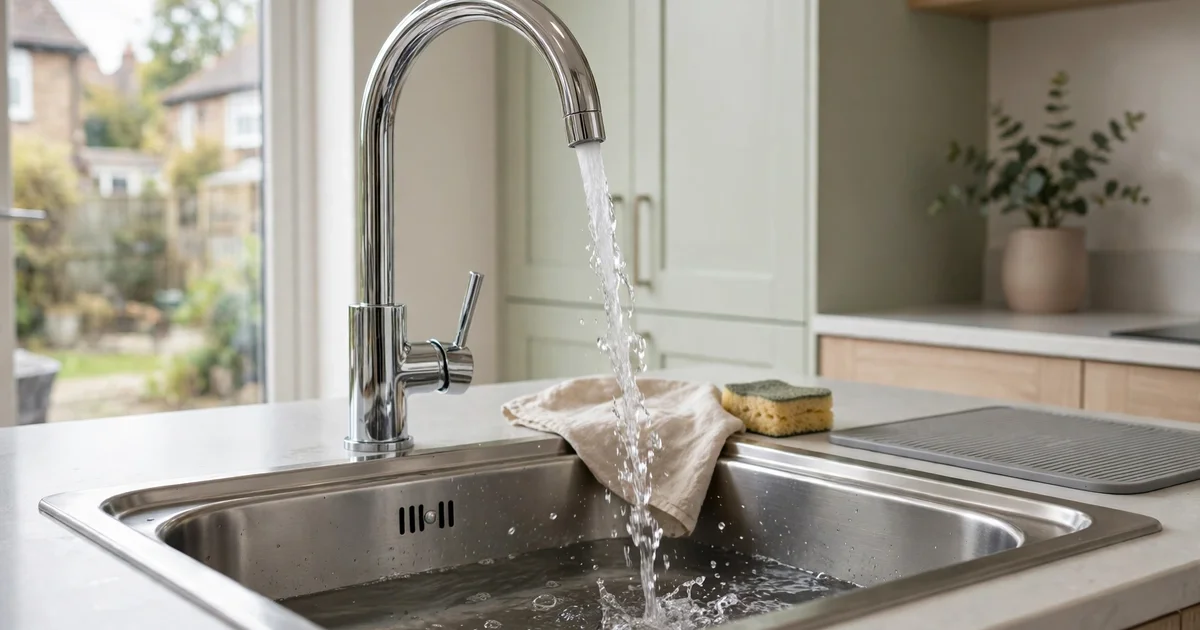
A tap wont turn off how to fix uk homeowners usually ask about starts with one step, and it is not the tap itself. First, stop the water. Then find out why the tap will not close. Most of the time, a worn washer or a damaged cartridge is the cause, and both are cheap parts you can replace in under an hour. This guide walks you through the emergency stop, the diagnosis, and the fix for each tap type, so you can stop the waste and the worry today.
A tap that keeps running is more than an annoyance. It can waste tens of litres of water every hour, and it can flood a kitchen or bathroom if the sink plug is in or the waste is slow. It can also soak the cupboard below and stain the floor. So act fast, but stay calm. The steps below work for kitchen taps, bathroom taps, and bath taps, and they need no special skill. You only need a screwdriver, an adjustable spanner, and the right spare part.
Stop the Water First: Your Two-Minute Emergency Fix
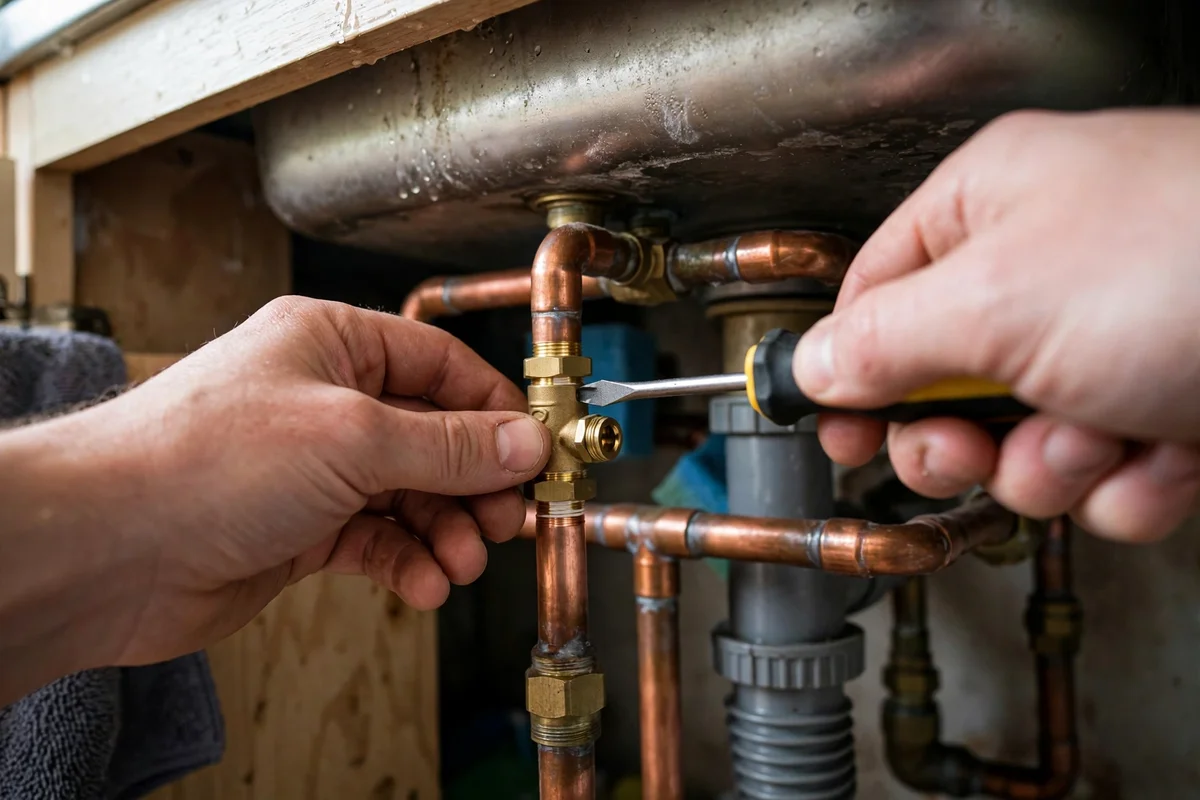
Do this before you touch the tap. A tap that will not turn off is still under full mains pressure, so any part you loosen will spray water. First, find the isolation valves. Most modern kitchen and bathroom taps have a small valve on each supply pipe underneath the sink or bath. Turn the slot a quarter turn with a flat screwdriver, so it sits across the pipe instead of along it. Then open the tap and check that the flow stops.
If you cannot find isolation valves, use the main stop tap instead. In most UK homes, it sits under the kitchen sink or where the water main enters the house. Turn it clockwise to close it. Then open the tap that will not turn off and let the remaining water drain out. If hot water keeps running, your home may have a stored hot water supply, so you may also need to close the valve on the feed to the hot water cylinder. After that, the flow should stop within a minute or two.
Do not force a stiff stop tap or isolation valve. Old valves can snap or start leaking if you push them too hard. If a valve will not move, leave it alone and call a plumber. Also, do not leave a running tap unattended while you look for the stop tap. If water is escaping onto the floor, put towels down first and move anything that water can damage.
Once the water stops, put the plug in the sink or bath. Small screws and washers love to fall down the plughole. Then take a photo of the tap and the pipework below it. The photo helps at the plumbers’ merchant if you need a part, and it shows you how everything goes back together.
Why Your Tap Won’t Turn Off
A tap stops water by pressing a seal against a seat, or by turning two ceramic discs so their holes no longer line up. When that seal fails, water keeps flowing even though the handle is in the closed position. The cause depends on the tap type, so the table below shows the usual faults. In short, a worn washer, a chipped ceramic disc, or a broken handle connection is behind most cases.
| What you notice | Likely cause | Tap type |
|---|---|---|
| Handle turns, but the flow never stops | Worn washer or damaged cartridge | Any type |
| Handle spins freely with no resistance | Loose handle screw, stripped spline, or broken spindle | Any type |
| Tap needs more and more force to stop | Worn washer or worn valve seat | Compression tap |
| Flow slows but never fully stops | Chipped ceramic disc or scale in the cartridge | Quarter-turn or mixer tap |
| Handle will not move at all | Seized spindle, limescale, or corrosion | Any type |
| Tap stops, then starts dripping again | Debris trapped in the seal, or a worn seat | Any type |
Limescale makes every fault worse. Hard water areas across much of England leave scale on washers, discs, and spindles. Over time, the scale stops the seal from closing fully. That is why a tap often fails slowly, needing a firmer twist each week, before it finally refuses to turn off at all. If your home has hard water, expect tap parts to wear faster than the maker suggests.
When the fault is a drip, not a stuck tap
A tap that drips from the spout is a different fault from a tap that will not turn off, even though both can come from a worn washer. Our guide to how to fix a dripping tap covers the slow-drip problem in detail, with a focus on mixer taps and cartridges. This guide is about the emergency version: a tap that keeps running and will not close.
Work Out Which Tap You Have
The fix depends on the tap type, so work this out before you buy parts. There are three common types in UK homes, and you can tell them apart by how the handle feels.
Compression taps (traditional)
These have separate hot and cold handles, and each handle turns several full rotations to open and close. Inside, a rubber washer presses down onto a metal seat. They are common in older homes and on bath taps. If your handle turns and turns, you almost certainly have a compression tap.
Quarter-turn taps (ceramic disc)
These open fully in a quarter or half turn, and the handle stops with a firm click. Inside, two ceramic discs slide against each other. They are common on modern basin and bath taps. If the handle moves only a short way, you have a quarter-turn tap.
Single-lever mixer taps (monobloc)
One lever controls both flow and temperature. Lift it to open, push it down to close, and move it side to side for hot and cold. Inside, a single mixing cartridge blends the two supplies. These are the most common kitchen taps in UK homes today. If one lever does everything, you have a mixer tap.
Still unsure? Look under the tap or behind the handle for a brand name. Cartridges are usually specific to the maker and model, so the brand matters when you buy a spare. Washers, by contrast, are fairly standard, and a plumbers’ merchant can match one from the old part if you take it with you.
Fix a Compression Tap That Won’t Turn Off
Compression taps fail when the washer wears thin or the seat below it gets rough. The fix is simple, and it needs no special tools. First, make sure the water is off at the isolation valve or stop tap. Then open the tap to release any pressure left in the pipe.
Next, remove the handle. Look for a small screw under a cap on top of the handle, or on the side. Pop the cap off with a flat screwdriver, undo the screw, and lift the handle away. Then unscrew the tap head with an adjustable spanner. It should turn anticlockwise. If it is stiff, a drop of penetrating oil and ten minutes of patience will help. Do not force it, or you may crack the tap body.
Take the head out and check the washer
Once the head is out, you will see the washer on the end of the spindle. It sits under a small brass nut or screw. Undo the nut, lift the old washer off, and fit a new washer of the same size. Take the old washer to the shop if you are unsure, as washers come in several sizes and a wrong one will not seal. Then check the valve seat inside the tap body. Run a fingertip around it. If it feels rough or pitted, the new washer will wear out fast, so fit a seat dressing tool or ask a plumber to reseat it.
Now put the tap back together. Screw the head back in, refit the handle, and turn the water back on slowly. Then test the tap. It should close with a normal turn, without force. If it still runs, the seat is too worn, and the tap head or the whole tap needs replacing. That is a bigger job, but it is still a standard task for a plumber.
Fix a Quarter-Turn Tap That Won’t Turn Off
Quarter-turn taps have no washer. Instead, two ceramic discs control the flow. When a disc chips or scale builds up between them, the tap cannot close fully. The fix is to replace the cartridge, which is the brass unit that holds the discs.
First, turn the water off and release the pressure, as above. Then remove the handle. On most quarter-turn taps, a small grub screw on the side of the handle holds it in place. Loosen it with an Allen key and lift the handle off. Under the handle, you will see a shroud or cover. Unscrew it by hand, and the cartridge will be visible below.
Next, unscrew the cartridge with an adjustable spanner. Note how it sits, as the new one must go back the same way. Take the old cartridge to a plumbers’ merchant and match it by brand, size, and spline count. Cartridges look similar but they are not interchangeable, so do not guess. A wrong cartridge will not fit, or it will leak from the base.
Before you fit the new cartridge, clean the inside of the tap body with a cloth. Any grit left inside will damage the new discs. Then fit the new cartridge, tighten it firmly but not too hard, and refit the shroud and handle. Turn the water back on slowly and test the tap. It should open and close with a short, smooth turn. If it still runs, the tap body itself may be damaged, and a new tap is the better fix.
Fix a Single-Lever Mixer Tap That Won’t Turn Off
Mixer taps use a single cartridge that blends hot and cold water. When the cartridge wears or scale jams it, the lever may move but the flow never stops. The fix is a new cartridge, and it takes about half an hour.
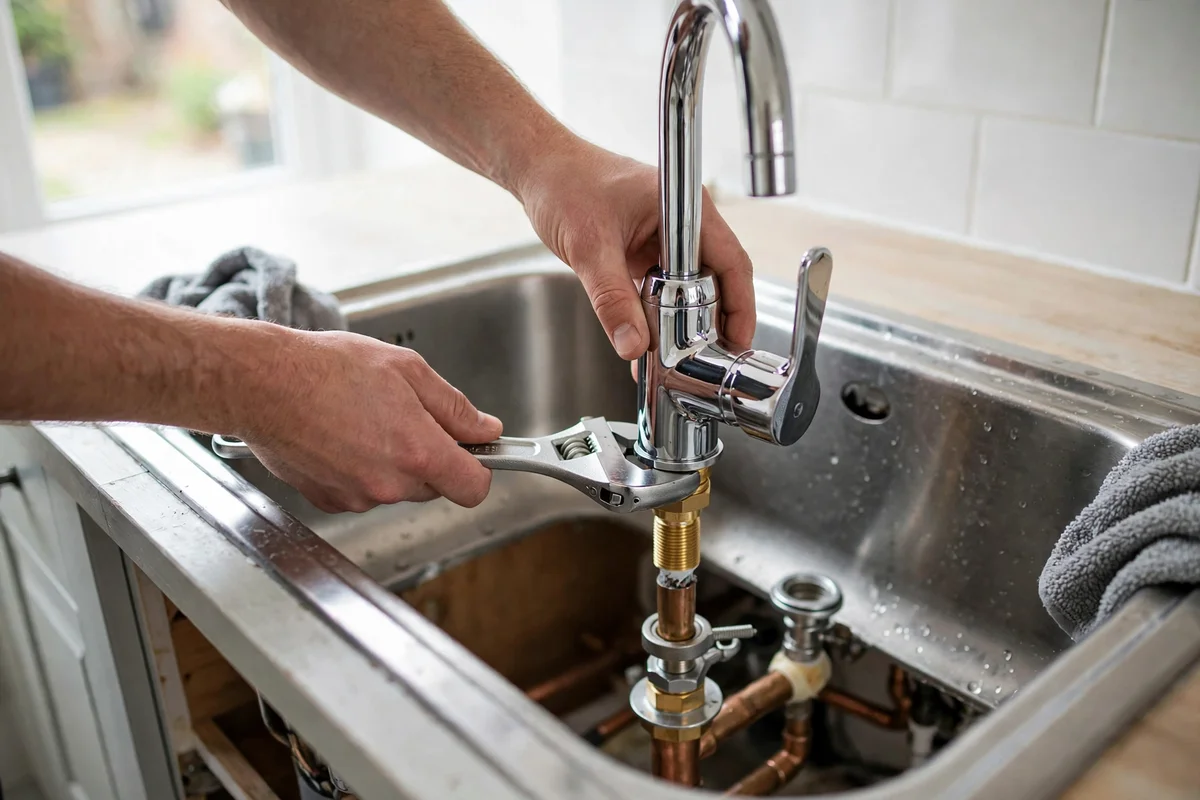
First, turn off both isolation valves under the sink, hot and cold. A mixer has two supplies, so closing only one will not stop the flow. Then open the tap to drain the pipes. Next, find the grub screw that holds the lever. It usually hides under a small red and blue cap on the front of the lever. Pop the cap off, loosen the grub screw with an Allen key, and lift the lever off.
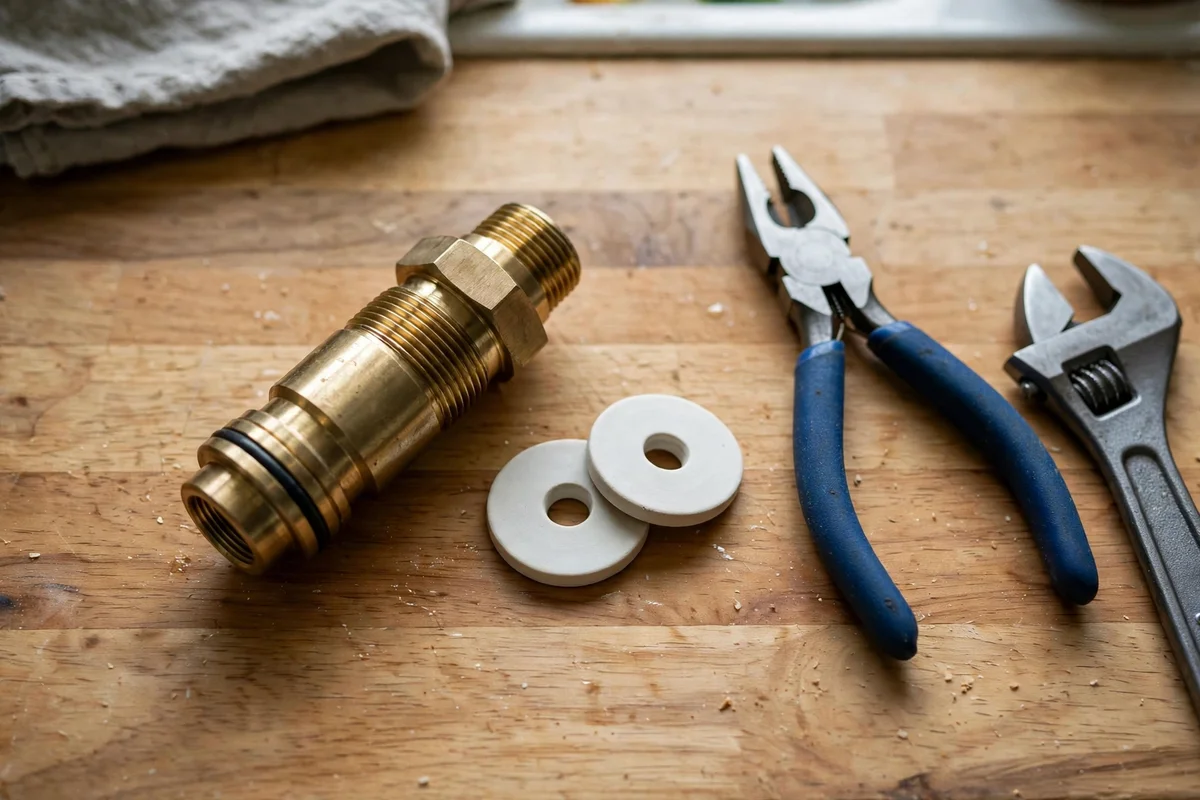
Under the lever, a dome-shaped cover unscrews by hand. Below that, a large brass nut holds the cartridge in place. Undo the nut with an adjustable spanner and lift the cartridge out. Take a photo of its position first, as some cartridges only fit one way round. Also note the brand and model, which is often printed on the cartridge body.
Fit the new cartridge
Buy a matching cartridge from the tap maker or a plumbers’ merchant. Cheap universal cartridges exist, but they often fit badly and fail early, so a genuine part is worth the extra few pounds. Then clean the tap body, fit the new cartridge the same way round, and tighten the nut. Refit the cover and lever, turn the water back on, and test. The lever should close the flow fully when pushed down. If it still runs, check that both isolation valves are open and that the cartridge sits flat. A cartridge that is not seated will leak past its seals.
If the mixer is a boiling-water tap or an electronic tap, stop here. These taps have their own parts and safety rules, so follow the maker’s instructions or call a plumber. The same applies to sensor taps, which need a specialist part.
What If the Handle Spins Freely or Won’t Move?
Sometimes the fault is not the washer or the cartridge, but the handle itself. If the handle spins freely with no resistance, the connection between the handle and the spindle has failed. First, tighten the handle screw. If that does not help, remove the handle and look at the splines, which are the small ridges on the spindle. Worn-smooth splines mean the handle cannot grip, so you need a new handle or a new tap head.
If the handle will not move at all, the spindle has seized. Limescale or corrosion is the usual cause. Try a spray of penetrating oil around the spindle, leave it for half an hour, and try again gently. Do not force it with pliers, as you may snap the spindle and turn a small job into a tap replacement. If it still will not move after a second dose of oil, the tap head or cartridge needs replacing.
A handle that is stiff but still moves is a warning sign. It means scale is building up inside, and the tap may fail soon. Descaling the tap head or fitting a new cartridge now is cheaper than an emergency call later. In hard water areas, a tap that feels stiff is worth fixing before it stops closing altogether.
Repair or Replace? How to Decide
Most taps that will not turn off can be repaired for a few pounds. Still, there are times when a new tap is the better choice. Use the guide below to decide. In general, repair the tap if the body is sound and the part is easy to find. Replace it if the body is damaged, the part is no longer made, or you have already repaired it twice.
| Situation | Best fix | Typical cost |
|---|---|---|
| Worn washer (compression tap) | New washer | £1 to £3 for the part |
| Worn cartridge (quarter-turn or mixer) | New cartridge | £10 to £40 for the part |
| Loose handle or stripped spline | New handle or tap head | £10 to £30 for the part |
| Cracked or corroded tap body | New tap | £40 to £150 for the tap, plus fitting |
| Part no longer made | New tap | £40 to £150 for the tap, plus fitting |
| Tap repaired twice already | New tap | £40 to £150 for the tap, plus fitting |
A plumber typically charges £60 to £90 for a simple washer or cartridge fix, including the part. A full tap replacement usually costs £80 to £150 for labour, plus the price of the tap. Emergency call-outs cost more, especially at night or at weekends, so stopping the water yourself and booking a normal visit can save a lot. If the tap is old and the finish is worn, a new tap also improves the look of the sink or bath, which is a bonus.
How Much Does It Cost to Fix a Tap That Won’t Turn Off?
The cost depends on the tap type and whether you do it yourself. DIY parts are cheap, and most fixes need only basic tools. A plumber’s visit costs more, but it includes the diagnosis, the part, and the guarantee. The table below shows typical UK prices.
| Fix | DIY cost | Plumber cost (part + labour) |
|---|---|---|
| New washer | £1 to £5 | £60 to £90 |
| New quarter-turn cartridge | £10 to £25 | £70 to £110 |
| New mixer cartridge | £15 to £40 | £80 to £120 |
| New tap head | £10 to £30 | £70 to £100 |
| New tap (supply and fit) | £40 to £150 (tap only) | £120 to £300 |
Prices vary by area, and London rates are higher than the rest of the UK. Always ask for a fixed quote before the work starts, and check whether the price includes VAT. If the plumber finds more damage once the tap is apart, they should explain the extra cost before they carry on. Also, a running tap wastes water, so a fast fix saves money on your water bill too. A tap running at full flow can waste over 10 litres a minute, which adds up fast on a metered supply.
When to Call a Plumber Straight Away
Most taps that will not turn off are safe DIY jobs once the water is stopped. Still, call a plumber straight away if any of the following apply. Do not wait, as water damage gets worse by the hour.
Call a plumber if you cannot stop the water at all. If the isolation valves and the stop tap both fail, or if you cannot find them, you need help fast. Also call if water is leaking inside a wall, a ceiling, or a cupboard, as the damage may be worse than it looks. The same applies if the tap is on a pressurised system and you are unsure how to isolate it safely.
Also call a plumber if the tap is part of a combi boiler system and the boiler pressure keeps dropping. A running tap can drain the system, and the boiler may lock out. Our guide to why your boiler loses pressure explains the link between leaks and pressure loss. If you see damp patches on walls or ceilings after a tap failure, read our guide to what causes damp on internal walls. Get the leak fixed first, as damp will not dry out while water is still escaping.
Finally, call a plumber if the tap is a boiling-water tap, a sensor tap, or part of a shower valve. These need specialist parts and, in some cases, electrical work. A standard tap repair is a good DIY job, but a tap connected to mains electricity or a pressurised hot water cylinder is not.
Tap Won’t Turn Off FAQs
These are the questions homeowners ask most often when a tap will not turn off.