 by
A boiler that keeps losing pressure is one of the most common heating problems in UK homes. You top it up, the heating works again, and then a few days later the gauge has dropped and the boiler has locked out. It is frustrating, and it is also a symptom. A sealed heating system should hold its pressure. So when the needle keeps falling, water is leaving the system somewhere.
The good news is that the list of causes is short. Most boilers lose pressure for one of six reasons. Some you can check yourself in a few minutes. Others need a Gas Safe registered engineer. This guide explains each cause, how to tell them apart, how to top the system up safely, what repairs typically cost, and when to stop and call a professional.
What Should Your Boiler Pressure Be?
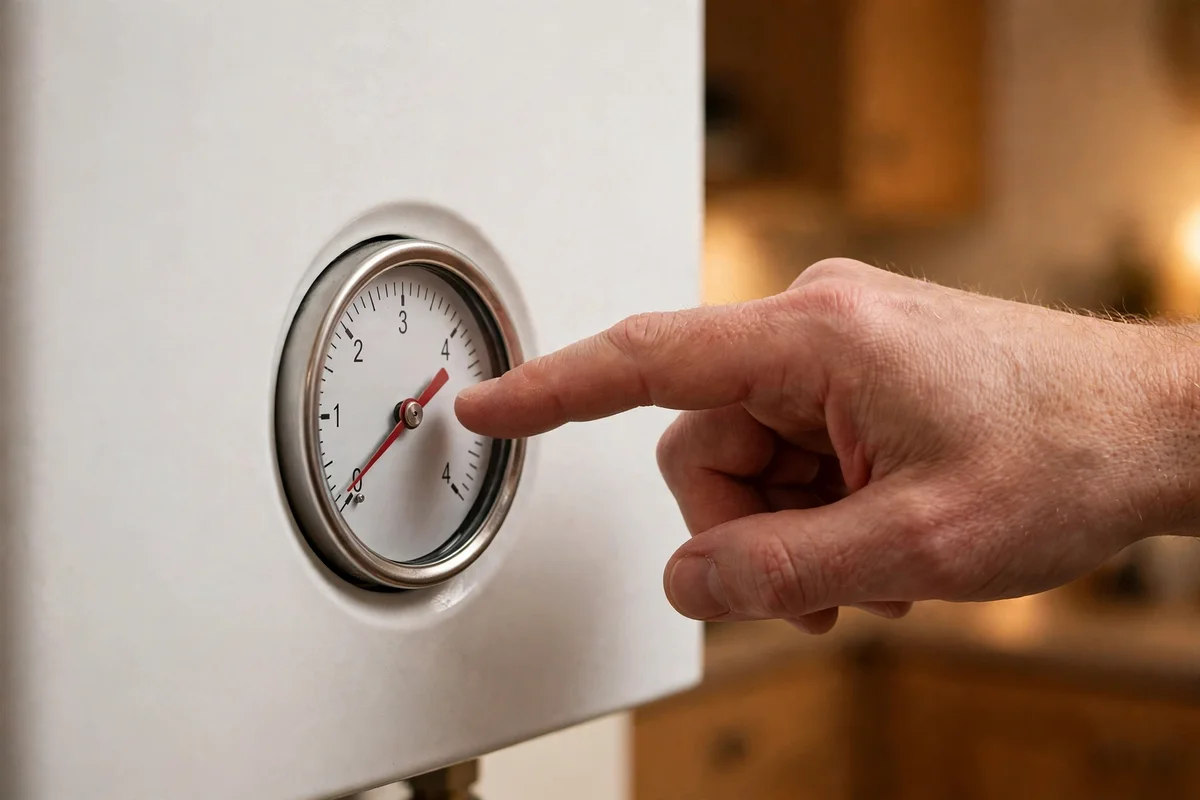
First, check what normal looks like. Most combi boilers and system boilers in the UK should read between 1 and 1.5 bar when the system is cold. Your boiler manual gives the exact figure for your model, and the manual always wins over a general guide.
Read the gauge when the heating has been off for a while. Pressure rises as water heats and expands, so a reading taken with the heating on will look higher than it really is. Use this table as a rough guide.
- Below 0.5 bar: too low. Many boilers lock out and show a low-pressure fault code.
- 1 to 1.5 bar (cold): normal for most boilers. Check your manual for your model.
- Rising to 2 to 2.5 bar when hot: normal expansion as the water heats up.
- At or near 3 bar: too high. The pressure relief valve is likely to open and dump water outside.
A small drop over a year is normal. Air escapes through the boiler’s air vent, and bleeding radiators lets pressure out too. So one top-up a year is nothing to worry about. If you are topping up every week or every few days, something is wrong. That is the line between normal and a fault.
Why Does a Boiler Lose Pressure? The Six Causes
Every cause comes down to the same thing: water leaving a sealed system. Work through the list in order, from the most common to the least common.
1. You have just bled the radiators
This is the most common cause, and the easiest to fix. Bleeding a radiator lets air out, but water comes out too. So the pressure drops with it. If you bled several radiators, the drop can be large. Top the system up once after bleeding, and the problem should stop there. If the pressure keeps falling after that, look at the next causes.
2. A slow leak on a radiator, valve or pipe
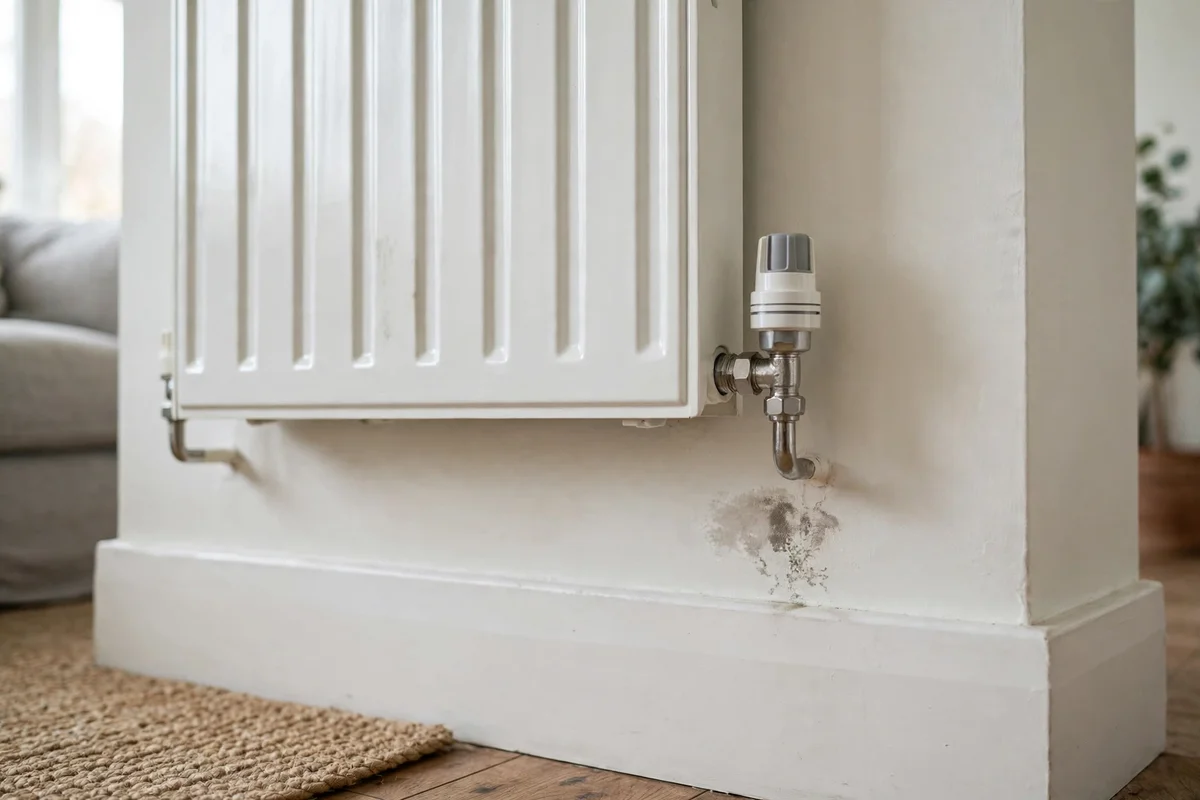
This is the cause behind most repeat pressure loss. Radiator valves, joints, bleed screws and towel rails can weep slowly for months. The water often evaporates before it leaves a puddle, so you see no obvious leak. Look for damp or rusty marks around radiator valves and pipe joints. Also check for a green or white crust on a valve, damp carpet near pipe runs, and stains on ceilings below upstairs radiators. A leak under floorboards or boxed in behind a wall may stay hidden for a long time. If the pressure falls steadily and you cannot find a leak, a hidden leak is the most likely answer.
3. The pressure relief valve is letting water out
Every sealed system has a pressure relief valve, often called the PRV. It dumps water outside through a small copper pipe if the pressure gets too high. On many boilers it opens at 3 bar. Once a PRV has opened a few times, a bit of debris can stop it closing fully. Then it keeps dribbling. Check the end of the copper pipe on your outside wall. If it is wet or dripping, that is where your pressure is going. Do not cap the pipe. The valve needs replacing, and that is a job for a Gas Safe engineer.
4. The expansion vessel has lost its charge
The expansion vessel is a small tank inside or next to the boiler. It holds a cushion of air behind a rubber diaphragm. As heated water expands, the air cushion compresses and soaks up the extra volume. Vessel life is typically around 5 to 10 years. Once the charge is gone, the pressure shoots up when the heating runs. Then the PRV opens and dumps water outside. When the system cools, the gauge reads lower than before. So the pattern is clear: pressure swings high when hot, then drops low when cold. Recharging or replacing the vessel is Gas Safe work. Do not attempt it yourself.
5. The filling loop is open or letting by
The filling loop connects your boiler to the mains water supply. You open it to top the system up, then you close it again. If the loop is left open, even slightly, water can pass through it. Or the valve inside can fail and let water by. A filling loop that lets by can push the pressure up rather than down, but a faulty loop can also confuse the diagnosis. So check that both valves on the loop are fully closed after every top-up. If the pressure still behaves strangely, an engineer can test the loop.
6. A leak inside the boiler
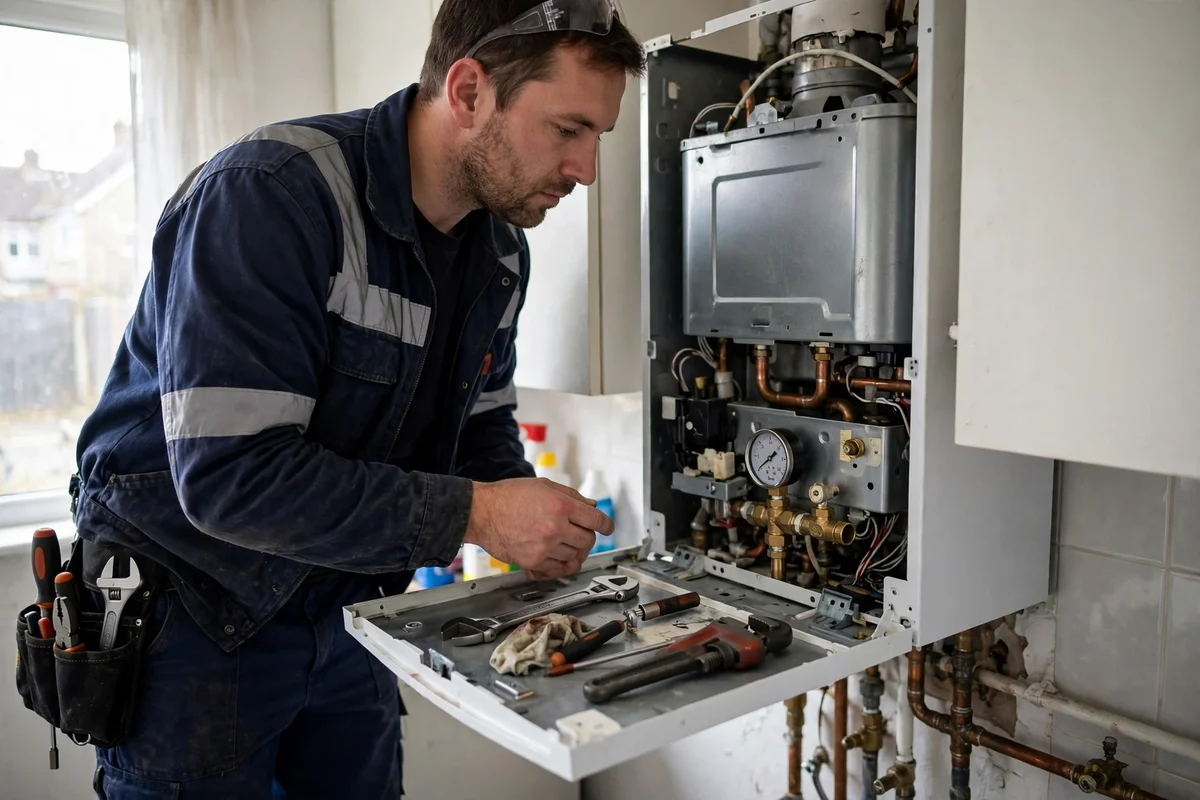
The pump, valves, air vent and heat exchanger all hold system water. Any of them can develop a small leak inside the casing. You may see drips under the boiler, or damp around its base. But often the leak stays hidden inside. Never open the boiler casing yourself. Work inside a gas boiler is Gas Safe work only. If you suspect an internal leak, book an engineer.
How to Tell Which Cause Is Yours
You do not need tools to narrow it down. Watch the gauge and match the pattern to the cause. This table covers the most common patterns.
- Pressure drops slowly over days or weeks: most likely a small leak on a radiator, valve, joint or hidden pipe.
- Pressure drops right after bleeding radiators: normal. Top up once and watch it.
- Pressure shoots up when hot, then reads low when cold: most likely a flat expansion vessel, with the PRV dumping water at the top of the swing.
- The outside copper pipe is wet or dripping: the pressure relief valve is letting water by.
- Pressure falls fast, within hours, with no visible leak: suspect a hidden leak or an internal boiler leak. Book an engineer.
- Pressure rises on its own: the filling loop may be open or letting by. Check that it is fully closed.
Keep a simple note of the gauge reading each morning for a week. Write down the cold reading, and whether the heating ran the day before. That note helps an engineer a lot. It shows the pattern clearly, and it stops the fault from being a mystery on the day of the visit.
How to Repressurise Your Boiler Safely
Topping up is something most owners can do. Your boiler manual shows the exact steps for your model. So read the manual first, and follow it rather than any general guide. The steps below cover the usual method.
- Switch the boiler off and let the system cool down. Never top up a hot system.
- Find the filling loop. It is usually a braided silver hose under the boiler, with one or two small valves at each end.
- Open the valves slowly. Watch the gauge as the pressure rises.
- Close the valves when the gauge reads between 1 and 1.5 bar. Do not overfill it.
- Switch the boiler back on and check that the pressure holds. Bleed any radiators that need it, then check the gauge again.
If you overfill the system, bleed a radiator with the heating off. That lets a little water out and brings the pressure down. Then close the bleed screw and recheck the gauge. If the pressure falls again within days, topping up is only a sticking plaster. The cause still needs finding.
Do not keep topping up every day without a diagnosis. Each top-up adds fresh water to the system. Fresh water brings oxygen with it, and oxygen speeds up corrosion inside radiators and pipework. So a boiler that needs daily top-ups should be seen by an engineer soon.
What Does It Cost to Fix a Boiler Losing Pressure?
Costs depend on the cause and where you live, but these typical UK ranges give you a starting point. Always get a written quote before work starts.
- Replacing a weeping radiator valve: typically around £80–£150, including the part and labour.
- Replacing a pressure relief valve: typically around £100–£200, including parts and labour.
- Recharging or replacing an expansion vessel: typically around £150–£350. An external vessel is usually cheaper to fit than an internal one.
- Finding and fixing a hidden leak: typically around £150–£400, depending on access. Lifting floorboards or opening a wall adds cost.
- Internal boiler leak repair: typically around £150–£400, depending on the part. A heat exchanger costs far more, and on an old boiler it may not be worth it.
A diagnostic visit alone typically costs around £60–£100, and many engineers take that off the repair bill if they do the work. Ask about this when you book. If your boiler is old and the repair is expensive, compare the quote against the cost of a replacement. Our guide to combi boilers vs heat pumps can help if you are weighing a replacement, and our guide to electric boilers vs gas boilers covers the other main option.
When to Call a Gas Safe Engineer
Some jobs are safe for a homeowner. Others are not. Call a Gas Safe registered engineer if any of these apply:
- You cannot find the cause after checking the valves, the outside pipe and the gauge pattern.
- The pressure falls again within days of topping up.
- The expansion vessel, pressure relief valve or filling loop needs work.
- There is water inside the boiler casing or dripping from under the boiler.
- The boiler shows a fault code that will not clear, or it locks out repeatedly.
- You smell gas, or the boiler makes banging or kettling noises. In that case, switch it off and call an engineer at once.
Only a Gas Safe registered engineer should work on a gas boiler. Ask for their Gas Safe ID card when they arrive, and check the number on the Gas Safe Register. It takes a minute, and it is the simplest safety check you can do.
How to Stop Your Boiler Losing Pressure Again
Once the cause is fixed, a few simple habits keep the system healthy. Check the gauge once a month, when the system is cold. That way you catch a slow fall early, before it becomes a lockout. Bleed radiators only when they need it, and top the pressure up straight after. Keep the filling loop valves fully closed between top-ups, and never leave the loop connected and open.
Have the boiler serviced once a year. A service includes a pressure check, and the engineer can spot a weeping valve or a tired expansion vessel before it fails. If your home has a large heating system, our guide to how central heating works explains the parts of the system and how they fit together. And if damp has already appeared near a radiator, our guide to what causes damp on internal walls will help you tell a heating leak apart from condensation or rising damp.
Most of all, do not ignore a slow fall. A boiler that needs topping up every month has a problem that will only get bigger. Find it early, and the fix is usually small.
Frequently Asked Questions
Is it normal for a boiler to lose pressure?
A little loss over a year is normal. Air escapes through the air vent, and bleeding radiators lets pressure out too. One top-up a year is fine. If you are topping up every week or every few days, something is wrong and the cause needs finding.
What pressure should my boiler be at?
Most combi and system boilers should read between 1 and 1.5 bar when the system is cold. Check your boiler manual for the exact figure for your model. Pressure rises a little when the heating runs, which is normal.
Can I top up my boiler myself?
Yes, in most cases. Your boiler manual shows the exact steps for your model. Switch the boiler off, let it cool, open the filling loop slowly, and close it at 1 to 1.5 bar. Never open the boiler casing, and call a Gas Safe engineer for anything inside it.
Why does my boiler lose pressure with no visible leak?
Because the water is going somewhere you cannot see. The most common hidden causes are a pressure relief valve letting water out through the pipe on your outside wall, a weep from pipework under floorboards or behind walls, and a flat expansion vessel that makes the PRV open every time the heating runs.
How much does it cost to fix a boiler losing pressure?
It depends on the cause. A weeping radiator valve typically costs around £80–£150, a pressure relief valve around £100–£200, and an expansion vessel around £150–£350. Finding a hidden leak typically costs around £150–£400. A diagnostic visit alone is usually around £60–£100.