
 by
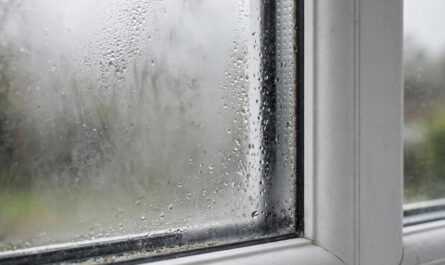
Wet windows every morning from October to March is one of the most common UK homeowner complaints — puddles on sills, blackening frames, and the daily wipe-down ritual. It is also one of the most fixable. This guide explains why it happens overnight and the practical steps that actually stop it.
Why Mornings Are Worst
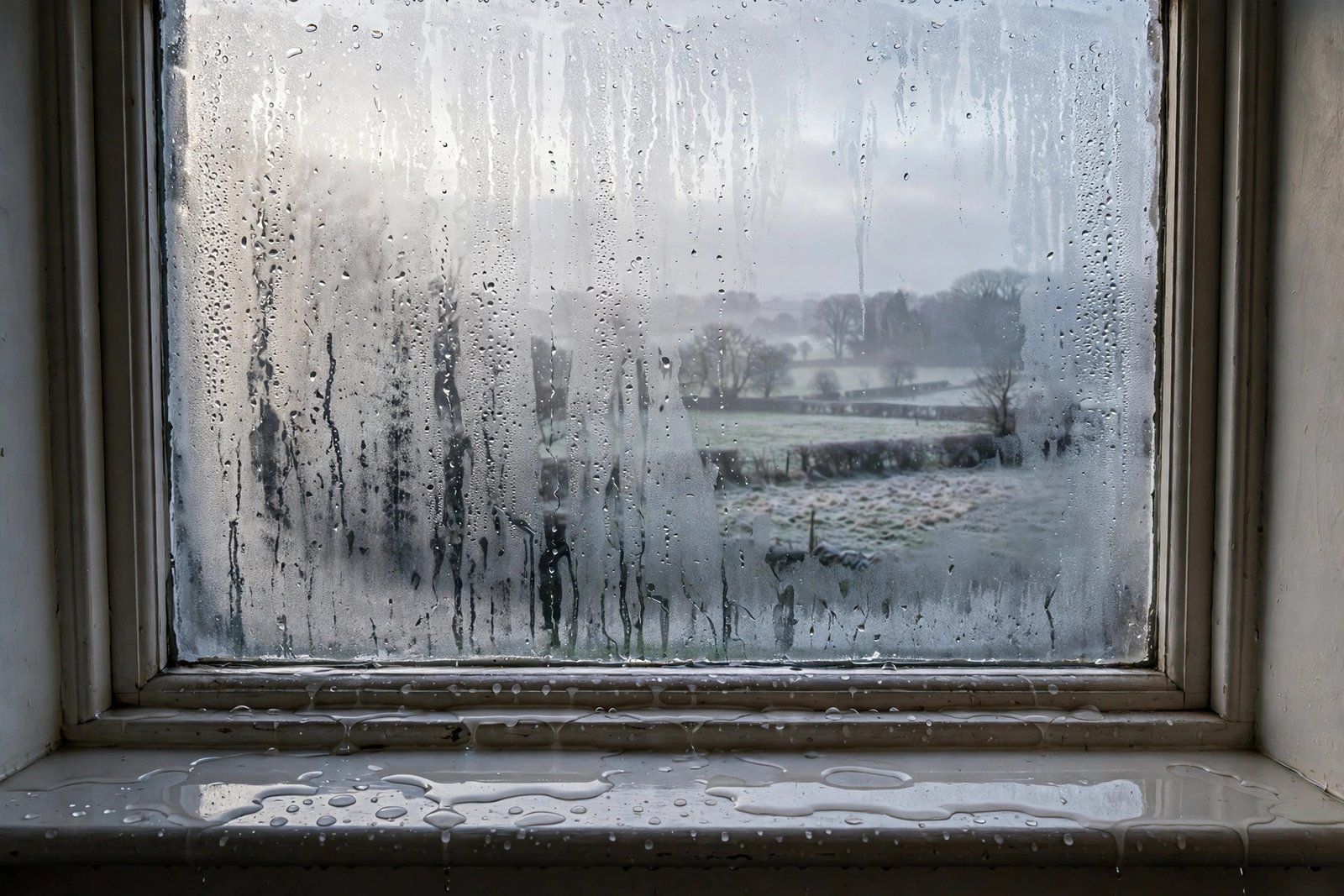
Overnight, your home produces moisture (breathing, mostly) while temperatures drop. Windows — especially single-glazed or older double glazing — are the coldest surfaces in the room, so airborne moisture condenses on them first. By morning, hours of accumulation are visible. It is worse in bedrooms (two people, shut door, heating off) and in homes where trickle vents are closed or painted over.
A light misting on single glazing is normal physics. Streaming water, puddles, and black mould on frames mean the balance is wrong — too much moisture, too little ventilation, or surfaces too cold. See our damp vs condensation explainer.
Quick Wins (Do These First)
- Wipe it down each morning — a squeegee or microfibre cloth takes 30 seconds and stops water sitting long enough to feed mould. This treats the symptom while you fix the cause.
- Open trickle vents — and unpaint them if sealed. They exist for exactly this.
- Crack a window for 10–15 minutes in the morning, even in winter — the air exchange is worth more than the heat lost.
- Keep bedroom doors open (or ajar) where practical, so moisture disperses instead of concentrating.
- Do not dry clothes on radiators overnight — a single load can release 2+ litres of water into the air.
The Real Fixes
- Consistent heating: holding bedrooms at 16–18°C overnight reduces condensation far more than blasting heat morning and evening. Cold surfaces are the problem; warmth is the fix.
- Extractor fans that work: bathroom and kitchen fans must vent outside (not into lofts) and actually be used — humidity-sensing fans remove the human factor.
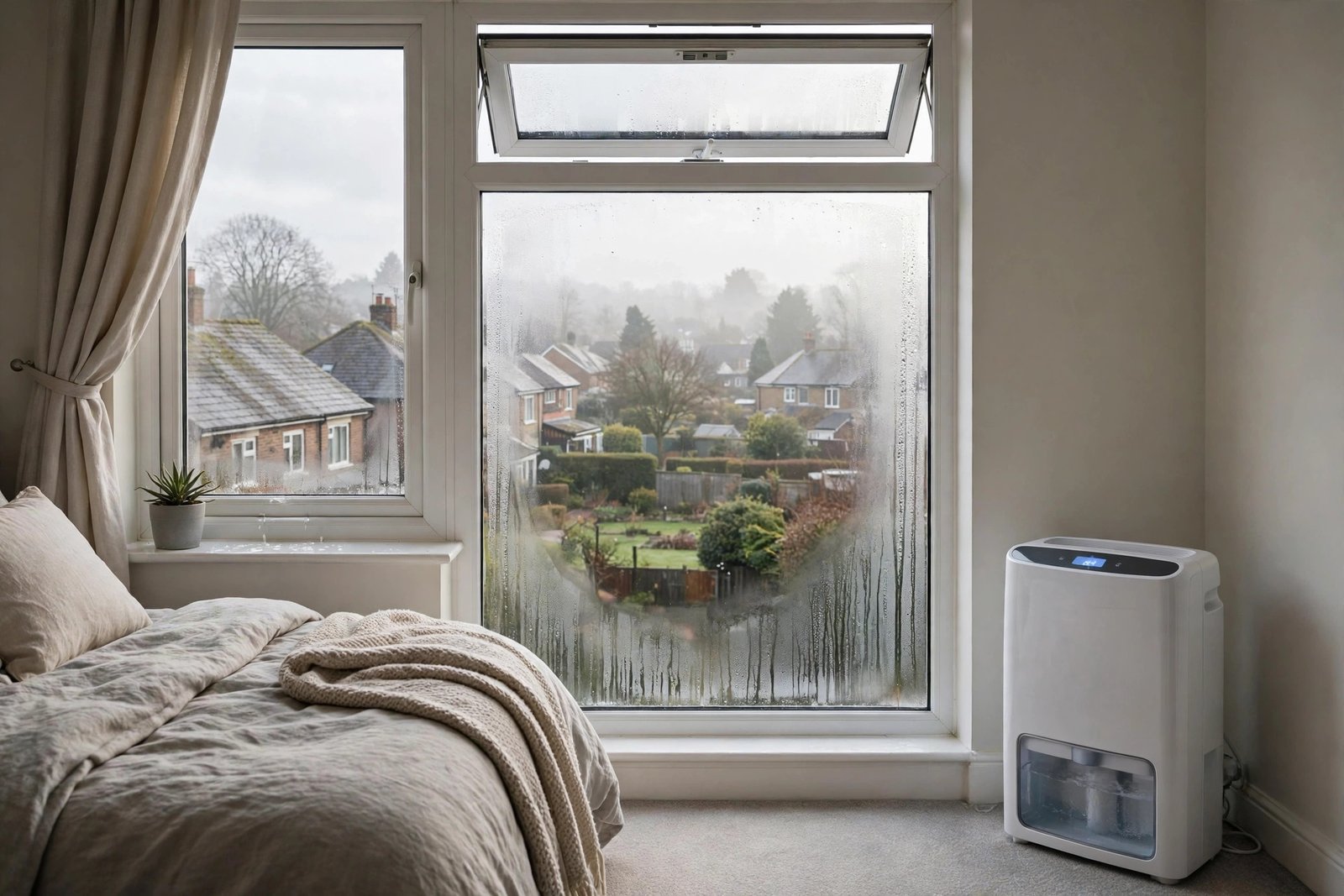
- Dehumidifier: in the bedroom or hallway, a small unit can transform mornings — see dehumidifier vs extractor fan.
- Secondary glazing or better windows: the long-term fix for single glazing — warmer glass means less condensation, permanently.
- Whole-house ventilation: for chronic cases across multiple rooms, a PIV unit is worth evaluating.
What About the Black Mould on Frames?
Clean it with a mould remover (frames are non-porous, so this is straightforward), then treat the cause — mould on window sills and reveals is the same problem in miniature. If seals have failed and there is moisture inside the glazing unit, that is a different issue: see condensation inside double glazing.
Frequently Asked Questions
Is it normal to have condensation every morning?
Light misting on cold glass is common; daily streaming water is not “just what windows do” — it signals excess moisture or poor ventilation worth fixing.
Will opening windows in winter make it worse?
No — brief ventilation exchanges moist indoor air for drier outdoor air (cold air holds less moisture). Ten minutes beats sealed-up damp.

Do dehumidifiers stop morning condensation?
Yes — they directly remove the overnight moisture. Many users report the problem disappearing within days of first use.
Should I wipe condensation every day?
Yes, until the cause is fixed — standing water feeds mould within days. A squeegee makes it a 30-second job.
When is it not condensation?
If water appears between the panes of double glazing, the sealed unit has failed — see our guide. That needs unit replacement, not ventilation.
The Bottom Line
Morning condensation is a moisture-ventilation-heat balance problem, and it responds well to the basics: ventilate, heat consistently, wipe daily, and consider a dehumidifier. For the full system, see our mould prevention guide and complete damp guide.