
 by
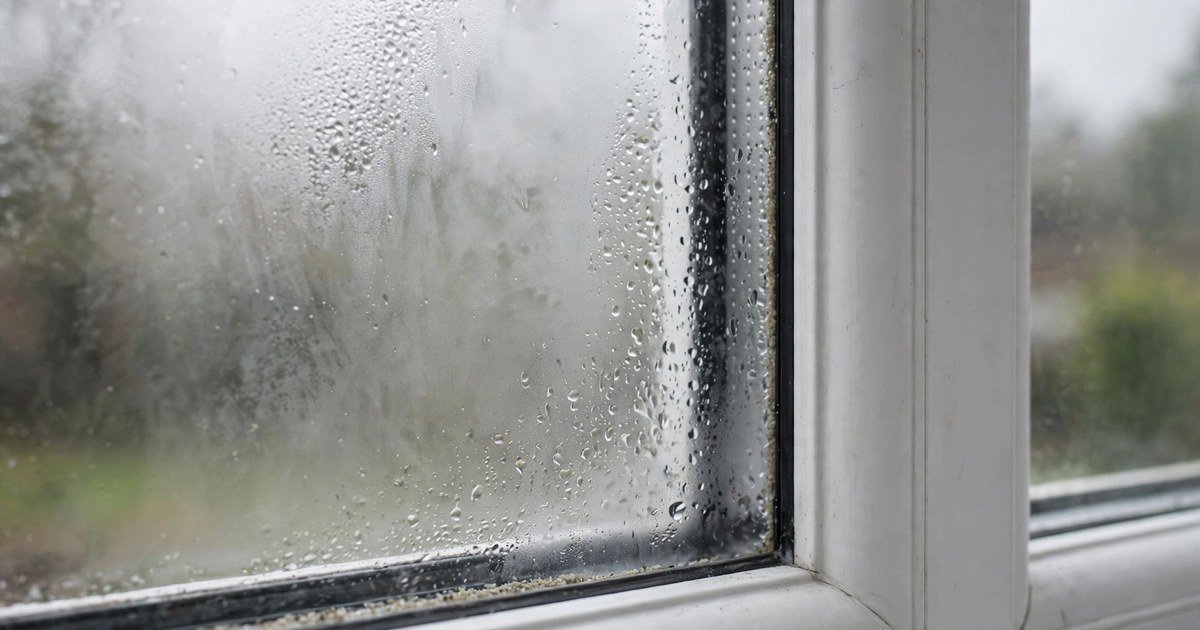
If the misting is between the panes of your double glazing — where no cloth can reach it — you do not have a condensation problem in the usual sense. You have a failed sealed unit. This guide explains why it happens, which “fixes” are worth it, and what replacement really costs.
Why It Happens: Sealed Unit Failure
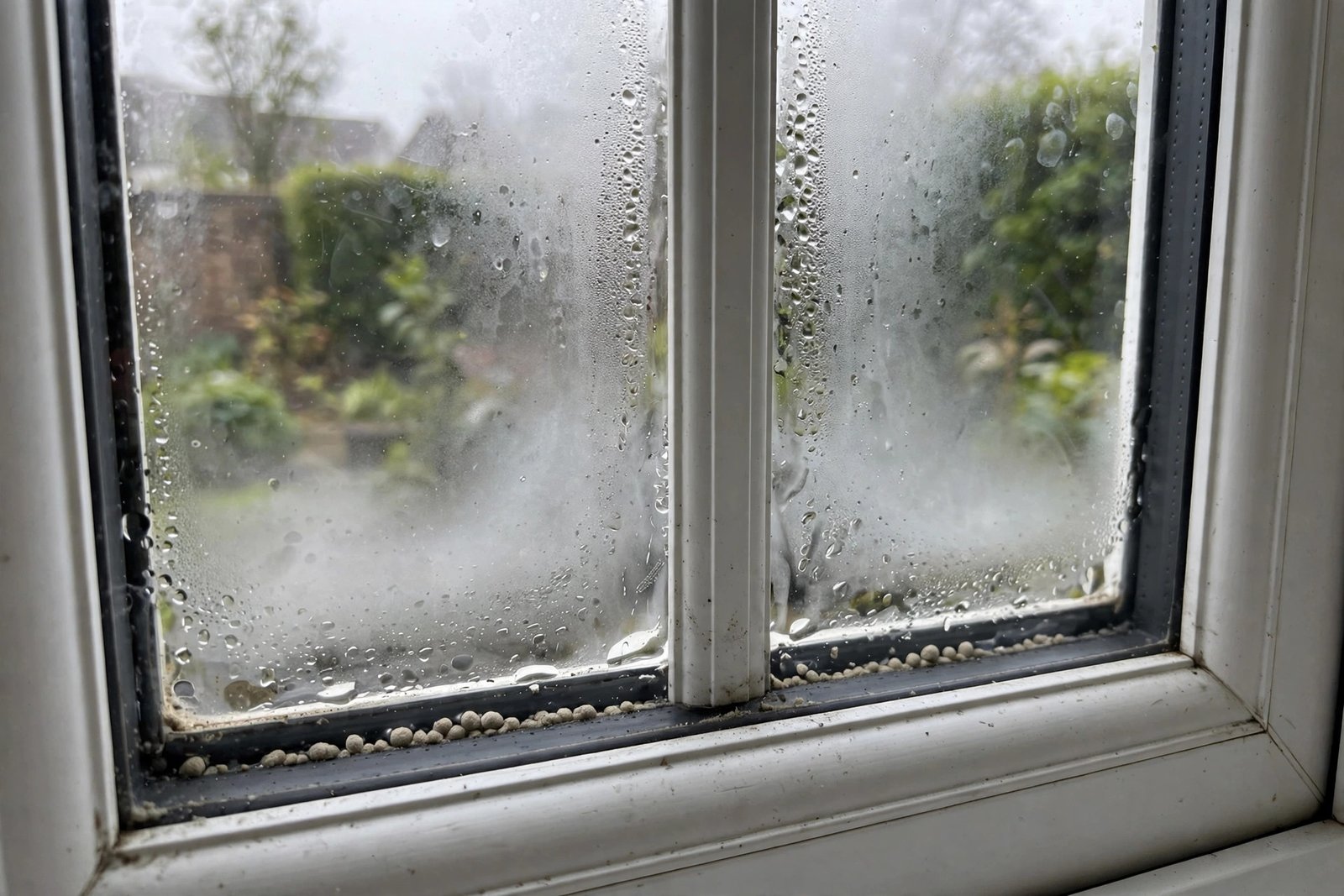
Double glazing works because the gap between panes is sealed and filled with dry air or argon. The perimeter seal eventually degrades — UV, temperature cycling, poor manufacture, or just age (15–25 years is typical). Once the seal fails, moist air enters, condenses between the panes, and cannot be wiped away. The unit has failed; the misting is the symptom. This is different from surface condensation, which forms on the room-side glass and wipes off.
How to Tell Which You Have
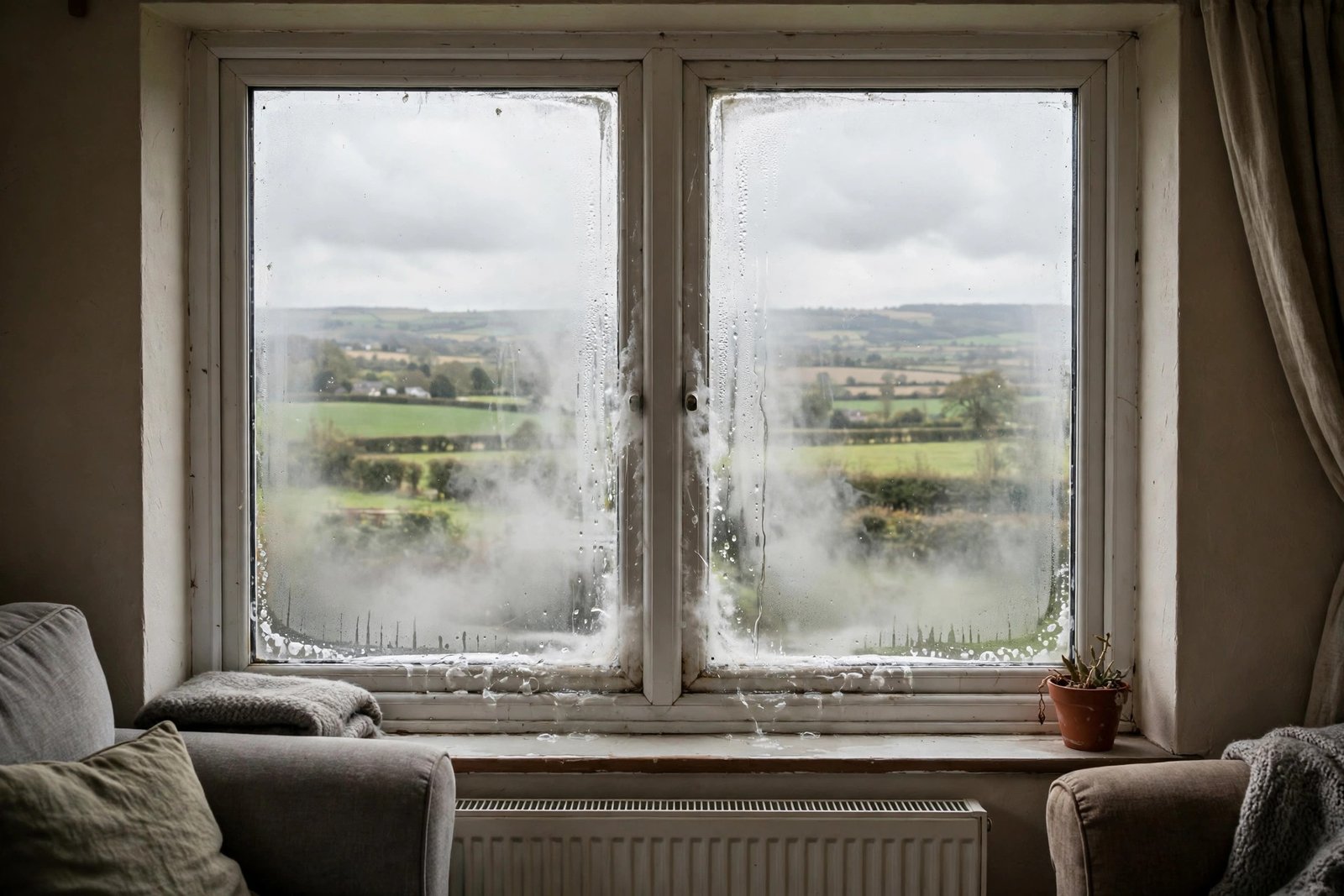
- Between the panes: cannot be touched from either side, often looks like fogging or droplets inside the unit, may come and go with temperature. = Failed seal.
- Room-side surface: wipes off with a cloth. = Normal condensation; see morning condensation fixes.
- Outside surface: wipes off from outside, usually early morning. = Actually a sign your glazing insulates well (the outer pane is cold because heat is not escaping).
What Fixes Work?
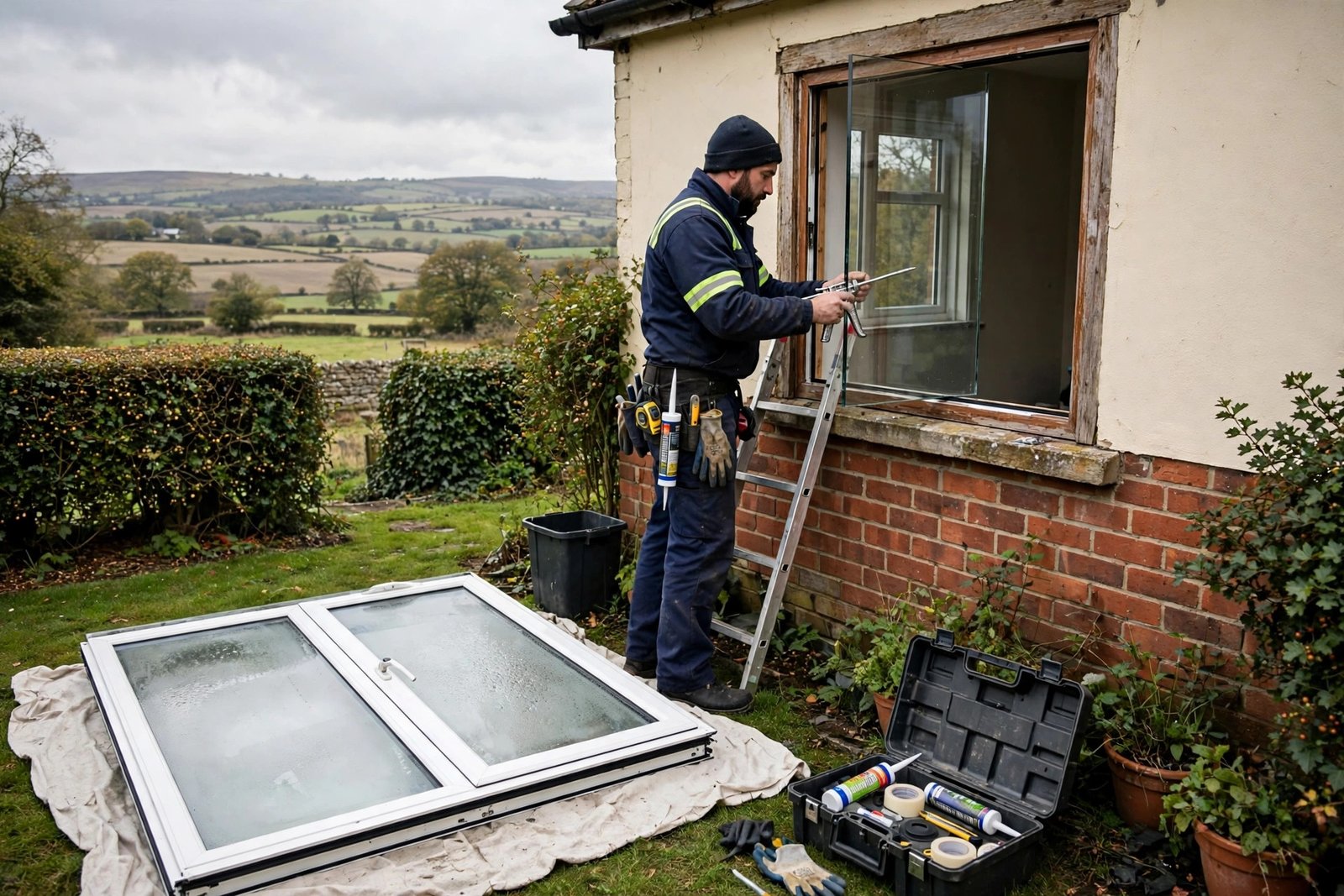
- Replace the sealed unit (recommended): the glass unit is swapped while keeping the existing frame — assuming the frame is sound. This is the proper fix and restores full insulation.
- Defogging/demisting services: some companies drill the unit, dry it and reseal. Cheaper, but results vary, the insulating gas is not replaced, and misting often returns. Treat as a stopgap.
- Full window replacement: only needed if frames are also failing. Do not let a salesman upsell you from a unit swap to full windows unless the frames warrant it.
What Does It Cost?
As a rough UK guide: replacing a single sealed unit typically costs £100–£300 depending on size and glass type; a full house of units runs into the low thousands. Defogging services charge less per unit but with the caveats above. Get the unit size measured properly — mismeasured units are a classic source of disputes.
Frequently Asked Questions
Can you fix condensation inside double glazing yourself?
Not properly. DIY defogging kits exist but give poor, short-lived results. Unit replacement is a glazier’s job.
Does failed double glazing lose insulation?
Yes — the argon/dry air is gone, so the unit insulates little better than single glazing, and the misting blocks light.
How long do sealed units last?
Typically 15–25 years. South-facing units fail sooner (UV and heat cycling); poor manufacture fails sooner still.
Will my warranty cover it?
Many installers offer 10-year guarantees on sealed units — check your paperwork before paying. FENSA-registered installers’ guarantees are the most reliable.
Can I just live with it?
You can, but the unit’s insulation is compromised and the misting worsens. If the frame is sound, a unit swap is the cost-effective fix.
The Bottom Line
Misting between panes means the seal has failed — replace the unit, keep the frame. For surface condensation, see our morning condensation guide and complete damp guide.