
 by
Painting over mould is one of the most common decorating mistakes in the UK — the fresh paint looks perfect for a few months, then the black patches bleed straight back through. The sequence matters enormously: clean, dry, fix the cause, then paint. This guide gives you the order that actually holds.
Why Painting Over Mould Fails
Paint forms a film over the surface. Mould underneath keeps growing on the damp plaster behind that film, and within months it pushes through — often worse than before, because the paint trapped the moisture in. Anti-mould paint over live mould fails the same way; it is a preventative, not a cure. See does damp-proof paint work for the full picture.
The Right Sequence
- 1. Fix the moisture first: before touching a paintbrush, identify and fix the damp source — see what causes damp on internal walls and stopping mould returning. Painting before this step is decorating over a leak.
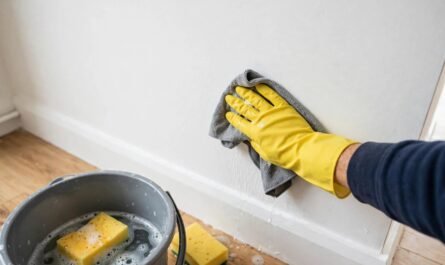
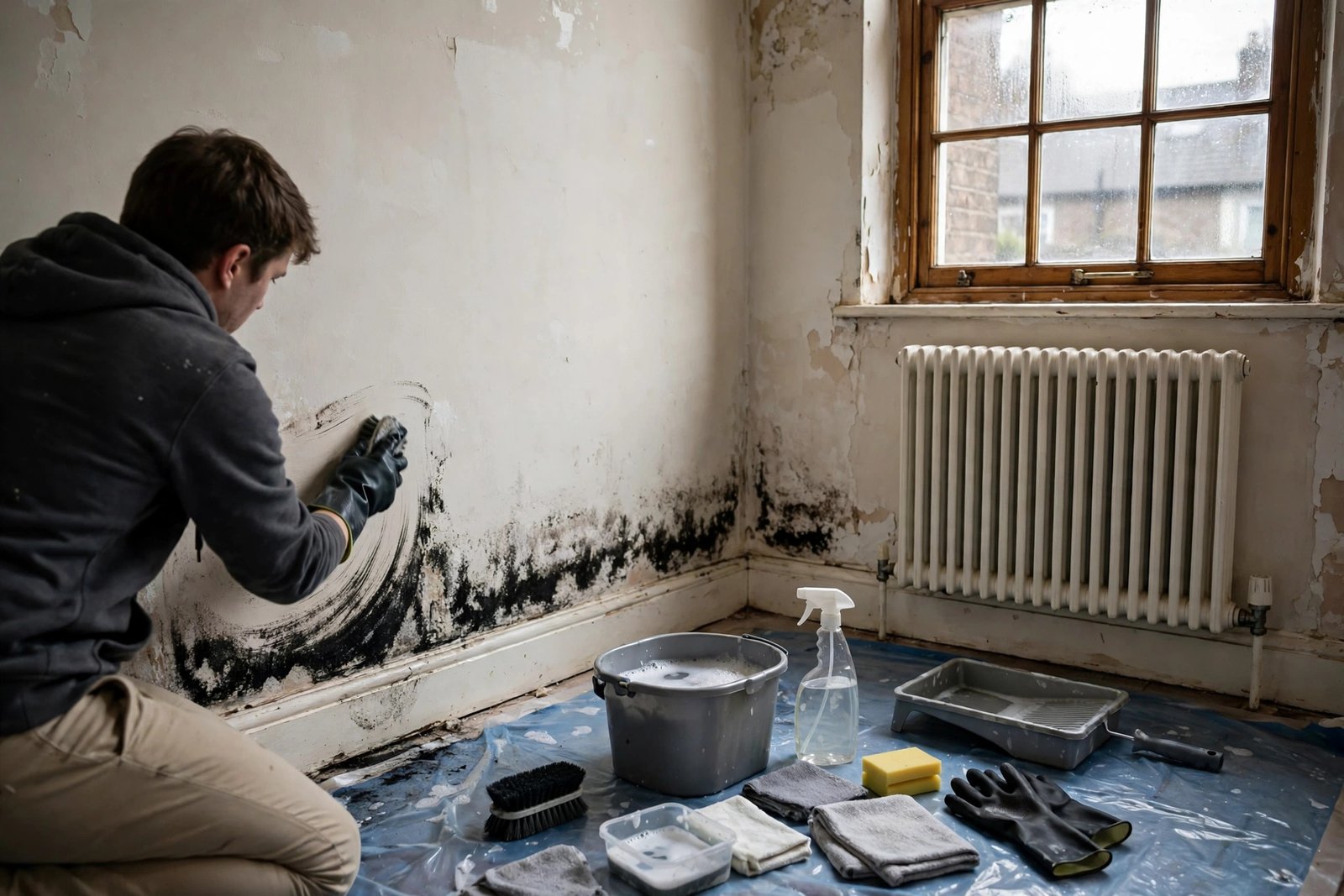
- 2. Clean thoroughly: dedicated mould remover (not just bleach), working from edges inward, with ventilation and a mask. Remove all visible growth and staining.
- 3. Dry completely: allow at least 48 hours — longer in winter. Painting onto damp plaster seals moisture in. A moisture meter reading (under ~16%) removes the guesswork.
- 4. Repair the surface: fill any blown or damaged plaster; sand smooth. Badly damaged areas may need a stain-blocking primer.
- 5. Prime: use a stain-blocking or anti-mould primer on previously affected areas — ordinary emulsion lets old stains ghost through.
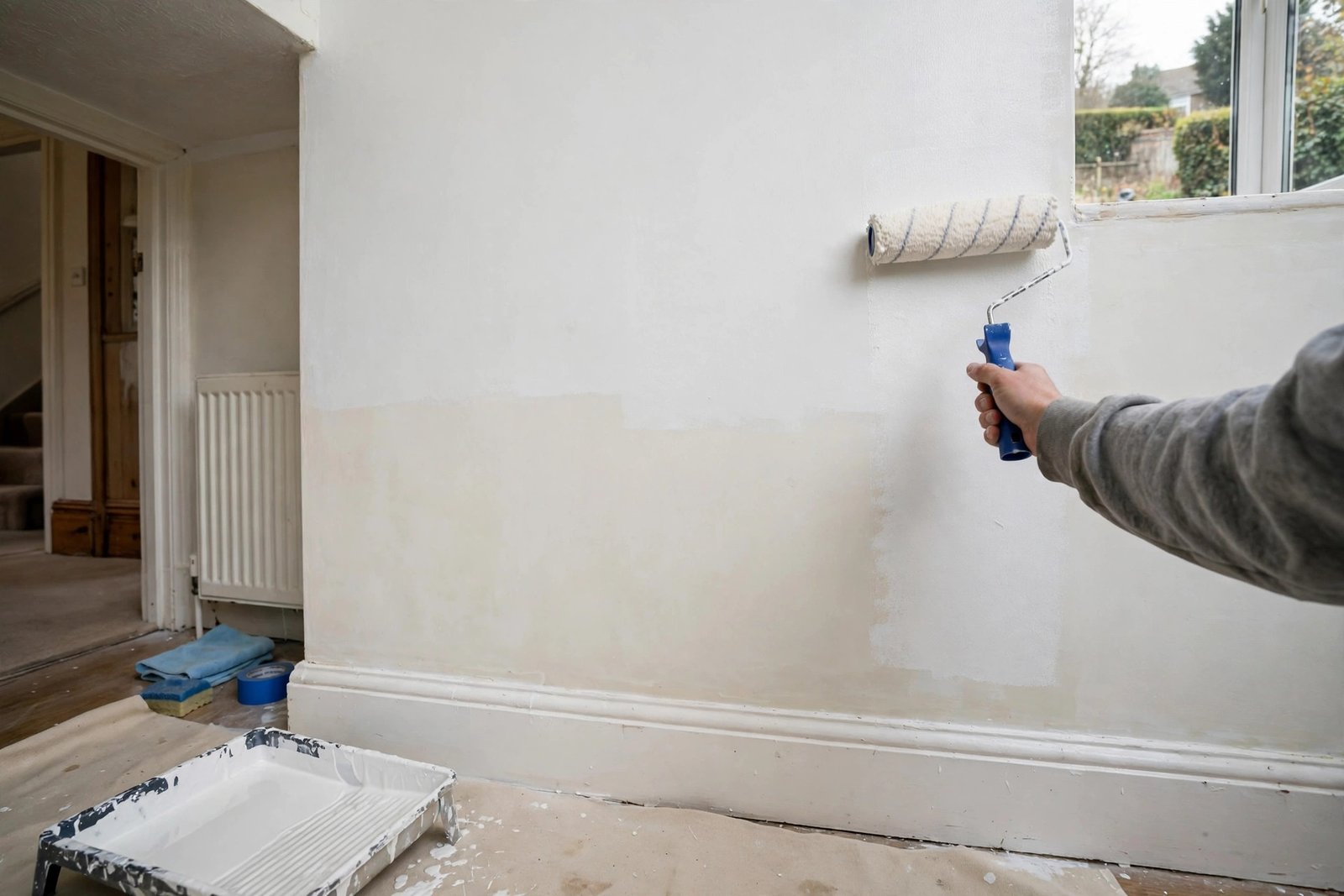
- 6. Paint: two coats of quality emulsion; consider anti-mould paint or additive in kitchens, bathrooms and previously affected rooms.
Choosing Paint for Problem Areas
For rooms prone to condensation (bathrooms, kitchens, cold bedrooms), anti-mould emulsion or a mould-resistant additive is sensible prevention — applied over a properly prepared, dry, fixed wall. It inhibits regrowth; it does not substitute for ventilation or damp repair. In wet rooms, consider specialist bathroom paint with higher moisture resistance.
Frequently Asked Questions
Can I paint over mould if I use anti-mould paint?
No — remove the mould first. Anti-mould paint prevents regrowth on clean walls; it does not kill established mould underneath.
How long should I wait after treating mould before painting?
At least 48 hours of drying after cleaning, longer in cold weather. The wall must be genuinely dry — a moisture meter is the reliable check.
Will the stain come through new paint?
It can, without a stain-blocking primer. Old mould stains are notorious for ghosting through ordinary emulsion.
Do I need to strip wallpaper before treating?
Yes — mould behind wallpaper must be exposed to be treated. Strip it, treat the wall, then rehang (or paint) once dry.
What if the plaster is crumbling?
Cut back to sound plaster, treat, fill and prime. If large areas are blown, get a plasterer — painting over failed plaster never holds.
The Bottom Line
Fix, clean, dry, prime, paint — in that order, no shortcuts. For the moisture side, see our mould prevention guide and complete damp guide.