
 by
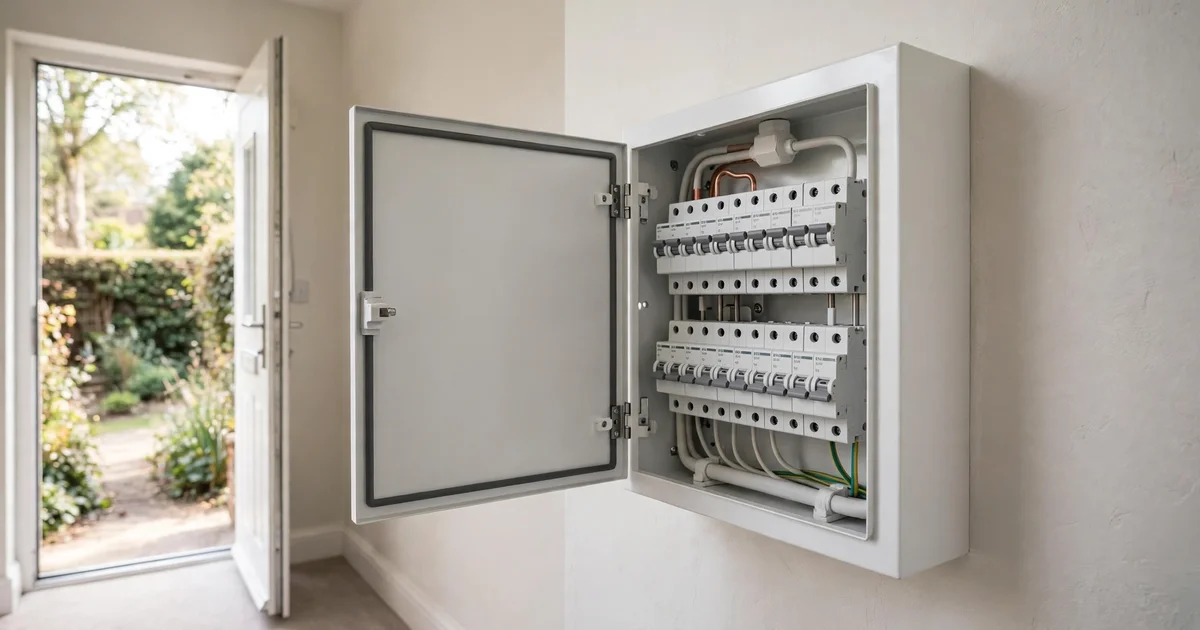
The consumer unit is the grey metal box that controls all the electricity in your home. Most people call it the fuse box. If yours is old, damaged, or full of rewirable fuses, a replacement is one of the most useful upgrades you can make. It improves safety, and it brings the electrics up to current standards.
But what does it cost? Prices vary a lot by board type, the number of circuits, and where you live. This guide gives the typical UK prices for 2026, explains what you are paying for, covers the Part P rules, and shows how to get a fair quote from a registered electrician.
How Much Does It Cost to Replace a Consumer Unit?
For a typical UK home, a consumer unit replacement usually costs between £400 and £1,000, including the unit, labour, testing and certification. Most homes fall in the middle of that range. A small flat with six circuits sits near the bottom. A large detached house with twelve or more circuits sits near the top.
The type of board is the biggest single factor. This table shows the typical ranges, including fitting, testing and the Part P certificate.
- Dual RCD board: typically £400–£650. The cheapest option. It meets current standards and suits most homes.
- High integrity board: typically £470–£650. It groups most circuits under RCDs and gives individual protection to key circuits.
- Full RCBO board: typically £500–£1,000. Every circuit has its own protection, so one fault trips only that circuit.
- RCBO board with AFDD protection: typically £900–£1,200. The highest level of protection, often used in HMOs and high-value homes.
- Board plus new circuits: typically £900–£1,400. Adding circuits, such as for an EV charger or a new kitchen, pushes the price up.
These figures are typical UK prices for 2026, and they exclude VAT in some quotes. So always ask whether the quote includes VAT. London and the South East are typically 20 to 30 percent higher than the national average. The North East and Yorkshire are typically around 10 percent lower.
Consumer Unit Cost by Property Size
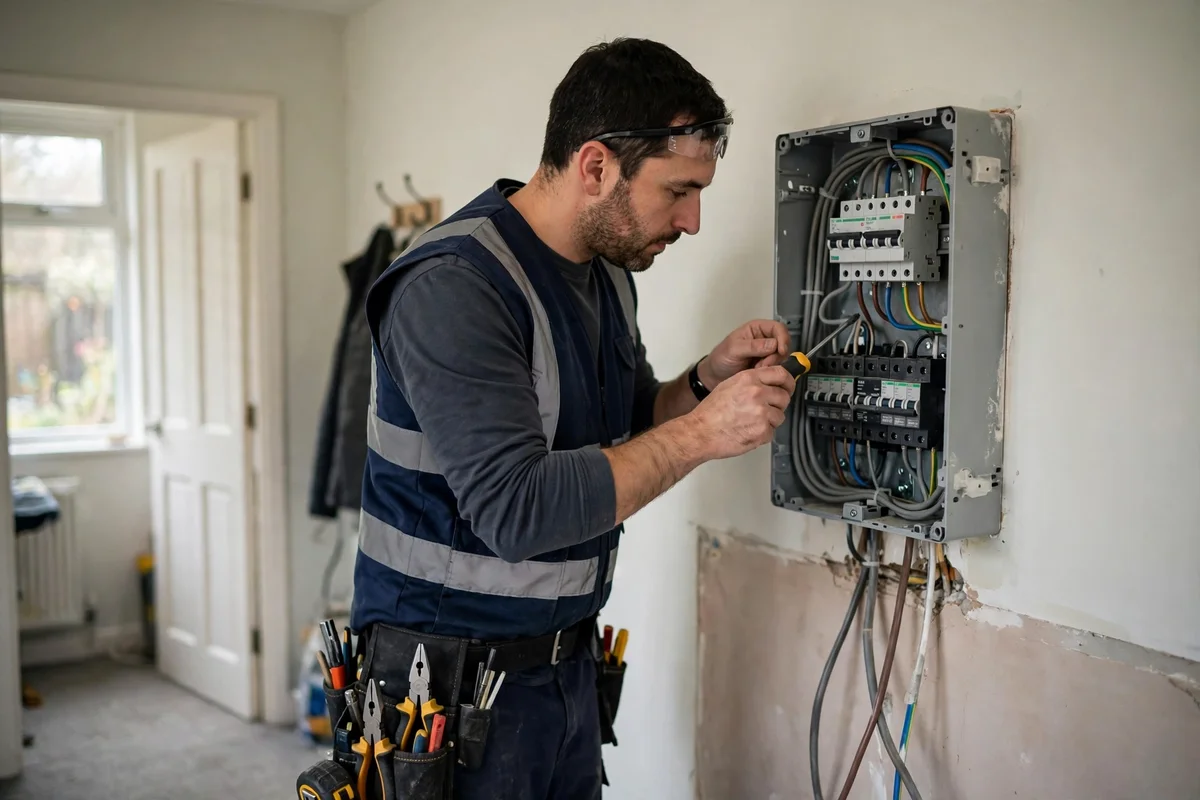
The number of circuits is the biggest driver of cost. More circuits mean more ways on the board, more terminations, and more testing. The number of circuits broadly tracks the size of the property.
- Small flat or terraced house, around 6 circuits: typically from £350. A 6-way board is often enough.
- Semi-detached house, 8 to 10 circuits: typically around £550. A 10-way board is the most common size in the UK.
- Large detached house, 12 or more circuits: typically £750–£1,000. A 12-way or larger board is needed.
- 10-way RCBO board, national average: typically around £485–£600 for supply and fit.
These figures assume the existing wiring is in good condition. They also assume the unit stays in the same place. Moving a consumer unit to a new position typically adds around £400. Moving it together with the incoming mains cable can cost £2,000 or more, because the distribution network operator may need to be involved.
What Is Included in the Price?
A proper quote should cover the whole job, not just the box on the wall. Check that these items are included before you accept a price.
- The new metal consumer unit, populated with the breakers you have agreed. Since 2016, domestic consumer units must have a non-combustible metal enclosure.
- Labour, typically 4 to 8 hours for a straightforward replacement. Most jobs finish within a day.
- Full circuit testing, including an RCD test on every protected circuit.
- An Electrical Installation Certificate (EIC) on completion, plus Part P notification to Building Control.
- Labelling, so every circuit is clearly marked. A good electrician labels each breaker as they test it.
Labour alone is typically around £220–£350 per day, or around £45–£75 per hour, for a qualified electrician. Most electricians quote a fixed price for a consumer unit replacement rather than an hourly rate. A fixed price is better for you, as long as the testing and certification are included.
Consumer Unit Types Explained
There are four main types of board. The right one depends on your home, your budget, and how much protection you want.
Dual RCD board
This is the cheapest option and the most common. It splits the circuits into two groups, each protected by one RCD. The drawback is that one fault trips several circuits at once. So a fault in the kitchen can take out the lights upstairs. It still meets the current wiring regulations, and it suits most homes.
High integrity board
This board sits between a dual RCD board and a full RCBO board. Most circuits share RCD protection, but key circuits get their own RCBO. For example, the fridge, freezer and smoke alarms often get individual protection. That way, a fault elsewhere does not switch them off. It costs a little more than a dual RCD board, and it is a sensible middle ground.
Full RCBO board
Every circuit has its own RCBO, which combines overcurrent and earth fault protection in one device. One fault trips only that circuit, so the rest of the house stays on. It costs more, because each RCBO is a separate device, but it is the most convenient option in daily use. Most new installations now use RCBO boards.
RCBO board with AFDD protection
AFDDs, or arc fault detection devices, spot dangerous arcing in wiring that other devices can miss. They add around £40–£60 per circuit. They are not required in most homes, but they are worth considering in HMOs, properties with older wiring, or high-value homes. A board with AFDDs on every circuit is the most expensive option, typically £900–£1,200.
What Can Push the Price Up?
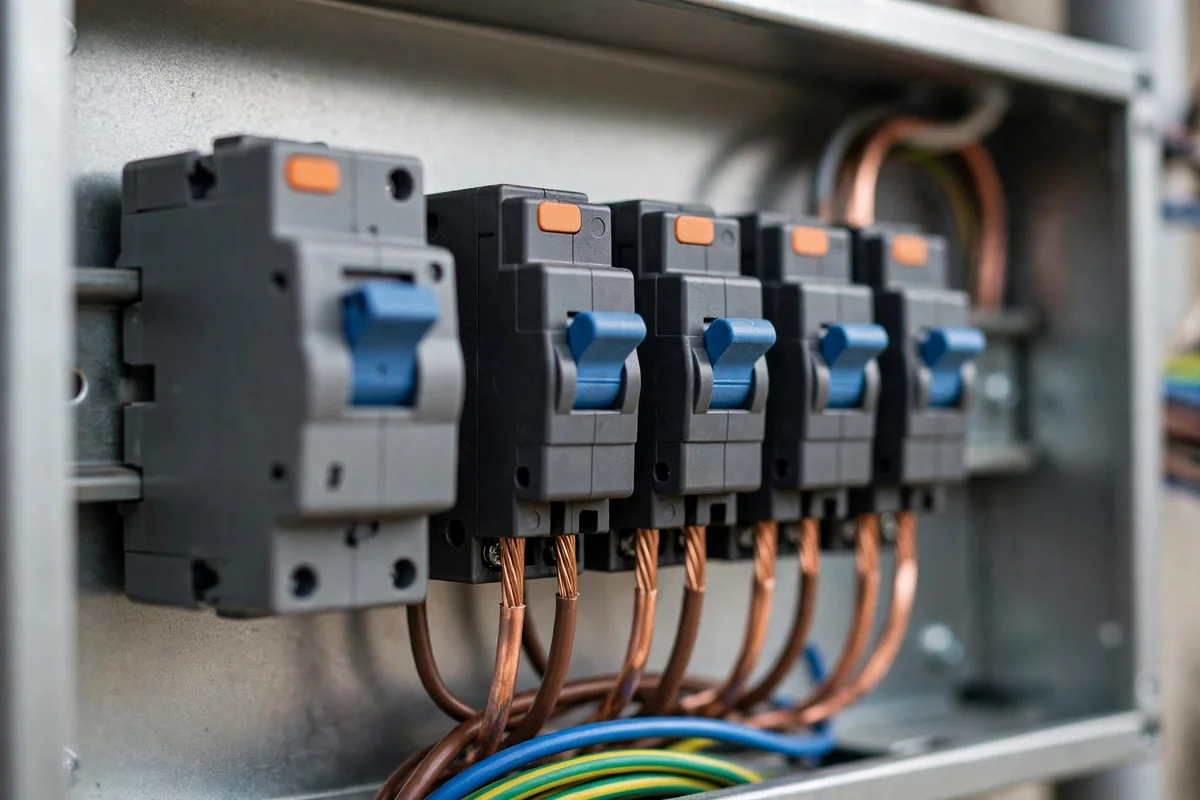
A straightforward replacement assumes the existing wiring is in reasonable condition. Several things can add cost, and a good electrician will flag them during the survey.
- More circuits than expected. Each extra circuit adds roughly £30–£60, plus the cost of the breaker.
- Earthing upgrades. Upgrading the main earthing conductor or main bonding typically adds £100–£300.
- Surge protection. A surge protection device (SPD) typically adds £80–£150. It protects your electronics from voltage spikes.
- Supply upgrade. If your home needs a larger supply, for example for an EV charger or a heat pump, the work typically adds £300–£600. Our guide to storage heaters vs electric radiators explains how heating choices affect electrical load.
- Remedial work. If testing finds faults in the existing wiring, the electrician must fix them before the new board can be certified. This is the most common cause of a quote rising.
- Emergency or out-of-hours work. An urgent replacement costs more than a booked job, and London rates are higher than the rest of the country.
Ask the electrician what happens if testing finds a fault. A clear answer before the work starts is far better than a surprise on the day.
Part P and Building Regulations
Replacing a consumer unit is notifiable work under Part P of the Building Regulations. That means it must be notified to your local Building Control body. In practice, the electrician does this for you if they are registered with a competent person scheme, such as NICEIC, NAPIT or ELECSA.
Use an electrician who is registered with one of these schemes. They can self-certify the work, and you will receive an Electrical Installation Certificate and a Building Regulations compliance certificate. Keep both documents safe. You will need them if you sell the house, and your insurer may ask for them too.
Do not use an unregistered electrician for this job. If the work is not notified, you may have trouble selling the property later. And if something goes wrong, your home insurance may not cover it. The certificate is part of what you are paying for.
How Long Does a Replacement Take?
A straightforward replacement usually takes 4 to 8 hours, and most jobs finish within a day. The power will be off for 4 to 6 hours during the work. So plan around it. Charge your phone, and move anything from the freezer to a cool bag if the power will be off for a long time.
The electrician will test every circuit before they leave. They will also label the board and walk you through it, showing you which breaker controls which circuit. If they do not test and label the board, ask them to. It is part of the job, not an extra.
Do You Need a New Consumer Unit?
Not every old fuse box needs replacing at once. But these signs mean you should get one checked soon.
- Rewirable fuses. If your fuse box still uses fuse wire, it is decades old and offers far less protection than a modern board.
- A plastic or wooden enclosure. Modern boards are metal. An old plastic box does not meet current fire safety standards.
- Frequent tripping. If the RCD trips often, the board may be struggling, or there may be a fault in the wiring.
- Burn marks, buzzing or a hot smell. These are warning signs. Switch the power off and call an electrician at once.
- No RCD protection. If your board has no RCD at all, your circuits have no protection against electric shock from a fault.
- A new kitchen, extension or EV charger. Major work often needs more circuits than the old board can hold. If you are planning a new kitchen, our guide to underfloor heating cost per m² covers another common reason to add circuits.
How to Get a Fair Quote
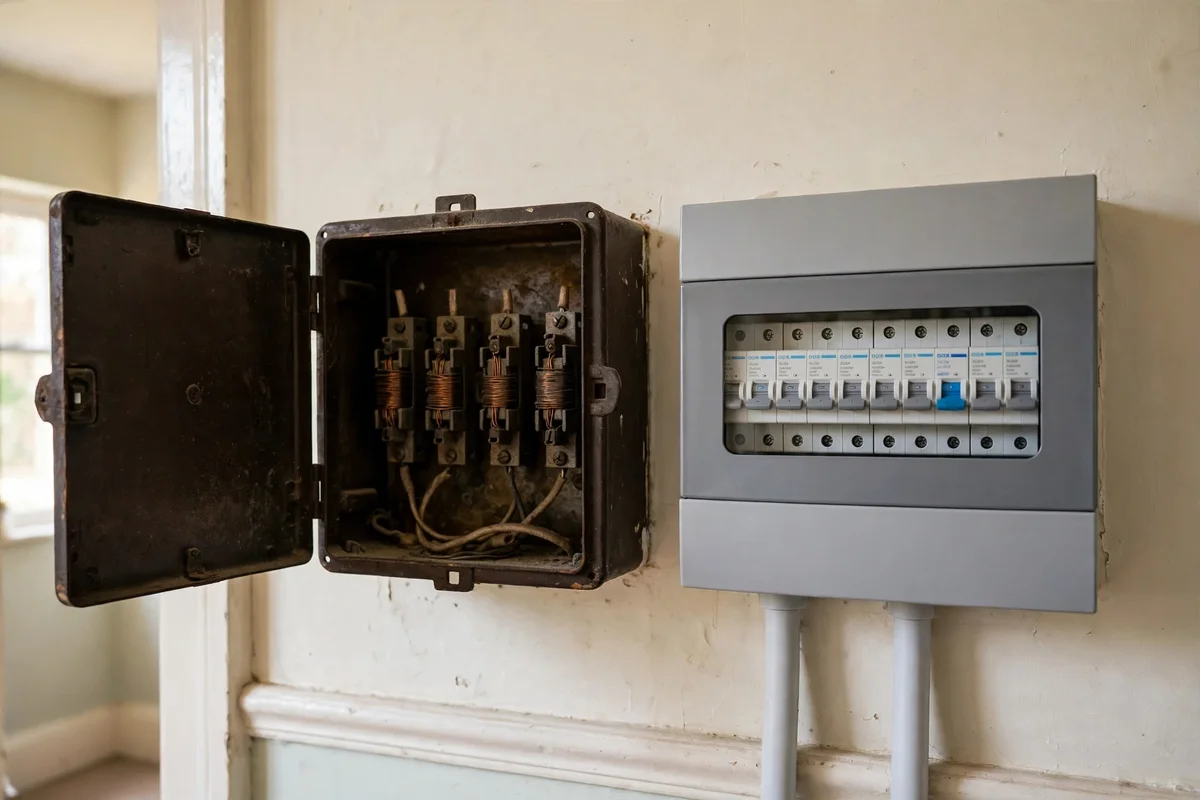
Always get at least three written quotes from electricians registered with a competent person scheme. A written quote should list the board type, the number of circuits, and whether testing, certification and Part P notification are included. If a quote is far cheaper than the others, ask what is missing. Testing and certification are the items most often left out of a low quote.
Ask these questions before you agree to anything:
- Is the quote fixed, and does it include VAT?
- Which board type and how many circuits are included?
- Are full testing, an Electrical Installation Certificate and Part P notification included?
- What happens if testing finds a fault in the existing wiring?
- How long will the power be off, and is the work guaranteed?
Check reviews from local customers, and ask the electrician for their scheme membership number. You can check it on the scheme’s website in a minute. A good electrician will be happy to be checked. If you are also dealing with water damage near electrics, for example from a leaking roof, switch the affected circuit off at the consumer unit first. Our guide to fixing a leaking roof explains when to isolate the power and when to call a professional.
Frequently Asked Questions
How much does it cost to replace a consumer unit in the UK?
Typically £400–£1,000, including the unit, fitting, testing and certification. A dual RCD board is usually £400–£650, a full RCBO board £500–£1,000, and a board with AFDD protection £900–£1,200. Prices are higher in London and the South East.
How long does it take to replace a consumer unit?
A straightforward replacement usually takes 4 to 8 hours and finishes within a day. The power is typically off for 4 to 6 hours while the work is done. The electrician tests every circuit before leaving.
Do I need a Part P certificate for a new consumer unit?
Yes. Replacing a consumer unit is notifiable work under Part P of the Building Regulations. A registered electrician self-certifies the work and gives you an Electrical Installation Certificate plus a Building Regulations compliance certificate. Keep both documents safe.
Can I replace a consumer unit myself?
No. It is notifiable electrical work that must be done by a qualified electrician and certified. Only an electrician registered with a competent person scheme, such as NICEIC, NAPIT or ELECSA, can self-certify the work. DIY replacement is illegal without Building Control approval and can void your home insurance.
Is a fuse box the same as a consumer unit?
Yes, in practice. Fuse box is the older name for the same thing. A modern consumer unit uses circuit breakers and RCDs instead of rewirable fuses, and it must have a metal enclosure. The replacement cost is the same job either way.