 by
If your home isn’t on the gas grid — a flat, a rural cottage, a new-build estate with no gas connection — your main heating choice is electric. And the question that keeps coming up is: storage heaters vs electric radiators — which is cheaper to run, and which actually keeps you comfortable?
It’s a more interesting comparison than it looks, because the two technologies work in completely different ways. One heats bricks overnight and leaks warmth all day; the other heats on demand like a kettle. Get it wrong and you’re either shivering by 6pm or watching the meter spin. Here’s the honest comparison for UK homes.
How Do Storage Heaters Work?
Storage heaters are the older technology, and there’s a decent chance you’ve seen one: those big, chunky white boxes under the windows in older flats and council houses. Inside are dense ceramic or clay bricks. The heater charges the bricks up with heat overnight — typically on a cheap off-peak electricity tariff — and the bricks slowly release that warmth through the day.
The key phrase there is off-peak tariff. Storage heaters were designed around tariffs like Economy 7, which gives you seven hours of cheaper electricity overnight (usually around midnight to 7am) and a more expensive daytime rate. Heat the bricks when electricity is cheap, coast through the day — that’s the whole idea.
Modern “high heat retention” storage heaters are a big step up from the 1970s bricks-in-a-box. They have much better insulation, thermostatic controls, fans to push the heat out when you want it, and programmable timers. Brands like Dimplex, Elnur and Creda dominate this space in the UK. If your mental image is an uncontrollable lump that roasts you at 9am and gives up by teatime, the newer models genuinely are different — though the basic physics hasn’t changed.
How Do Electric Radiators Work?
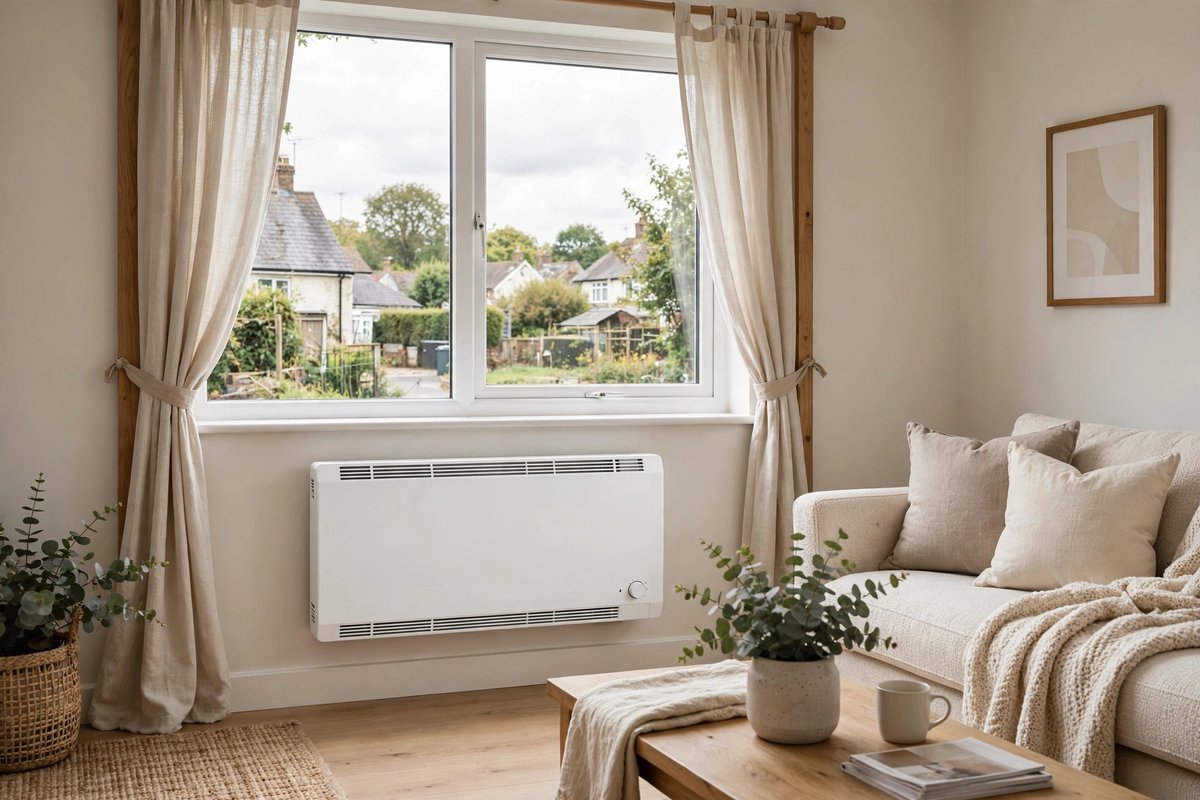
Electric radiators are much simpler: they heat on demand, whenever you switch them on. There are several types:
- Oil-filled radiators — electricity heats thermal oil inside sealed columns; the oil holds warmth for a while after switch-off. Cheap to buy, slow to warm up.
- Ceramic / dry thermal radiators — use a ceramic core or aluminium body that heats quickly and retains some heat. Most “designer” electric radiators sold in the UK are this type.
- Panel convectors — basic electric panels that heat air fast but cool just as fast. Cheap, cheerful, and not very efficient for whole-room heating.
- Infrared panels — heat objects and people directly rather than the air. Niche, but worth knowing about for bathrooms and home offices.
Unlike storage heaters, electric radiators don’t need a special tariff. They run on your standard electricity rate, day or night — which means precise control (heat this room now, not that one) but also means you’re always paying full price per unit of electricity.
Storage Heaters vs Electric Radiators: Running Costs Compared
This is the heart of the debate, so let’s be honest about the maths. Electricity in the UK costs roughly 3–4 times as much per unit as gas under the current price cap — so electric heating is never going to be cheap. The question is only which electric option wastes the least.
Storage heaters win on unit price: off-peak Economy 7 electricity is typically around half the price of the standard daytime rate. If your heating can genuinely run mostly on night-rate electricity, your cost per unit of heat is dramatically lower than an electric radiator’s.
Electric radiators win on control: you only heat the rooms you’re using, when you’re using them. A storage heater releases heat whether you want it or not — if you’re out all day, much of that stored warmth goes to heating an empty house.
Here’s a rough illustration (treat this as example maths, not a quote — tariffs and the price cap move):
| Scenario | Storage heaters (Economy 7) | Electric radiators (standard rate) |
|---|---|---|
| Night-rate electricity | Cheap off-peak unit rate | Not available — standard rate 24/7 |
| Daytime top-up | Expensive day rate for any boost needed | Standard rate, but only when heating |
| Control | Blunt — heat leaks out all day | Precise — room by room, on demand |
| Best for | People home all day (retirees, home workers) | People out during the day |
| Worst for | Empty houses all day — stored heat wasted | Whole-house heating — every unit at full price |
The rule of thumb: if you’re home all day and on Economy 7, modern storage heaters are usually cheaper to run. If you’re out at work all day, controllable electric radiators usually win — because they sit idle while you’re gone instead of gently warming an empty house.
What Do They Cost to Install?
Upfront costs point the other way:
- Storage heaters: a modern high-heat-retention unit typically costs £400–£800 per heater supplied and fitted, depending on size and brand. A 2-bed flat needing three units might run £1,200–£2,400 installed. You’ll also need (or already have) an Economy 7 meter and off-peak wiring — if your home doesn’t have it, getting it set up adds cost and hassle.
- Electric radiators: £150–£500 per radiator for a decent wall-mounted unit, plus fitting (many are DIY-able — they just need a fused spur). Three rooms could be £600–£1,800 all in. No special tariff or wiring needed.
So electric radiators are cheaper and simpler to install; storage heaters demand more upfront but can pay it back through cheaper running costs — if your lifestyle suits them.
Comfort and Control: The Day-to-Day Difference
Cost isn’t everything — you have to live with the thing. The honest pros and cons:
Storage heaters
- Pros: cheapest per unit of heat on Economy 7; silent; no plumbing; modern models have decent controls and fans.
- Cons: heat output peaks in the morning and fades by evening — exactly backwards for most working people; bulky and ugly (though slimmer models exist); a very cold snap can outrun the stored heat, forcing expensive daytime top-ups.
Electric radiators
- Pros: heat on demand with precise thermostatic control; slim and good-looking; room-by-room zoning is easy; pair beautifully with smart thermostats and timers.
- Cons: every unit of heat at full daytime price; cheap panel convectors cool the moment they switch off; heating a whole house this way gets expensive fast.
The comfort gap matters more than people expect. Plenty of storage-heater owners end up buying a plug-in oil-filled radiator for the evening anyway — which rather defeats the purpose.
Which Rooms Suit Which?
Rather than picking one technology for the whole house, many UK homes do best with a mix:
- Bedrooms: electric radiators — you want heat on demand at bedtime, not warmth leaking out since 8am. A timer that warms the room before you get into bed is ideal.
- Living room (home all day): storage heater — the steady background warmth suits someone who’s actually there to enjoy it.
- Living room (out at work): electric radiator on a timer — heats up for your return, idles while you’re out.
- Bathroom: electric towel rail or infrared panel — quick, targeted heat exactly when the room’s in use.
- Home office: electric radiator or infrared — you’re heating one room for working hours, not the whole house.
If you’re comparing wider options for a renovation, it’s also worth pricing underfloor heating costs — electric underfloor mats can be surprisingly sensible for single rooms like bathrooms.
Can You Just Replace Storage Heaters with Electric Radiators?
Yes — it’s a common swap, and it’s straightforward. An electrician removes the storage heater and wires a standard electric radiator to the existing supply (storage heaters often have their own dedicated circuit, which is actually handy). You’ll want to check:
- Your tariff — if you switch away from storage heating, ask your supplier whether Economy 7 still makes sense. Without night-time heating load, the cheap overnight rate may no longer outweigh the expensive day rate, and a standard single-rate tariff could be cheaper overall.
- Heater sizing — electric radiators are sized in watts per room; a room that had a 3.4kW storage heater won’t necessarily need a 3.4kW radiator, since the radiator only runs when you need it.
- EPC impact — oddly enough, storage heaters on Economy 7 can score better on an Energy Performance Certificate than standard electric radiators. If you’re renting the property out, check before you rip them out.
Tips to Keep Any Electric Heating Bill Down
Whichever you choose, these make a real difference to the bill:
- Draught-proof first. Electric heat is expensive heat — don’t let it escape. Seal gaps around windows and doors before you spend a penny on heaters.
- Add thermal curtains on draughty windows — one of the cheapest ways to reduce heat loss in a room, and it directly cuts how long your heaters need to run.
- Zone your heating. Heat the rooms you’re in, not the whole house. This is where electric radiators with individual thermostats shine.
- Use timers ruthlessly. Half an hour before you get up and half an hour before bed beats “on all evening”.
- Check your tariff yearly. The gap between Economy 7 night rates and standard rates shifts — what’s cheapest this year might not be next year.
Frequently Asked Questions
Are storage heaters cheaper to run than electric radiators?
Usually yes, if you’re on an Economy 7 tariff and home during the day — the cheap overnight rate makes each unit of heat significantly cheaper. But if you’re out all day, the wasted stored heat can erase the advantage, and controllable electric radiators may cost less overall.
Do storage heaters work without Economy 7?
They’ll still produce heat, but it defeats the point — you’d be charging the bricks at full daytime price, making them one of the most expensive ways to heat a home. Storage heaters only make financial sense paired with a cheap off-peak tariff.
Can I replace a storage heater with an electric radiator myself?
The radiator itself is simple to mount, but the wiring isn’t a DIY job — storage heaters are on dedicated high-current circuits, and any new fixed wiring needs a qualified electrician (and possibly building-regulations notification). Get a proper quote rather than improvising.
Which is better for a bedroom — a storage heater or an electric radiator?
An electric radiator, in most cases. Bedrooms need heat on demand at bedtime and in the morning — exactly when a storage heater’s stored warmth is at its weakest. A radiator on a timer gives you a warm room when you actually sleep in it.
Are electric radiators expensive to run in the UK?
Compared with gas central heating, yes — electricity costs roughly 3–4 times as much per unit as gas under the current price cap, so any electric heating is pricey for whole-house use. For single rooms, used with timers and thermostats, the cost is manageable. The expensive mistake is trying to heat an entire house with electric radiators running all evening.
The Bottom Line
Storage heaters vs electric radiators comes down to lifestyle. Home all day on Economy 7? Modern storage heaters are the cheaper way to stay warm. Out at work with unpredictable hours? Controllable electric radiators waste less. And whichever you pick, draught-proofing and decent curtains will save you more than any heater swap ever will.