 by
Smart thermostats promise a tempting deal: stick one on the wall, let it learn your routine, and watch your heating bills shrink. Hive, Nest and Tado have spent years telling UK homeowners exactly that. But are smart thermostats worth it, or are you paying £200 for a gadget that does what a £30 programmer already does?
The honest answer: it depends entirely on how you heat your home now. For some households they’re one of the best-value upgrades going; for others they’re an expensive remote control. Here’s how to tell which you are.
What Does a Smart Thermostat Actually Do?
A basic thermostat does one thing: turns the heating off when the room hits the set temperature. A basic programmer adds a schedule — on at 6:30am, off at 9pm, that sort of thing.
A smart thermostat adds several layers on top:
- Phone control — adjust heating from anywhere. Stuck in traffic? Delay the heating coming on. Coming home early? Warm the house up before you arrive.
- Learning and geofencing — some models learn your routine or use your phone’s location to turn heating down when everyone’s out and up when someone’s heading home.
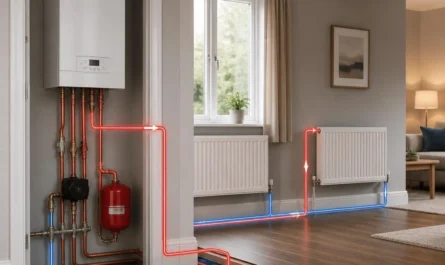
- Room-by-room control — paired with smart radiator valves (TRVs), you can heat the living room in the evening and the bedrooms at night instead of the whole house at once.
- Usage data — see exactly when your heating runs and how much it’s costing, which is genuinely eye-opening for most people.
- Weather compensation — some models adjust for outside temperature so the house doesn’t overshoot on mild days.
None of this is magic — it’s better control. And better control is where the savings come from.
The Main Types on Sale in the UK
You don’t need to agonise over brands, but it helps to know the landscape:
- Hive — British Gas’s smart home brand, very popular in the UK, straightforward app, works with most boiler types. Often discounted.
- Google Nest — the learning thermostat that started the category; strong on auto-scheduling, sleek hardware.
- Tado — German brand, strong on room-by-room control and radiator valves, popular with tinkerers.
- Ecobee and others — smaller UK presence but worth comparing if you like the feature set.
Most cost £120–£250 for the thermostat itself. Professional installation adds roughly £50–£100, though many are designed for competent DIY fitting — more on that below.
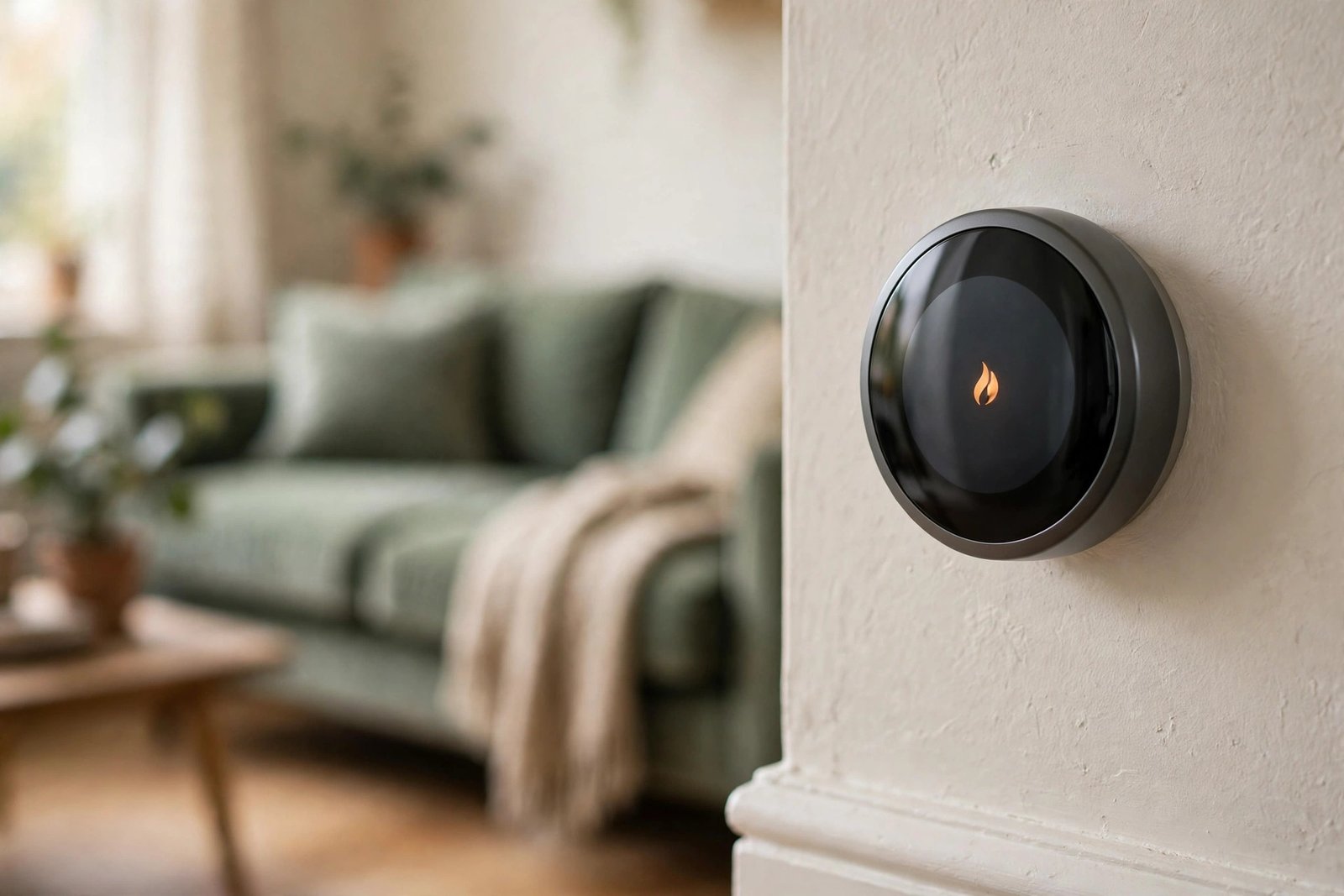
Then there are smart TRVs — replacement radiator valves (£40–£70 each) that let you set temperatures per room from your phone. These are arguably the bigger deal for larger homes: a smart thermostat controls the whole house as one zone, but smart TRVs turn it into many zones.
How Much Can You Realistically Save?
Let’s be straight: manufacturers’ savings claims are marketing. The oft-quoted figures assume a household that currently heats an empty house all day — if that’s you, the savings are real and large. If you already use a programmer sensibly, the gains are modest.
The Energy Saving Trust has long said that better heating controls can cut bills — turning the thermostat down by just one degree is widely cited as saving around £100+ a year on a typical bill, though your mileage will vary with energy prices and your home. A smart thermostat’s job is to make those savings automatic rather than relying on willpower.
Realistic expectations by household type:
- Heating on all day, empty house: a smart thermostat with geofencing could cut heating use substantially — this is the best-case scenario, and payback can be under a year.
- Basic programmer, sensible schedule: expect modest savings — maybe 5–10% — mostly from avoiding overheating and fine-tuning. Payback in 1–3 years.
- Already disciplined with TRVs and timers: a smart thermostat adds convenience more than savings. Buy it for the app, not the payback.
On a typical £150–£200 purchase, most households land somewhere in the middle: the device pays for itself in roughly one to three heating seasons, then keeps saving.
What Do They Cost All-In?
- Thermostat unit: typically £120–£250 depending on brand and features.
- Professional installation: roughly £50–£100 on top — often bundled in retailer deals.
- Smart TRVs: £40–£70 per radiator if you want room-by-room zoning; a 3-bed house might need 5–8 of them.
- Ongoing costs: none, usually — no subscription for the core features on the main brands.
Watch for bundle deals: energy suppliers and retailers regularly discount Hive and Nest units, sometimes with installation included. There’s rarely a reason to pay full list price.
When Smart Thermostats Are Worth It
- Your schedule is unpredictable. Shift workers, hybrid workers, anyone whose “home” hours change week to week — this is the killer use case. A fixed programmer can’t adapt; a phone-controlled thermostat can.
- You heat an empty house. If the heating currently runs all day while everyone’s at work or school, geofencing alone will pay for the device quickly.
- You have a larger home. Room-by-room control via smart TRVs stops you heating three empty bedrooms to keep the living room warm.
- You’re on electric heating. At ~25p per unit, every wasted hour costs triple what it does on gas — precise control matters far more. Pair with electric radiators with individual thermostats for the full effect.
- You like data. Seeing your heating pattern laid out often changes behaviour more than the automation does.
When They’re Not Worth It
Equally, save your money if:
- You live in a small flat with one zone. A £30 programmable thermostat does 90% of the job when there’s only one room temperature to manage.
- Someone’s home all day anyway. If the heating needs to be on regardless, there’s little for the smart features to optimise.
- You rent. Most landlords won’t want you rewiring their heating controls, and you can’t take the savings with you. (Battery-powered smart TRVs are the renter-friendly alternative — no wiring.)
- Your boiler is ancient. Some very old boilers don’t play nicely with smart controls; if the boiler’s due for replacement soon, wait and decide as part of that project — see our combi boiler or heat pump guide.
Can You Install One Yourself?
Often, yes — most smart thermostats are designed for DIY installation and come with step-by-step app guidance. If you’re just swapping a wired thermostat for a smart one on the same backplate, it’s usually a 30-minute job: isolate the power, photograph the existing wiring, match the terminals.
Get a professional if: the wiring looks unfamiliar, you have a system boiler with a separate hot water cylinder and multiple zone valves, or anything involves the boiler’s internals rather than just the thermostat wiring. Gas boiler internals are Gas Safe territory — don’t open the boiler casing yourself.
One compatibility check before buying: confirm the thermostat supports your boiler type (combi, system, regular) and your heating setup. The manufacturers all have online compatibility checkers — use them.
Getting the Most Out of It
A smart thermostat only saves money if you actually use the features. The households that see the biggest savings do these things:
- Set it and trust the geofencing. The point is automation — if you override it constantly, you’ve bought a £200 manual thermostat.
- Drop the setpoint by a degree. 20°C to 19°C is barely noticeable with decent insulation, and it’s the single biggest lever on the bill.
- Zone with TRVs where it counts. Bedrooms cooler than living rooms is the classic win — most people sleep better slightly cool anyway.
- Fix the fabric first. No thermostat compensates for heat pouring out of single-glazed windows. Thermal curtains on draughty windows and basic draught-proofing multiply whatever the thermostat saves.
- Review the data monthly. The usage graphs show you exactly where the money goes — check them for the first few months and adjust.
Frequently Asked Questions
Do smart thermostats really save money?
They can, but the saving comes from behaviour change, not the device itself. Households that currently heat empty homes see the biggest savings through geofencing and phone control. If you already run a tight schedule on a basic programmer, expect modest savings of around 5–10% — mostly from avoiding overheating.

Can I install a smart thermostat myself?
Usually yes, if you’re swapping like-for-like wiring — most brands design for DIY with app-guided installation. Get a professional if the wiring is unfamiliar, you have a zoned system with multiple valves, or the job involves opening the boiler casing (that’s Gas Safe engineer territory).
Will a smart thermostat work with my combi boiler?
Almost certainly. The main smart thermostat brands all support combi boilers — it’s the most common UK setup. Check the manufacturer’s online compatibility checker with your exact boiler model before buying, especially with older or less common boilers.
Do smart thermostats work without Wi-Fi?
The basic thermostat function keeps working — it’ll hold temperature and run its schedule. But you lose phone control, geofencing, software updates and usage data, which is most of the point. They’re designed for homes with reliable Wi-Fi; if yours drops out regularly, the “smart” benefits will frustrate you.
What’s the difference between a smart thermostat and smart TRVs?
A smart thermostat controls your whole heating system as one zone from one location. Smart TRVs (thermostatic radiator valves) go on individual radiators and let you set different temperatures per room. They work best together: the thermostat manages the overall schedule, the TRVs fine-tune it room by room.
The Bottom Line
Are smart thermostats worth it? If your schedule is unpredictable, your house sits empty all day, or you’re heating electrically — yes, comfortably. If you’re already disciplined with a basic programmer in a small home, it’s a convenience purchase, not an investment. Either way, buy it on a deal, set up the automation properly, and let it do the job you paid it to do.