 by
Moving a bathroom upstairs is one of the more disruptive jobs you can do in a home, and it is also one of the most expensive. The short answer to the cost of moving a bathroom upstairs uk question is that it typically costs between £3,500 and £16,000, with most full jobs landing somewhere in the middle of that range. A straightforward move directly above the old bathroom can come in around £6,500, while a full relocation with a new soil stack, new sanitaryware and tiling can reach £14,850 or more. The single biggest factor is not the bath or the tiles. It is the waste drainage.
This guide works through the three scenarios homeowners actually face, a full cost breakdown, what drives the price up, the Building Regulations you must meet, and how long the work takes. Every figure below comes from published UK cost guides, and all prices are given as typical ranges, because the final bill depends on the layout of your house, the condition of the existing pipework, and the standard of finish you choose. If you are also weighing up a simpler refresh, our bathroom renovation cost breakdown covers what a like-for-like refit typically costs without moving anything.
How Much Does It Cost to Move a Bathroom Upstairs in the UK?
There is no single price for this job, because the cost depends almost entirely on where the new bathroom sits relative to the drains. The published UK figures span a wide range. One cost guide puts the overall range at £3,500 to £16,000, with an average of around £13,500. Another puts the range at £4,500 to £12,000. Checkatrade puts the total average at around £14,850 for a full move and refit. Those averages are not contradictory. They describe different jobs, from a basic relocation reusing the existing sanitaryware to a full new bathroom in a new position.
The table below gives the three scenarios in brief. The sections that follow explain each one in detail.
| Scenario | Typical cost | Typical timeline |
|---|---|---|
| Directly above the old bathroom | Typically around £6,500 | Typically 2 to 3 weeks |
| Opposite end of the house | Typically £7,000 to £10,000 | Typically 3 to 5 weeks |
| Loft or where gravity drainage is impossible | Typically £6,000 to £8,000 for a basic macerator set-up | Typically 2 to 4 weeks |
| Full move with new sanitaryware and tiling | Typically around £14,850 | Typically 4 to 8 weeks |
Notice how wide those ranges are. A basic relocation that reuses the bath, basin and toilet is a very different job from a full move that fits a brand-new bathroom. The rest of this guide breaks down where the money goes, so you can see which end of the range your job is likely to land in.
The Three Scenarios: What Each One Typically Costs
Before you get a quote, work out which of these three scenarios matches your house. The scenario decides the plumbing work, and the plumbing work decides the price.
Scenario 1: Directly Above the Old Bathroom
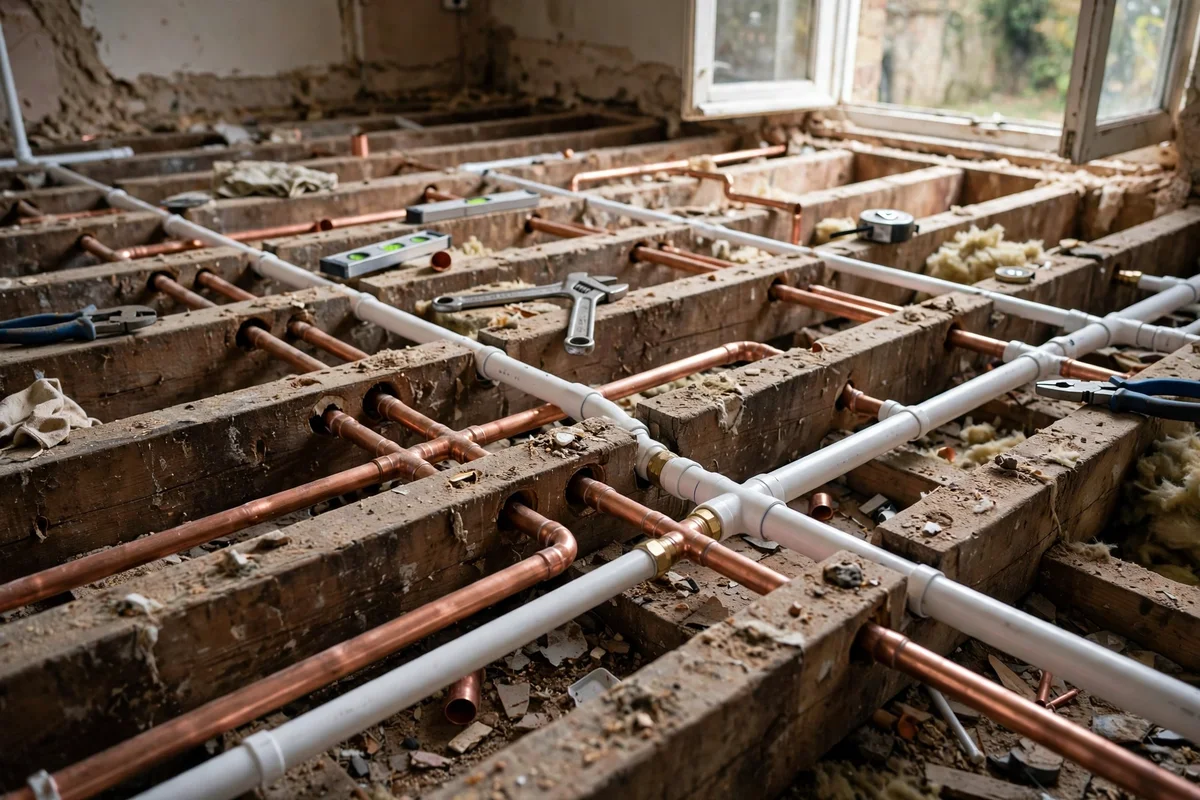
This is the cheapest and simplest move. The new bathroom sits directly above the old one, so the waste pipes can drop straight down into the existing soil stack, and the hot and cold supplies are already nearby. A straightforward relocation like this typically costs around £6,500, including new waste pipework, first and second-fix plumbing, building control, and reinstalling the sanitaryware. It typically takes 2 to 3 weeks.
The saving comes from drainage. Because the new bathroom is above the old one, the plumber does not need to run long waste runs across the house or fit a new soil stack. The fall on the waste pipe is easy to achieve, and the connection to the existing stack is short. If your house allows this layout, take it. It is the cheapest way to move a bathroom upstairs, and it is also the least disruptive.
Scenario 2: Opposite End of the House
Moving the bathroom to the opposite end of the house typically costs £7,000 to £10,000. The extra money goes on longer pipe runs. Waste water has to travel further to reach the soil stack, and the longer the run, the harder it is to keep the fall the regulations require. Hot and cold supplies also have to be extended, and the first-fix plumbing takes longer.
This scenario can also mean cutting into more floors and ceilings to run the pipes, and making good afterwards. The work is still straightforward plumbing, but there is more of it, and the making-good adds time and cost. A good plumber will walk the route before quoting, because the exact path of the waste run is what sets the price.
Scenario 3: Loft, or Where Gravity Drainage Is Impossible
Sometimes gravity drainage simply cannot work. A loft bathroom is the usual example. The waste outlet sits above the soil stack, or too far from it, so water cannot fall away on its own. In that case the answer is usually a macerator, such as a Saniflo unit, which grinds the waste and pumps it to the stack. A basic macerator set-up typically costs £6,000 to £8,000.
The macerator unit itself, including fitting, typically costs £600 to £1,200. The rest of the £6,000 to £8,000 covers the bathroom fit-out around it. Macerators are a practical solution, but they are not the same as gravity drainage. They need power, they make noise when they run, and they need maintenance. Most plumbers will tell you to use gravity drainage wherever it is possible, and to treat a macerator as the fallback when it is not.
Cost Breakdown: Where the Money Actually Goes
The figures below are the published UK ranges for the main parts of the job. They come from different cost guides, so do not add them all together into a single total. Use them to see which parts of your job will be expensive and which will be cheap.
| Item | Typical cost |
|---|---|
| Rip out and dispose of the old bathroom | Typically around £900 |
| Make good the old bathroom space | Typically around £2,850 |
| Install the new bathroom (basic sanitaryware and tiling) | Typically around £11,100 |
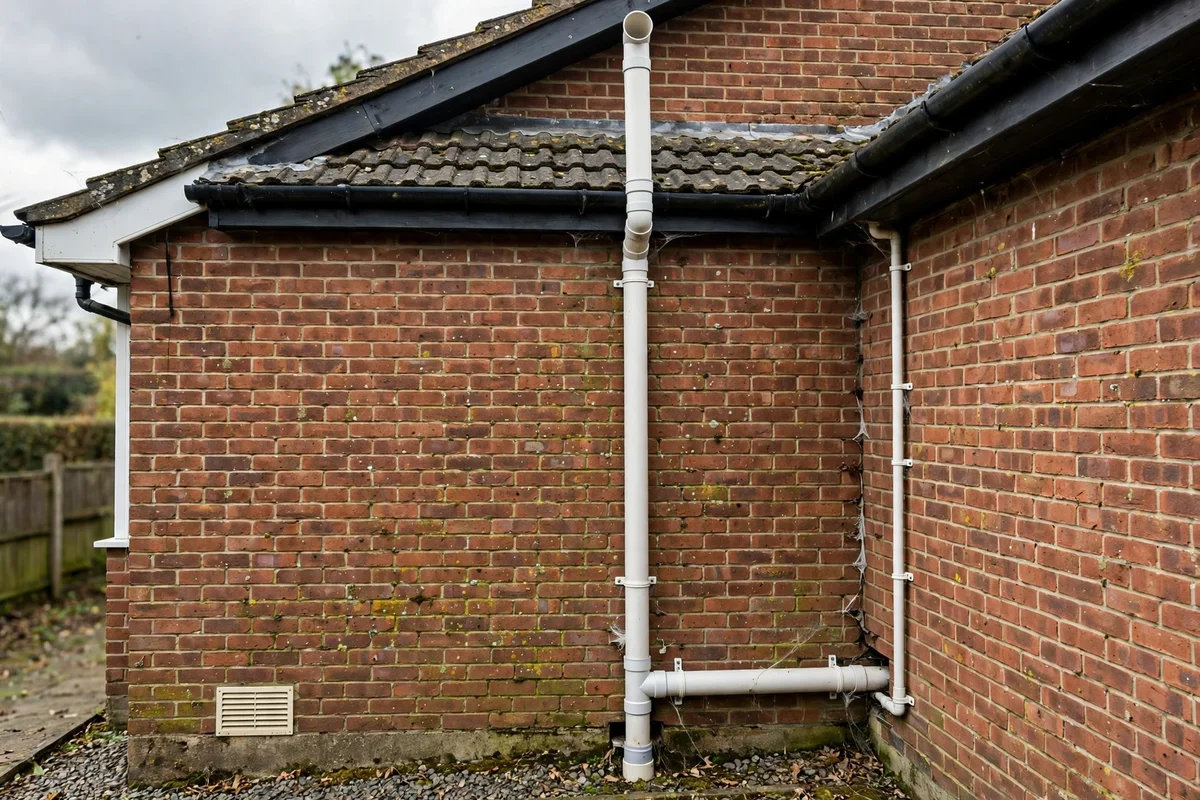
| New soil stack | Typically £800 to £1,500 |
| Tapping into the existing soil stack | Typically £400 to £800 |
| Macerator unit and fitting | Typically £600 to £1,200 |
| Building control (Part G and Part P) | Typically £300 to £500 |
| First-fix plumbing | Typically £1,200 to £2,500 |
| Second-fix and finishing | Typically £2,000 to £4,000 |
| Extension work, if needed | Typically around £2,850 per m² |
Two things stand out in that table. First, the new bathroom itself is the biggest single cost. Basic sanitaryware and tiling typically come in around £11,100, and that figure rises fast if you choose premium fittings. Second, the drainage items are the ones that vary most between jobs. Tapping into an existing stack typically costs £400 to £800, while fitting a brand-new soil stack typically costs £800 to £1,500. That difference alone can move the total by a thousand pounds.
Labour is charged by the hour or by the day, and the published rates give a sense of the scale. A plumber typically charges £40 to £60 per hour, and an electrician typically charges £50 to £60 per hour. A job that takes three weeks of trades will carry a large labour bill, so the timeline matters as much as the materials. If you are comparing quotes, ask each tradesperson to break out labour and materials separately. That makes it much easier to see where the differences lie.
For a sense of what the new bathroom itself costs when you are not moving it, our small bathroom renovation cost guide breaks down the same sanitaryware, tiling and labour for a compact room.
What Drives the Price? Waste Drainage Comes First
Ask any plumber what decides the cost of moving a bathroom upstairs, and the answer is the same. It is the waste drainage. Everything else, the bath, the tiles, the taps, is a choice you control. The drainage is decided by the house.
The rule that matters is the fall. Waste water has to flow downhill to the soil stack, and UK Building Regulations require a minimum fall of 18mm per metre for a 100mm soil pipe. That sounds small, but it adds up over a long run. A waste pipe that has to travel five metres across the house needs 90mm of fall, and that means the pipe has to start high and end low. In a house with shallow floor joists, there may not be enough depth to achieve that fall, and that is when the job gets expensive.
The cheapest drainage outcome is a short, direct drop into the existing soil stack. That is what you get in Scenario 1, directly above the old bathroom. The next cheapest is tapping into the existing stack from a nearby position, typically £400 to £800. The most expensive is fitting a new soil stack, typically £800 to £1,500, which may also mean cutting through the roof or the external wall and making good afterwards. And when gravity drainage cannot work at all, the macerator is the answer, with the unit and fitting typically costing £600 to £1,200.
Before you commit to a layout, get a plumber to check the drainage route in person. A drawing or a phone description is not enough. The plumber needs to see the joist direction, the depth of the floor, and where the existing stack runs. That one visit will tell you whether your preferred spot is cheap, expensive, or impossible.
Building Regulations You Must Meet
Moving a bathroom upstairs is notifiable building work, and you must meet the Building Regulations. The three parts that matter most are Part G, Part P and Part F.
Part G, sanitation, hot water safety and water efficiency. This covers the sanitaryware itself, the hot water supply, and water efficiency. The new bathroom must have a proper cold water supply, a safe hot water supply, and sanitaryware that is fit for purpose. Building control will want to see that the installation meets the standard.
Part P, electrical safety. Bathrooms are special locations for electrical work, because water and electricity do not mix. Any new circuits, lighting, or shower supplies in the new bathroom must be installed or checked by a competent electrician, and the work must be notified. This is not a job for a general handyman. Use a registered electrician, and keep the certificate.
Part F, ventilation. A new bathroom needs proper ventilation, either by an opening window or by an extractor fan. A bathroom without ventilation will build up condensation, and condensation leads to damp and mould. Our guide to whether a bathroom extractor fan is a legal requirement explains what the regulations actually ask for, and when a fan is mandatory.
Building control approval for the move typically costs £300 to £500, and it covers Part G and Part P. Do not skip it. Building control sign-off is the proof that the work meets the regulations, and you will need it if you ever sell the house. A buyer, or their solicitor, will ask for it. Unapproved bathroom work is one of the most common things flagged in conveyancing, and it can delay or derail a sale.
How Long Does It Take to Move a Bathroom Upstairs?
A straightforward relocation, directly above the old bathroom, typically takes 2 to 3 weeks. A full move with a new bathroom, new soil stack and a full refit typically takes 4 to 8 weeks. Most jobs fall somewhere between those two figures.
The timeline is set by the sequence of the work. First the old bathroom is ripped out and disposed of. Then the first-fix plumbing and electrics go in, which means running the new waste, hot and cold supplies, and the wiring, before any plastering or tiling. Then the walls are made good, the floor is prepared, and the second fix begins, which is the sanitaryware, the tiling, and the finishing. Each stage has to dry or set before the next one starts, so the job cannot be rushed without risking the finish.
Plan for the disruption. You will be without a bathroom while the work is under way, unless you have a second one. If the house has only one bathroom, agree the sequence with the plumber before the work starts, so you know which days you will be without a toilet or a shower. Some homeowners book a short stay away during the noisiest middle of the job, and that is worth considering if you work from home.
Will the Floor Take the Weight?
A bath full of water is heavy, and an upstairs floor is not the same as a ground floor slab. Before you fit a heavy bath upstairs, the floor structure needs to be checked. This is especially true in older houses, where the joists may be smaller or more widely spaced than in a modern home.
The weight that matters is the bath, the water in it, and the person in it, all sitting on a small footprint. A cast-iron or stone bath is far heavier than a standard acrylic one, and a large freestanding bath concentrates that weight on a small area. If the joists are not up to it, the floor can deflect, and that movement can crack tiles, open up grout lines, and in the worst case damage the waste connections underneath.
The practical answer is to get the floor checked before you buy the bath. A builder or a structural engineer can look at the joist size, spacing and span, and say whether the floor needs strengthening. Strengthening usually means adding noggins between the joists, sistering new joists alongside the old ones, or adding a support wall below. It is far cheaper to do that work before the bathroom is fitted than to fix a cracked floor afterwards. If you are set on a heavy bath, choose the bath first and the floor strengthening second, so the structure is built for the load it will actually carry.
When Is Moving a Bathroom Upstairs Worth It?
Moving a bathroom upstairs is worth it when the current layout is genuinely awkward. The most common reason is a downstairs bathroom in a house where the bedrooms are upstairs, which means a trip downstairs in the night and a bathroom that is a long way from where people sleep. Another common reason is a growing family, where one bathroom is no longer enough and the upstairs has space for a second one. In both cases the move solves a daily problem, and that is a good reason to spend the money.
It is less clearly worth it when the only reason is a vague sense that the bathroom “should” be upstairs. A move that costs £10,000 or more, takes a month, and leaves you without a bathroom for weeks is a lot of disruption for a marginal gain. If the existing bathroom works well and the only issue is that it is downstairs, consider whether a refit in place would give you most of the benefit for a fraction of the cost. A new suite, better lighting and a proper extractor fan can transform a bathroom without moving a single pipe.
If you do decide to move it, think about what the new bathroom should be. A small upstairs bathroom with a shower and a toilet is a very different job from a full family bathroom with a bath. Our comparison of a wet room vs a walk-in shower is worth reading before you settle the layout, because the choice affects the drainage, the floor build-up, and the cost.
Frequently Asked Questions
How much does it cost to move a bathroom upstairs in the UK?
The cost of moving a bathroom upstairs uk homeowners typically face is between £3,500 and £16,000, with most full jobs landing in the middle of that range. A straightforward move directly above the old bathroom typically costs around £6,500 and takes 2 to 3 weeks. A full move with new sanitaryware and tiling typically costs around £14,850 and takes 4 to 8 weeks. The biggest cost driver is the waste drainage, so the layout of your house matters more than the fittings you choose.
Do I need building regulations approval to move a bathroom upstairs?
Yes. Moving a bathroom upstairs is notifiable building work, and you need building control approval. The main regulations are Part G for sanitation and water efficiency, Part P for electrical safety, and Part F for ventilation. Building control typically costs £300 to £500. Keep the sign-off certificate, because a future buyer or their solicitor will ask for it.
Can you move a bathroom anywhere upstairs?
Not anywhere. The new bathroom has to be somewhere the waste water can drain away, which means the waste pipe needs a minimum fall of 18mm per metre for a 100mm soil pipe. If the new position is too far from the soil stack, or above it, gravity drainage may not work. In that case a macerator, such as a Saniflo unit, can pump the waste to the stack, with the unit and fitting typically costing £600 to £1,200. A plumber should check the drainage route in person before you commit to a layout.
How long does it take to move a bathroom upstairs?
A straightforward relocation directly above the old bathroom typically takes 2 to 3 weeks. A full move with a new bathroom, a new soil stack and a full refit typically takes 4 to 8 weeks. The work has to run in sequence, first fix, then making good, then second fix, and each stage needs time to dry or set, so the job cannot be rushed without risking the finish.
What is the cheapest way to move a bathroom upstairs?
The cheapest way is to put the new bathroom directly above the old one, so the waste drops straight into the existing soil stack. That typically costs around £6,500. Reusing the existing sanitaryware instead of buying new also keeps the cost down, because a new bathroom with basic sanitaryware and tiling typically costs around £11,100 on its own. Avoid a new soil stack and a macerator if you can, because those are the items that push the price up fastest.