 by
Tiling is usually the single biggest labour cost in a small bathroom refit — bigger than the suite, bigger than the plumbing. And because every bathroom is a different shape with different walls, “how much to tile a small bathroom” gets vague answers. So let’s be specific: typical UK prices, what tilers actually charge, and the decisions that move your quote up or down.
For a typical small UK bathroom (around 4–6m² of floor, with walls to tile), most people end up spending roughly £800–£2,000 all-in for labour and materials. The rest of this guide explains exactly where in that range you’ll land.
How Much Do Tilers Charge in the UK?
Tilers usually quote in one of two ways, and it’s worth knowing both so you can compare quotes fairly:
| Pricing method | Typical UK rate | Notes |
|---|---|---|
| Per square metre | £40–£70 per m² | Labour only; materials on top |
| Day rate | £200–£350 per day | Common for small or awkward jobs |
| Minimum charge | £200–£400 | Many tilers won’t come out for less |
For a small bathroom, expect 2–4 days of tiling work depending on how much wall area you’re covering and how fiddly the layout is. A straightforward splashback-and-floor job is at the quick end; floor-to-ceiling walls with a window, a recessed niche and pipe boxing are at the slow end. London and the South East sit at the top of these ranges; the North and Midlands nearer the bottom.
Always get at least three quotes, and make sure each one specifies whether materials are included. A “cheap” per-m² rate with materials excluded can end up dearer than a higher all-in quote.
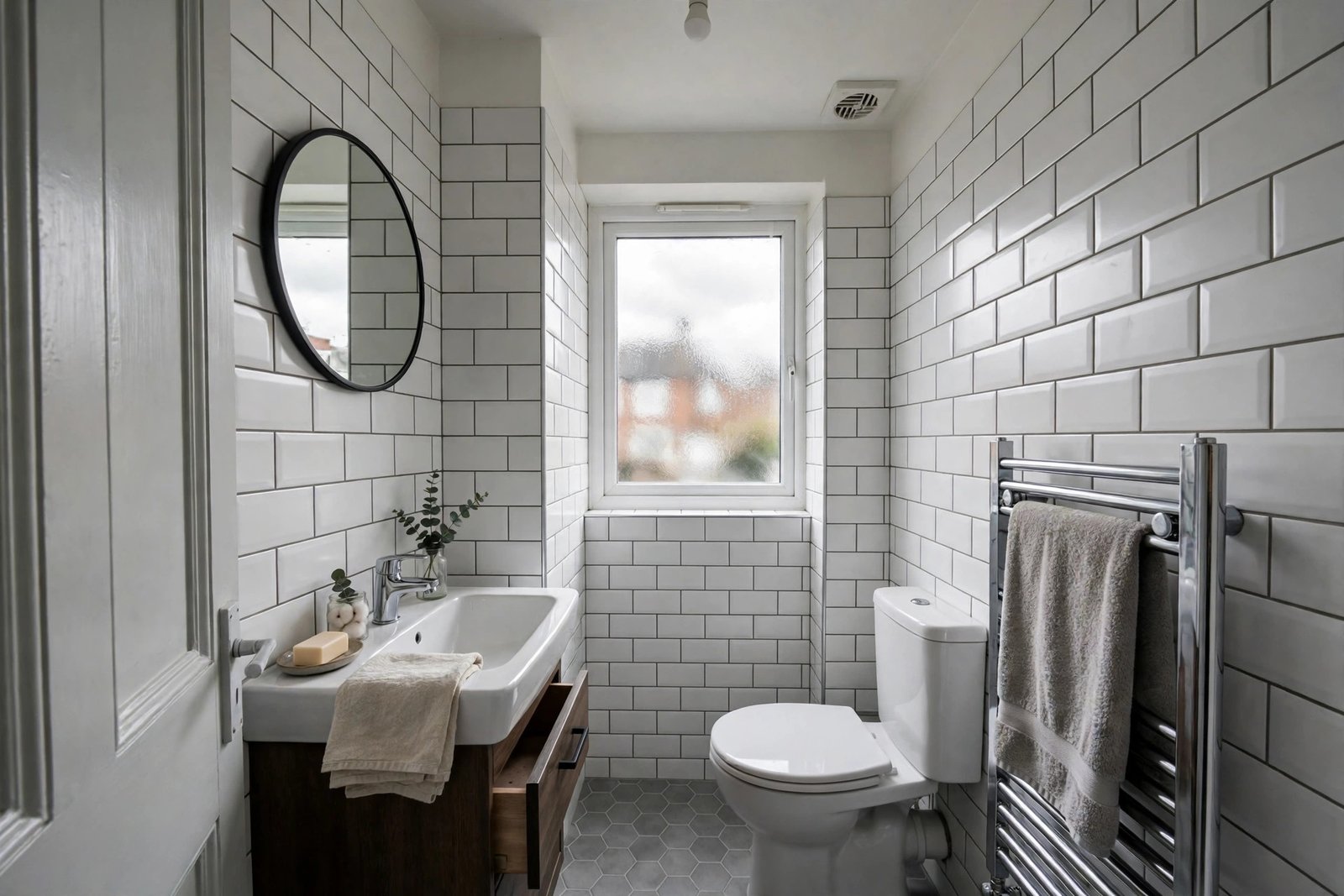
How Much Do Bathroom Tiles Cost?
Tile prices vary enormously, but for a small bathroom the material cost is rarely the scary part — it’s the labour. Typical supply costs per m²:
- Ceramic wall tiles: £15–£30 per m² — the budget workhorse, perfectly good for walls.
- Porcelain tiles: £25–£60 per m² — denser, harder-wearing, better for floors and wet areas.
- Natural stone: £40–£100+ per m² — beautiful, but needs sealing and costs more to lay.
- Mosaic sheets: £30–£80 per m² — lovely as a feature strip or niche backing; slow (and therefore expensive) to lay in large areas.
- Adhesive, grout and trim: roughly £50–£150 for a small bathroom, depending on the area.
- Tanking kit (waterproofing): roughly £60–£150 — essential in walk-in shower areas.
A sensible mid-range choice — porcelain floor, ceramic walls — typically works out at £300–£600 in tile materials for a small bathroom. Designer tiles can double or triple that without changing the labour cost at all, which is worth remembering: expensive tiles don’t just cost more to buy, mistakes cost more too, so order 10–15% extra for cuts and breakages.
What Pushes the Price Up?
Two bathrooms the same size can get very different quotes. The usual culprits:
- Tile size and pattern. Large-format tiles cover ground quickly and are cheaper per m² to lay. Small mosaics, herringbone and chevron patterns take far longer — expect the labour quote to reflect that.
- Removing old tiles. Stripping old tiles and making the walls good again can add a day’s labour (£200–£350) before a single new tile goes on.
- Wall condition. Wonky, crumbling or uneven walls need levelling or re-boarding. Tilers can’t make a flat finish on a wavy wall, and the prep work shows up in the quote.
- Waterproofing. Any walk-in shower area should be tanked (waterproofed) before tiling. It’s non-negotiable for a proper job and adds materials plus time.
- Fiddly details. Window reveals, recessed niches, pipe boxing, sloping ceilings — every cut and corner slows the tiler down. Simple rectangular rooms are cheapest to tile.
- Your postcode. As with all trades, London premiums are real — sometimes 30–50% above the national ranges above.
Should You Tile Floor-to-Ceiling or Half-Height?
This is as much a cost decision as a style one. Tiling floor-to-ceiling roughly doubles the tiled area compared with half-height walls plus painted plaster above — so it roughly doubles the labour and materials.
That said, full-height tiling has practical advantages in a bathroom: no painted surfaces to suffer from steam, easier cleaning, and a more “finished” look that buyers like. A popular compromise is full-height in the shower area and around the bath, with half-height (or just a splashback) elsewhere. Whatever you choose, protect the investment with proper ventilation — a bathroom extractor fan keeps steam off your fresh grout and paintwork, which is the difference between tiles that look new for a decade and grout that goes black in two years.
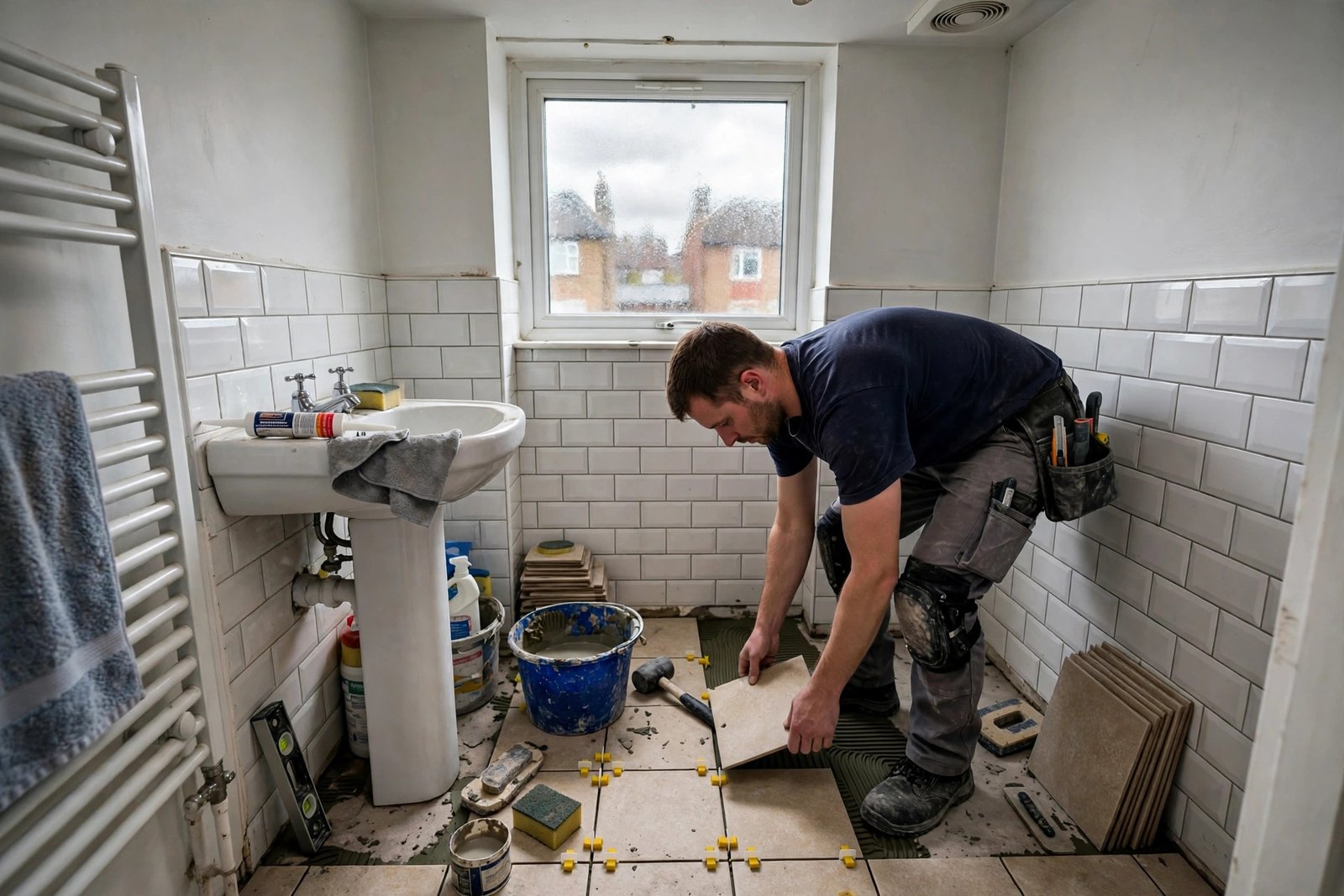
Can You Tile Over Existing Tiles?
Yes — if the existing tiles are sound, well-adhered and flat. Tiling over saves the cost and mess of removal (that £200–£350 day of stripping), and it’s a legitimate approach the tile manufacturers’ own guides allow for.
But there are trade-offs. You lose a few millimetres of room dimension all round, which matters in a genuinely tiny bathroom. Door thresholds, pipework and sanitaryware edges can end up looking awkward. And if the old tiles are hiding damp or blown plaster, you’re just burying the problem. As a rule: tile over if the old tiles are solid and the room can spare the depth; strip back if there’s any doubt about what’s underneath.
How to Keep the Cost Down Without Cutting Corners
- Do your own prep. Stripping old tiles, removing the old suite and clearing the room yourself can save a day of the tiler’s time.
- Choose standard sizes. 300x600mm or 600x600mm porcelain is quick to lay and widely available — cheap labour, cheap tiles.
- Limit the feature areas. One mosaic niche or feature wall gives you the designer look; doing the whole room in mosaic gives you a designer bill.
- Book the tiler early. Good tilers are booked weeks out. A rushed last-minute booking means paying whoever’s available.
- Don’t skip the extractor. It sounds unrelated to tiling costs, but moisture is what kills grout and loosens tiles. If your bathroom has musty smells and mould already, sort the ventilation before you spend £1,500 on tiles — otherwise you’ll be re-grouting within a couple of years.
Frequently Asked Questions
How much does it cost to tile a small bathroom in the UK?
Typically £800–£2,000 all-in for labour and materials. Tilers charge roughly £40–£70 per m² or £200–£350 per day, and mid-range tile materials for a small bathroom run £300–£600. Fiddly layouts, tile removal and London postcodes push you towards the top of the range.
How many tiles do I need for a small bathroom?
Measure the total area in square metres (height × width for each wall, minus large openings), then add 10–15% for cuts, breakages and spares. For a typical small bathroom with half-height walls you might need 15–25m² of tiles; floor-to-ceiling can be 30m² or more. Keep a box of spares — finding a matching batch later is surprisingly hard.
Is it cheaper to tile over existing tiles?
Yes — you save the removal cost, typically £200–£350 for a day’s stripping and making good. It’s fine if the old tiles are solid and flat, but you lose a few millimetres of room depth and you shouldn’t do it if there’s any sign of damp underneath.
Should bathroom tiles go behind the toilet and bath?
Ideally, yes. It costs a little more in tiles and labour now, but it means you can replace the suite later without retiling, and there are no untiled patches if fittings ever shift. Most tilers recommend tiling the full wall and fitting the suite against the tiles.
How do I stop mould growing on grout?
Ventilation first, cleaning second. Run an extractor fan during and after showers, wipe down the worst of the condensation, and use a mould-resistant grout and sealant. If the bathroom already smells musty, fix the moisture problem before retiling — our guide to musty smells and mould explains where that damp smell comes from.
The Bottom Line
Tiling a small bathroom typically costs £800–£2,000 all-in, with labour at £40–£70 per m² or £200–£350 a day. Keep costs down with standard-size tiles, simple layouts and your own prep work — and protect the result with proper ventilation, because even the best tiling job won’t survive a permanently damp bathroom.