
 by
by Draw the curtains on a damp January morning — that stale, sour whiff. If you’ve ever wondered why do my curtains smell musty, you’re not alone. It’s one of the most common complaints in British homes, especially from October to March, and it rarely means your house is dirty.
Curtains are giant fabric filters: they hang against the coldest surface in the room, soak up moisture and cooking smells, and almost never get washed. Once you know what’s causing it, the fix is usually simple — and you probably won’t need new ones.
Why Do My Curtains Smell Musty? The Main Causes
That musty odour is almost always a moisture story. Mould and mildew need damp, a bit of warmth, and something organic to feed on — and curtains hanging against a cold winter window provide all three.
1. Condensation on the glass
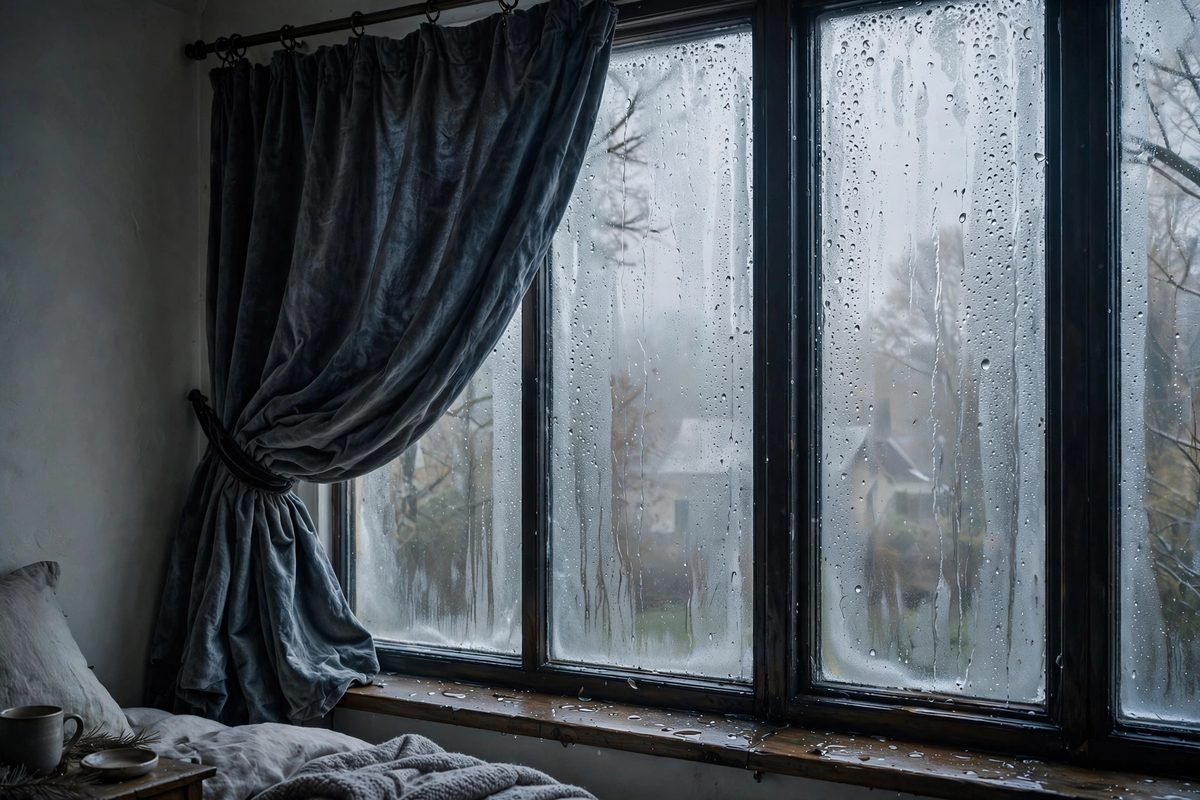
This is the number one cause in UK homes. Warm indoor air hits the cold windowpane overnight and turns to water, which runs into the curtain hem or leaves the fabric stewing in damp air for hours. Repeat that nightly for five months and you’ve built a mildew farm. Single glazing is worst, but double glazing still mists up on freezing nights — especially with laundry drying on a radiator nearby.
2. Poor ventilation
Sealed-up winter homes trap moisture from cooking, showers, and indoor laundry. With nowhere to go, that damp air settles into soft furnishings — and curtains take the brunt of it.
3. They hardly ever get washed
Bedding gets washed weekly, yet curtains hang for years collecting dust, skin cells, and grease — a buffet for the mould behind the smell. When did yours last see a washing machine?
4. The fabric holds onto odours
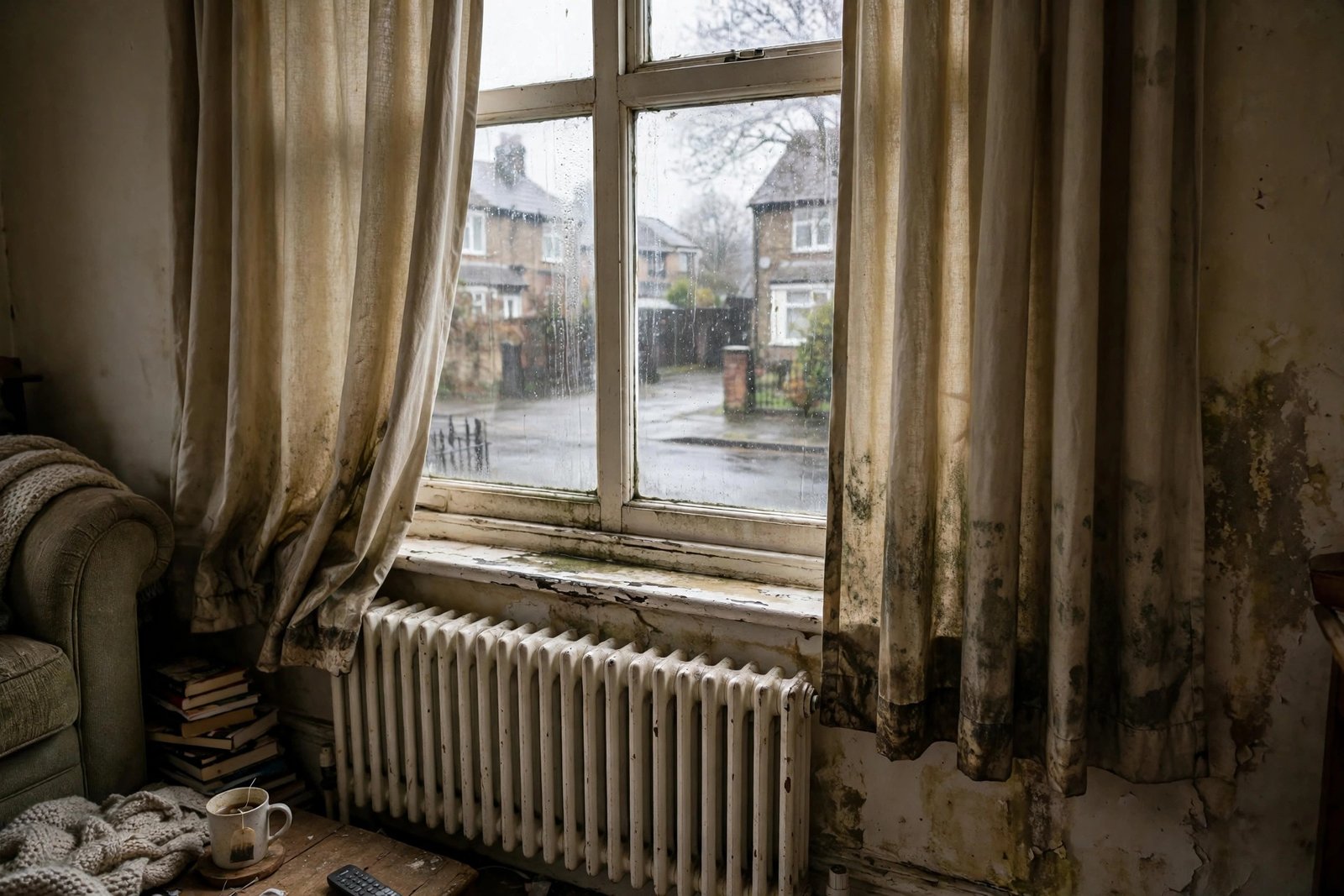
Heavy cotton, velvet, and blackout linings trap moisture far more than light voiles or synthetics. Coated linings are the worst — damp gets stuck between layers where air can’t reach, which is why bedroom blackouts are repeat offenders. Our guide to curtain fabrics explained covers which materials cope best with damp rooms.
How Do You Get the Musty Smell Out of Curtains?
Check the care label first — shrinking interlined curtains in a hot wash is a painful lesson. Then work through these steps:
- Vacuum both sides with the upholstery attachment to remove dust and loose spores before water gets involved.
- Machine-washable curtains: gentle 30–40°C cycle, don’t overfill the drum, and add half a cup of bicarbonate of soda for extra deodorising.
- Bicarbonate soak for stubborn smells: submerge the curtains in a bath of lukewarm water with a cup of bicarbonate of soda for 3–4 hours (overnight for bad cases), then rinse well.
- White vinegar rinse: a cup of white vinegar in the rinse cycle neutralises mildew odours, and the vinegar smell vanishes completely as the fabric dries.
- Dry-clean only: don’t risk the machine. Air them outside on a dry, breezy day — sunlight is a natural disinfectant — or tell the dry cleaner it’s mildew so they treat it properly.
- Dry them completely. Never rehang curtains that are even slightly damp. Tumble dry on low if the label allows, or air them somewhere warm until bone dry.
Got blinds too? Treat them as well — musty blinds will re-contaminate clean curtains. See our guide on how to clean blinds.
Work through the steps above and the reason why do my curtains smell musty usually reveals itself at step one: moisture trapped against cold glass, night after night.
When Should You Replace Musty Curtains Instead of Washing Them?
Sometimes the smell has won. Black or dark-green mould spots that survive a proper wash and bicarb soak mean the mould has grown into the fibres, not just on them. The same goes for a lining that’s crumbling or going sticky — the coating is breaking down, and no wash fixes that.

The other giveaway is speed: if the mustiness returns within days despite ventilation, it’s beyond what washing can shift. Replacement then costs less than another dry-clean. If you’ve tried everything above and still wonder why do my curtains smell musty, the fibres themselves are likely compromised — replacement is the honest answer. Bedroom curtains reach this point fastest — warm air, body moisture, and shut windows all night.
How Do You Stop Curtains Smelling Musty Again?
Getting the smell out is only half the job — if you’re wondering why do my curtains smell musty again by February, the conditions haven’t changed. These habits help most:
- Ventilate daily. Crack a window for ten minutes each morning and keep trickle vents open year-round.
- Stop drying laundry on radiators under the curtains. One load releases around two litres of water — use a heated airer in a ventilated room instead.
- Use a dehumidifier in problem rooms. Bedrooms and north-facing living rooms are the usual suspects.
- Leave a gap between curtain and glass so air circulates instead of trapping damp against the fabric.
- Consider thermal curtains — the lining keeps the room-side warmer, so less condensation forms on the fabric.
- Wash curtains twice a year — spring and autumn — to stop the slow build-up that turns musty by midwinter.
Frequently Asked Questions
Why do my curtains smell musty after washing?
Almost always because they weren’t fully dry before rehanging — even slightly damp fabric will go musty again within days, especially behind a cold window. The other possibility is that the washing machine didn’t get hot enough to kill the mildew, or the smell is in the lining rather than the face fabric. Try the bicarbonate soak above and make sure they’re bone dry before they go back up.
Can musty curtains make you ill?
For most people, a musty smell is unpleasant rather than dangerous, but mould spores can irritate allergies and asthma, and may trigger sneezing, itchy eyes, or a worsening cough in sensitive people. If anyone in the house has a respiratory condition, treat musty curtains as a prompt to improve ventilation and clean them properly. See your GP if symptoms persist or you’re concerned.
Will air freshener get rid of the musty smell?
Only for about an hour. Sprays and plug-ins mask the odour without touching the mould causing it, so the smell comes straight back. Worse, layering fragrance over mildew can make the room smell even more unpleasant. Deal with the moisture and wash the fabric — that’s the only fix that lasts.

How often should I wash my curtains?
Twice a year is a sensible minimum for most homes — once in spring and once in autumn. If someone smokes indoors, you cook a lot without an extractor fan, or the room suffers from condensation, every three to four months is better. Sheers and voiles need it more often since they show grime faster.
Do blackout curtains smell worse than ordinary curtains?
They can do. The coated lining that blocks the light also blocks airflow, so moisture gets trapped between the layers where it can’t evaporate. That makes blackout curtains in bedrooms — warm, humid rooms with closed windows — particularly prone to mustiness. Washing them more often and airing the room daily keeps it under control.
The Bottom Line
Musty curtains are a symptom, not a disaster. Nine times out of ten it’s winter condensation plus years without a wash — fixable in a weekend. Wash properly, dry completely, air the room, and the smell won’t return. If it does anyway, the fabric has had enough — and now you know exactly why your curtains smell musty. Renting? If the curtains came with the property, check whether landlords have to provide curtains in the UK before paying for replacements yourself. For the full picture — types, fabrics, measuring and costs — see our complete guide to curtains.