 by
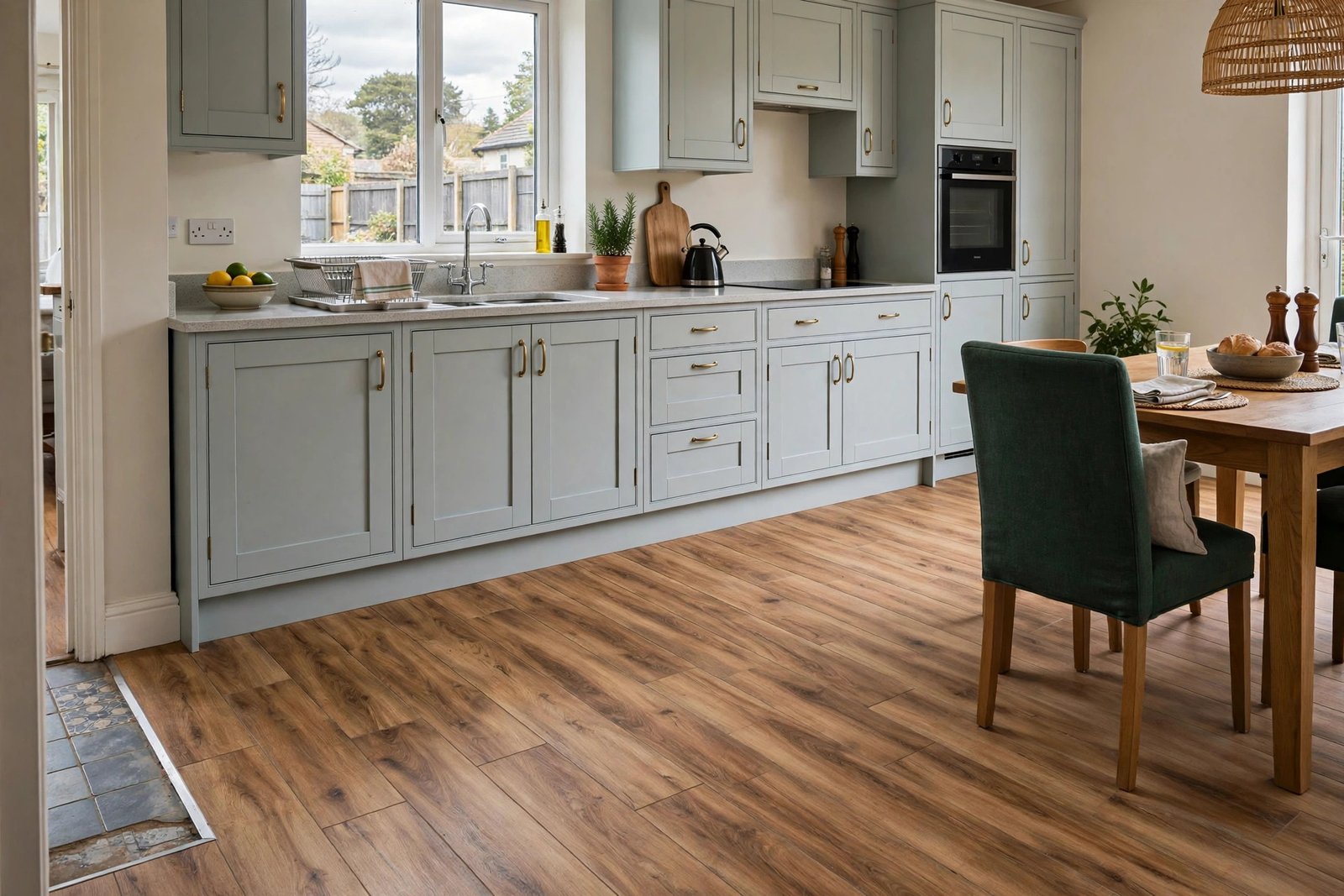
Ripping up old tiles is miserable work — dust, noise, potential asbestos in old adhesive, and days of disruption. So the question everyone asks: can you just lay LVT straight over the tiles? The answer is sometimes, with preparation that most people underestimate. This guide explains when it works and when it does not.
The Short Answer
Yes, you can lay click (rigid-core) LVT over well-bonded ceramic or porcelain tiles, provided the tiles are sound, level and properly prepared. Glue-down LVT over tiles is much riskier and generally not recommended — it needs a near-perfect surface. If the tiles are loose, cracked, uneven or hollow-sounding, rip them up; no shortcut fixes a bad substrate.
When It Works
- Tiles are solidly bonded (no hollow drumming when tapped)
- The floor is level within manufacturer tolerance (usually 3mm over 2m)
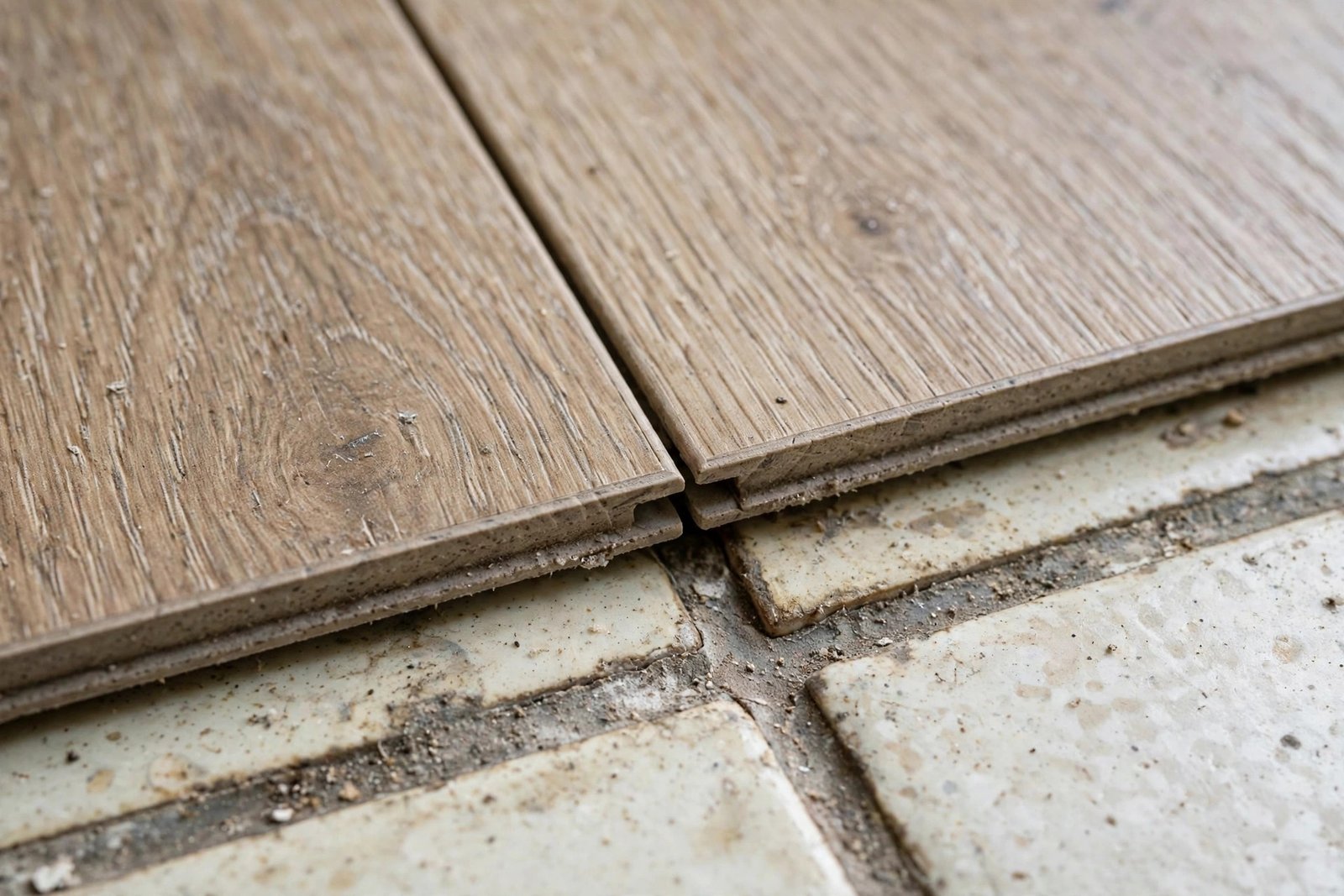
- Grout lines are narrow and shallow — wide, deep grout joints telegraph through
- You are using click/rigid LVT, not glue-down
Preparation: The Part People Skip
This is where jobs succeed or fail:
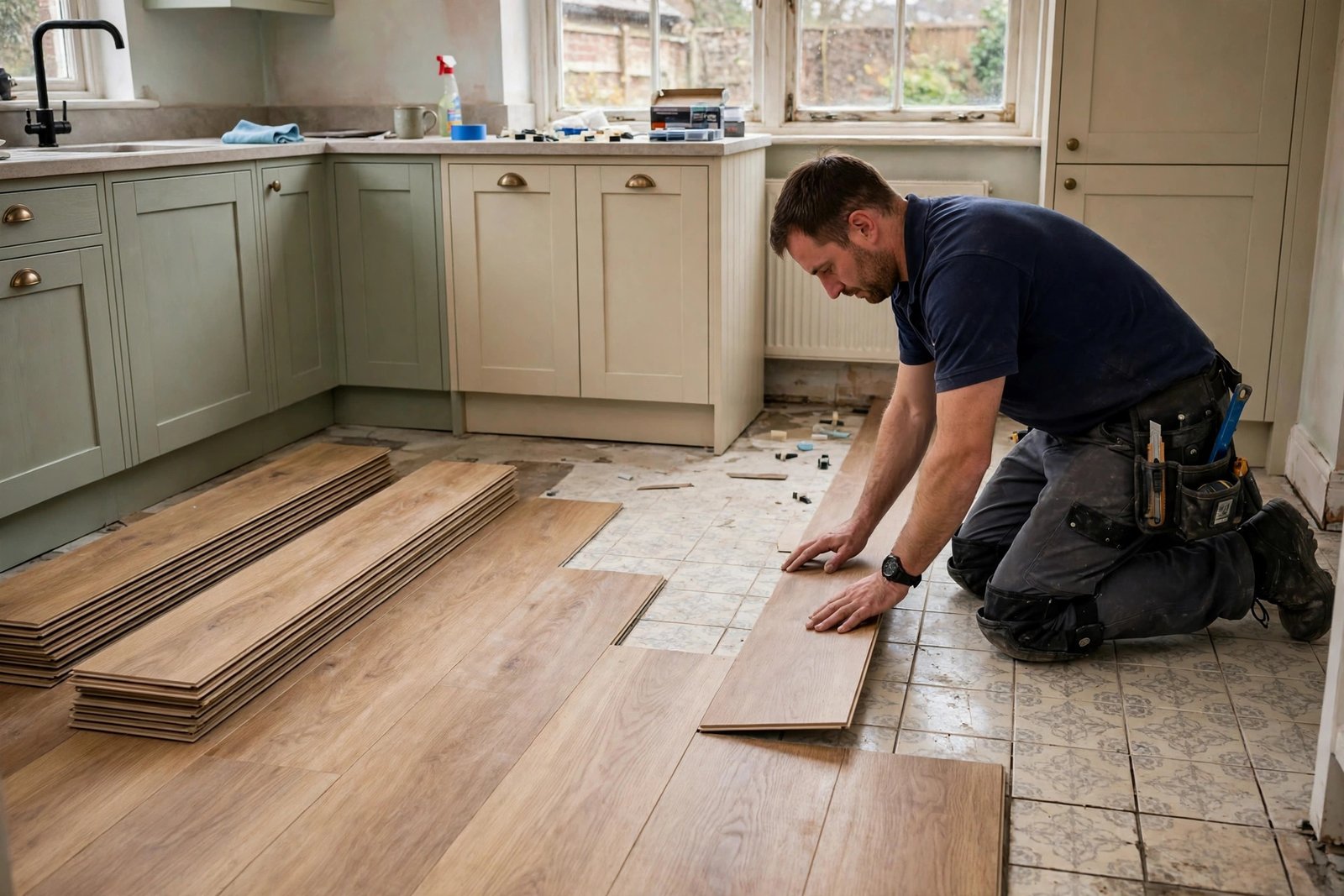
- Deep clean and degrease: kitchen tiles especially hold grease that stops levelling compound bonding.
- Fill the grout lines: skim the whole floor with a rapid-set smoothing/levelling compound so the tile pattern does not show through the LVT. This step is non-negotiable.
- Prime: use the primer recommended for your levelling compound, especially over glazed tiles.
- Check heights: the new floor raises finished height by 5–8mm — plan for door trimming, appliance clearances (dishwashers, washing machines) and transitions to adjoining rooms.
- Underlay: use a thin LVT-specific underlay unless your planks have it pre-attached — see our LVT underlay guide.
When to Rip Up Instead
- Loose, cracked or hollow tiles — the LVT will move with them
- Significant lippage or unevenness that levelling cannot economically fix
- Height problems you cannot solve (low door clearances, integrated appliances)
- Glue-down LVT — the preparation needed approaches the cost of just removing the tiles
- Any suspicion of asbestos in old tile adhesive (common pre-1980s) — get it tested and professionally removed
Frequently Asked Questions
Will the tile pattern show through LVT?
It can, if grout lines are not skimmed. A proper smoothing compound layer eliminates telegraphing — skipping it is the classic mistake.
Can you glue LVT directly to tiles?
Technically possible on perfect tiles, but manufacturers rarely warrant it. Click LVT over prepared tiles is the sensible route.
How much height does LVT over tile add?
Typically 5–8mm including levelling and underlay. Check doors and appliances before committing.
Is it cheaper than removing tiles?
Usually yes — tile removal runs £10–£20/m² plus disposal and mess. But if preparation gets extensive, the saving shrinks.
Does it affect the warranty?
It can. Check your LVT manufacturer’s approved-subfloor list — some explicitly exclude tile substrates. Using an unapproved substrate can void the warranty.
The Bottom Line
LVT over sound, level tiles works — if you skim the grout lines, prime properly and respect the height build-up. If the tiles are dodgy, rip them up; shortcuts over bad substrates always fail. See our complete flooring guide for more.