
 by
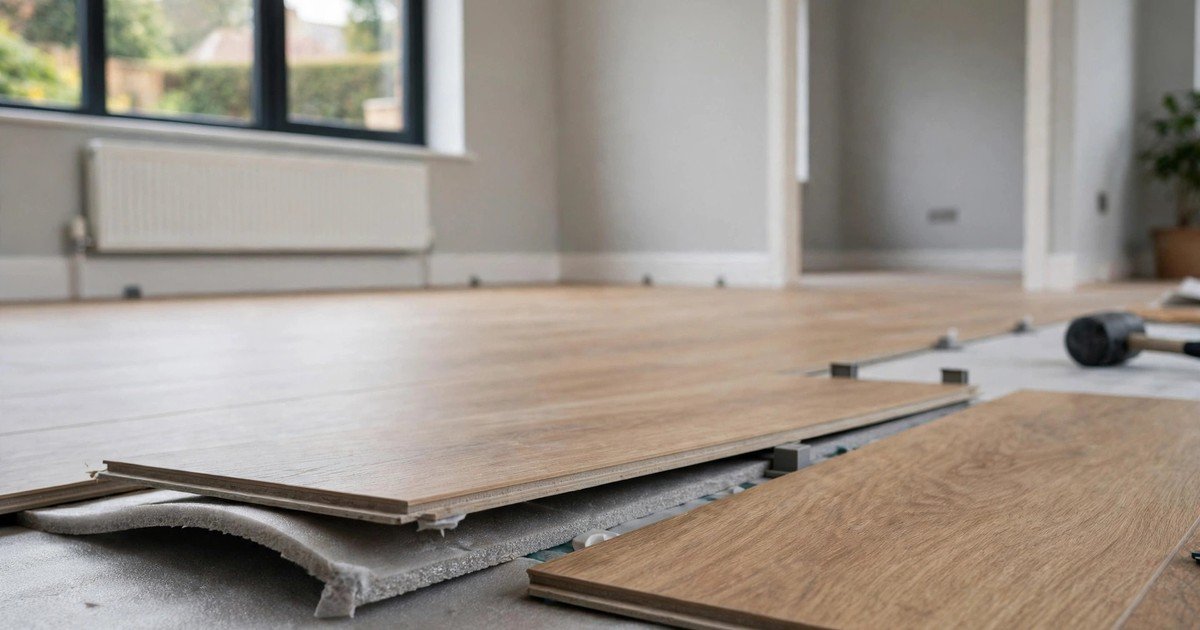
Underlay under LVT (luxury vinyl tile) is one of the most confusing topics in flooring — ask three fitters and you will get three answers. The confusion exists because the answer genuinely depends on which type of LVT you are laying. Get it wrong and you can void the warranty. Get it right, however, and your floor feels and sounds noticeably better. This guide sorts it out.
The Short Answer
Glue-down LVT: no separate layer — it sticks directly to the subfloor. Adding it under glue-down LVT will cause it to fail.
Click (rigid-core) LVT: usually yes, unless the planks come with it pre-attached. Check the manufacturer’s instructions — this is the bit people skip.
That is 90% of the confusion resolved. The rest of this guide covers the details that matter.
Glue-Down LVT: No Underlay, Ever
Glue-down (dry-back) LVT is thin — typically 2–2.5mm — and bonds directly to a prepared subfloor with adhesive. A soft, moving layer between the tile and the floor would defeat the adhesive and lead to tiles lifting, peaking or sliding. Every manufacturer is explicit about this: none under glue-down LVT, full stop.
What glue-down does need is subfloor preparation: the surface must be smooth, level, dry and primed. Any imperfection telegraphs straight through thin vinyl. If your subfloor is rough, budget for a smoothing compound — that is where the money goes instead. For the wider LVT picture, see our complete flooring guide.
Click LVT: It Depends on the Plank
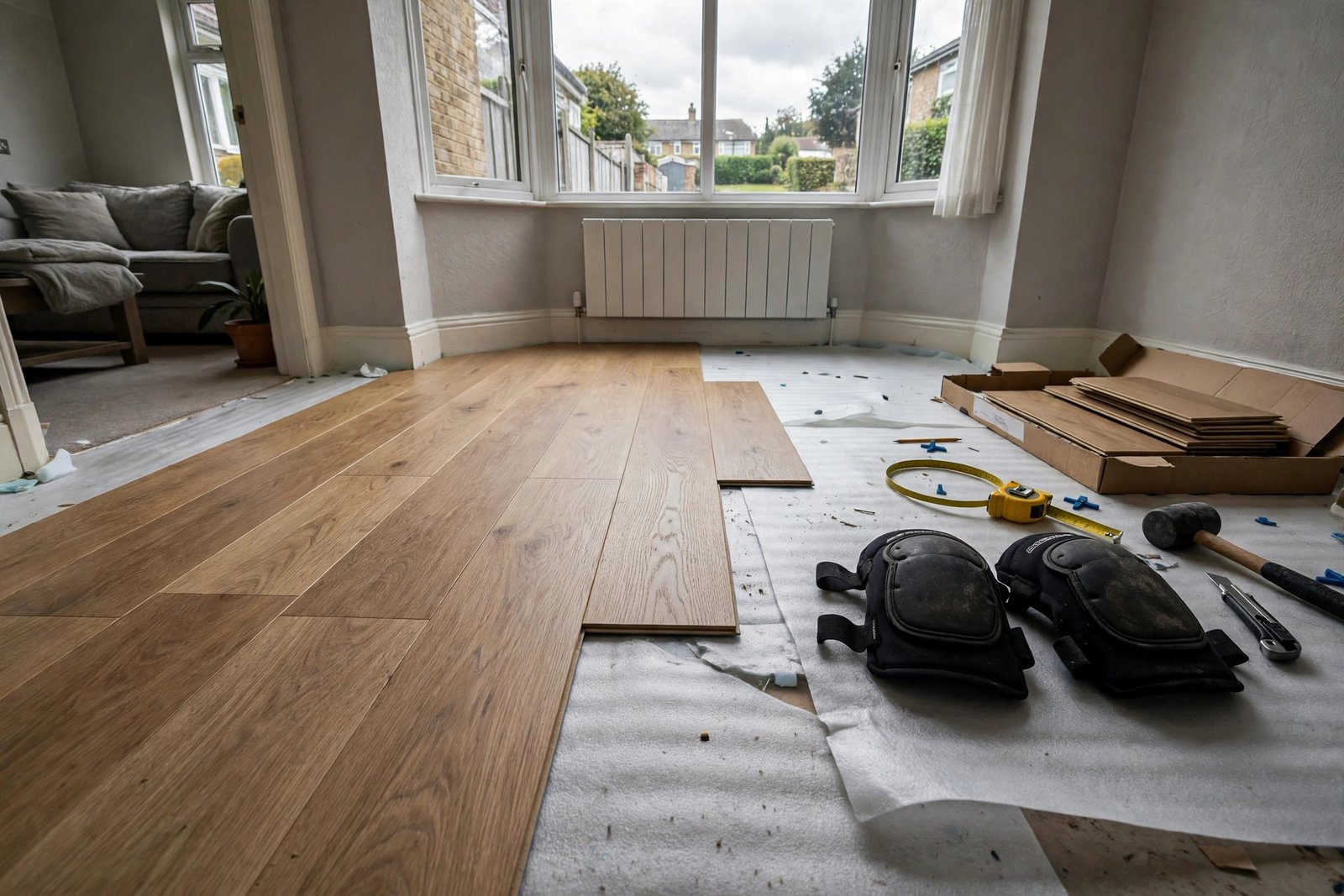
Click (also called rigid-core, SPC or WPC) LVT is thicker — 4–8mm — and floats over the subfloor, locked together at the edges. Here the rules split:
- Planks with pre-attached underlay: many click LVT products come with a thin foam or cork backing already attached. In that case, do not add more — doubling up makes the floor too soft and stresses the click joints.
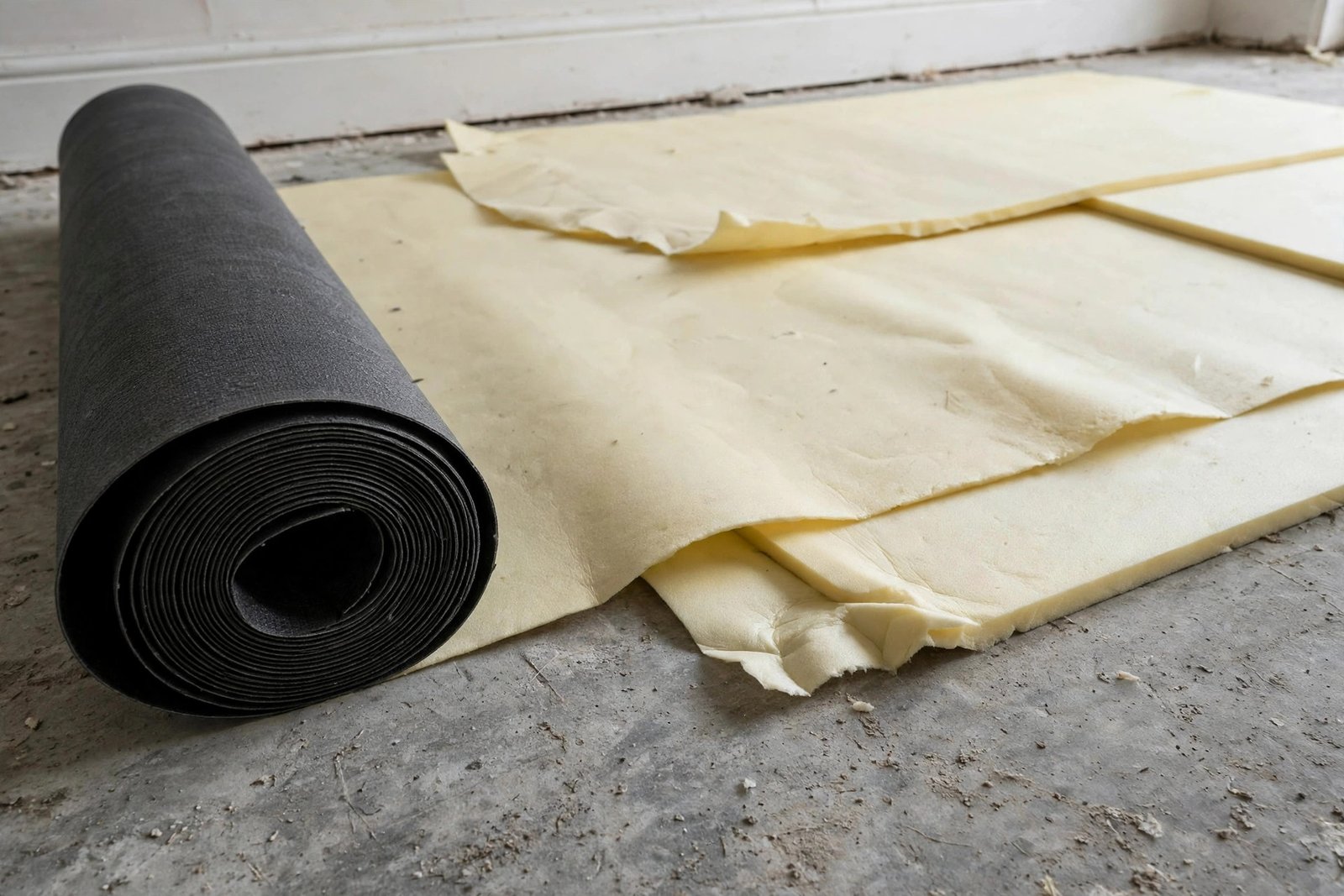
- Planks without pre-attached underlay: yes, use a dedicated LVT underlay. It is typically thin (1–1.5mm) — much thinner than the laminate kind — because a thick, soft layer lets the click joints flex and eventually break.
The critical rule: never use the standard laminate kind under LVT. The laminate kind is 2–3mm+ and too soft; LVT needs a dense, thin, purpose-made product. Using the wrong product is one of the most common reasons click LVT warranties get voided.
What Does LVT Underlay Actually Do?
A proper one does four jobs:
- Sound: takes the hollow “click-clack” out of footfall — the single biggest noticeable difference, especially in flats where neighbours hear everything.
- Comfort: adds a touch of give underfoot.
- Minor levelling: smooths out tiny subfloor imperfections (it will not fix a genuinely uneven floor — that needs levelling compound).
- Moisture: some include a damp-proof membrane, useful over concrete ground floors.
Which Underlay for LVT?
Look for a product explicitly labelled for LVT or vinyl click flooring — typically 1–1.5mm dense foam or rubber. Expect to pay around £1–£3/m². Avoid anything marketed for laminate unless it specifically states LVT compatibility. For example, always check your flooring manufacturer’s approved-underlay list before buying: using an unapproved product can void the warranty even if it is technically suitable.
Frequently Asked Questions
Can I put underlay under glue-down LVT?
No. Glue-down LVT must bond directly to the subfloor. It creates movement that breaks the adhesive bond and will cause tiles to lift. Spend the money on subfloor preparation instead.
Do I need underlay if my LVT has it pre-attached?
No — do not double up. A pre-attached layer plus a separate one makes the floor too soft and stresses the click joints. One layer only, whichever it is.
Can I use laminate underlay under LVT?
No. The laminate kind is too thick and soft for LVT click joints. Use a thin (1–1.5mm) one specifically made for LVT, ideally one approved by your flooring manufacturer.
Does LVT underlay help with noise?
Yes — it is the main benefit. A proper one noticeably reduces the hollow tapping sound of footfall, which matters a lot in flats and upstairs rooms.
Do I need a damp-proof membrane under LVT?
Over concrete ground floors, yes — either a separate DPM or a product with one built in. Over timber upper floors it is generally unnecessary unless the room has a damp history.
The Bottom Line
Glue-down LVT: none, ever. Click LVT: use a thin LVT-specific layer unless your planks come with it pre-attached — and never substitute the laminate kind. When in doubt, the manufacturer’s instructions beat any forum opinion. For more flooring decisions, see our complete UK flooring guide and our LVT vs laminate comparison.