
 by
by Choosing between a curtain track vs rod? A small decision with a surprisingly big payoff — how the room looks, and how easily your curtains open and close every day.
Short version: tracks hide away and glide effortlessly — ideal for bays and heavy curtains. Poles — curtain rods, in American English — are a design feature, with finials and finishes that frame the window. Both work well, but they suit different windows, curtains and budgets.
This guide covers how each works, what they cost in the UK, and which curtains pair with which — so you can buy once and buy right.
What a Curtain Track Is
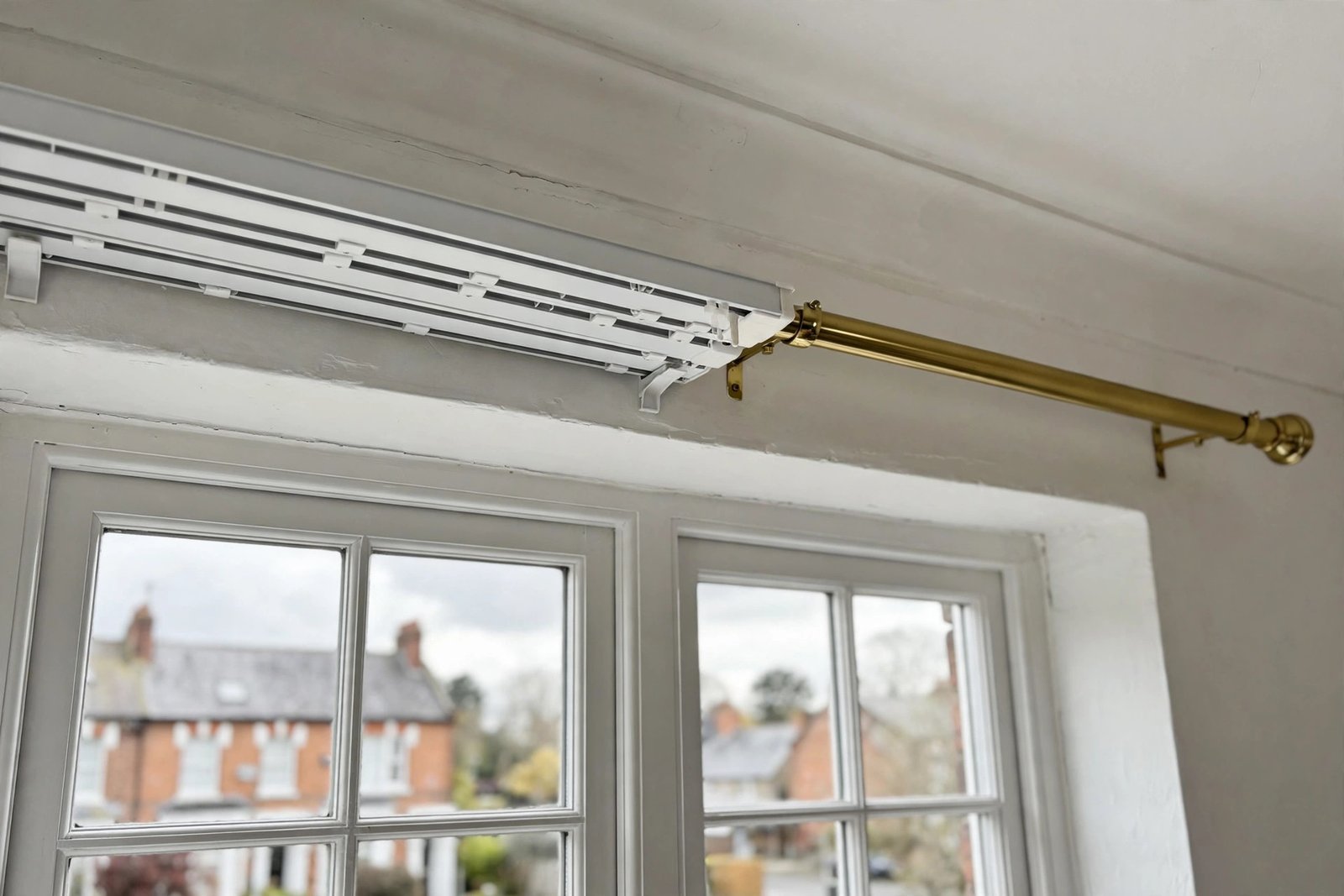
A curtain track is a slim plastic or aluminium channel on little runners, screwed to the ceiling or wall. It stays deliberately discreet — you notice the curtain, not the hardware.
Tracks are the default in most new-build flats, often as a ceiling-mounted channel. They come into their own on bays, where a track bends to follow the exact shape — something no straight pole can do.
They’re also the go-to for heavy curtains: weight spreads across many runners, so thick lined curtains slide instead of dragging. That matters for warmth — worth remembering when choosing the right curtain fabric for draughty windows.
What a Curtain Rod (Pole) Is
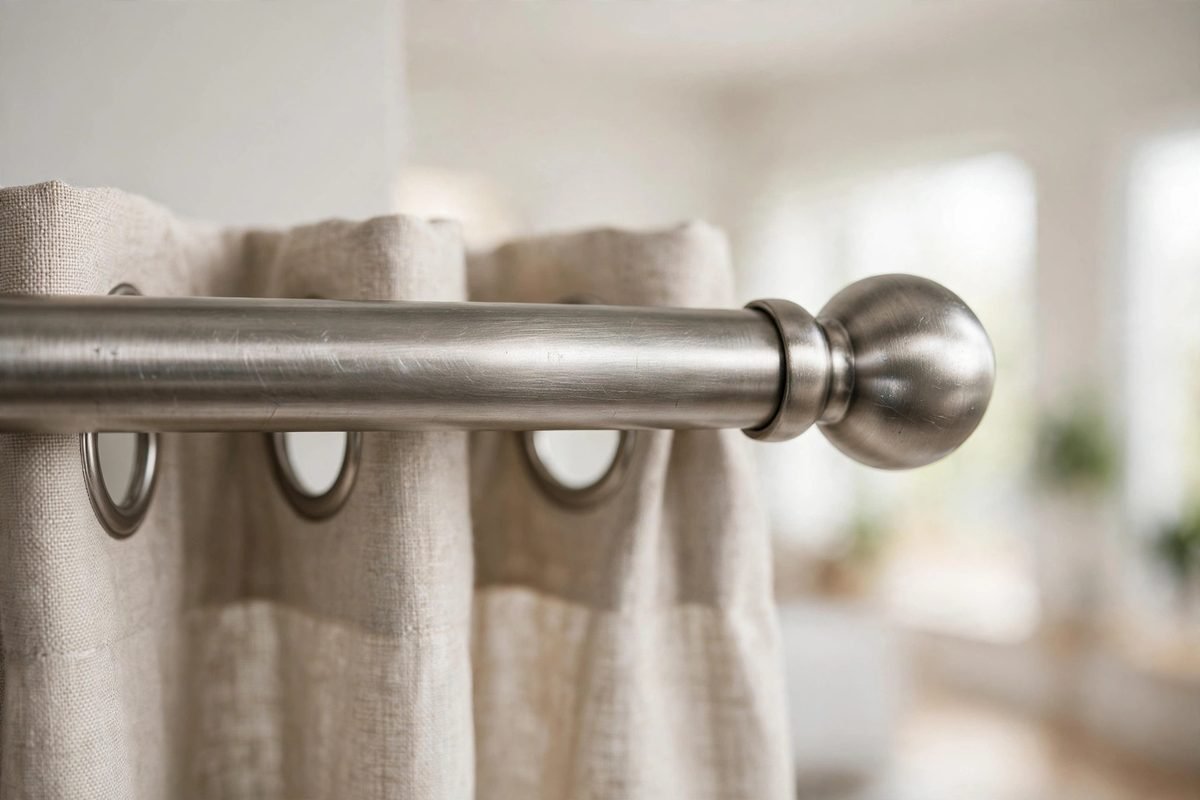
A curtain rod — a curtain pole in the UK, as every Dunelm, IKEA and John Lewis label says — is a round bar on brackets above the window. Curtains hang from rings, or thread straight onto the bar if they’re eyelet, and you pull them along by hand.

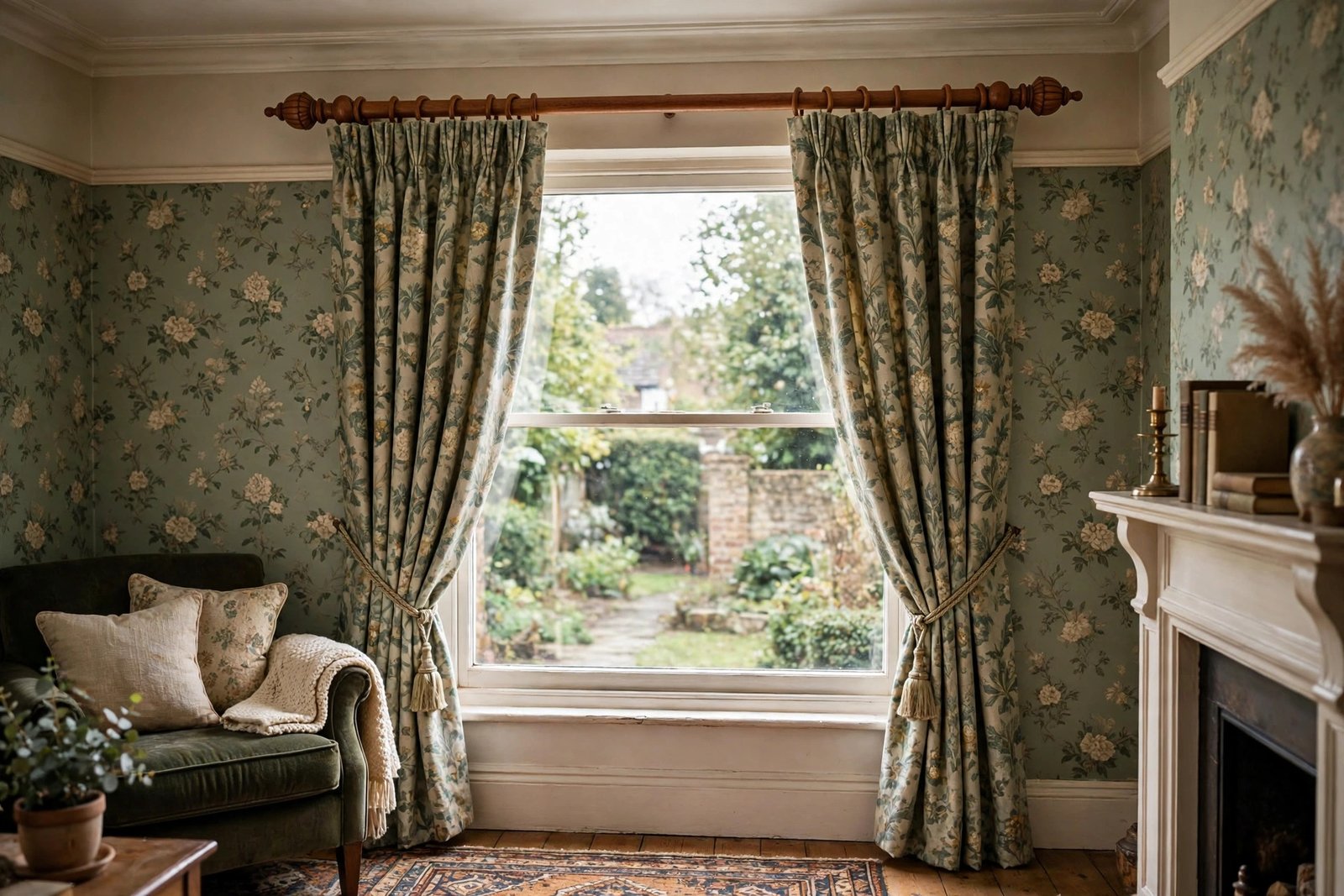
Poles are visible, and that’s the point: wood, metal and mixed finishes, with finials from plain balls to crystal-look designs. If you want the hardware to be part of the room’s style, a pole wins hands down.
The trade-off is friction: curtains on rings never glide as smoothly as curtains on runners, and straight poles can’t bend around a bay — multiple poles with joins rarely look neat.
Curtain Track vs Rod: Key Differences
The curtain track vs rod debate comes down to five things:
| Curtain Track | Curtain Rod (Pole) | |
|---|---|---|
| Looks | Discreet — mostly hidden by the curtain heading | Decorative — finials and finishes are part of the design |
| Curtain types | Pencil pleat and pinch pleat; eyelet only with special gliders | Eyelet, tab top, and pencil pleat on rings |
| Ease of use | Glides effortlessly, even with heavy curtains | Good for light curtains; heavier ones need a firm tug |
| Bay windows | Excellent — tracks bend to fit the bay | Poor — straight poles can’t follow the curve |
| Installation | Fiddlier to get level; ceiling fixing is common | Straightforward — brackets, a drill and a spirit level |
| Typical UK cost | Basic tracks from around £10–£20; made-to-measure bent tracks £60+ | Poles from around £8–£15; premium wood or metal £40–£100+ |
Which Curtains Work with Which?
Eyelet curtains are made for poles — the metal rings thread onto the bar, and that’s the look they’re designed for. You can hang them on a track with special gliders, but it rarely looks as good. Love an eyelet pair? Buy the pole.
Pencil pleat curtains suit both. They hook straight onto track runners or onto pole rings — which is why most made-to-measure curtains come in this heading.
Tab top curtains only work on poles — the fabric loops need a round bar. They look relaxed, but they’re the least practical for daily use, since the tabs create the most friction.
Installation: DIY Difficulty and UK Costs
A pole is a friendly DIY job: mark brackets 10–15 cm above the recess and 15–20 cm wider each side, drill, plug, screw — done in under an hour. Dunelm and IKEA kits run roughly £8–£30; premium wooden poles £40–£100+.
Tracks demand more care — a long track must be dead level or curtains drift sideways, and ceiling-mounted tracks mean drilling upwards. Straight tracks cost around £10–£20; a made-to-measure bent track for a bay typically runs £60 to well over £100. A handyman fits either for roughly £40–£80 labour (higher end in London).
Maintenance is minimal either way: wipe the track channel clear of dust so the runners keep gliding, and check pole brackets once a year — heavy curtains gradually loosen screws, especially in plasterboard walls.
Curtain Track or Pole: Which Should You Choose?
Here’s a quick way to settle the curtain track vs rod question for your own windows.
Choose a track when:
- You have a bay window — this is the track’s home turf.
- You want floor-to-ceiling curtains or a hotel-style ceiling look.
- Your curtains are heavy or lined and you’ll open them daily.
- You’d rather the hardware disappeared — ideal for minimal rooms.
Choose a pole when:
- You want the hardware to add style — wood for traditional rooms, black metal for modern.
- You’ve bought eyelet curtains, which are designed for poles.
- The window is a straightforward rectangle and you like a classic framed look.
- You’re fitting door curtains, where a sturdy pole handles constant tugging better than most budget tracks.
Frequently Asked Questions
Can you hang eyelet curtains on a track?
Technically yes, using special eyelet gliders that clip into the track channel — but it’s a compromise. Eyelet curtains are designed to thread onto a pole, and on a track they can look bunched and awkward. If you already own eyelet curtains, a pole is the better choice; if you’re committed to a track, pencil pleat curtains are the natural pairing.
Are curtain tracks cheaper than rods?
At the budget end, yes — a basic white plastic track (around £10–£20) usually undercuts the cheapest decent pole. But the comparison flips for trickier windows: a made-to-measure bent track for a bay can cost £60–£100+, while a straight pole for a standard window might be £15. So tracks are cheaper for simple windows; poles often work out cheaper once bays are involved.
Do curtains glide better on tracks or poles?
Tracks, without question. Curtains on runners slide with barely a touch, even when they’re heavy and lined. Curtains on pole rings involve more friction — fine for lightweight voiles or bedroom curtains you open once a day, but noticeably stiffer for big, heavy drapes you’ll move constantly.
What is a curtain pole called in the UK?
In the UK, “curtain pole” is the standard term — what Americans call a curtain rod, we call a pole. You’ll see “pole” on packaging at Dunelm, IKEA and John Lewis. “Track” means the same thing on both sides of the Atlantic: the slim channel with runners. Some UK shops also sell “rails”, which are usually just another word for tracks.
Can I replace a curtain track with a pole?
Yes — it’s one of the easier swaps in home DIY. Take the track down, fill the old screw holes, and fit pole brackets in the standard position, roughly 10–15 cm above the window recess. Before you buy, check your curtain heading: pencil pleat curtains move across to rings easily, but tab-top curtains only work on a pole, never on a track.
Conclusion
So, curtain track vs rod? For smooth daily use, a bay window, or heavy lined curtains, take the track. If you want the hardware to earn its place — especially with eyelet curtains — a pole is the better buy. Match hardware to curtains first, decor second, and you won’t go wrong. For the full picture — types, fabrics, measuring and costs — see our complete guide to curtains.