

 by
Walk into any Dulux Decorator Centre or trade counter in the UK and you will find two names dominating the primer shelf: Zinsser and Dulux. Both promise better adhesion, stain blocking and a smoother topcoat. But they are not interchangeable, and picking the wrong one can mean stains bleeding through your fresh paint, a topcoat peeling off glossy wood, or a finish that never quite looks right.
This guide compares Zinsser vs Dulux primer properly: what each brand actually does best, how they differ on stain blocking, adhesion, drying times and price, and which one suits your walls, woodwork and ceilings. No brand loyalty, just the practical differences that matter when you are standing in the shop.
What Is a Primer, and Do You Actually Need One?
A primer is a preparatory coat that goes on before your topcoat. It does three jobs: it seals a porous or stained surface so the topcoat does not soak in unevenly, it gives the topcoat something to grip onto, and it blocks stains, knots and tannin from showing through.
You do not need primer on every wall. A previously painted wall in good condition usually just needs a clean and a light sand. You do need primer when you are painting bare plaster, bare wood or MDF, a stained or smoke-damaged surface, a glossy surface such as old gloss paint or melamine, or a surface that has been repaired with filler. Skipping primer in those cases is the most common reason a new paint job fails early. If the wall itself has a damp or mould problem, deal with that first — a primer will not fix it. Our guide to how to treat mould on walls before painting explains the preparation steps that should come before any primer goes on.
Zinsser Primer at a Glance
Zinsser is a specialist brand, and that is its whole appeal: almost everything it makes is a problem-solving primer. The three products UK decorators reach for most are:
- Zinsser B-I-N — a shellac-based primer-sealer. The strongest stain blocker in the range, and the one decorators choose for nicotine, water stains, knots and smoke damage. It dries very fast and sticks to glossy surfaces without sanding, but it smells strongly and needs methylated spirits for cleaning brushes.
- Zinsser Bulls Eye 1-2-3 — a water-based primer-sealer for general use. Good all-rounder for walls, ceilings, wood and previously painted surfaces, with low odour and easy water clean-up.
- Zinsser Cover Stain — an oil-based primer-sealer. Strong stain blocking and adhesion on difficult surfaces, slower to dry than B-I-N, and a favourite for exterior wood and heavy stains.
Zinsser also makes specialist products such as Gardz (a clear sealer for damaged or powdery plaster) and Peel Stop (a binding primer for flaking paint). The range is wide, which is a strength — there is usually a Zinsser product made for your exact problem — but it also means you need to pick carefully. Grabbing the wrong tin is easy.
Dulux Primer at a Glance
Dulux is the brand most UK homeowners already know, and its trade range is what professional decorators actually buy. The key products are:
- Dulux Trade Aqua Uniprimer — a water-based primer, sealer, stain block and undercoat in one tin. Designed as a general-purpose primer for walls, ceilings and wood, with low odour and water clean-up.
- Dulux Trade Quick Dry Wood Primer Undercoat — a water-based primer-undercoat for interior wood, including doors, skirting and window frames.
- Dulux Trade Undercoat — a traditional solvent-based undercoat for wood and metal, used under gloss or satinwood topcoats where a tougher, deeper finish is wanted.
- Dulux Trade Super Grip Primer — an adhesion primer for glossy, hard-to-paint surfaces such as tiles, melamine and previously glossed wood.
Dulux primers are sold everywhere — Dulux Decorator Centres, B&Q, Wickes, Screwfix and trade counters — so availability is rarely a problem. The range is simpler than Zinsser’s, which makes choosing easier, but it has fewer specialist problem-solvers.
Zinsser vs Dulux Primer: Head-to-Head
Here is how the two brands compare on the things that actually decide a purchase:
| Attribute | Zinsser | Dulux |
|---|---|---|
| Stain blocking | Best in class. B-I-N (shellac) blocks nicotine, water stains, knots and smoke in one coat where most primers need two. | Good for light stains. Aqua Uniprimer handles mild marks, but heavy nicotine or water stains usually need a specialist product. |
| Adhesion to glossy surfaces | Excellent. B-I-N and Bulls Eye 1-2-3 grip glossy paint, varnish, melamine and tiles with little or no sanding. | Good with Super Grip Primer; standard primers need the surface keyed (sanded) first. |
| Drying and recoat time | Very fast. B-I-N Aqua is touch dry in around 25 minutes with a 45-minute recoat; shellac B-I-N is similarly quick. | Slower. Water-based primers typically need a few hours before recoating; solvent undercoats can need overnight. |
| Odour | Shellac and oil-based products smell strongly; water-based Bulls Eye 1-2-3 is low odour. | Water-based range is low odour; solvent undercoats smell more. |
| Ease of use for DIY | Very good, but you must choose the right product — the range is wide and the tins look similar. | Very good. Fewer products, clearer labels, and available in every DIY shop. |
| Price (typical, UK) | Typically a little more per litre. B-I-N 1L is typically around £25; Bulls Eye 1-2-3 1L is typically around £18. | Typically a little less. Aqua Uniprimer 1L is typically around £18–£27 depending on size; Trade Undercoat 2.5L is typically around £36. |
Which Primer Is Best for Stain Blocking?
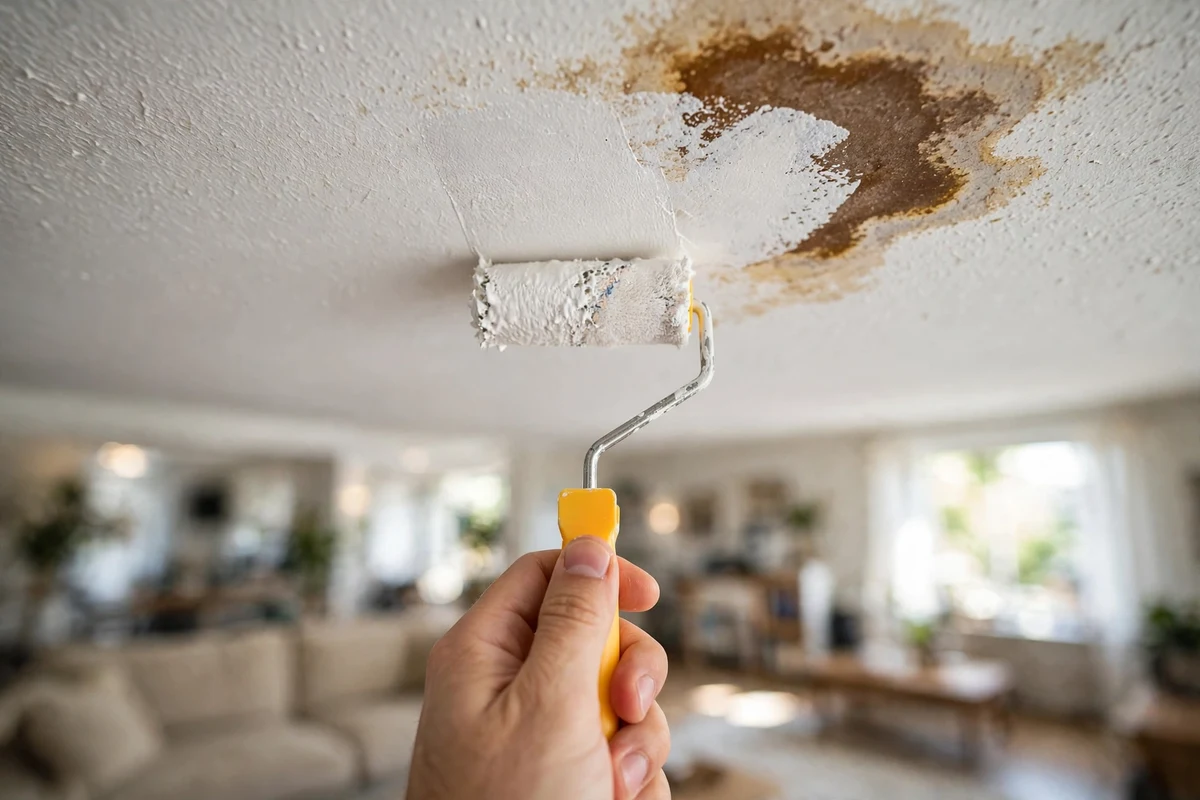
For stains, Zinsser wins clearly. If you have nicotine staining from a previous smoker, a brown water mark from an old leak, or knots bleeding through pine, Zinsser B-I-N is the product decorators reach for first. Its shellac base seals the stain in one coat, and it dries fast enough to topcoat the same day.
Dulux Aqua Uniprimer will cope with light marks — a faint stain, a small repaired patch, a grubby wall — but for a heavy stain it will usually need two coats and may still let the mark show through after a few weeks. If the stain is caused by an ongoing leak or damp, fix the source first. A primer seals a stain; it does not stop water coming in. Our guide to what causes damp on internal walls will help you tell a leak stain from a condensation stain before you start.
Which Primer Is Best for Bare Wood and MDF?
Bare wood needs a primer that seals knots and stops tannin bleeding through, especially with pine and other resinous softwoods. Zinsser B-I-N is the strongest choice here — it seals knots in one coat and stops them showing through pale topcoats. Bulls Eye 1-2-3 is a good water-based alternative for general woodwork.
Dulux Quick Dry Wood Primer Undercoat is a solid choice for bare interior wood that is not knotty — new skirting, architrave, MDF shelving and doors. It goes on easily, dries quickly and sands well. For MDF, both brands work, but seal the cut edges first: MDF edges soak up paint and swell if they are not primed properly. Two thin coats on edges beats one thick one.
Which Primer Is Best for Walls and Ceilings?
For ordinary walls and ceilings, either brand’s water-based primer will do the job. Dulux Aqua Uniprimer is the simpler pick for a whole room: one tin primes, seals and undercoats, it is low odour, and you can buy it anywhere. Zinsser Bulls Eye 1-2-3 does the same job and is arguably better on problem patches — a repaired area, a filler patch, a wall that has had wallpaper stripped off it.
For new plaster, neither a standard primer nor a topcoat should go on first. New plaster needs a mist coat — emulsion thinned with water — before anything else. Our guide to treating mould on walls before painting covers surface preparation in detail, and the same rule applies to fresh plaster: prepare first, prime second.
Drying Times and Recoat Times Compared
Drying time matters when you are working to a weekend deadline. As a rough guide, Zinsser B-I-N (shellac) is touch dry in under an hour and can usually be recoated in around 45 minutes; B-I-N Aqua is touch dry in about 25 minutes with a 45-minute recoat. Bulls Eye 1-2-3 is typically ready to recoat in around an hour. Cover Stain, being oil-based, is slower — allow several hours.
Dulux water-based primers are typically touch dry in one to two hours and ready to recoat in around four hours, depending on temperature and ventilation. Solvent-based Dulux undercoats are slower still and are best left overnight in a cool room. Always check the tin: temperature, humidity and how thickly you applied the coat all change the real drying time, and recoating too early is the quickest way to ruin a finish.
Price Comparison in the UK
Primer is a small part of a decorating job’s cost, so price should rarely be the deciding factor — but it is worth knowing the gap. Typical UK prices (including VAT, from trade counters and DIY shops) are:
- Zinsser B-I-N 1L — typically around £25; 2.5L typically around £53.
- Zinsser Bulls Eye 1-2-3 1L — typically around £18; 2.5L typically around £40–£45.
- Zinsser Cover Stain 1L — typically around £15.
- Dulux Trade Aqua Uniprimer 1L — typically around £18–£27; 2.5L typically around £47.
- Dulux Trade Undercoat 2.5L — typically around £36; 5L typically around £60–£82.
Per litre, Zinsser is typically a little more expensive than Dulux — decorators in trade forums often note that Dulux is cheaper than Zinsser, which surprises people. But coverage matters too: a stain-blocking primer that works in one coat is cheaper than a cheaper primer that needs two coats and still lets the stain through. Buy the right primer for the surface, not the cheapest tin on the shelf.
Which Should You Buy? The Verdict
Choose Zinsser if you have a specific problem to solve: nicotine or water stains, knots in pine, smoke damage, a glossy surface that paint will not stick to, or flaking paint that needs sealing. B-I-N is the strongest stain blocker you can buy in a UK trade counter, and Bulls Eye 1-2-3 is the best general-purpose water-based primer in the range.
Choose Dulux if you are priming ordinary walls, ceilings and woodwork in good condition and you want a simple, widely available, good-value product. Aqua Uniprimer covers most everyday jobs in one tin, and Dulux undercoats are the standard choice under gloss and satinwood on interior wood.
If you are still unsure, the honest answer is that most UK decorators keep both on the shelf: Dulux for everyday priming, Zinsser for the awkward jobs. That is not a cop-out — it is how the two brands are actually used. And whichever you buy, the preparation matters more than the brand. Clean the surface, fix the damp or mould first — see our guide on how to stop mould coming back on walls if that is your problem — sand glossy areas lightly, and apply two thin coats rather than one thick one.
How to Apply Primer Properly
Primer is forgiving, but a few habits make the difference between a finish that lasts and one that peels. Clean the surface and let it dry fully. Sand glossy paint or varnish lightly to give the primer a key. Stir the primer well — Zinsser B-I-N in particular separates in the tin. Apply thin, even coats with a brush for woodwork and a roller for walls; thick coats dry slowly and can crack. Respect the recoat time on the tin, and sand lightly between coats on woodwork for the smoothest topcoat. And if you are using a shellac or oil-based primer indoors, ventilate the room well and keep the windows open — the smell is strong.
Frequently Asked Questions
Do I need a primer before painting new plaster?
Yes, but not a standard primer first. New plaster needs a mist coat — emulsion thinned with water, typically around a 50:50 mix — to seal the porous surface. Once the mist coat has dried, you can prime any problem patches and then apply your topcoats.
Is Zinsser B-I-N better than Dulux for stains?
For heavy stains, yes. B-I-N is shellac-based and blocks nicotine, water stains, knots and smoke in one coat. Dulux Aqua Uniprimer handles light marks well, but heavy stains usually need two coats and can still show through.
Can I use primer as a topcoat?
No. Primer is not designed as a finish — it is usually matt, soft and marks easily. It will also absorb dirt and moisture. Always apply at least one topcoat of emulsion, satinwood or gloss over primer.
How long does primer take to dry before painting?
It depends on the product. Zinsser B-I-N Aqua is touch dry in about 25 minutes and can be recoated in around 45 minutes. Dulux water-based primers typically need around four hours before recoating. Cold or damp rooms slow every primer down, so check the tin and allow extra time in winter.
Is Zinsser worth the extra money over Dulux?
For problem surfaces, yes — a stain blocker that works in one coat is cheaper than a cheaper primer that needs two coats and still fails. For ordinary walls and woodwork in good condition, Dulux is good value and there is no need to pay more.