 by
When the boiler starts making ominous noises — or an engineer tells you it’s on borrowed time — UK homeowners now face a genuine dilemma: new combi boiler or heat pump? For decades the answer was automatic (another gas boiler), but grants, rising gas prices and net-zero policy have made the heat pump a serious contender.
This isn’t a sales pitch for either side. Both are sensible choices in the right home, and both are expensive mistakes in the wrong one. Here’s how they actually compare, with honest numbers.
How Does a Combi Boiler Work?
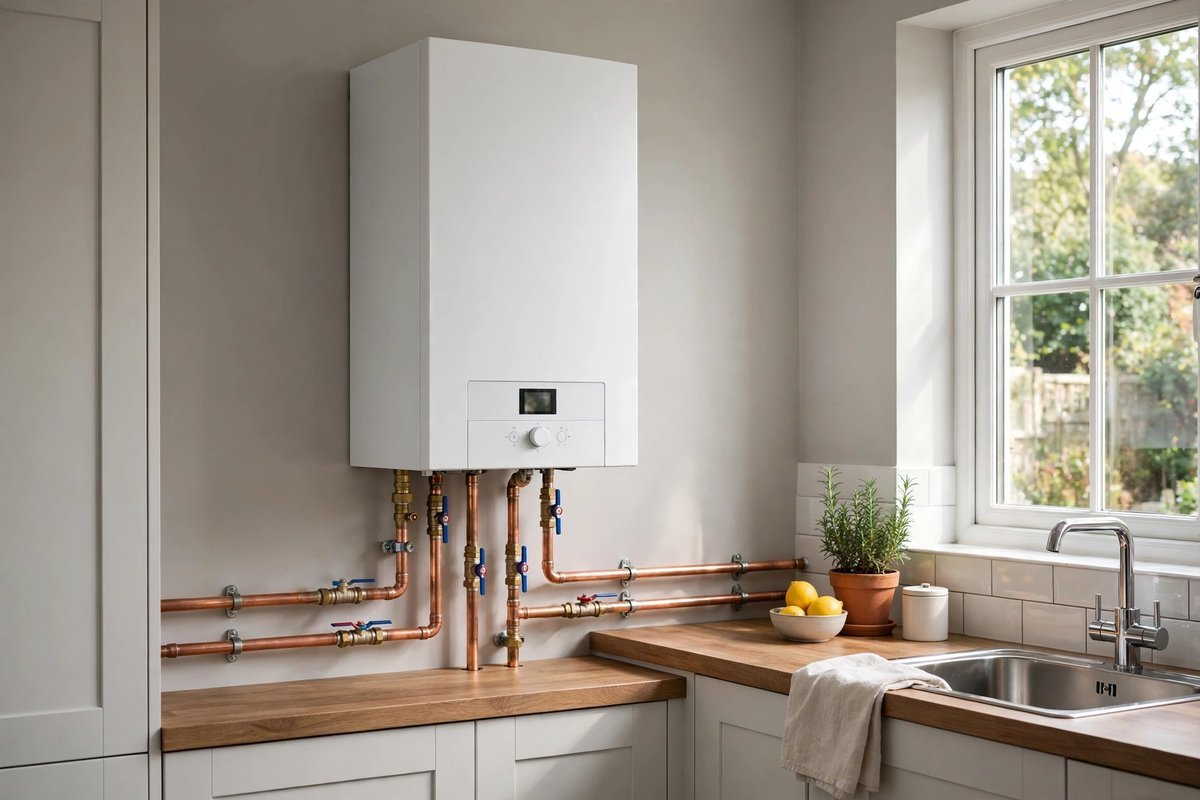
A combi (combination) boiler burns gas to heat water on demand — for your radiators and your hot taps, straight from the mains, with no cylinder and no cold-water tank in the loft. Turn on the tap, the boiler fires, hot water arrives seconds later.
That’s why combis dominate UK homes: they’re compact, they’re familiar, every heating engineer understands them, and they free up the airing cupboard. A modern condensing combi is a mature, reliable piece of kit — the technology isn’t going anywhere soon.
How Does a Heat Pump Work?
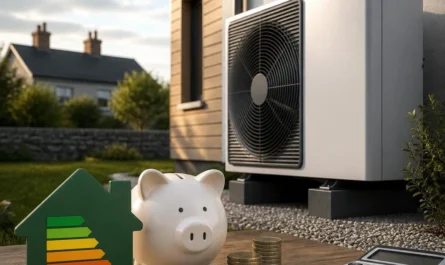
An air source heat pump — the type relevant to most UK homes — works a bit like a fridge in reverse. It extracts heat from the outside air (yes, even cold air) and concentrates it to heat your home’s water circuit. It runs on electricity, not gas, so there’s no combustion and no flue.
The key concept is efficiency: for every unit of electricity a heat pump uses, it typically delivers around three units of heat. Gas boilers, by contrast, deliver less than one unit of heat per unit of gas burned. That efficiency gap is the whole reason heat pumps can compete despite electricity costing more per unit than gas.
The catch: heat pumps produce heat at lower temperatures than boilers. Instead of radiators running at 70°C+, a heat pump system typically runs at 35–50°C — which means bigger radiators (or underfloor heating) and a well-insulated house to work at its best.
Combi Boiler vs Heat Pump: Upfront Costs
This is where the gap is starkest:
- New combi boiler: typically £2,000–£4,000 supplied and fitted, depending on the boiler brand, the complexity of the swap and your part of the country. A straightforward like-for-like replacement sits at the lower end.
- Air source heat pump: typically £7,000–£13,000 installed for a full system — and that often includes new radiators, a hot water cylinder and pipework upgrades, because the heat pump usually can’t just slot into the old setup.
The Boiler Upgrade Scheme narrows the gap: it’s a UK government grant (England and Wales) that knocks several thousand pounds off the cost of a heat pump installation — currently £7,500 for an air source heat pump. That can bring a heat pump install close to, or sometimes below, the cost of a premium boiler job. Check the current scheme terms before budgeting, as grant levels and eligibility do change.
One cost people forget on the boiler side: a new gas boiler usually requires the system to be flushed first (often a warranty condition) — see our guide on whether your system needs a powerflush.
Running Costs Compared: The Honest Maths
Here’s where it gets interesting. Let’s walk through example maths — clearly labelled as an illustration, because tariffs move:
Say gas costs roughly 6–7p per kWh and electricity roughly 24–25p per kWh under the current price cap. A gas boiler at ~90% efficiency turns each 6.5p unit of gas into about 0.9 units of heat — so heat costs you roughly 7p per unit. A heat pump delivering 3 units of heat per unit of electricity turns 24p of electricity into 3 units of heat — roughly 8p per unit of heat.
On those illustrative numbers, running costs end up surprisingly close — which is why the debate is genuine rather than one-sided. In practice:
- A heat pump in a well-insulated home can match or beat a gas boiler on running costs, especially on a heat-pump-friendly electricity tariff.
- A heat pump in a draughty, poorly insulated home will struggle — lower efficiency, longer run times, higher bills than the gas boiler it replaced.
- A gas boiler’s running cost is predictable and well understood; gas remains much cheaper per unit than electricity, which is the boiler’s permanent advantage.
The honest summary: neither option is dramatically cheaper to run in a typical UK home right now. Anyone promising huge savings either way is selling something.
Head-to-Head Comparison
| Factor | Combi boiler | Air source heat pump |
|---|---|---|
| Typical installed cost | £2,000–£4,000 | £7,000–£13,000 (before grants) |
| Grant available | No | Yes — Boiler Upgrade Scheme |
| Running cost (illustrative) | ~7p per unit of heat | ~8p per unit of heat (varies hugely) |
| Hot water | Instant, unlimited (mains pressure) | Stored in a cylinder — needs space |
| Space needed | Just the boiler on the wall | Outdoor unit + indoor cylinder + bigger radiators |
| Best home type | Most existing homes, easy retrofit | Well-insulated homes, ideally with space |
| Installation disruption | 1–2 days, minimal | Several days, radiators/pipework often replaced |
| Carbon emissions | Burns gas — higher | Lower, and falls as the grid greens |
Is Your Home Suitable for a Heat Pump?
This is the question that decides it for most people. Heat pumps are fussier about the house than boilers are. You’re a good candidate if:
- Your home is reasonably well insulated — decent loft insulation, cavity wall insulation or solid-wall insulation, and double glazing. A heat pump in a leaky Victorian terrace without insulation upgrades will disappoint.
- You have space — for the outdoor unit (roughly the size of an air-con box, needs airflow and sensible placement) and for a hot water cylinder indoors. No airing cupboard, no easy cylinder location.
- Your radiators can be upsized — or you’re open to underfloor heating costs being part of the project. Heat pumps and underfloor heating are a genuinely excellent pairing.
- You’re off the gas grid — if there’s no gas connection, the comparison isn’t combi vs heat pump, it’s heat pump vs oil/LPG/electric. Heat pumps usually win that one comfortably.
Most reputable installers will do a heat-loss survey before quoting — if a company quotes you a heat pump without one, that’s a red flag.
The Hot Water Question
Don’t underestimate this. A combi gives you hot water on demand, forever — back-to-back showers, no planning. A heat pump heats a cylinder, so hot water is finite: a typical cylinder covers a couple of showers before needing to reheat (usually an hour or so).
For a couple in a 2-bed flat, that’s a non-issue. For a family of five with teenagers, it’s a genuine lifestyle consideration. You can fit a bigger cylinder, but that needs more space. Be honest with yourself about your household’s hot water habits before choosing.
Which Should You Choose?
Get the combi boiler if: your home is a typical existing property without major insulation upgrades planned; you want minimal disruption and the lowest upfront cost; you love on-demand hot water; or the numbers only work for a heat pump with grants you’re not eligible for.
Get the heat pump if: your home is well insulated (or you’re insulating as part of the project); you have space for the unit and cylinder; you’re off the gas grid; you plan to stay long-term; or cutting carbon matters to you and the grant maths works.
Consider a hybrid (heat pump + existing boiler) if: you want lower carbon without ripping out the whole system — though hybrids are a smaller market and worth discussing with a specialist installer.
If a gas boiler of some sort remains the plan but you’re weighing fuel types rather than technologies, our electric boilers vs gas boilers comparison covers that angle.
Frequently Asked Questions
Can a heat pump replace a combi boiler directly?
Not as a straight swap. A heat pump needs an outdoor unit, a hot water cylinder (which a combi household won’t have), and usually larger radiators or underfloor heating because it runs at lower water temperatures. Expect pipework changes and several days of installation work rather than a one-day boiler swap.
Do heat pumps work in cold UK weather?
Yes — they extract heat from air well below freezing; UK winters are mild by heat-pump standards. Efficiency does drop as it gets colder, so the coldest weeks cost more to run, but a correctly sized and installed heat pump will keep a well-insulated home warm through a British winter.
How much does it cost to switch from a combi to a heat pump?
Typically £7,000–£13,000 for the full installation including radiators and cylinder, before grants. The Boiler Upgrade Scheme grant (currently £7,500 for air source heat pumps in England and Wales) can substantially reduce this — get quotes from MCS-certified installers, as certification is usually required for grant eligibility.
Will a heat pump work with my existing radiators?
Sometimes, but often not well enough. Heat pumps run at lower flow temperatures, so radiators usually need to be larger to emit the same heat. An installer should calculate this room by room in a heat-loss survey — expect at least some radiators to need upsizing.
Is gas going to be banned in UK homes?
There’s no ban on existing gas boilers, and you can still buy and install a new gas boiler today. Government policy is pushing new-build homes away from gas heating and encouraging heat pumps through grants, but no date has been set to force existing homeowners off gas. A new combi boiler bought now will see out its normal 10–15 year lifespan.
The Bottom Line
Combi boiler or heat pump? For most existing UK homes, a new combi remains the pragmatic choice: cheaper, simpler, familiar. A heat pump is the better long-term bet if your home is well insulated, you have the space, and the grant maths works. Get a proper heat-loss survey before deciding — it’s the only way to know which camp your house falls into.