 by
by Most of us use central heating daily without ever thinking about what’s actually happening behind the walls. This guide explains how does central heating work, covering the main components and how they work together to heat your home.
The Core Components of a Central Heating System
- Boiler – heats water, typically fuelled by gas, oil, or electricity
- Pump – circulates hot water around the system
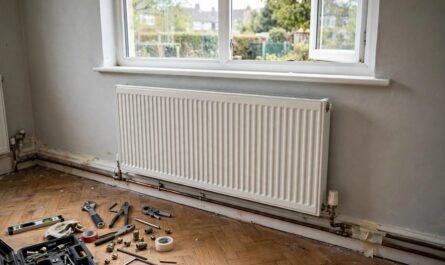
- Radiators – release heat into each room
- Thermostat – controls when the system switches on and off based on temperature
- Programmer or timer – sets when heating runs throughout the day
How Water Moves Through the System
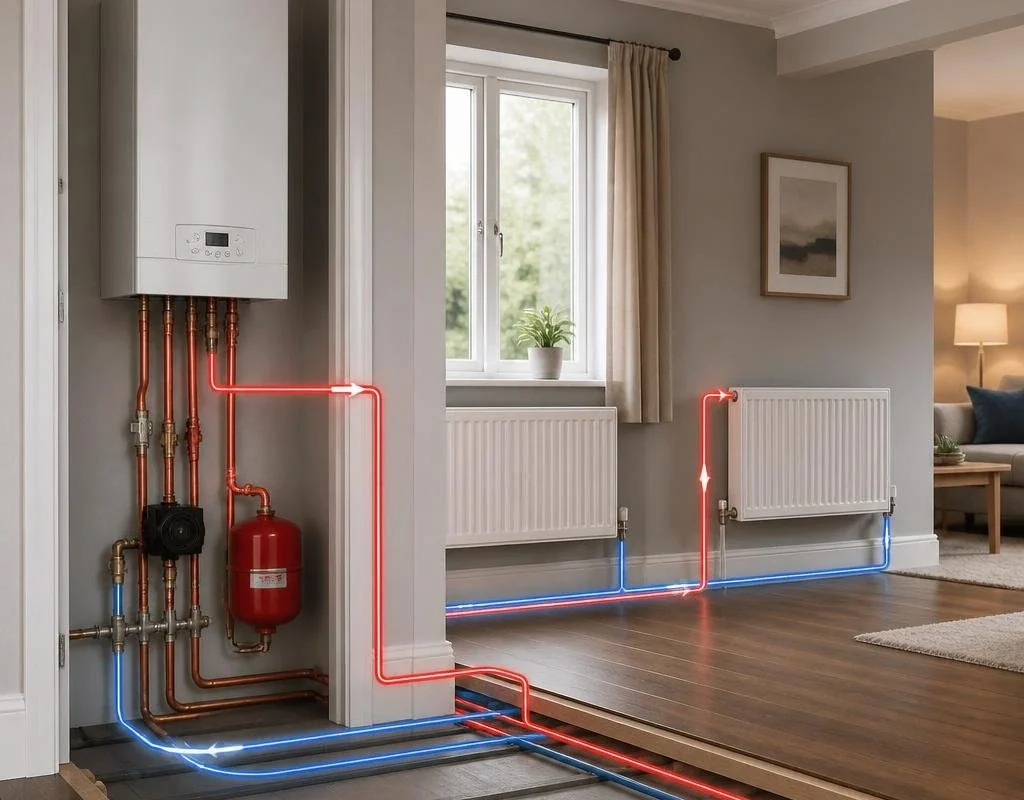
Water is heated in the boiler, then pumped through pipework to radiators around the home. As it passes through each radiator, it releases heat into the room before returning to the boiler to be reheated, in a continuous loop known as a wet central heating system.
Combi vs. System vs. Conventional Boilers
A combi boiler heats water on demand, without needing a separate cylinder, making it space-efficient for smaller homes. A system boiler uses a hot water cylinder but no separate cold water tank, while a conventional (regular) boiler uses both a cylinder and a loft-mounted tank, better suited to larger homes with higher hot water demand.
Fuel Types Behind the Boiler
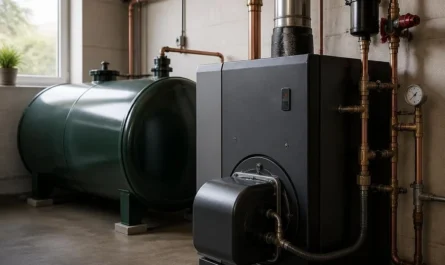
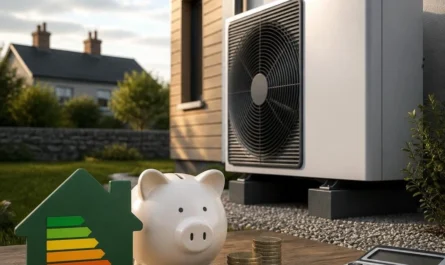
Most UK homes use a gas boiler, installed and serviced by a Gas Safe registered engineer. Homes off the gas grid often use oil central heating instead, serviced by an OFTEC-registered engineer, while a growing number of homes are switching to electric heat pumps as a lower-carbon alternative.
The Role of the Thermostat and Controls
A thermostat measures room temperature and signals the boiler to switch on or off accordingly, preventing the system from running constantly. Smart thermostats and smart boiler controls add scheduling flexibility and remote control via an app, on top of this basic function.
Why Radiators Sometimes Need Bleeding
Air can become trapped in radiators over time, creating cold spots, usually near the top. Bleeding a radiator releases this trapped air, allowing hot water to fill the space fully and restoring even heat distribution.
Improving System Efficiency
A well-maintained, correctly balanced system heats a home more efficiently and cheaply than a neglected one. For practical ways to reduce your overall heating costs, see our guide to heating a house for cheap.
What Happens When You Turn the Thermostat Up?
The sequence is more choreographed than most realise. The thermostat signals the boiler to fire, heating water in the primary circuit to around 60–70°C. The pump pushes this hot water through flow pipes to each radiator, where thermostatic valves meter it based on room temperature. Cooled water returns via the return pipe to be reheated — the continuous loop. When rooms reach target temperature, valves close progressively and the boiler modulates down or cycles off. Understanding this loop explains most faults: follow the heat’s journey and you will usually find where it breaks down.
Common Central Heating Faults and What They Mean
Cold spots at the top of radiators mean trapped air — bleed them. Cold at the bottom suggests sludge blocking flow, needing a powerflush. Kettling (rumbling like a kettle) points to limescale in the heat exchanger, common in hard-water areas. A boiler that fires then quickly cuts out may have a faulty thermistor or blocked condensate pipe — the latter freezes in cold snaps and is fixable with warm water. Recognising these patterns saves diagnostic fees and helps you describe the fault accurately to an engineer.
How Old Is Too Old? System Lifespans
Boilers typically last 12 to 15 years; radiators can soldier on for 25+ unless they corrode internally. Pipework lasts decades but accumulates sludge. Controls become obsolete faster — a 20-year-old timer cannot do what a modern smart thermostat does. The tipping point: when annual repair bills approach 10% of replacement cost, or efficiency has fallen so far that fuel waste exceeds finance costs. A 15-year-old non-condensing boiler wastes roughly a third of its fuel compared with a modern condensing model.
Upgrading an Old System: What Actually Changes
A modernisation usually means a condensing combi or system boiler, a magnetic system filter, a chemical flush, and smart controls — typically £2,500 to £4,500 fitted. Radiators are often reused if sound, though upsizing a few improves low-temperature efficiency. Expect 2 to 3 days of disruption and no heating overnight — schedule for mild weather. The efficiency jump (60–70% to 90%+) usually pays back within 5 to 8 years at current energy prices, faster if the old boiler was failing.
Central Heating and Hot Water: How They Share
In most UK systems, one boiler serves both heating and hot water via a diverter valve that prioritises hot water on demand — which is why radiators briefly cool when someone runs a bath. Combi boilers heat water instantaneously; system and conventional boilers store it in a cylinder. Understanding this sharing explains common quirks: lukewarm radiators during heavy hot-water use are normal, not a fault. For cutting the cost of running it all, our smart boiler guide covers modern controls.
Frequently Asked Questions
Why is my radiator hot at the bottom but cold at the top?
This usually indicates trapped air, which can be released by bleeding the radiator with a radiator key.
What’s the difference between a combi and a system boiler?
A combi heats water on demand with no cylinder, while a system boiler uses a hot water cylinder but no loft tank, suiting different household sizes and hot water needs.
How long does central heating usually last?
A well-maintained boiler typically lasts 10-15 years, though this varies by model, usage, and how regularly it’s serviced.
How does a central heating system work step by step?
The thermostat calls for heat, the boiler fires and heats water, the pump circulates it to radiators, thermostatic valves regulate each room, and cooled water returns to the boiler — repeating until the target temperature is reached.
Why are my radiators cold at the bottom?
Usually sludge — rust and debris settled at the bottom blocking flow. Bleeding will not fix it; a powerflush or individual radiator flush is needed, plus inhibitor added afterwards.
How often should central heating be serviced?
Annually by a Gas Safe engineer for gas systems (a legal landlord requirement and usually a warranty condition). Oil systems need yearly servicing too, ideally before winter.
Related Home Heating Guides
- Oil Central Heating: A Complete Guide
- How to Heat a House for Cheap (UK)
- Heat Pump Running Costs in the UK
- Smart Boilers: Are They Worth It?