 by
This guide to shower losing pressure causes uk covers the checks in order. It starts with the free checks and ends with the fixes that cost money. A weak shower is one of the most common plumbing complaints in UK homes, and the cause is usually simple. Limescale in the shower head, a blocked filter in the valve, or a hot water system that was never built for a strong shower. These three cover most cases. Work through the checks below, and you will find your cause before you spend a penny.
First, a quick note on words. Strictly speaking, pressure is how hard the water pushes, and flow is how much water comes out each minute. In the shower, both feel the same: a disappointing trickle instead of a proper spray. This guide uses “pressure” the way most homeowners do, to mean the strength of the shower. The checks below sort out where the problem sits. It may be in the shower itself, in the pipes, or in the hot water system that feeds it.
Is It the Shower or the Whole House?
Start here, as the answer shapes everything else. Turn on the cold tap in the kitchen. In most homes, it comes straight from the mains, so it shows what the water company is sending you. Then try the hot and cold taps in the bathroom. Compare the three, and match what you find to the table below.
| What you find | Where the problem is |
|---|---|
| Kitchen cold tap is weak too | The supply into the house, or the stop tap |
| Taps are fine, only the shower is weak | The shower head, hose, or valve |
| Only the hot water is weak | The hot water system: cylinder, combi, or hot side filter |
| Shower is weak when someone else runs a tap | Not enough flow for two outlets at once |
| Shower has always been weak upstairs | Gravity-fed system with too little height |
| Pressure dropped suddenly | A valve partly closed, or a mains problem |
If every tap in the house is weak, ask a neighbour whether theirs is weak too. If it is, the problem sits with the water company, not your pipework. No fix inside your home will help. Water companies must supply at least 1 bar of pressure at your property boundary. So a supply fault is their job to fix. Also check your stop tap, which is usually under the kitchen sink. It should be fully open. Turn it gently anticlockwise, but do not force it, as old stop taps can snap or start leaking.
If only the shower is weak, the problem is in the shower itself, and the next sections will find it. If only the hot water is weak, jump to the section on hot water systems. That pattern points to the cylinder, the combi boiler, or a filter on the hot side of the valve.
The Jug Test: Measure Your Shower Flow
Before you change anything, measure the flow. Guessing wastes money, but a number tells you how bad the problem is and whether a fix has worked. The jug test takes one minute and needs only a litre jug and a stopwatch.
Hold the jug under the shower head and time how long it takes to fill one litre. If it takes longer than about six seconds, your flow is low. That works out at under 10 litres a minute. A comfortable shower runs at around 8 to 12 litres a minute, and most mixer and rainfall heads want more. Below 8 litres a minute, or below 0.5 bar, counts as low. The shower will feel weak whatever you do to the head.
Run the test twice: once with the shower head on, and once with it off. If the flow is strong without the head and weak with it, you have found the problem. The head is blocked, and the fix is cheap. If the flow is weak both ways, the problem sits further back. Look at the valve, the pipes, or the hot water system. Write the numbers down, as they help a plumber too if you call one later.
Limescale in the Shower Head and Hose
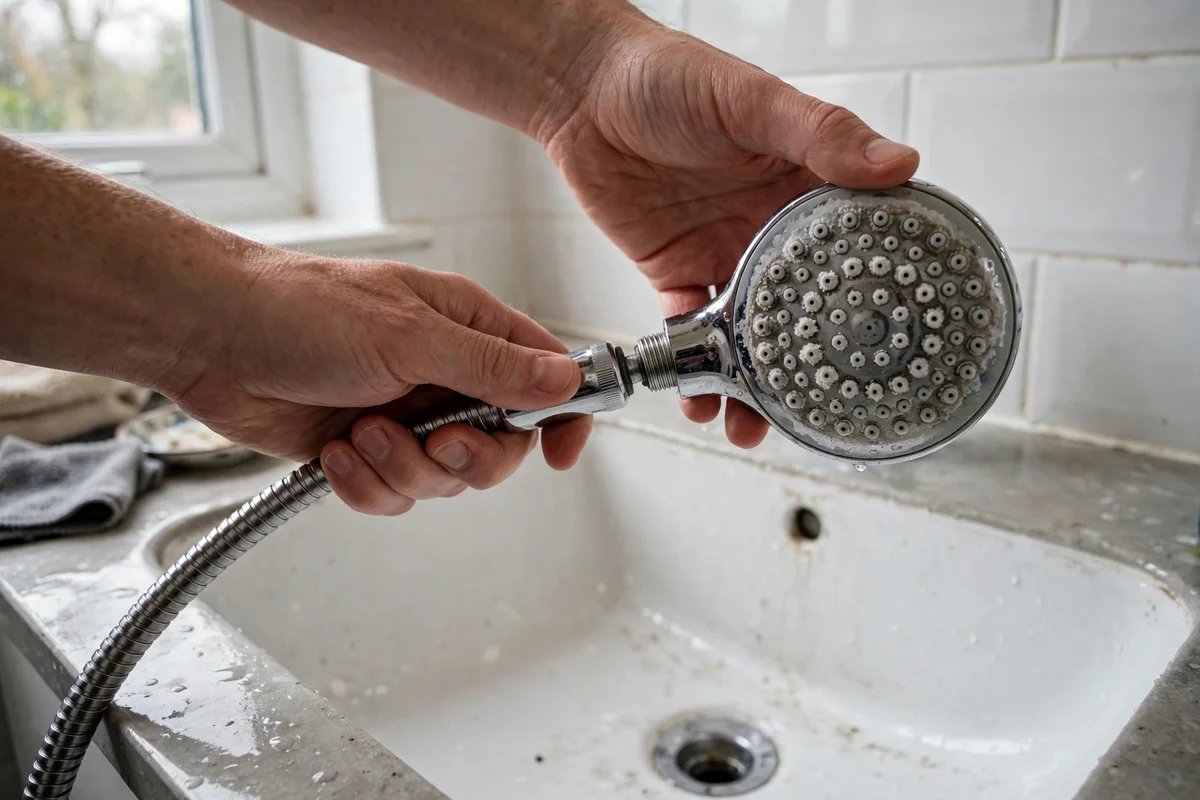
Limescale is the most common cause of a shower losing pressure, and it builds up slowly. Hard water carries dissolved minerals. They leave scale behind in the tiny holes of the shower head and the fine filters inside the valve. Month by month, the holes narrow, and the spray gets weaker. Hard water areas cover much of southern and eastern England. There, a shower head can scale up badly within a year.
Start with the head. Unscrew it from the hose by hand; most turn anticlockwise. Then soak it in a descaler made for showers, or in a mix of white vinegar and water. Follow the product instructions. After soaking, poke each nozzle clear with a cocktail stick or an old toothbrush, and rinse the head well. Then refit it and run the jug test again. If the flow improves, you have found the cause, and the fix cost you almost nothing.
Also check the hose. A kinked or squashed hose restricts flow, and an old hose can narrow inside with scale. Unscrew the hose from the valve and run water through it. If the flow is poor, soak it the same way, or fit a new hose, which typically costs £10 to £20. If the head is old and the nozzles are worn, a new head is often the better buy. Heads made for low-pressure systems have larger nozzles. They give a stronger spray from the same flow, so they suit gravity-fed homes well.
Check the Valves and Filters
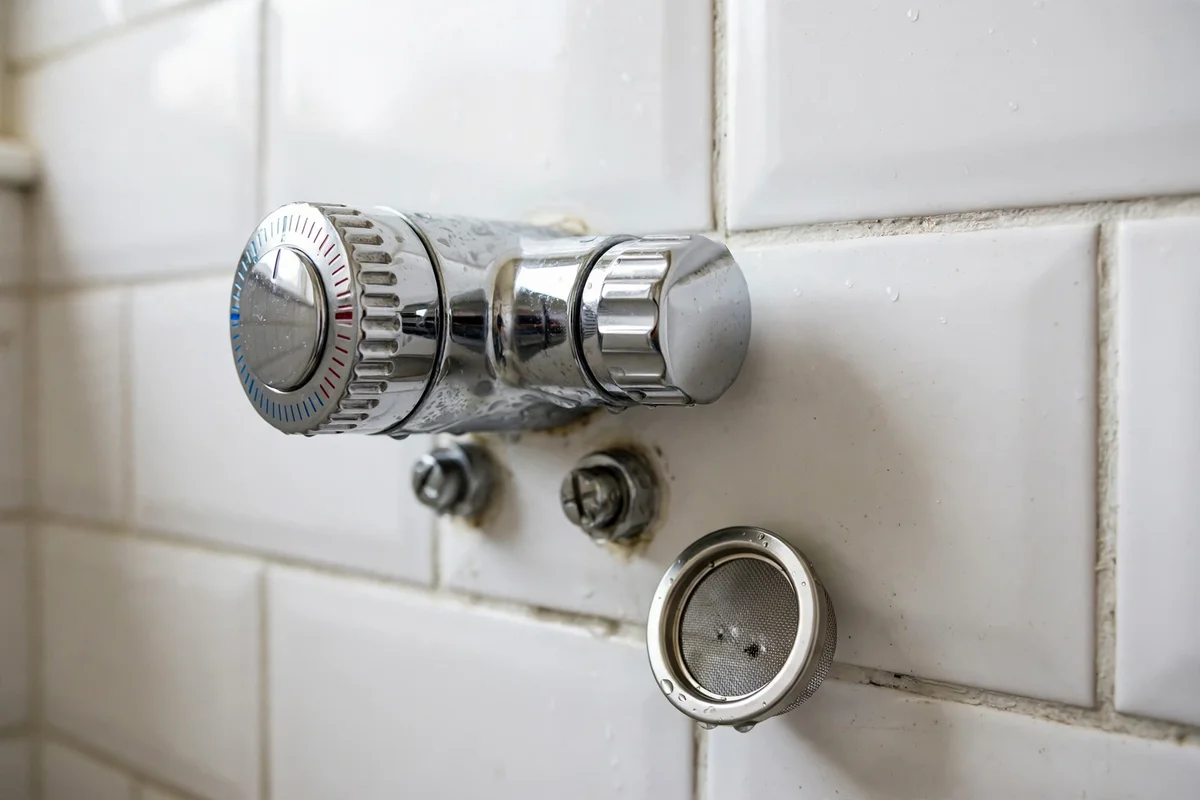
If the head and hose are clear, look at the valves and filters. Many showers have small isolation valves on the hot and cold supplies, often behind an access panel or under the bath. Check that they are fully open. A valve can look open but still sit part-closed inside if it is faulty. Turn each one fully open and test again.
Next, check the inlet filters. Thermostatic mixer valves usually have small mesh filters where the hot and cold pipes enter the valve. When they block with scale or grit, flow drops, often on one side only. To check them, turn off the water at the isolation valves. Then remove the valve cover and pull the filters out with pliers. Rinse them clean under a tap, or soak them in descaler, then refit them. If a filter is torn or clogged beyond cleaning, fit a new one, which costs only a few pounds.
Check the thermostatic cartridge
Also check the thermostatic cartridge inside the valve. A scaled-up cartridge can restrict flow and make the temperature unstable, so the shower runs hot and cold by turns. Cleaning a cartridge is a job for a confident DIYer, and replacing one typically costs £30 to £80 for the part. If you are unsure, leave the valve to a plumber, as a wrong reassembly can cause scalding or a leak. The same applies to electric showers, where the wiring must stay untouched.
Finally, look for airlocks. Trapped air in the pipework causes inconsistent flow, and it is easy to mistake for low pressure. If the shower splutters or the flow surges and fades, air may be the cause. Running all the taps in the house for a few minutes can clear a small airlock. If it keeps coming back, a plumber should find where the air is getting in.
How Your Hot Water System Limits Shower Pressure
If the checks above made no difference, the pressure is probably limited by how your home gets its hot water. The system sets a ceiling on the shower, and no head or filter can beat it. The table below shows the four common UK systems and what each one means for your shower.
| System | How it works | Shower pressure |
|---|---|---|
| Gravity-fed | Cold tank in the loft feeds a hot cylinder | Weak, often 0.1 to 0.5 bar |
| Combi boiler | Heats water from the mains as you use it | Mains pressure, but limited flow rate |
| Unvented cylinder | Stores hot water at mains pressure | Strong, usually 2 bar or more |
| Electric shower | Heats mains water inside the unit | Mains pressure, but flow falls as heat rises |
Gravity-fed systems
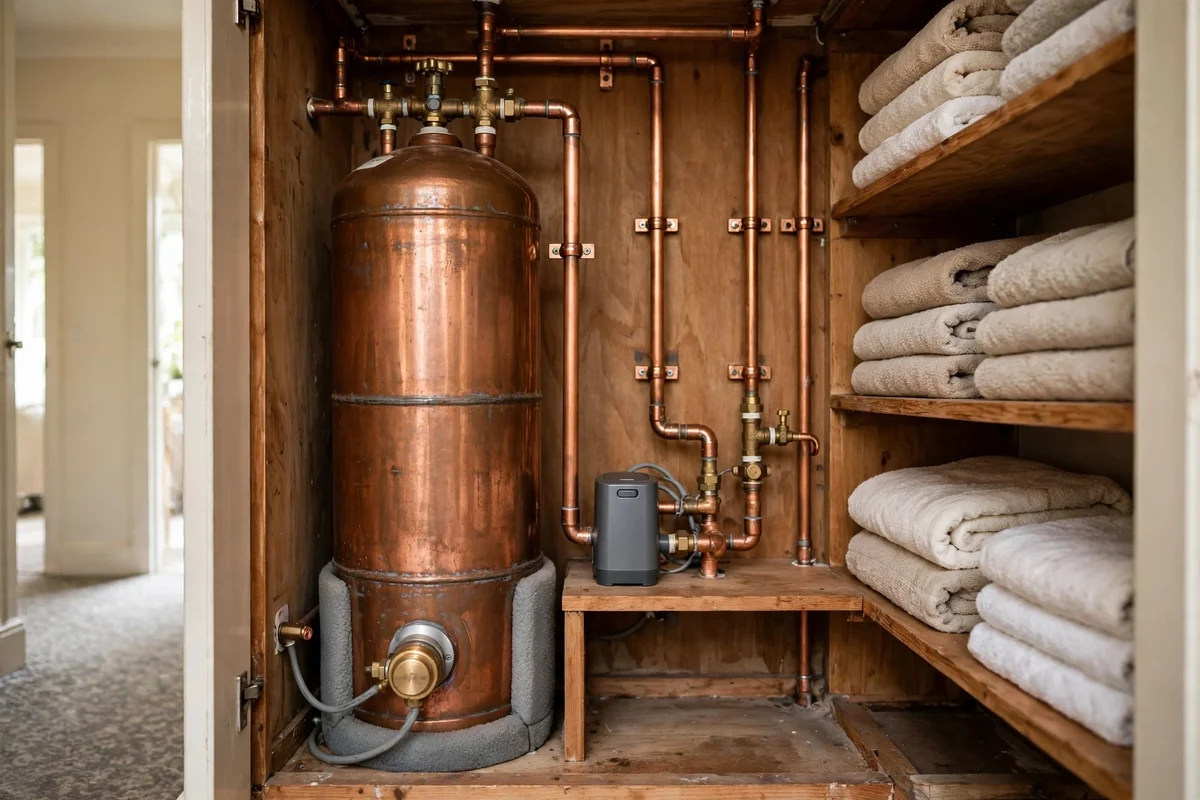
If you have a hot water cylinder in an airing cupboard and a cold water tank in the loft, your system is gravity-fed. The pressure at the shower depends on the height between the bottom of the loft tank and the shower head. In a bungalow, a loft conversion, or a top-floor bathroom, there is very little height, so the shower will always be weak. The usual fix is a shower pump, fitted near the cylinder, which boosts the flow from the tank to the shower. Our guide to why your boiler loses pressure explains how these systems link to boiler pressure too.
Combi boilers
A combi heats water as it flows, so it feeds the shower at mains pressure. But each combi can only heat so much water per minute. So a big rainfall head can feel weak, and running another hot tap at the same time will cut the flow. If the hot water was strong and has slowly dropped, the heat exchanger may be scaling up. That needs a heating engineer. A combi also needs a good mains supply, so a weak mains will show up here first.
Unvented cylinders
An unvented cylinder stores hot water at mains pressure and usually gives the strongest showers. If the shower is weak on this system, the cause is rarely the cylinder itself. Check the pressure reducing valve, the inlet filter, and the mains supply first. Building Regulations require unvented cylinders to be fitted and serviced by a qualified installer, so do not open one yourself.
Electric showers
An electric shower draws mains water directly and heats it inside the unit, so it does not rely on stored pressure. But the flow falls as the heat setting rises, because the heater can only add so much warmth per litre. In winter, when the incoming water is colder, the same shower feels weaker. If the flow has dropped over time, the inlet filter or the heating element may be scaled. Then a new unit may be the fix.
Fixes That Actually Work
The right fix depends on the cause, so match it to what you found. Start with the cheap fixes, and only spend on the bigger ones when the checks point that way.
For a scaled head or hose, descale or replace the head. A head made for low-pressure systems typically costs £15 to £40 and can transform a weak gravity-fed shower. For a blocked filter, clean or replace it, which costs a few pounds. A faulty cartridge needs a new one, which typically costs £30 to £80 for the part.
For a gravity-fed system, fit a shower pump. A single or twin impeller pump boosts the flow to the shower. It typically costs £150 to £350 for the unit, plus £150 to £300 for fitting. Pumps are noisy, so site the pump well and check that your cylinder and tank can feed it. A pump is the standard fix for a weak upstairs shower in a gravity-fed home. It works well when the rest of the system is sound.
When the boiler is the limit
For a combi boiler with a weak mains supply, an electric shower is often the better answer. It draws mains water directly and does not depend on the boiler’s flow rate. Fitting one typically costs £200 to £500, including the unit and an electrician, as electric showers need their own circuit. If the whole house has low pressure, a mains booster pump or a break tank may help. But that is a bigger job and needs a plumber’s advice.
What about replacing the shower itself? A new mixer shower will not fix a weak supply, so do not buy one hoping it will. Fix the cause first, then choose a shower that suits the pressure you have. If you are planning a bathroom refit, our comparison of a wet room vs walk-in shower covers the layout choices. Our small bathroom renovation cost guide shows typical UK prices for the whole job.
How Much Does It Cost to Fix Low Shower Pressure?
Most shower pressure problems are cheap to fix, and the expensive ones are the system upgrades. The table below shows typical UK prices, so you can judge what your fix should cost before you book anyone.
| Fix | DIY cost | Professional cost (part + labour) |
|---|---|---|
| Descale the shower head | Under £5 | Not usually a plumber job |
| New shower head (low-pressure type) | £15 to £40 | £50 to £80 |
| New shower hose | £10 to £20 | £40 to £70 |
| Clean or replace valve filters | Under £10 | £60 to £100 |
| New thermostatic cartridge | £30 to £80 | £90 to £160 |
| Shower pump (supply and fit) | Not a DIY job | £300 to £650 |
| New electric shower (supply and fit) | Not a DIY job | £200 to £500 |
Prices vary by area, and London rates run higher. Always ask for a fixed quote before the work starts, and check whether it includes VAT. A pump or a new electric shower is the only fix that should cost several hundred pounds. If a plumber quotes that much without testing the head, the filters, and the system first, get a second quote.
When to Call a Plumber
Cleaning a shower head, checking a valve, and running the jug test are safe for anyone. Leave the boiler, the hot water cylinder, and any electric shower wiring to a qualified person. Call a plumber if the flow is weak at every tap. Also call if the stop tap will not move, or if you find a leak while checking the valve. Also call if the shower is fed by an unvented cylinder, as only a qualified installer may work on it.
Call a heating engineer if your combi boiler has lost pressure or the hot water has dropped suddenly. A scaled heat exchanger or a faulty diverter valve can cut the flow, and both need a Gas Safe engineer. If the shower problem came with damp patches or a musty smell, read our guide to stopping condensation in a bathroom with no window. Then check for leaks behind the bath panel or under the shower tray before the damp spreads.
Shower Losing Pressure FAQs
These are the questions homeowners ask most often about a weak shower.