
 by
by Walk into any Dunelm or IKEA and you’ll face the same dilemma: neat roller blinds on one side, soft folded roman blinds on the other. So when it comes to roman blinds vs roller blinds, which one actually deserves your money?
It’s one of the most common questions UK homeowners ask, and honestly there’s no single winner — it depends on the room, your budget, and how much cleaning faff you’ll tolerate. If you haven’t settled on blinds yet, our guide to the different types of blinds covers every option — but if you’ve narrowed it down to these two, read on.
In this roman blinds vs roller blinds comparison, we’ll break down exactly how they differ — looks, light control, privacy, cost, cleaning and lifespan — then give you a straight recommendation for each room in the house.
What Are Roman Blinds?
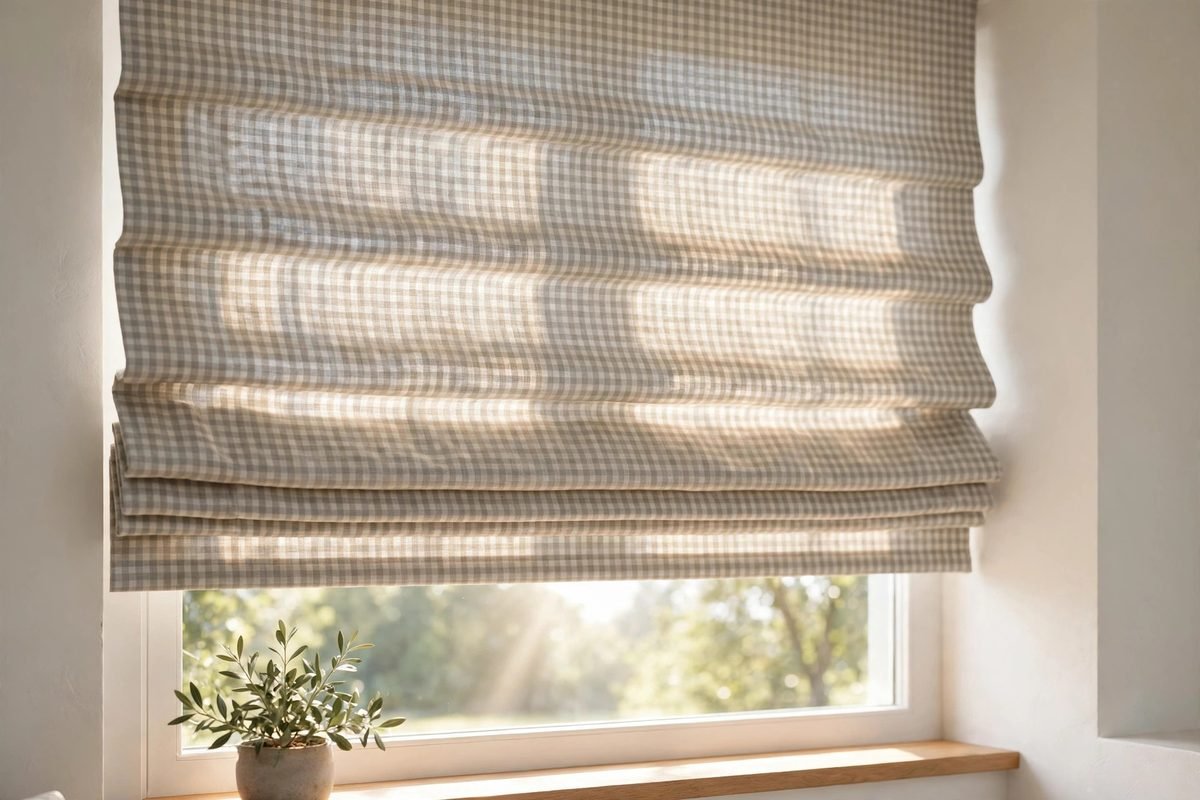
A roman blind is a single panel of fabric that hangs flat against the window when lowered and folds up into neat horizontal pleats when raised. Cords up the back create the folds, and fully open it sits in a soft stack at the top.
Because they’re made from proper curtain-weight fabric, roman blinds feel softer and more “dressed” than most blinds. Most UK suppliers — Dunelm, John Lewis, Blinds2go — sell them made to measure, with blackout or thermal lining options. They also layer beautifully — see our guide to pairing roman blinds with curtains.
What Are Roller Blinds?
A roller blind is about as simple as window dressings get: one sheet of fabric that rolls up around a tube at the top of the window, worked by a side chain, spring or motor. Lowered, it sits flat and minimal; raised, it disappears into a slim roll.
Roller blinds are the workhorse of the blind world. They come in blackout, dim-out, sunscreen and moisture-resistant fabrics, which is why you’ll find them in kitchens and bathrooms up and down the country. They’re also the cheapest blind you can buy.
Roman Blinds vs Roller Blinds: Key Differences
Here’s the honest head-to-head:
| Roman Blinds | Roller Blinds | |
|---|---|---|
| Looks | Soft, tailored, curtain-like folds | Clean, flat and minimal |
| Light control | Good; blackout lining available but light can leak at the edges | Excellent; blackout fabrics block nearly all light |
| Privacy | Good when lowered | Good when lowered |
| Cost | Higher — more fabric and making involved | Lower — the simplest blind to manufacture |
| Cleaning | Trickier — folds trap dust; many need specialist cleaning | Easy — usually just a wipe with a damp cloth |
Roman blinds win on looks; roller blinds win on practicality and price. Now the detail most people ask about first: money.
Cost Comparison: Roman Blinds vs Roller Blinds UK
When people ask about roman blinds vs roller blinds, the first question is almost always money. Prices move with size, fabric and whether you buy ready-made or made to measure, but as a rough UK guide for 2026:
- Ready-made roller blind (standard approx. 60 x 160 cm): around £10–£30 at Dunelm or IKEA
- Made-to-measure roller blind: roughly £30–£80+, more for blackout or motorised
- Ready-made roman blind: around £25–£60
- Made-to-measure roman blind: roughly £60–£150+, depending on fabric and lining
So yes, roller blinds are cheaper — often dramatically so. A made-to-measure roman in a decent fabric can easily cost three times the equivalent roller. But cost isn’t everything, as the room-by-room breakdown shows.
Which Is Better for Each Room?
Kitchen
Roller blinds win here. Kitchens are steamy, greasy places, and a wipeable roller shrugs off splashes that would stain a roman’s folds. For more ideas, see our kitchen curtains and blinds guide.
Bathroom
Roller again. Bathrooms need moisture-resistant fabrics and easy cleaning — both roller strengths. A roman blind soaks up steam, and its folds invite mildew in a poorly ventilated room.
Bedroom
This is where roman blinds fight back: a blackout-lined roman looks far more inviting than a flat roller in a bedroom. But if you need total darkness — a north-facing box bedroom, say, or shift work — a blackout roller blocks more light.
Living Room
Roman blinds, for most people — the living room is where you show off a little. One warning for bay windows: three or four romans across a wide bay gets pricey, so rollers are the budget fallback.
Cleaning and Maintenance
Beyond looks and cost, think about upkeep — the blind you dread cleaning is the one you’ll resent in a year.
Roller blinds are low-maintenance: most wipe clean with a damp cloth, and PVC fabrics handle kitchens and bathrooms without complaint.
Roman blinds need more care. The folds collect dust — vacuum them with an upholstery attachment — but stains often mean spot-cleaning or the dry cleaner, so check the care label before you buy.
Which Lasts Longer?
In the roman blinds vs roller blinds longevity stakes, both should last a good 5–8 years — but they fail differently. Rollers usually die at the mechanism: the chain snaps or the spring gives up. Replacements are cheap and often DIY-fixable.
Romans tend to fail at fabric or cords — sun-fading, fraying cords, worn tapes. Quality matters: a well-made roman outlasts a bargain one by years. Keep either out of constant direct sun.
How Easy Are They to Install?
Both are straightforward DIY: most blinds fit inside the window recess or on the wall above it with two brackets, a drill and a spirit level — allow 20–30 minutes per blind. Made-to-measure suppliers include fitting instructions, and many offer a measuring service if your windows aren’t square. For very wide windows or motorised rollers, a professional fitter (typically £40–£70 per blind) is worth it.
Frequently Asked Questions
Which is cheaper, roman or roller blinds?
Roller blinds are cheaper, usually by a wide margin. A ready-made roller for a standard UK window starts at around £10–£15, while an equivalent ready-made roman starts at roughly £25–£30. Made to measure, the gap grows: expect £30–£80+ for a roller versus £60–£150+ for a roman, depending on fabric and lining.
Are roman blinds better than roller blinds for bedrooms?
For looks, yes — roman blinds feel softer and more luxurious, which suits a bedroom. For darkness, rollers have the edge: a blackout roller blocks more light because it sits flatter against the window with fewer gaps. Many people get the best of both with a blackout roller behind curtains.
Can you use roller blinds in a bathroom?
Yes — roller blinds are one of the best choices for bathrooms. Choose a moisture-resistant or PVC fabric, which won’t absorb steam or grow mildew the way fabric roman blinds can. Avoid standard fabric rollers in bathrooms with poor ventilation.
Do roman blinds block out light fully?
Not completely. Even with blackout lining, roman blinds can let light seep in around the edges and through the cord holes. They’re fine for living rooms, but if you need a truly dark bedroom, a blackout roller blind — or a roman layered over a blackout roller — works better.
Are roller blinds easy to clean?
Yes, that’s one of their biggest selling points. Most roller blinds wipe clean with a damp cloth, and dust comes off with a quick once-over with a duster or vacuum brush. Fabric roman blinds, by contrast, usually need vacuuming and occasional specialist cleaning.
The Verdict: Which Should You Choose?
So where does the roman blinds vs roller blinds debate land? Rollers for kitchens, bathrooms and tight budgets; romans for living rooms and bedrooms, where looks count more than wipeability.
Still torn? Ask yourself: will I resent cleaning it? If yes, buy the roller and spend the saving on something you’ll enjoy. The best blind is the one you won’t regret in two years.