
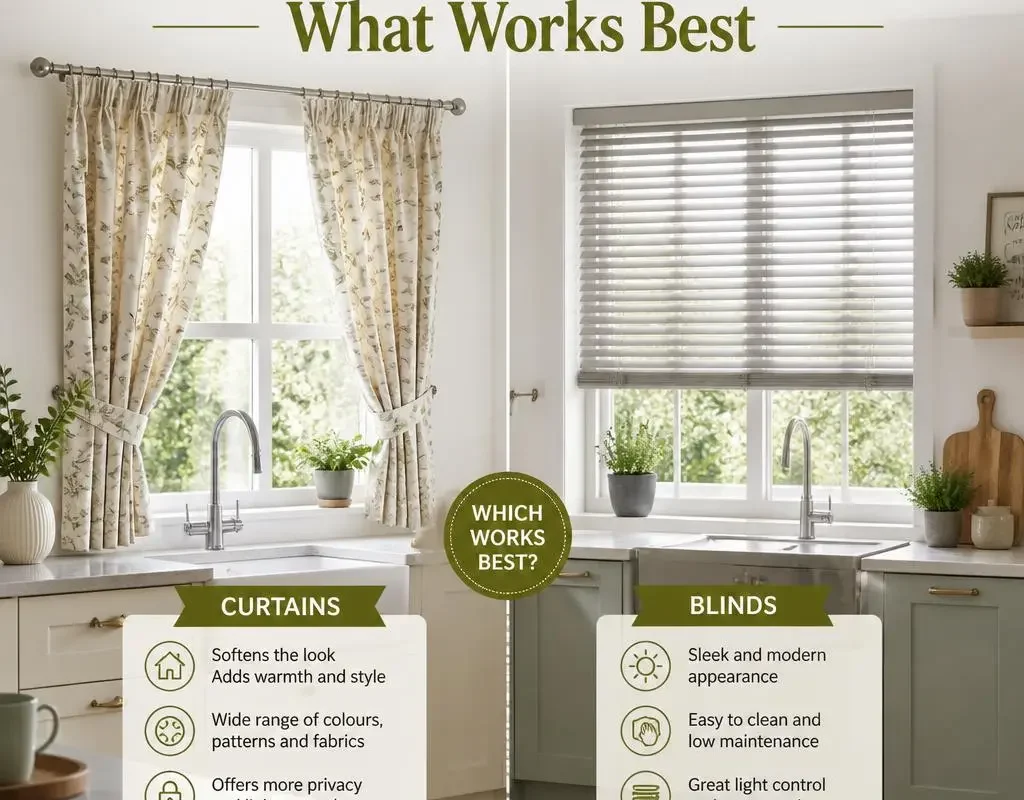
 by
by A kitchen window takes more punishment than any other in the house — steam, grease, splashes, and constant use — so the usual rules for blinds and curtains don’t fully apply here. This guide covers what actually works over a kitchen window, and where curtains still have a place.

Why the Kitchen Is Different
Steam from cooking, grease in the air, and splashes from the sink all shorten the life of fabric window treatments faster than in any other room. A material that looks fine in a living room can warp, stain, or need constant washing over a kitchen window. This is why blinds, rather than curtains, tend to do most of the practical work here, with curtains playing a smaller, more decorative role if used at all. For the general case for combining the two, see our blinds and curtains together guide.
Best Blind Materials for a Kitchen
- Faux wood or PVC venetian blinds – resist warping and moisture damage far better than real wood, and wipe clean easily
- Aluminium venetian blinds – fully moisture-resistant and easy to wipe down after cooking
- Vinyl or laminated roller blinds – simple to clean, and widely available in wipeable, kitchen-rated fabrics
Real wooden blinds and untreated fabric Roman blinds are best avoided directly over a sink or hob, since both absorb moisture and grease more readily than the options above. For a broader rundown of blind types, see our different types of blinds guide.
The Sink Window: A Splash Zone
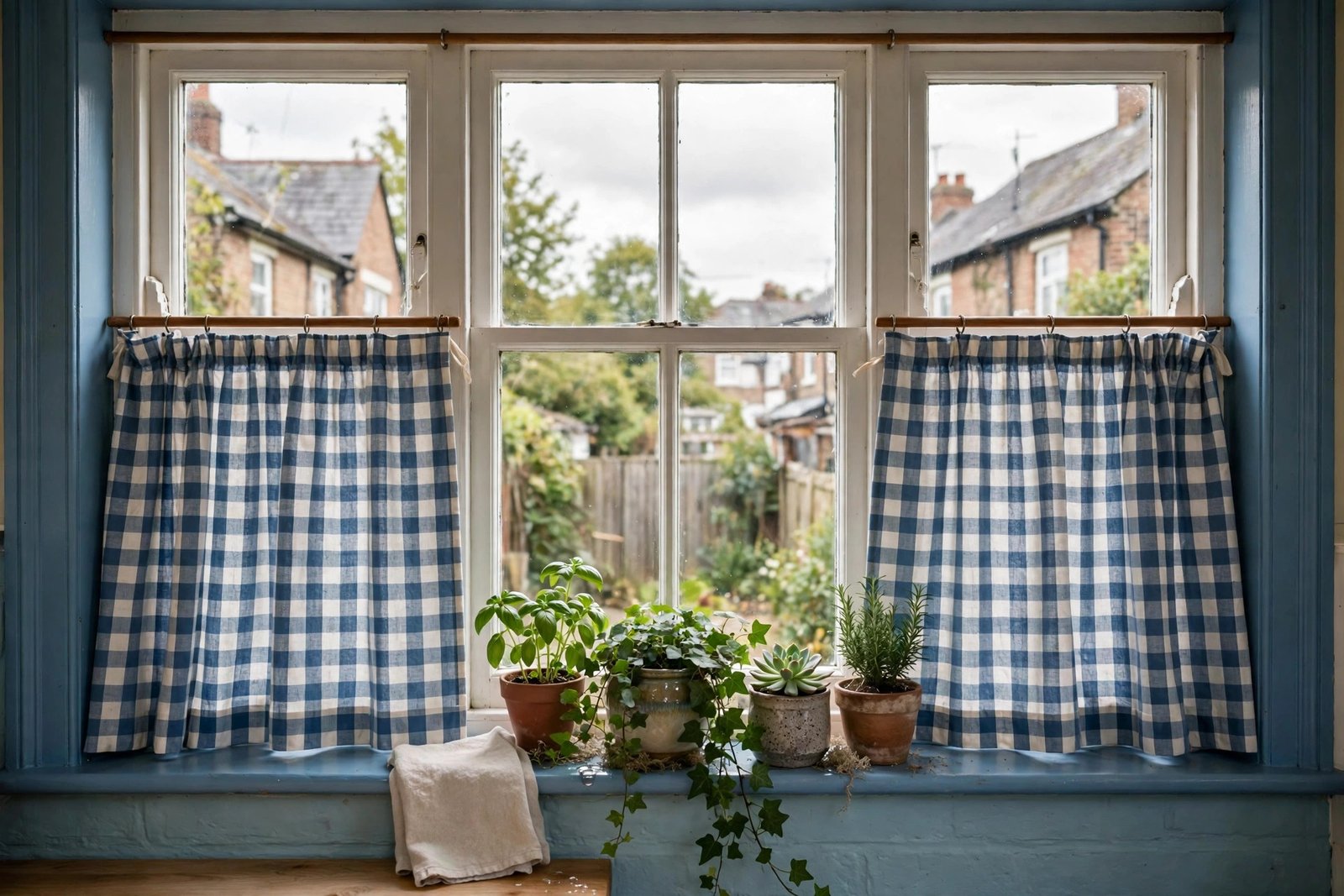
The window directly above a sink gets the most direct exposure to water. A short, wipeable blind sitting just above the sill, rather than a full-length treatment trailing near the taps, keeps fabric or slats away from splashes altogether. Café-style curtains covering only the lower half of the window are a traditional alternative here, but they still need washing more often than a wipeable blind would.
Do Curtains Have a Place in the Kitchen at All?
Yes, but with one important safety caveat: curtains should never hang close to a hob or any open flame, since fabric near a cooking area is a genuine fire risk. Where a kitchen window is well away from the cooker, lightweight, washable curtains can still add softness, particularly paired with a plain blind underneath for the practical, everyday light control. Keep any curtain fabric machine-washable, since kitchen fabric picks up cooking odours faster than fabric elsewhere in the home.
Light Control and Privacy Over a Kitchen Sink
Kitchens are often used at different times of day for different tasks — bright, full light for food prep, softer light in the evening. A venetian or vertical blind that tilts, rather than only raising and lowering, gives that flexibility without needing a second treatment layered on top.
Child Safety in the Kitchen
Kitchens often have blind cords within reach of young children standing at a table or in a highchair nearby. As with any room, corded blinds should meet UK child safety standards (BS EN 16433/16434), with cords fitted with breakaway connectors or wound onto a cleat well above reach — worth double-checking in a kitchen specifically, since furniture is often pulled closer to the window here than in other rooms.
Matching a Busy Kitchen Without Adding More Pattern
Kitchens already carry a lot of visual information — cabinets, worktops, appliances, tiling. A plain blind in a colour that picks up one existing tone in the room (a cabinet colour or worktop shade) usually reads better than introducing a new pattern at the window. If curtains are used as an accent, keep them plain too, or reserve pattern for one element only.
Grease and Steam: The Real Enemies
Kitchens attack window treatments with airborne grease and steam — the combination that ruins fabrics fastest. This single fact should drive your choice: whatever you pick must survive, and be cleanable from, this assault. Smooth, non-porous surfaces (PVC, aluminium, coated fabrics) wipe clean; textured weaves and natural fibres absorb grease permanently. Position treatments as far from the hob as the window allows, and always run the extractor fan — it protects your blinds as much as your walls.
Blinds for Kitchen Doors
Kitchen back doors — often half-glazed — need treatments that handle constant use. Perfect Fit blinds on the glazed panels move with the door and stay neat; roller blinds on a simple bracket work for full-glazed doors. Avoid long curtains near doors (hygiene and fire risk) and anything with cords at hand height. If the door is your main entrance, prioritise durability over delicacy — it will be grabbed, bumped and splashed daily.
Easy-Clean Champions: What Wipes Down Best
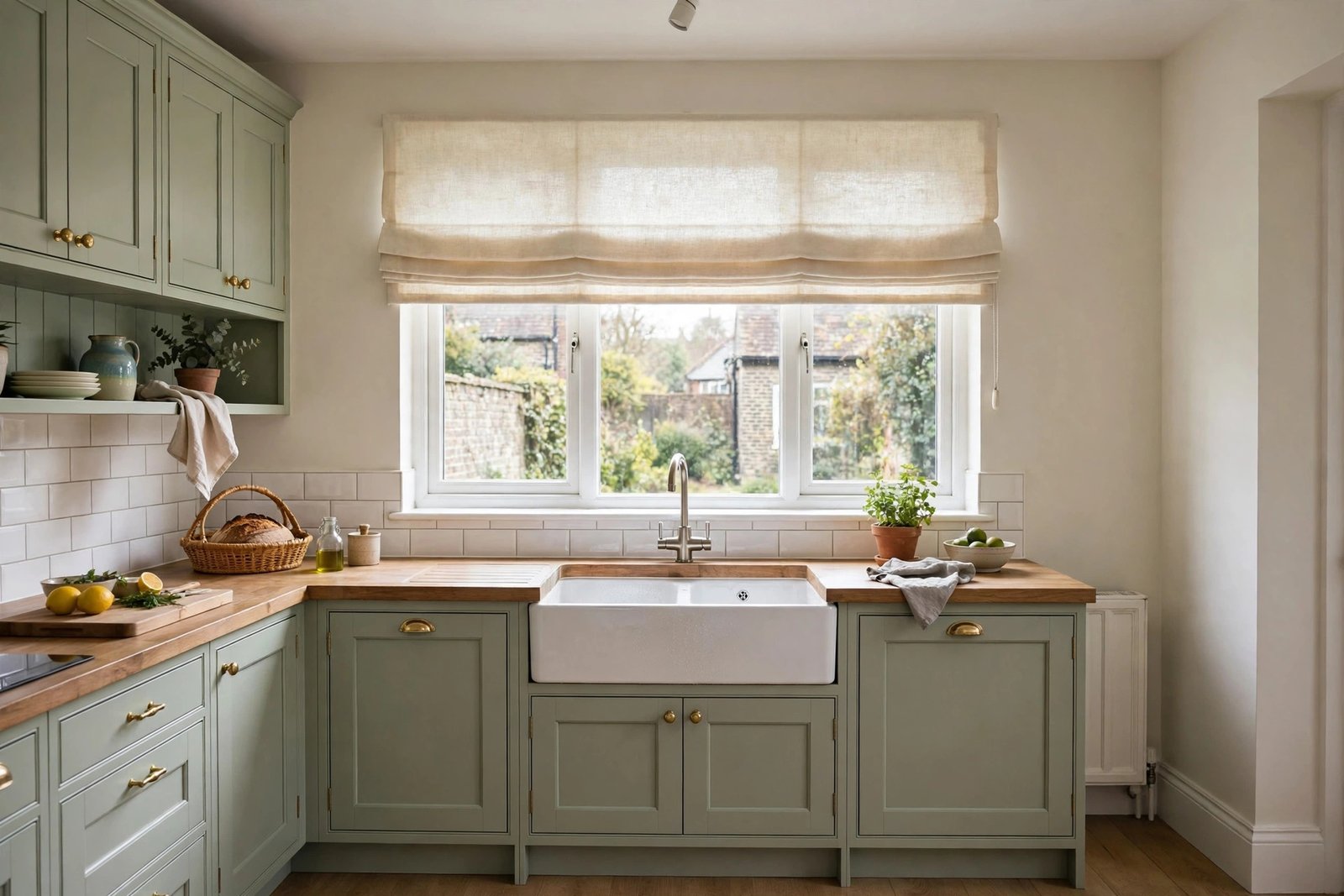
Ranked by cleanability: 1. PVC roller blinds — wipe and done. 2. Aluminium venetians — quick slat wipe. 3. Faux-wood venetians — wipeable but textured. 4. Coated roman blinds — spot clean only. 5. Real wood and fabric — avoid in kitchens. Whatever you choose, a monthly wipe-down prevents the baked-on grease layer that eventually defeats cleaning. In hard-water areas, dry after wiping to prevent mineral spots on slats.
Coordinating With Kitchen Colours
Kitchens already contain many colours — units, worktops, tiles, appliances — so window treatments should calm, not compete. Pick out the worktop or a secondary tile colour for blinds; keep patterns minimal where splashbacks are busy. White and off-white blinds suit most kitchens and maximise light, but show grease fastest — mid-tones hide more. If your kitchen is genuinely colourful, a quiet neutral blind lets the kitchen itself be the star.
When to Skip Window Treatments Entirely
Sometimes the best treatment is none. If your kitchen window faces no neighbours and gets no direct sun, bare glass maximises light and eliminates cleaning entirely — very defensible in a working kitchen. Window film gives privacy without fabric for overlooked windows. And for rental kitchens, the absence of a treatment is one less thing to maintain or damage. A treatment should solve a problem (privacy, glare, heat); with no problem, skip it. Door-specific options are in our patio door blinds guide.
Frequently Asked Questions
What’s the best blind for a window above a kitchen sink?
A short, wipeable venetian blind in aluminium, faux wood, or PVC generally holds up best to splashes and steam directly above a sink.
Are curtains ever suitable in a kitchen?
Yes, provided they’re kept well away from the hob and any open flame, and made from a washable fabric, since kitchen fabric needs cleaning more often than elsewhere.
Should kitchen blinds and curtains match the rest of the house?
Not necessarily. Practical material choice matters more in a kitchen, so it’s reasonable for the window treatment here to differ from softer fabrics used elsewhere in the home.
What blinds are best for kitchens?
Moisture and grease-resistant types: PVC roller blinds, aluminium or faux-wood venetians. Avoid real wood (warps) and uncoated fabrics (absorb grease).
Can you have curtains in a kitchen?
Short cafe-style curtains on windows away from the hob can work, but they absorb grease and need frequent washing. Blinds are more practical for most kitchens.
Are wooden blinds OK in a kitchen?
Real wood is not ideal — steam warps it over time. Faux-wood venetians give the same look with full moisture resistance and are the safer choice.