 by
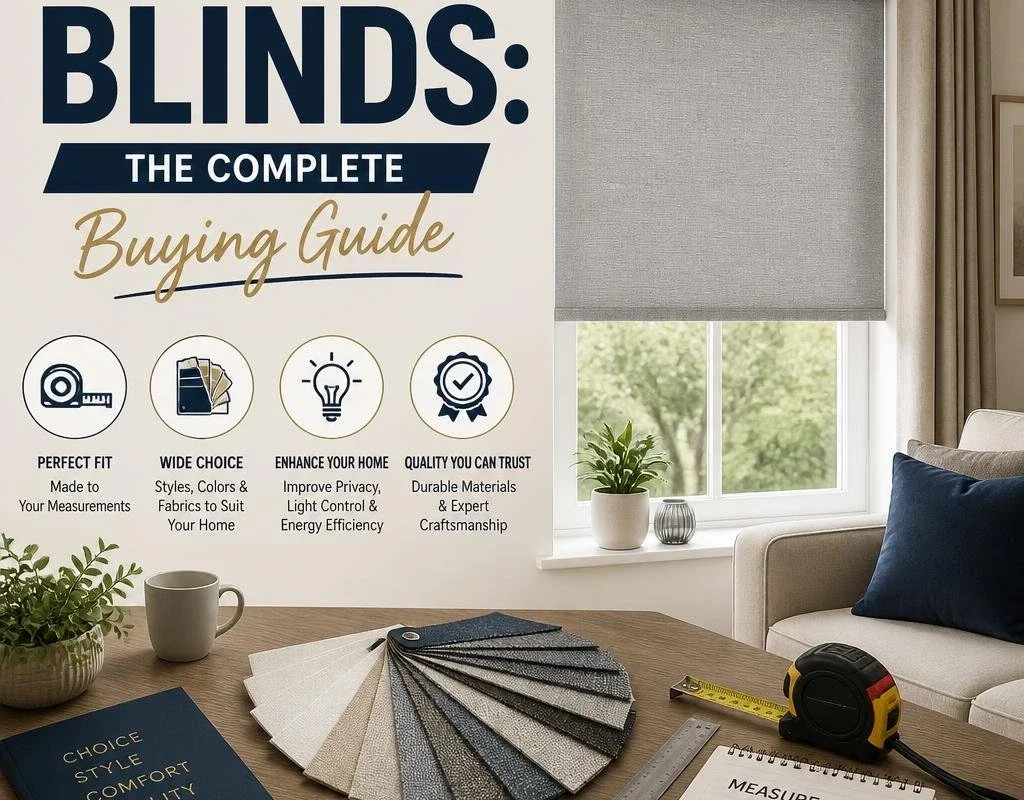
by Made to measure blinds are cut and built to the exact dimensions of your window, rather than sold in fixed standard sizes. This guide covers everything worth knowing before you order: how the process works, which blind type suits which window, materials, safety rules, and how to get an accurate measurement the first time.
What “Made to Measure” Actually Means
Unlike off-the-shelf blinds, which come in a limited range of standard widths and drops, made to measure blinds are manufactured specifically for your window’s exact dimensions. This matters more than it might seem: even a small gap between the blind and the window frame lets light in around the edges and can look noticeably unfinished, especially on bay windows, doors, or non-standard openings.
Main Types of Made to Measure Blinds
- Roller blinds – a single piece of fabric on a roller mechanism, simple and versatile for most rooms
- Venetian blinds – horizontal slats in aluminium or wood, offering precise light control by adjusting slat angle
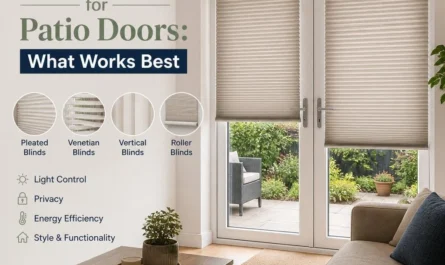
- Vertical blinds – hanging fabric or PVC vanes, well suited to wide windows, sliding doors, and patio doors
- Roman blinds – fabric that folds into neat horizontal pleats when raised, giving a softer, more decorative look
- Perfect fit blinds – click into the window frame itself with no drilling, popular for uPVC windows and doors
- Day and night (vision) blinds – alternating sheer and opaque bands that shift between privacy and light control
If you’re weighing these options against each other in more depth, our different types of blinds guide breaks down the pros and cons of each.
Choosing the Right Blind for Your Window Type
Standard windows suit almost any blind type, but some window styles benefit from a more specific choice. Bay windows often work best with a set of smaller blinds fitted to each pane, rather than one large blind spanning the whole bay, since this avoids an awkward, heavy-looking result. Our blinds for bay windows guide covers this in more detail. Patio and sliding doors, meanwhile, usually suit vertical blinds or specialist door blinds designed to move with the door track, which our blinds for patio doors guide explains further.
No-Drill and Perfect Fit Options
For renters, or anyone who’d rather avoid drilling into window frames, no-drill and perfect fit blind systems clip directly onto the frame using brackets that grip the frame itself. These are particularly popular for uPVC windows and doors, since they avoid damaging double glazing seals. Installation is generally straightforward enough for a confident DIYer, without needing a professional fitter.
Materials and Fabrics
Material choice affects both appearance and practicality. Blackout fabrics suit bedrooms, moisture-resistant PVC or aluminium suits bathrooms and kitchens, and natural materials like wood or bamboo add warmth to living spaces. Sheer fabrics let in soft light while maintaining some privacy, which works well in rooms that get a lot of direct sun.
Child Safety Regulations for Blinds
UK and EU regulations, set out in British Blind and Shutter Association (BBSA) guidance and standards BS EN 16433 and BS EN 16434, require corded blinds to include child-safety features, such as breakaway connectors or cord cleats, to reduce the risk of strangulation. Reputable made to measure suppliers build these safety features in as standard, but it’s worth confirming this explicitly if buying from a smaller or overseas retailer, particularly for blinds fitted in children’s bedrooms.
How to Measure Your Window Accurately
- Decide whether the blind will fit inside the window recess or outside it, covering the frame
- For a recess fit, measure the width at the top, middle, and bottom of the recess, and use the smallest figure
- Measure the drop (height) at the left, centre, and right of the window, again using the smallest measurement
- For an outside fit, measure the area you want the blind to cover, allowing extra width and drop to overlap the frame and block light gaps
- Always measure in millimetres for the most accurate result, since small errors matter more with tighter tolerances
Manual vs. Motorised Blinds
Manual blinds remain the more affordable, simpler option, and are perfectly practical for most windows. Motorised or smart blinds, controlled by remote or app, add convenience, particularly for hard-to-reach windows, skylights, or households wanting integration with a wider smart home system, though they cost considerably more and need mains or battery power.
Ordering and Lead Times
Because made to measure blinds are manufactured specifically for your window, expect a longer lead time than picking up a standard blind in-store, typically ranging from a few days to a couple of weeks depending on the supplier and blind type. Double-check your measurements before ordering, since made to measure products are usually non-returnable once cut to size. If you’re ordering curtains rather than blinds, our made to measure curtains guide covers the curtain-specific measuring process in full.
Frequently Asked Questions
Are made to measure blinds worth the extra cost over standard sizes?
For most windows, yes, particularly for anything non-standard, since an accurate fit noticeably improves both appearance and light control.
Do made to measure blinds need professional installation?
Most are designed for straightforward DIY fitting, though no-drill and perfect fit systems are generally the simplest for confident DIYers.
Are corded blinds safe for children’s bedrooms?
Corded blinds sold in the UK must meet child safety standards, including breakaway or cleat systems, but cordless or motorised options remove the risk entirely.