 by
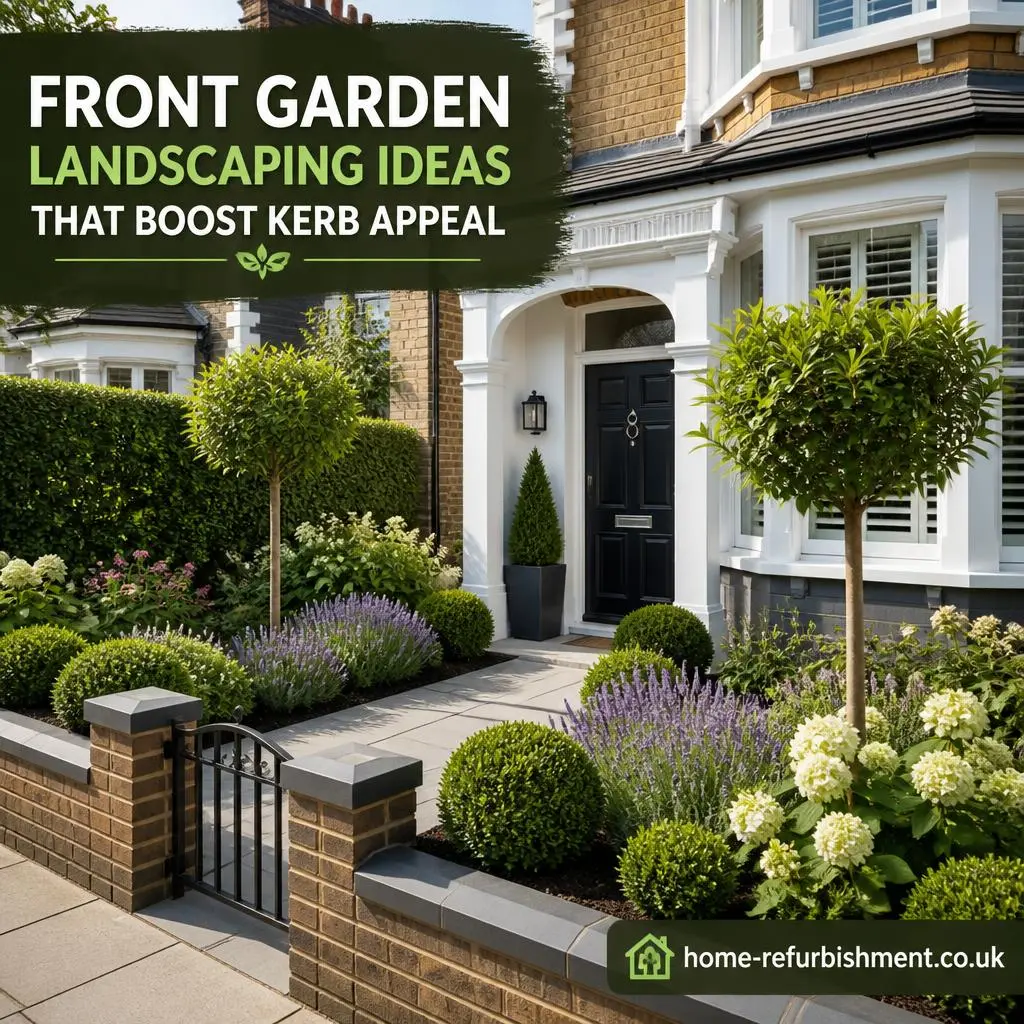
Front garden landscaping ideas can transform how a property looks from the street, often for relatively little cost compared with a full renovation. This guide covers practical ways to boost kerb appeal while keeping the space functional.
Why the Front Garden Matters
The front garden is usually the first thing visitors, and potential buyers, see, so it sets expectations for the rest of the property. A well-considered front garden doesn’t need to be elaborate, just tidy, purposeful, and in keeping with the style of the house.
Balancing Parking and Planting
Many UK front gardens need to accommodate parking, which can limit planting space. Permeable paving or gravel allows parking while still supporting drainage and some planting around the edges, and helps avoid the planning permission requirements that apply to larger areas of impermeable paving over 5m².
Low-Maintenance Front Garden Ideas
- Gravel beds with structural, drought-tolerant planting
- Evergreen shrubs that look tidy year-round with minimal upkeep
- Raised beds, which are easier to maintain than ground-level borders
- A simple, well-defined path in a material that matches the property’s style
Choosing a Front Door Path
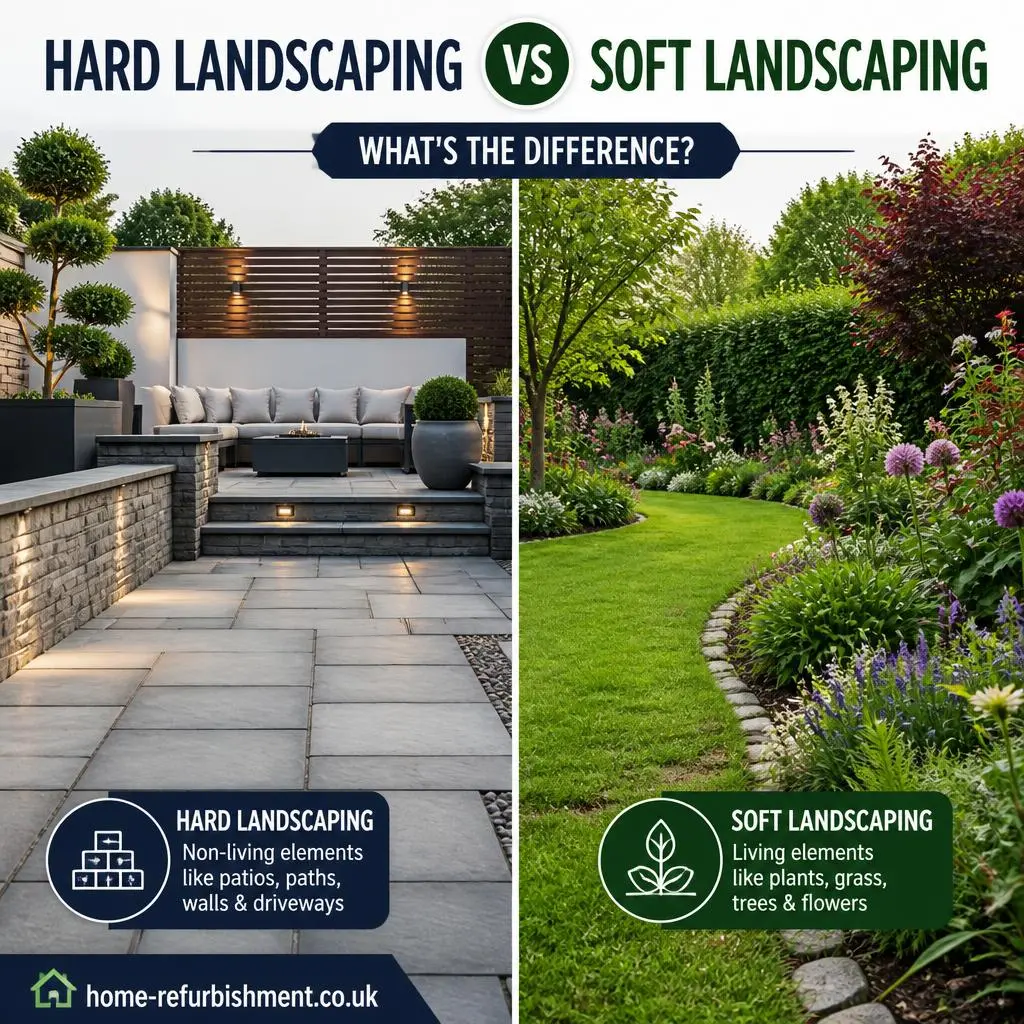
The path to your front door is a small detail that has a big visual impact. Keeping it in proportion with the house, and in a material that complements the property, ties the whole front garden together. Our hard vs soft landscaping guide covers material choices that work well here.
Lighting for Kerb Appeal
Simple path or wall-mounted lighting improves both safety and appearance after dark, and it’s often one of the more affordable ways to add impact to a front garden without a major redesign.
Boundaries and Front Garden Rules
As with back gardens, boundary fences and walls at the front of a property are limited to 1m in height without planning permission where they border a road, compared with 2m elsewhere. This is worth checking before adding taller screening or walls to a front garden.
Front Garden Ideas for Small Spaces and Terraces
Many UK front gardens are little more than a strip between the house and the pavement, but small does not mean hopeless. A single well-chosen tree — a compact cherry or rowan — gives height without overwhelming the space. Raised beds along the house wall create planting depth, while a narrow path in brick or gravel keeps the layout crisp. Avoid fussy designs with too many small features; in a tiny front garden, three strong elements beat a dozen competing ones. Even a few large pots by the front door can transform the approach.
Planting for Year-Round Interest in the UK
The classic front-garden mistake is planting only for summer. Aim for structure in every season: evergreen shrubs like box, yew or pittosporum hold the garden together through winter, spring bulbs bring early colour, and ornamental grasses carry autumn interest into the colder months. In the UK climate, hardy perennials such as lavender, echinacea and salvias give months of flowers with minimal fuss. A garden that looks deliberate in February as well as July is the real mark of good planting.
Driveway Alternatives That Keep Your Garden Green
Paving over the entire front garden is increasingly discouraged — and in some areas restricted — because of rainwater runoff and flood risk. Permeable alternatives keep parking practical without concreting everything: gravel grids, permeable block paving and reinforced grass systems all let water drain through. A popular compromise is two planted wheel tracks with a green strip between them, which reads as garden rather than car park. Check your local council’s rules before committing, since some areas now require planning permission for non-permeable driveways over five square metres.
Front Garden Ideas on a Budget
Kerb appeal does not require a landscaper’s invoice. A fresh coat of paint on the front door — deep green, navy or classic black — is the single highest-impact cheap upgrade. Replacing tired concrete with gravel costs a fraction of paving and instantly softens the space. Divide and move existing perennials rather than buying new plants, and check local gardening groups where neighbours often give away divisions free. Even just weeding, edging the lawn and jet-washing the path can make a front garden look newly landscaped for almost nothing.
Adding Privacy Without High Fences
Front gardens face the street, but that does not mean living behind a fortress wall — which can look hostile and may breach local height rules. A low hedge of privet, laurel or photinia at around one metre gives a sense of boundary while keeping sightlines open. For more screening, pleached trees or tall grasses in raised planters add height without the bulk of a fence. Remember that front boundaries over one metre usually need planning permission, so check before building. Browse our garden landscaping guides for more outdoor ideas.
Frequently Asked Questions
Do I need planning permission to pave my front garden?
Only if the paved area exceeds 5m² and uses non-permeable materials. Permeable paving or gravel generally avoids this requirement.
What’s the cheapest way to improve a front garden?
Tidying existing planting, adding gravel or bark to bare beds, and simple lighting are all low-cost ways to noticeably improve kerb appeal.
How tall can a front garden wall or fence be?
Generally up to 1m without planning permission where it borders a road, or 2m elsewhere on the property.
Do I need permission to turn my front garden into a driveway?
You may need planning permission if you are laying non-permeable surfacing over more than five square metres, or if you are dropping the kerb for vehicle access. Permeable surfaces like gravel usually avoid the permission requirement.
What are the best low-maintenance plants for a UK front garden?
Lavender, box, hebe, ornamental grasses and hardy geraniums all thrive with minimal care in UK conditions. Evergreen shrubs give year-round structure without constant attention.
How can I make my front garden more private?
A metre-high hedge, pleached trees, or tall planters with grasses all add screening without breaching front-boundary height rules. Layered planting feels softer and more welcoming than a solid fence.