 by
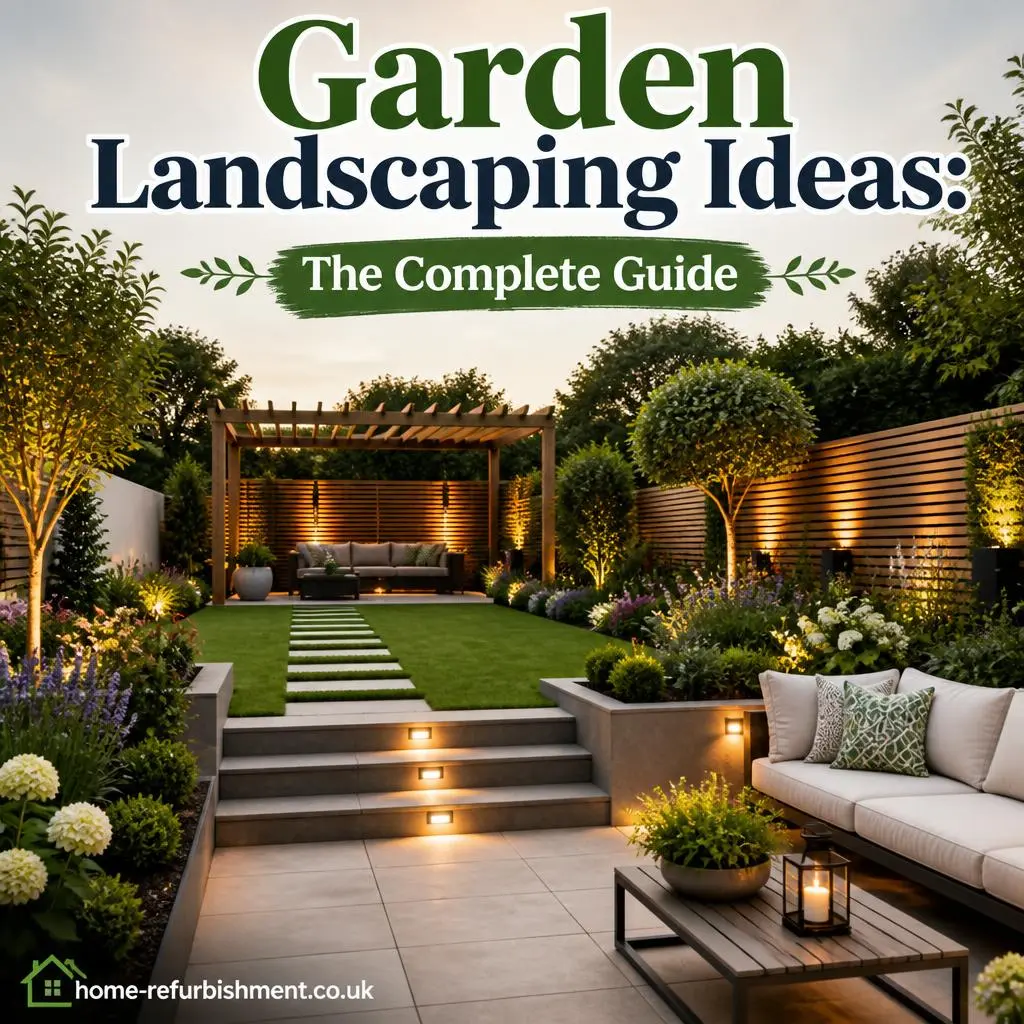
by Good garden landscaping ideas turn an outdoor space into somewhere you actually want to spend time, rather than a patch of grass that gets ignored. This guide covers the main approaches worth considering, whatever size or style of garden you’re working with.
Start With How You’ll Use the Space
Before choosing plants or paving, think about how you actually want to use the garden. Entertaining, growing your own food, a play area for children, or simply a calm space to relax all point towards different layouts and priorities.
Hard Landscaping vs. Soft Landscaping
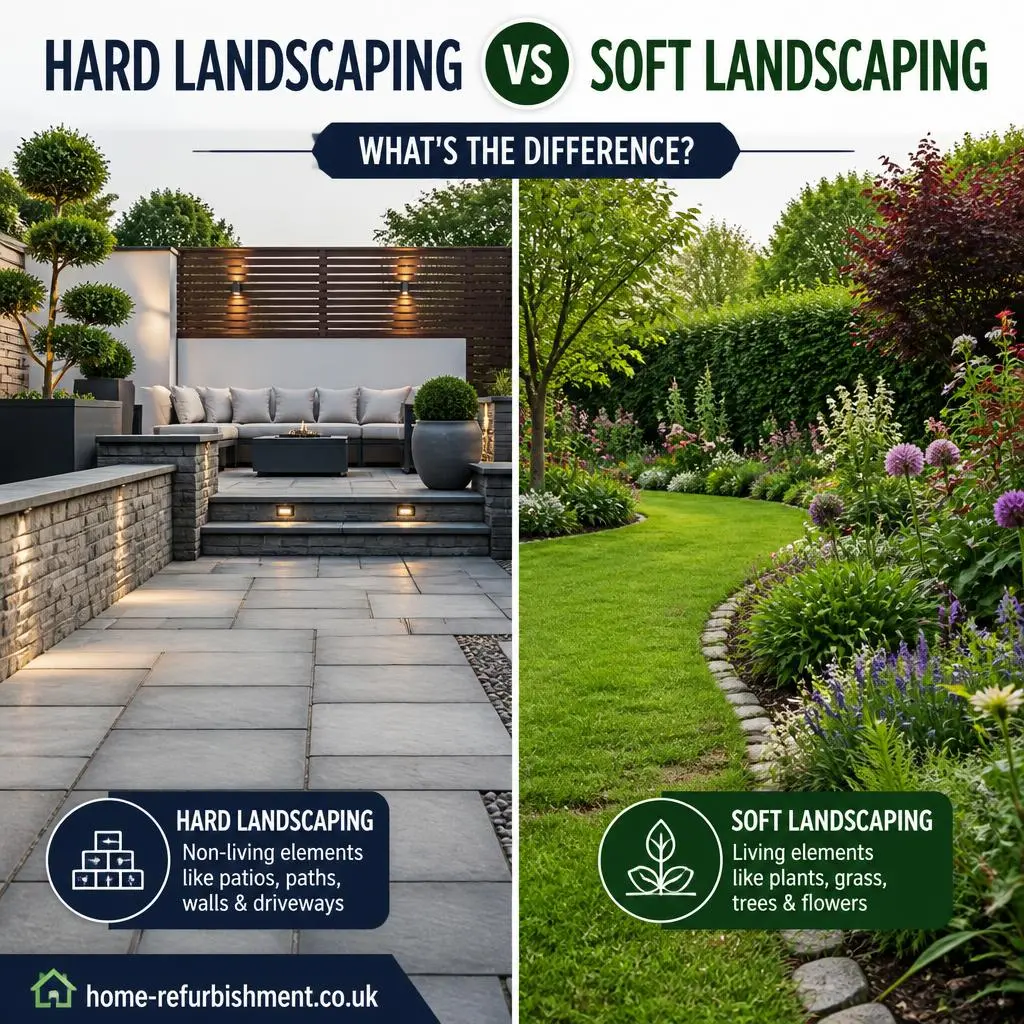
Landscaping generally splits into two categories: hard landscaping, covering paving, decking, walls, and structures, and soft landscaping, covering planting, lawns, and borders. A balanced garden usually needs both. For a deeper look at this distinction, see our hard vs soft landscaping guide.
Popular Garden Landscaping Styles
- Cottage garden – dense, informal planting with a mix of colours and textures
- Modern minimalist – clean lines, structured planting, and a limited material palette
- Mediterranean – gravel, drought-tolerant planting, and terracotta accents
- Japanese-inspired – calm, considered planting with an emphasis on structure over colour
Planning Permission and Boundary Rules
Most garden landscaping doesn’t need planning permission, but there are a few exceptions worth knowing. Paving over 5m² of front garden generally requires permission unless it uses permeable materials that allow water to drain naturally, in line with UK sustainable drainage (SuDS) guidance. Fences and walls are also restricted to 2m in height without permission, dropping to 1m where they border a road. Check with your local authority before larger boundary or paving projects.
Working With a Landscaper
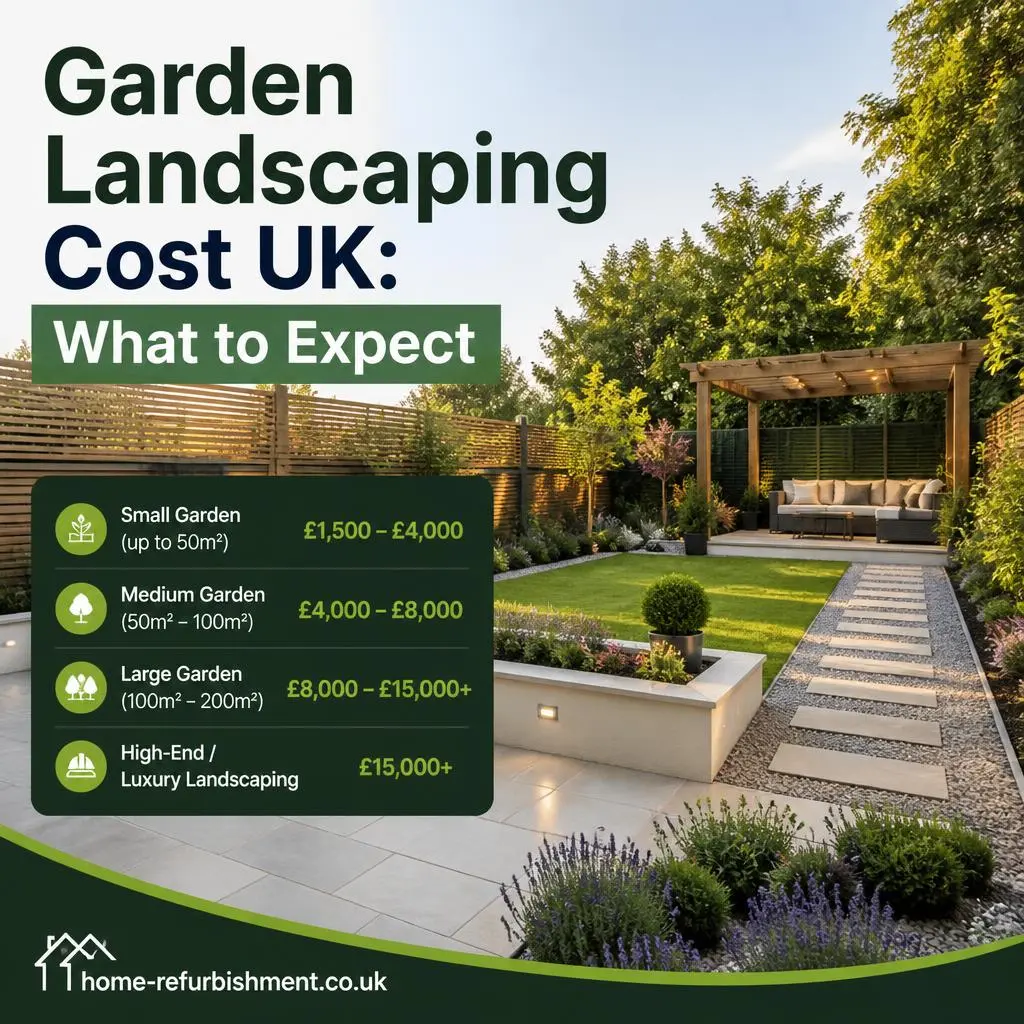
For larger projects, hiring a professional landscaper can save time and avoid costly mistakes. Look for members of the British Association of Landscape Industries (BALI), which vets contractors against recognised industry standards. For a sense of what professional landscaping typically costs, see our garden landscaping cost UK guide.
Choosing the Right Plants
Match plants to your garden’s actual conditions, including sun exposure, soil type, and drainage, rather than choosing purely on appearance. The Royal Horticultural Society (RHS) offers a widely used plant selector tool that filters by these conditions, which is a useful starting point for UK gardens.
Landscaping for Small or Awkward Gardens
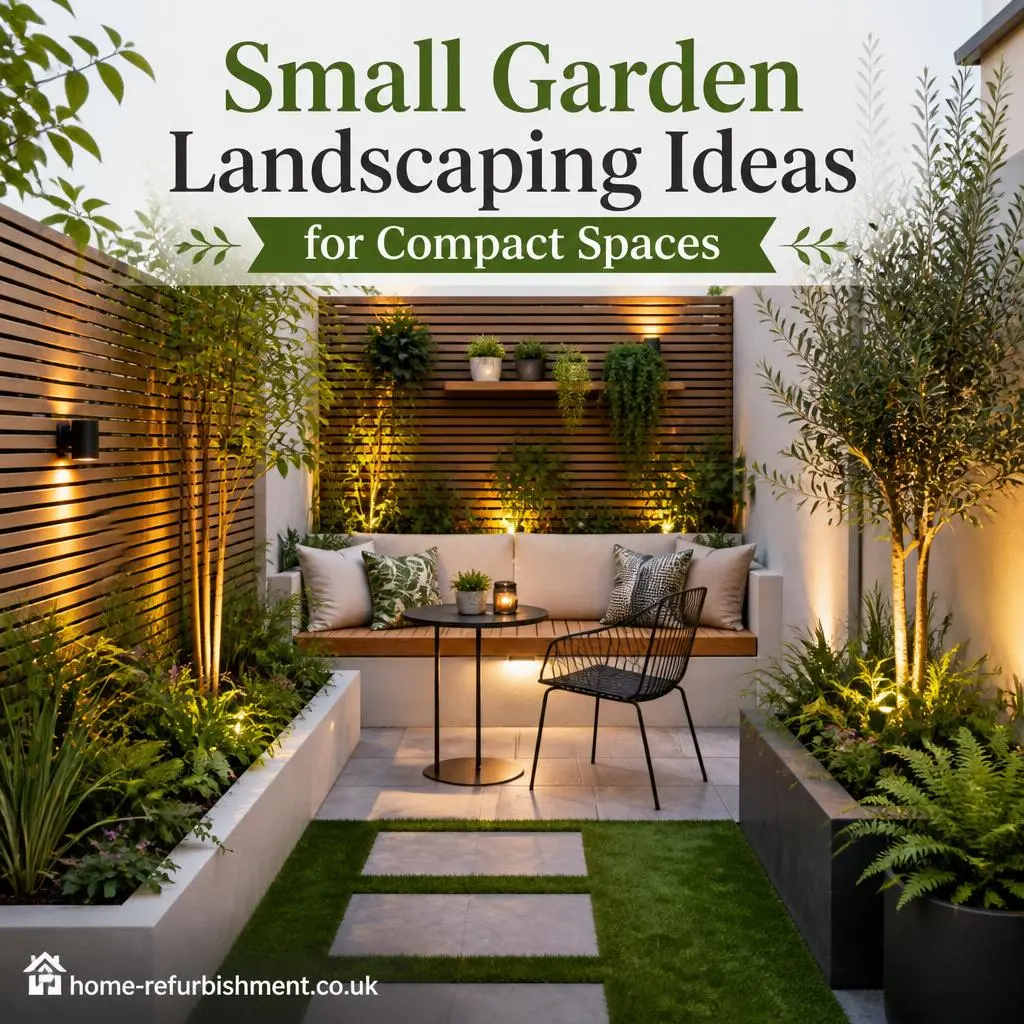
Compact or oddly shaped gardens benefit from a slightly different approach than larger plots. Our small garden landscaping ideas guide covers layout tricks specifically for making the most of limited space.
Cottage Garden vs. Contemporary: Choosing Your Style
The two dominant UK garden styles suit different temperaments. Cottage gardens — abundant, romantic, slightly wild — forgive beginners and suit period homes; think roses, lavender, foxgloves in joyful abundance. Contemporary gardens — clean lines, restrained planting, architectural structure — suit new builds and demand more discipline to maintain the look. Neither is “better”; the wrong choice is the one fighting your house style and maintenance appetite. Visit a few real gardens (NHS open gardens are ideal) before committing.
Wildlife-Friendly Landscaping
Designing for wildlife and designing beautifully increasingly overlap. Native hedging (hawthorn, blackthorn, hazel) feeds birds and looks superb; a small pond — even a buried bucket — transforms garden ecology; log piles and undisturbed corners shelter hedgehogs and insects. Choose single-flowered varieties over doubles (bees cannot access double blooms) and leave seed heads standing through winter. A wildlife garden is not a messy garden — structure plus nature-friendly planting reads as intentional and lush.
Low-Maintenance Landscaping for Busy People
Be honest about the hours you will actually spend. Large beds of shrubs and ground cover need a fraction of the attention of mixed borders; gravel and mulch suppress weeds between plants. Limit lawns — they demand weekly summer mowing — or replace with meadow-style planting cut twice yearly. Automated irrigation for pots pays for itself in saved plants. The lowest-maintenance garden of all is well-designed hard landscaping with architectural planting: structure does the work that fussy perennials would.
Lighting Design for Gardens
Garden lighting is not security floodlights — it is atmosphere. Uplight one tree or architectural plant as a focal point; wash walls with warm downlights; dot path edges with low bollards. Keep it subtle: a few well-placed fittings beat a dozen scattered ones, and warm white (2700K) flatters planting while cool white looks institutional. Solar options handle accents, but mains-powered lighting is more reliable for key features. Always consider neighbours — light your garden, not theirs.
Common Landscaping Regrets (and How to Avoid Them)
Ask experienced gardeners and the same regrets surface. Too much lawn for the mowing appetite. Trampolines and sheds placed where they dominate the view. Planting thuggish spreaders (bamboo, mint) without root barriers. And the biggest: no master plan — years of piecemeal changes costing more than one designed scheme. Avoid them all with one habit: sketch the whole garden on paper before buying a single plant. For cost planning, our landscaping costs guide breaks down budgets.
Frequently Asked Questions
Do I need planning permission to landscape my garden?
Usually not, though paving over a certain area at the front of the property, and taller boundary walls or fences, may require permission.
Should I hire a landscaper or do it myself?
This depends on the project’s scale. Planting and basic paving are often DIY-friendly, while structural work, drainage, or large paved areas usually benefit from professional input.
What’s the difference between hard and soft landscaping?
Hard landscaping covers structural elements like paving and walls, while soft landscaping covers plants, lawns, and borders. Most gardens use a mix of both.
What is the most popular garden landscaping style in the UK?
Contemporary minimalist designs dominate new builds, while cottage-style abundant planting remains hugely popular for period homes. Wildlife-friendly naturalistic planting is the fastest-growing trend.
How do I plan a garden landscaping project?
Start with how you will use the space, sketch a master plan on paper, set a budget with 15% contingency, then phase: structure and drainage first, planting last.
Is garden landscaping worth the money?
Usually yes — good landscaping returns most of its cost at sale and sells homes faster. The sweet spot is a tidy, low-maintenance design rather than an extravagant one.
Related Garden Landscaping Guides
- Garden Landscaping Cost UK: What to Expect
- Small Garden Landscaping Ideas for Compact Spaces
- Front Garden Landscaping Ideas That Boost Kerb Appeal
- Hard Landscaping vs Soft Landscaping: What’s the Difference?