 by
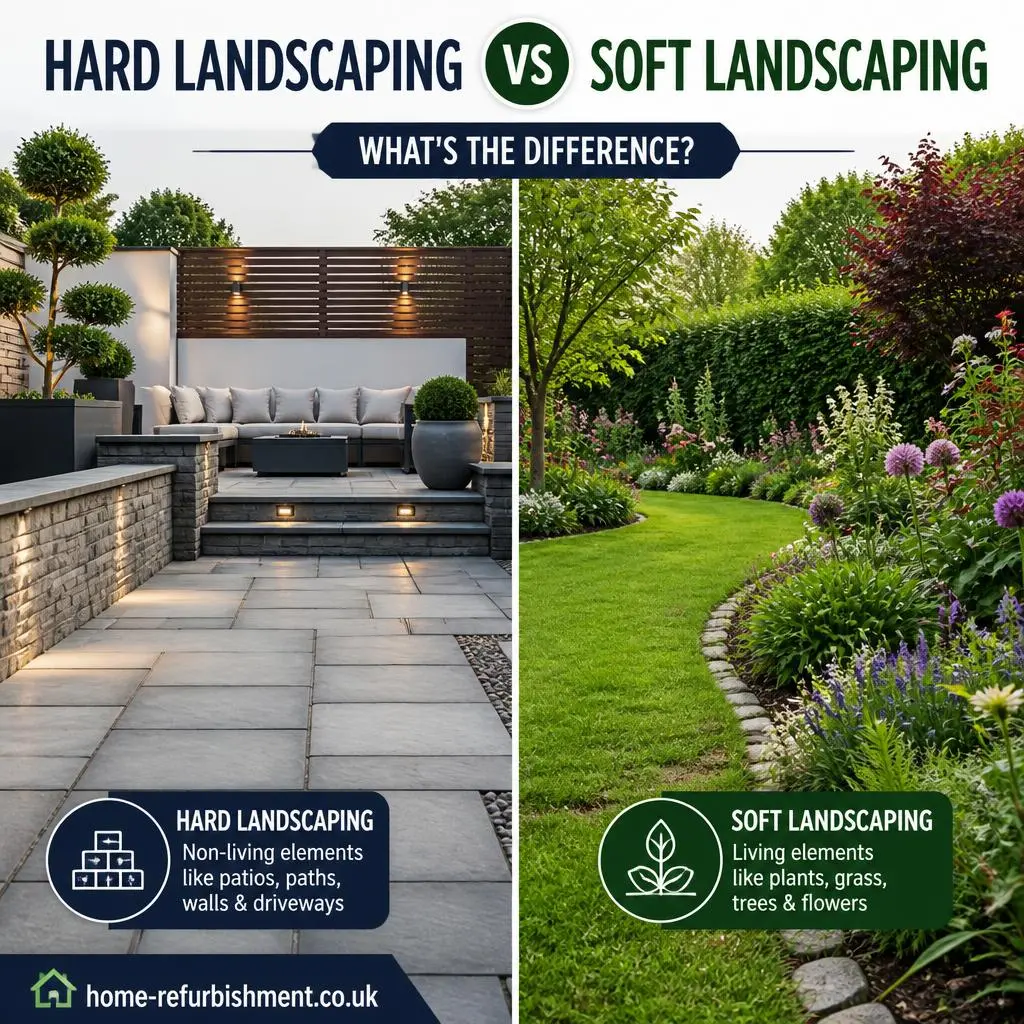
Garden hard landscaping and soft landscaping are the two building blocks of any garden design. Understanding the difference helps you plan a project, budget accurately, and decide what to tackle yourself versus hiring a professional for.
What Is Hard Landscaping?
Hard landscaping covers the structural, non-living elements of a garden: paving, decking, walls, fences, paths, and features like pergolas or raised beds. These elements typically define a garden’s layout and require the most upfront planning, since they’re expensive and difficult to change later.
What Is Soft Landscaping?
Soft landscaping refers to the living, planted elements: lawns, borders, trees, shrubs, and flowers. Unlike hard landscaping, soft elements can evolve and be adjusted more easily over time, making them a good area to experiment or phase in gradually.
Which Should You Plan First?
Hard landscaping generally comes first in the planning process, since paths, seating areas, and boundaries define the overall structure of the garden. Soft landscaping then fills in and softens that structure. Our garden landscaping ideas guide covers this planning process in more detail.
Cost Differences Between Hard and Soft Landscaping
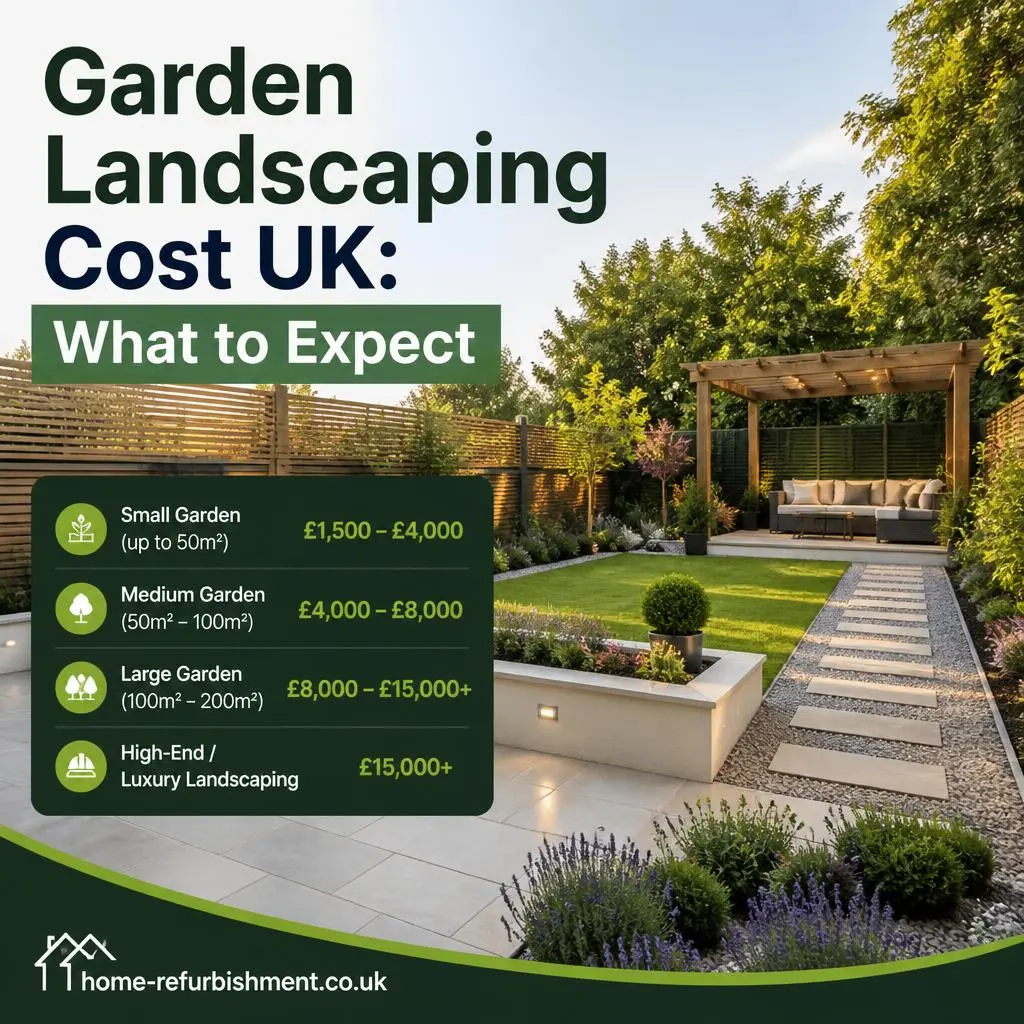
Hard landscaping is typically more expensive due to materials and labour-intensive groundwork, while soft landscaping costs vary widely depending on plant size and maturity. Our garden landscaping cost UK guide breaks down typical costs for both categories.
Permeable vs. Non-Permeable Hard Landscaping
Choosing permeable materials for paths, patios, and driveways, rather than solid concrete or non-permeable paving, supports natural drainage and can help avoid planning permission requirements for larger paved areas, in line with UK sustainable drainage (SuDS) guidance.
DIY-Friendly vs. Professional Work
- DIY-friendly: planting borders, laying simple gravel paths, basic lawn care
- Best left to professionals: retaining walls, drainage work, structural decking, and large paved areas
For structural hard landscaping work, look for a landscaper registered with the British Association of Landscape Industries (BALI).
Balancing Hard and Soft in a Small Garden
In compact gardens, the balance between hard and soft landscaping matters even more, since too much paving can make a small space feel stark. Our small garden landscaping ideas guide covers how to strike that balance in limited space.
Popular Hard Landscaping Materials Compared
Natural stone (sandstone, limestone, slate) looks superb and lasts decades, at £40 to £100 per square metre laid. Porcelain paving offers crisp modern lines, resists staining and needs little maintenance, but costs more and can be slippery when wet — choose textured finishes. Block paving is the driveway classic: durable, repairable brick by brick, from £50 per square metre. Gravel is cheapest and fully permeable but migrates and needs topping up. Match the material to the house style — porcelain suits new builds, stone suits period properties.
Drainage: The Unsexy Bit That Matters Most
Every hard surface needs somewhere for water to go. UK rules increasingly require permeable solutions or directed drainage for new paving — water must not simply run onto the highway. Plan falls (gentle slopes) away from the house at roughly 1:60, direct water to soakaways, borders or proper drains, and consider a linear drain channel where patio meets lawn. Getting drainage wrong means puddles, frost damage and undermined foundations; getting it right is invisible, which is exactly the point.
Edging: The Detail That Makes It Look Professional
The difference between amateur and professional hard landscaping is often just the edging. Steel or aluminium edging strips give razor-sharp lines between lawn and beds; stone setts create a classic border for patios; timber sleepers suit rustic schemes but eventually rot. Whatever you choose, bed it properly — edging that heaves after one winter ruins the whole effect. Budget 10% of your materials cost for edging and haunching; it is the cheapest way to make expensive paving look its best.
How Long Does Hard Landscaping Last?
Done properly, hard landscaping outlives most other garden investments. Natural stone and block paving: 25+ years. Porcelain: 20+ years with minimal maintenance. Timber decking: 10 to 15 years (less in shade). Gravel: indefinite, with periodic topping up. The sub-base matters more than the surface — a well-compacted MOT Type 1 base with proper drainage is what separates the 25-year patio from the 5-year one. Ask any contractor about their sub-base specification; vague answers are a red flag.
Maintaining Patios and Paths Year to Year
Jet-wash yearly in spring — but keep the lance moving on block paving or you will blast out the kiln-dried sand between joints (re-sand afterwards). Treat algae and lichen with a proper patio cleaner rather than bleach, which can discolour stone. Re-point loose mortar before winter frost widens the gaps. For a full picture of project costs, see our UK garden landscaping costs guide.
Frequently Asked Questions
Should hard or soft landscaping be done first?
Hard landscaping is generally planned and installed first, since it defines the garden’s structure before planting begins.
Is hard landscaping more expensive than soft landscaping?
Generally, yes, due to materials and labour, though soft landscaping costs can add up with larger or more mature plants.
Can I do hard landscaping myself?
Simple paths and small paved areas can be DIY-friendly, but structural work like retaining walls or drainage is best left to professionals.
What is the cheapest hard landscaping material?
Gravel is cheapest at £5–£15 per square metre for materials, plus it needs no drainage planning. Basic concrete slabs are the cheapest solid option, though less attractive than stone.
How long does block paving last?
25 years or more when laid on a proper sub-base with good drainage. Individual blocks can be lifted and replaced if damaged, which is a major advantage over poured surfaces.
Can I lay a patio myself?
Yes for small, simple patios if you are comfortable with groundwork — the sub-base and levels are the skilled part, not laying the slabs. Larger areas, drainage and retaining walls are best left to professionals.