 by
by A good living room storage cabinet solves clutter without sacrificing style. This guide covers the main types available, what to look for, and how to choose one that suits your space.
Why a Dedicated Storage Cabinet Helps
Open shelving looks great but doesn’t hide everyday clutter, such as remotes, chargers, or board games. A cabinet with doors or drawers keeps these items accessible but out of sight, which helps a living room feel calmer and more considered.
Common Types of Living Room Storage Cabinets
- Sideboards – long, low units ideal for dining-adjacent living rooms or as a TV console
- Media cabinets – designed around a TV, often with cable management built in
- Display cabinets – glass-fronted units suited to ornaments or collectables you want visible but protected
- Corner cabinets – make use of awkward corners other furniture can’t fill efficiently
If you’re looking at storage furniture more broadly, not just cabinets, our living room storage furniture guide covers additional options.
Choosing the Right Size
Measure your available wall space before buying, including height clearance if positioning below a TV or window. A cabinet that’s too large can dominate a room, while one that’s too small won’t provide meaningful storage.
Materials and Durability
Solid wood cabinets are durable and age well, though they cost more than MDF or veneer alternatives. For a busy household, look for scratch-resistant finishes and sturdy hinges, since these see frequent daily use.
Matching Your Existing Decor
A cabinet doesn’t need to match every other piece of furniture exactly, but keeping a similar wood tone or colour palette helps it feel intentional rather than mismatched. A contrasting cabinet can also work well as a deliberate statement piece.
What to Store Where
Keep frequently used items, like remotes or coasters, in easily accessible drawers, while less-used items, such as spare cables or board games, can go on lower shelves or behind doors. This keeps the cabinet functional day to day, not just decorative.
Corner Cabinets: Using Dead Space
Corners are the most wasted square footage in most living rooms. A corner cabinet or triangular unit turns that dead zone into genuinely useful storage without intruding into the room’s walkways. Look for designs with rotating or pull-out internals — deep corner cupboards without them become black holes where items vanish. In smaller rooms, a corner TV unit with storage underneath does double duty, freeing an entire wall that a flat unit would occupy.
Cabinets With Display Shelving: Best of Both Worlds
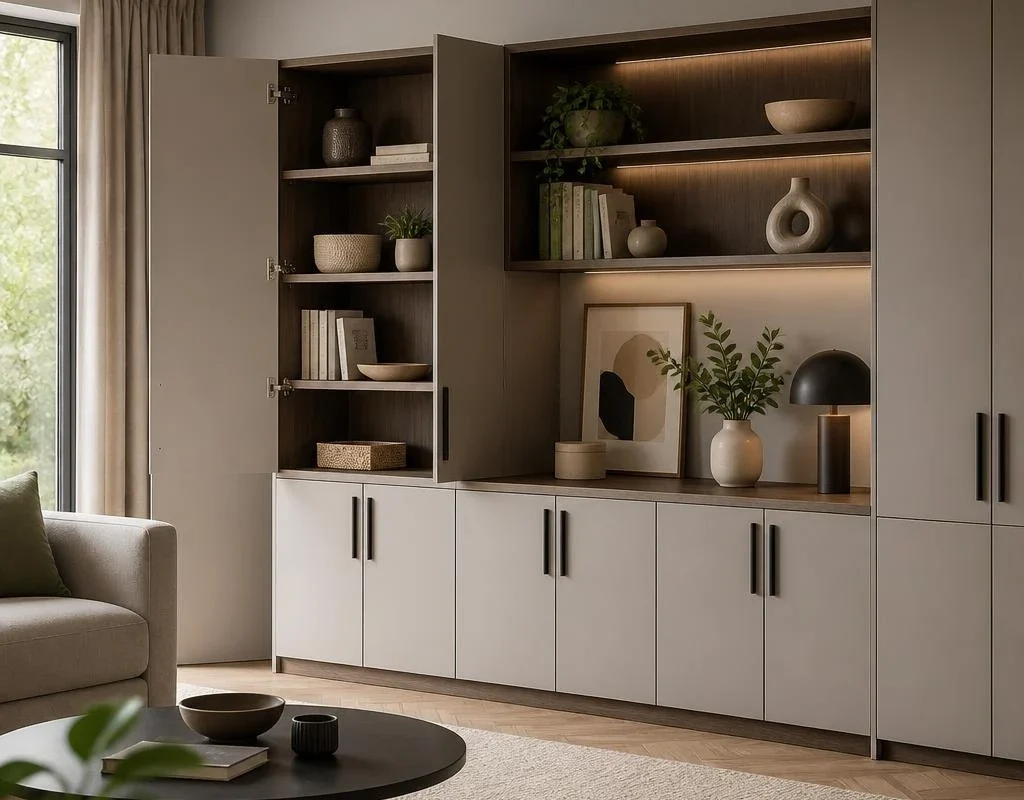
Combination units — closed cupboards below, open shelves above — solve the eternal hide-versus-display dilemma in one piece of furniture. Keep everyday clutter behind the doors and style the shelves with books, plants and a few chosen objects. The trick is restraint: styled shelves need breathing room, so leave at least a third of each shelf empty. If dusting puts you off open shelving entirely, glass-fronted upper sections give the display look with far less maintenance.
Child-Safe Cabinets: What to Look For
With toddlers about, a cabinet’s safety features matter as much as its looks. Wall anchoring is non-negotiable for anything tall or top-heavy — use the supplied straps or proper wall fixings, not hope. Soft-close hinges prevent trapped fingers, rounded corners beat sharp ones, and lockable doors keep cleaning products and medicines out of reach. Avoid freestanding narrow towers in play areas entirely; a climbing child can topple surprising weights.
Second-Hand Cabinets: Where to Find Quality
Solid wood living room cabinets depreciate brutally, which is excellent news for buyers. Charity furniture shops, auction houses and online marketplaces regularly list oak and mahogany sideboards for £50 to £150 — a tenth of their original price. Check drawers run true, doors align, and backs are intact; surface scratches are fine and often polish out. Measure your space and your car before collecting — assembled cabinets are deceptively bulky. A quality second-hand piece will outlast most new flat-pack several times over.
Styling the Top of Your Cabinet
The top of a storage cabinet is prime styling real estate — treat it deliberately. The classic formula is height, light and life: something tall (a vase with branches), something that glows (a lamp or candle), and something living (a plant). Odd numbers of objects look more natural than even ones, and varying heights beats a flat row. Leave negative space; a crowded cabinet top just reads as clutter, however beautiful the individual pieces. For more storage ideas beyond cabinets, see our living room storage furniture guide.
If the cabinet has open shelving, style it like a bookshelf — group items in odd numbers, mix horizontal stacks with vertical rows, and leave breathing room around each group so the display feels curated rather than crowded.
Frequently Asked Questions
What’s the difference between a sideboard and a media cabinet?
A sideboard is a more general storage piece, while a media cabinet is specifically designed around housing a TV and related equipment.
Should a living room storage cabinet match my other furniture?
It helps for cohesion, though a contrasting piece can also work well as an intentional design choice.
How do I stop a storage cabinet from looking cluttered on top?
Limit displayed items to two or three considered pieces, such as a lamp and a small ornament, rather than filling the entire surface.
What should I store in a living room cabinet?
The things that create visual clutter: remote controls, chargers and cables, board games, spare throws, and paperwork. Keep daily-use items at easy height and rarely needed things on higher or lower shelves.
How deep should a living room storage cabinet be?
35 to 45cm suits most living rooms — deep enough for books, games consoles and folded throws without jutting into the room. Media units need at least 40cm for modern consoles with ventilation space.
Are glass-fronted cabinets practical?
They look elegant but show every fingerprint and demand tidy contents. They suit display pieces and matching sets; for general family clutter, solid doors hide a multitude of sins.
Related Home Storage Guides
- Living Room Storage Furniture: Ideas Beyond Cabinets
- Dining Room Storage Ideas That Work
- Wardrobe Storage Systems: A Buying Guide
- Home Office Storage Cabinets Worth Considering