 by
by Cabinets aren’t the only answer to living room clutter. This guide covers other living room storage furniture worth considering, from ottomans to shelving, for households wanting options beyond a standard cabinet.
Why Look Beyond Cabinets?
A cabinet works well for hidden storage, but other furniture types offer storage while serving a second purpose, such as seating or display. For a dedicated look at cabinets specifically, see our living room storage cabinets guide.
Storage Ottomans and Footstools
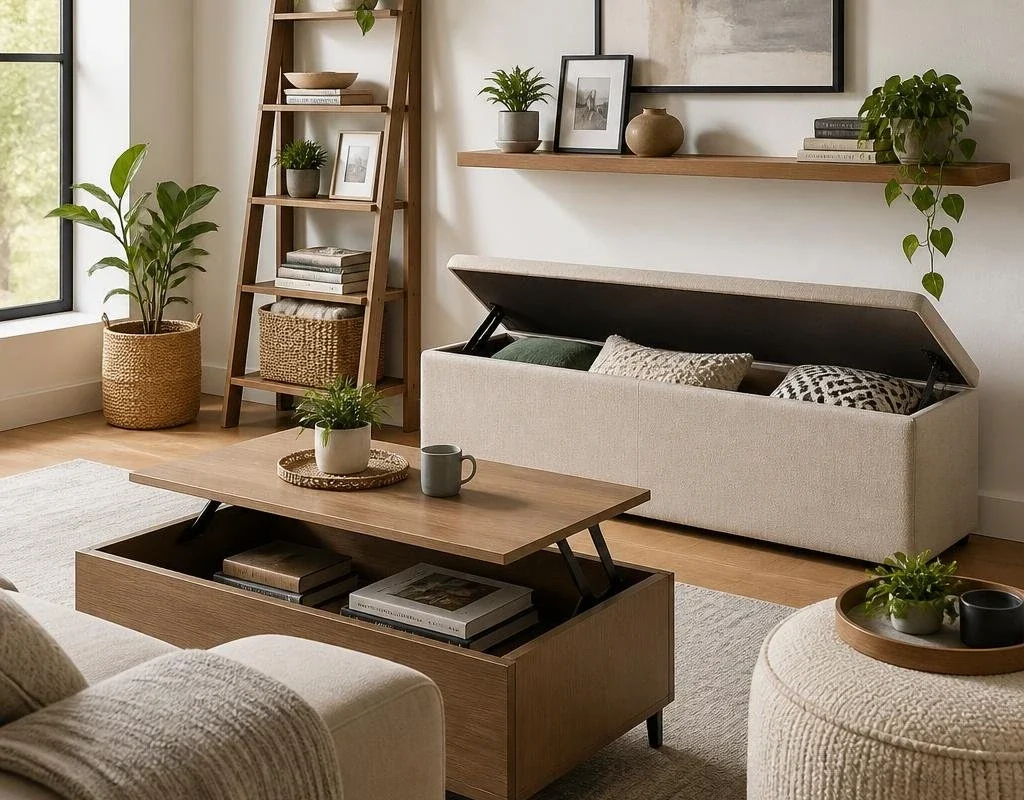
A storage ottoman doubles as extra seating or a footrest while hiding blankets, magazines, or remote controls inside. This makes it a particularly good option for smaller living rooms where every piece of furniture needs to work hard.
Open Shelving Units
Open shelving suits items you’re happy to display, such as books or ornaments, and tends to make a room feel more open than closed cabinetry. Pairing open shelving with a few storage baskets adds hidden storage without losing that airier feel.
Coffee Tables With Storage
Coffee tables with a shelf, drawer, or lift-top compartment add practical storage to a piece of furniture most living rooms already need. This is often an easy, low-disruption way to add storage without changing your room’s layout significantly.
Bench Seating With Storage
A storage bench works particularly well near an entryway-adjacent living room, or as additional seating that also holds shoes, throws, or seasonal items.
Wall-Mounted Storage Options
Floating shelves or wall-mounted cabinets free up floor space, which matters in smaller living rooms. These work particularly well combined with the floor-based furniture covered in our storage cabinets guide, rather than as a complete replacement for it.
Choosing Based on How You Actually Use the Room
Think about what you actually need to store day to day before choosing furniture. A household with young children may prioritise a storage ottoman for toys, while a household that entertains often might prefer a stylish sideboard for glassware and drinks.
Hidden vs. Displayed Storage: Finding the Right Balance
The most liveable rooms mix both. Hidden storage — ottomans, blanket boxes, cupboards — swallows visual clutter and keeps the room calm, which matters in the space where you relax. Displayed storage — open shelving, bookcases — adds personality but demands discipline, since every shelf is on show. A practical rule: hide the ugly and display the beautiful. Cables, paperwork and toys go behind doors; books, plants and a few chosen objects earn shelf space. Too much of either looks wrong — all hidden feels sterile, all open feels chaotic.
Storage Furniture for Families With Young Children
Children change the brief completely. Look for toy storage at child height — low open cubes or baskets they can actually use themselves, which makes tidying realistic rather than theoretical. Choose pieces with soft-close hinges and no sharp corners, and anchor tall bookcases to the wall; climbing toddlers are stronger than you expect. Lidded ottomans work brilliantly for quick pre-guest tidy-ups. Avoid glass-fronted cabinets at toddler level, and remember that anything within reach will be touched, so keep precious items high.
Measuring Your Living Room Before You Buy
Nothing kills a storage plan like furniture that does not fit. Measure the wall or alcove, then subtract at least 5cm for skirting boards and uneven walls — older UK homes are rarely square. Map out door swings, radiator positions and the path people walk through the room; a beautiful bookcase that blocks a walkway will drive you mad within a week. Use masking tape on the floor to mark the footprint before ordering. And measure your doorways and stairwell too, since assembled furniture has a habit of not fitting through Victorian terraces.
Coordinating New Storage With Your Existing Decor
New storage should look like it belongs. Pick up an existing accent — the wood tone of your floor, the colour of your sofa, the metal of your light fittings — and echo it in the new piece. You do not need a matching set; in fact, identical furniture ranges can look flat. Instead aim for complementary: if your room is mostly soft neutrals, a darker wood sideboard adds depth. Keep to two or three materials maximum across the room to avoid a cluttered feel, however tidy the storage itself is.
Budget Guide: What Living Room Storage Costs
Flat-pack shelving and storage cubes start around £30 to £80 and do the job perfectly well in spare rooms or first flats. Mid-range pieces — solid-looking bookcases, decent ottomans, proper TV units — typically run £120 to £350. Above £500 you are into solid timber, designer brands and made-to-measure alcove units, which can reach £1,500 or more for fitted solutions. Second-hand is the sweet spot for quality on a budget: charity furniture shops regularly sell solid wood bookcases for under £60. For coordinating with dining areas, see our dining room storage guide.
Frequently Asked Questions
Is a storage ottoman a good alternative to a cabinet?
Yes, particularly in smaller rooms, since it combines seating and storage in one piece rather than taking up additional floor space.
What’s the best storage option for a small living room?
Multi-purpose furniture, such as a storage ottoman or a coffee table with storage, tends to work best when floor space is limited.
Can I combine open shelving with closed storage?
Yes, in fact combining both often works best, using open shelving for display items and closed storage for everyday clutter.
What living room storage works best in a small flat?
Multifunctional pieces win: storage ottomans, coffee tables with lift-up tops, and tall narrow bookcases that use vertical space. Wall-mounted shelves free up floor area entirely.
How can I hide clutter without bulky furniture?
Use lidded baskets, storage ottomans and furniture with closed fronts rather than open shelves. A regular ten-minute reset — everything back in its home — matters more than the furniture itself.
Is open shelving practical in a busy living room?
Only for items you use or love enough to dust. In busy family rooms, limit open shelving to one feature wall and keep the rest behind doors, or the shelves quickly become clutter displays.