 by
You’ve got solar panels — or you’re thinking about getting them — and now the battery question has come up. It’s a fair one. Panels generate most of their electricity in the middle of the day, when nobody’s home to use it. A battery lets you store that daytime surplus and use it in the evening, instead of exporting it for pennies and buying it back at full price. But is the cost of solar battery storage in the UK actually worth it?
Short answer: batteries aren’t cheap, but prices have fallen steadily and the maths looks better than it did a few years ago — especially if you’re on a time-of-use tariff. Here’s what they cost, what affects the price, and how to work out whether one makes sense for your home.
What Is Solar Battery Storage?
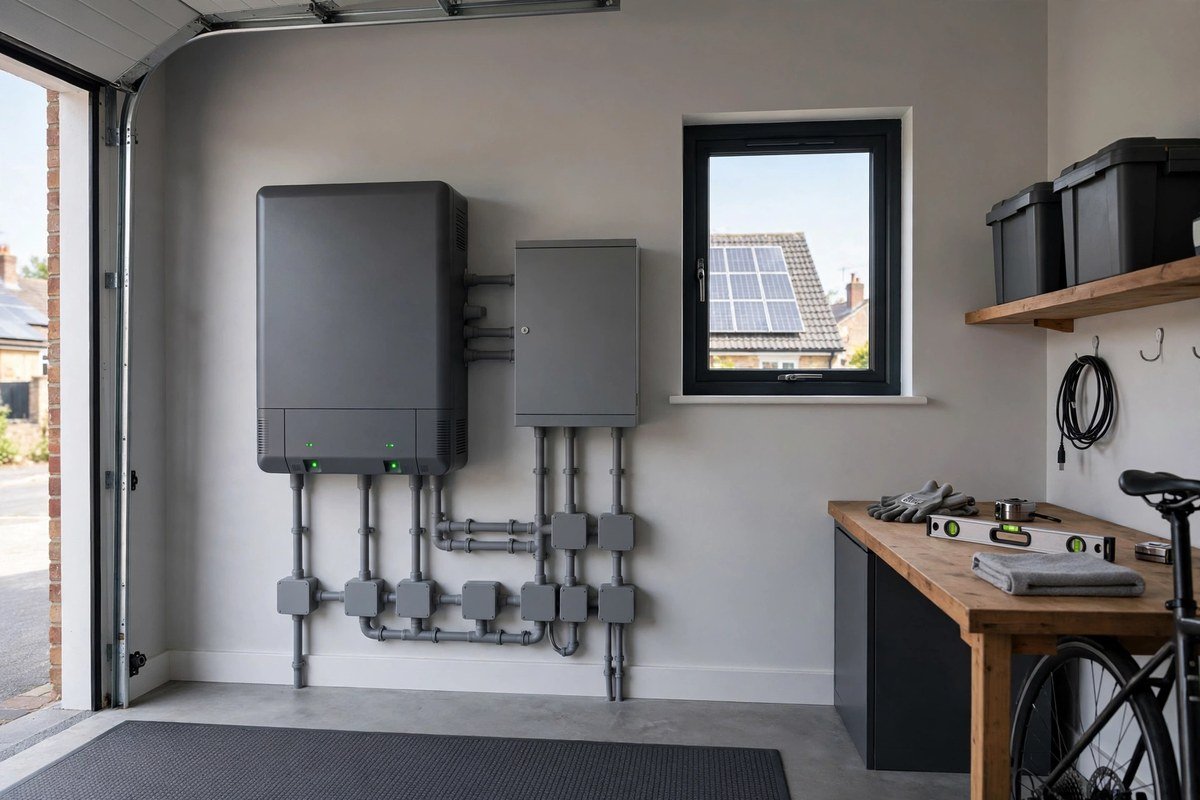
A solar battery is a rechargeable unit — usually lithium-ion these days — that stores electricity your panels generate but you don’t immediately use. Instead of sending that surplus to the grid, the battery holds it and releases it when the sun goes down, when you cook dinner, or during a power cut if your system supports backup.
There are two ways a battery connects to your system. DC-coupled batteries sit on the same side as the panels and usually need a hybrid inverter — most common when the battery is installed at the same time as the panels. AC-coupled batteries connect on the household side and work with your existing inverter, which makes them the usual choice for retrofitting a battery onto panels you already have.
How Much Does Solar Battery Storage Cost in the UK?
Batteries are mostly priced by capacity (kWh), and installation is usually included in the quotes you’ll see. Typical 2026 UK ranges, installed:
| Battery size | Typical installed cost | Suits |
|---|---|---|
| Around 3–4 kWh | £3,000–£4,500 | Small households, modest evening use |
| Around 5 kWh | £3,500–£5,500 | The most popular size for average UK homes |
| Around 8–10 kWh | £5,500–£8,500 | Larger households, higher evening demand |
| 13 kWh and above | £8,000–£11,000+ | Large homes, or homes with a heat pump or EV |
The most common setup — a 5 kWh battery retrofitted to existing panels — typically lands somewhere around £4,000–£5,000 installed. Adding a battery at the same time as new panels is usually a few hundred pounds cheaper than a standalone retrofit, because the scaffolding, labour and inverter work overlap.
What Affects the Price?
Quotes for seemingly similar batteries can differ by thousands. The main reasons:
- Usable capacity, not headline capacity. A “5 kWh” battery might only let you use 4.5 kWh of it (depth of discharge). Compare usable kWh, not the number on the brochure.
- The inverter. If your existing inverter isn’t battery-compatible, you’ll need a new hybrid inverter or an AC-coupled unit — that can add £800–£1,500 to the job.
- Retrofit vs bundled. Retrofitting onto existing panels means a second round of labour and sometimes scaffolding. Bundling with a new panel install is almost always cheaper overall.
- Brand and warranty. Established brands with 10-year warranties cost more than budget imports with shorter cover. Given this is a 10–15 year investment, warranty length matters more than it looks.
- Your installer and location. Use an MCS-certified installer — it matters for consumer protection and for export payments. Labour rates vary by region, as with any trade.
Do You Need a New Inverter for a Battery?
Not always. If you’re buying panels and a battery together, your installer will simply fit a hybrid inverter that handles both — no duplication, no wasted cost. If you already have panels, an AC-coupled battery can usually bolt onto your existing setup without touching the inverter, which is why retrofits are so popular.
The one case where you’ll likely need a new inverter is an older string inverter that’s nearing the end of its life anyway. In that situation, many installers will suggest replacing it with a hybrid unit at the same time — it’s efficient, even if it bumps the quote up.
Are Solar Panels and Battery Storage Worth It Together?
This is the real question, and the answer depends on how you use electricity. Without a battery, a typical household uses roughly a third of what its panels generate and exports the rest. With a battery, you can push that self-consumption much higher — using your own free electricity in the evening instead of buying from the grid.
The maths has improved for three reasons. First, battery prices have come down. Second, electricity is expensive, so every kWh you don’t buy is worth more. Third, time-of-use tariffs let some battery owners charge cheaply overnight in winter and dodge peak rates — the battery earns its keep even when the sun isn’t shining.
It also pairs well with the rest of an electrified home. If you’re moving towards a heat pump, for example, a battery can cover some of the pump’s evening demand from your own stored solar — and a smart thermostat helps you shift heating into the hours when your energy is cheapest or free.
How Long Until a Solar Battery Pays for Itself?
Be wary of anyone promising an exact payback figure — it depends on your usage, your tariff, how much you export, and what you paid for the battery. That said, installers often quote roughly 8–12 years for a typical setup, and the battery’s expected life is usually 10–15 years. So the honest picture is: a battery will probably pay for itself, but it’s a long game, not a quick win.
Two things genuinely improve the payback. The first is sizing the battery to your actual evening usage — oversized batteries cost more without saving more. The second is being on the right tariff: if you export surplus under the Smart Export Guarantee, the payments are modest, which actually strengthens the case for storing and using your own power instead.
And don’t forget the unsexy part of the equation: cutting your energy use in the first place. The cheapest kilowatt-hour is the one you never need — insulation, draught-proofing and efficient appliances make every pound you spend on generation and storage go further.
Is There a Grant or VAT Relief for Solar Batteries?
Yes — one definite saving. Solar panels and batteries installed in UK homes currently benefit from 0% VAT as energy-saving materials, which knocks a meaningful chunk off the installed price compared with standard-rated work. Make sure your quote reflects this; a reputable installer will apply it automatically.
Beyond VAT, there’s no broad national grant specifically for solar batteries right now. Schemes come and go at local level, so it’s worth a quick check with your council — but don’t bank on one. Treat any grant as a bonus, not part of the payback calculation.
Frequently Asked Questions
How much does a solar battery cost in the UK?
Typically £3,000–£4,500 installed for a small 3–4 kWh battery, £3,500–£5,500 for the popular 5 kWh size, and £5,500–£8,500 for 8–10 kWh. A 5 kWh retrofit to existing panels usually lands around £4,000–£5,000. Prices include installation and benefit from 0% VAT.
Can I add a battery to my existing solar panels?
Yes. AC-coupled batteries are designed exactly for this — they connect on the household side of your existing inverter, so your panels stay as they are. It’s the most common type of battery install in the UK.
What size solar battery do I need?
Match it to your evening electricity use, not your panel output. For an average UK household, around 5 kWh of usable storage covers the typical evening peak. Check a few months of smart meter data if you can — guessing usually leads to oversizing.
Do solar batteries work in winter?
They work fine, but there’s less solar to store — winter generation can be a fraction of summer output. Many owners use time-of-use tariffs in winter instead, charging the battery on cheap overnight electricity and using it through the expensive evening peak.
How long do solar batteries last?
Most lithium-ion home batteries are expected to last around 10–15 years, with performance gradually declining as charge cycles accumulate. Compare warranty terms carefully — a 10-year warranty is the mark of a serious product; shorter cover on a premium-priced battery is a red flag.
The Bottom Line
Solar battery storage typically costs £3,500–£5,500 installed for the 5 kWh size most UK homes choose. It’s a long-payback investment — roughly 8–12 years — but it genuinely cuts bills by letting you use your own solar in the evening, and it pairs brilliantly with time-of-use tariffs and electrified heating. Size it to your real evening usage, use an MCS-certified installer, and make sure the 0% VAT is applied.