
 by
Internal bathrooms with no window are common in UK flats and terraces — and they are condensation nightmares: every shower pumps litres of moisture into a sealed box with nowhere for it to go. “Just open a window” is not an option. This guide covers what actually works.
Why No-Window Bathrooms Suffer
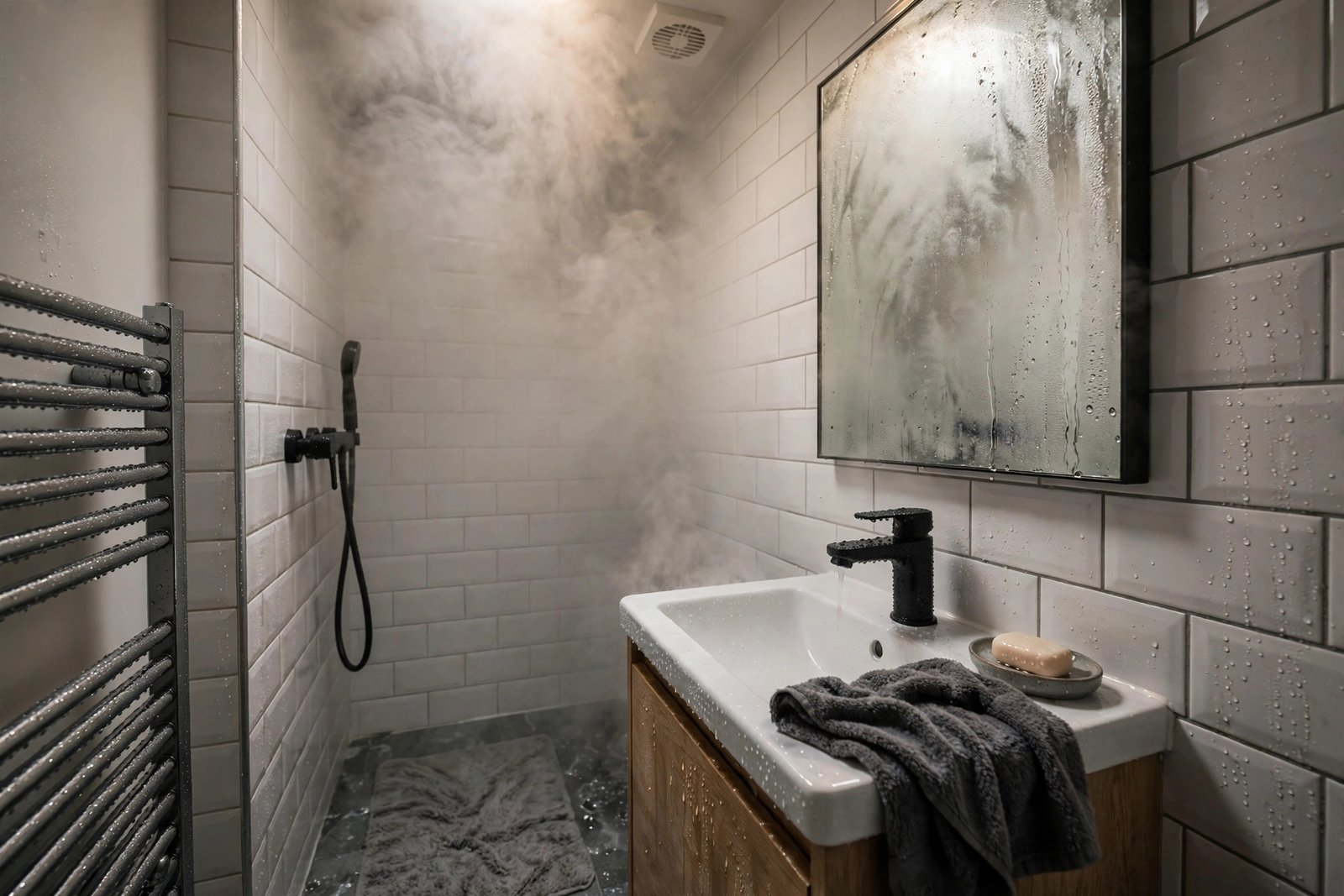
A hot shower can raise a small bathroom’s humidity to near 100%. With no window, that moisture sits until it condenses on every cold surface — mirrors, tiles, ceilings, paint — feeding the mould cycle (or in this case, the mould-on-ceiling cycle). Building regulations require mechanical extraction in windowless bathrooms precisely because of this.
The Extractor Fan: Non-Negotiable
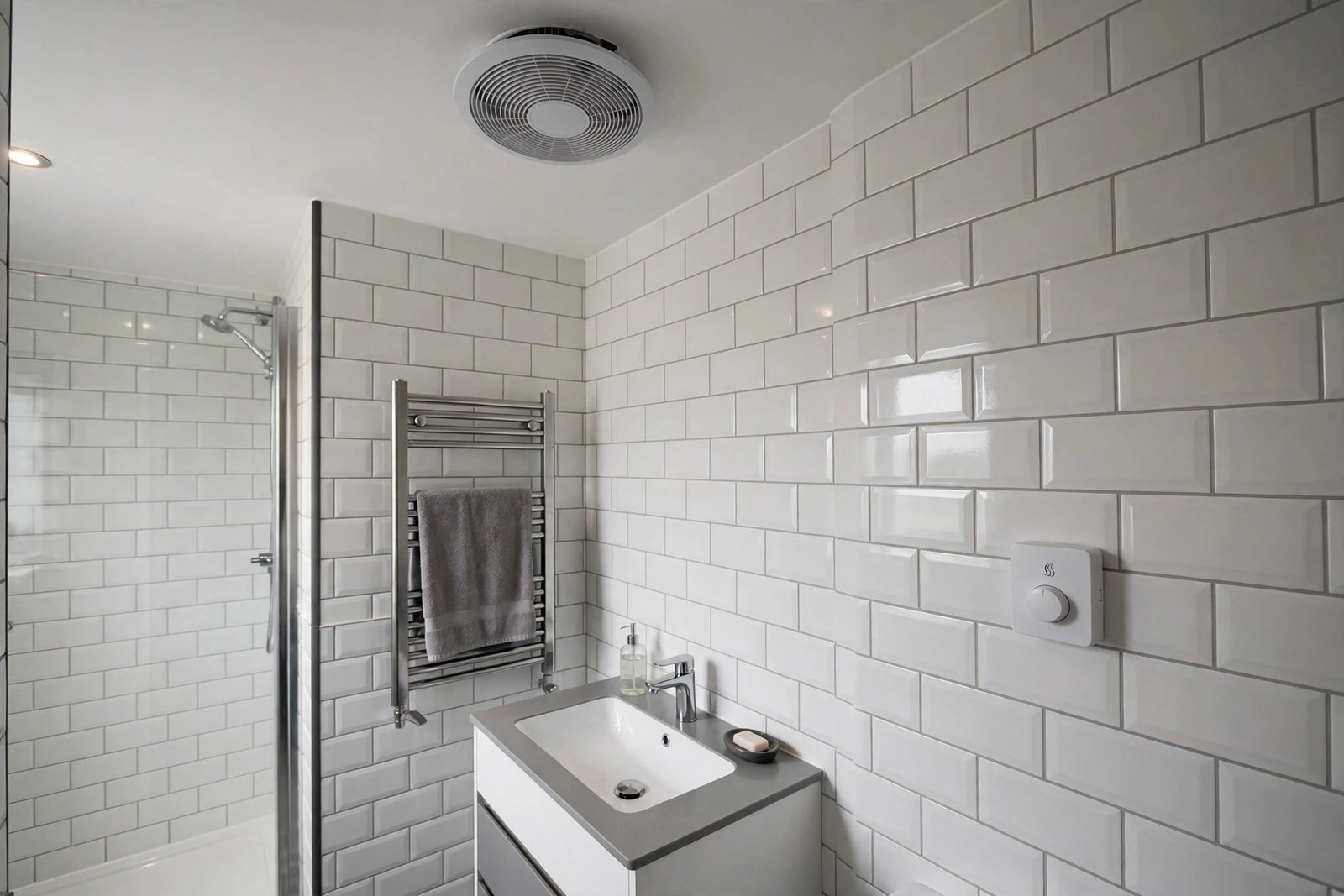
A windowless bathroom must have an extractor fan that vents outside (not into the loft — a depressingly common bodge). For it to work:
- Size it right: minimum 15 litres/second intermittent, or 8 l/s continuous — bigger bathrooms need more.
- Run it properly: on during the shower plus 15–20 minutes after. Humidity-sensing fans that overrun automatically remove the human factor — worth the small premium.
- Check it vents outside: into the loft just moves the damp problem upstairs.
- Keep the door gap: fans need replacement air — a 10mm undercut on the bathroom door lets air in as moist air leaves.
Beyond the Fan
- Shower cooler/shorter: unglamorous but effective — less steam generated is less to extract.
- Squeegee the tiles and screen after showering — removes a surprising amount of water before it evaporates.
- Leave the door open after (with the fan running) so residual humidity disperses into the better-ventilated home.
- Dehumidifier nearby: a small unit on the landing helps in chronic cases — see dehumidifier vs extractor fan.
- Mould-resistant paint on ceilings — prevention for the inevitable residual moisture.
- Check the whole system: if the bathroom is part of whole-house condensation, consider PIV.
Frequently Asked Questions
Is an extractor fan a legal requirement in a windowless bathroom?
Effectively yes — UK Building Regulations (Part F) require mechanical ventilation where there is no openable window. It is also just common sense.
How long should I run the fan after a shower?
15–20 minutes minimum. Humidity-sensing fans handle this automatically and are worth it.
Can I just leave the bathroom door open instead?
It helps disperse humidity but dumps it into the rest of the home — fine as a supplement, not a substitute for extraction.
Why is there mould on my bathroom ceiling?
Warm moist air rises to the coldest surface — the ceiling. It is the classic windowless-bathroom failure mode: inadequate extraction plus no ventilation.
Do I need planning permission for an extractor fan?
No — it is permitted development. Listed buildings or conservation areas may need consent for external grilles; check locally.
The Bottom Line
A properly sized, properly vented, properly used extractor fan solves most windowless-bathroom condensation. Everything else is backup. See our complete damp guide for the wider picture.