 by
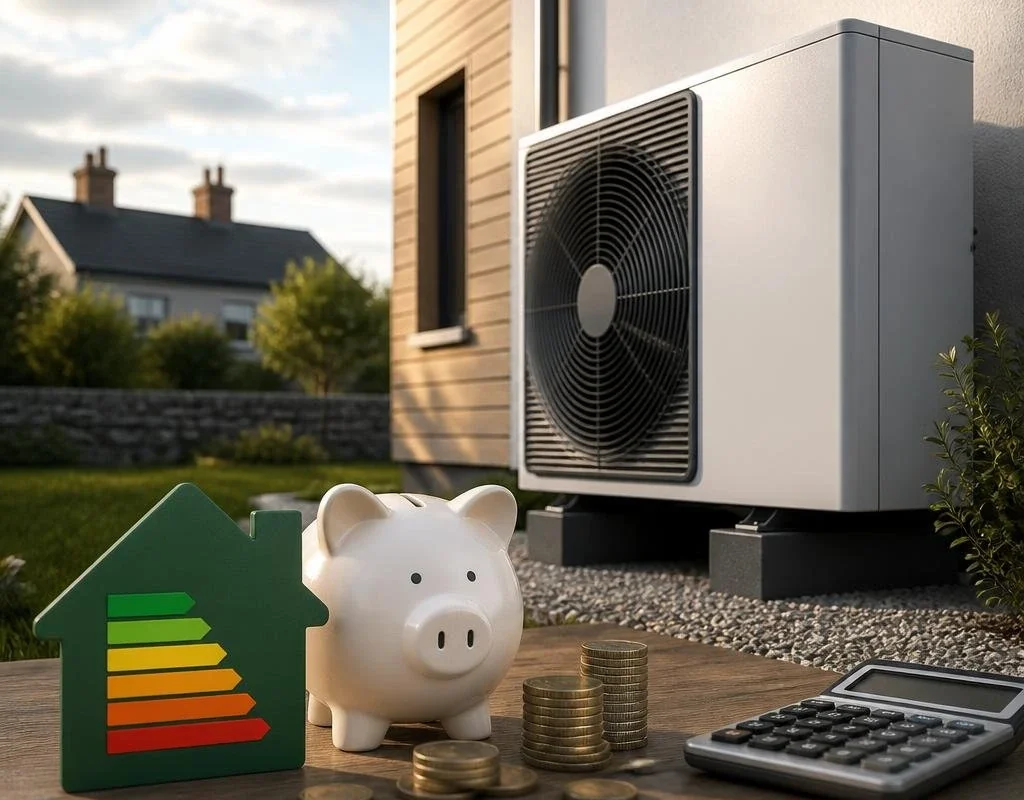
by Heat pumps are becoming an increasingly common alternative to traditional boilers in the UK. This guide covers heat pump running costs, what affects them, and how they typically compare with gas and oil heating.
How Heat Pump Running Costs Are Calculated
Unlike a boiler, a heat pump doesn’t burn fuel directly. Instead, it uses electricity to extract heat from the air or ground, so running costs depend on your electricity price and the system’s efficiency, measured by its Seasonal Coefficient of Performance (SCOP).
What Is SCOP, and Why Does It Matter?
SCOP indicates how much heat a system produces per unit of electricity used, averaged across a typical year. A higher SCOP means more efficient running costs, so it’s one of the most useful figures to compare when choosing between heat pump models.
Air Source vs. Ground Source Heat Pumps
Air source heat pumps are more common and generally cheaper to install, extracting heat from outside air. Ground source systems, which draw heat from underground pipework, typically cost more to install but often run slightly more efficiently, since ground temperatures stay more stable year-round.
Comparing Costs to Gas and Oil
Running costs vary depending on current energy prices and how well-insulated a home is. Heat pumps tend to perform best in well-insulated homes with appropriately sized radiators or underfloor heating. For homes still using oil central heating, a heat pump can offer a lower-carbon alternative, though the cost comparison depends heavily on individual circumstances.
UK Government Support for Heat Pumps
The Boiler Upgrade Scheme offers grants towards the cost of installing an air or ground source heat pump in England and Wales, which can significantly offset the upfront investment. Installers should be certified under the Microgeneration Certification Scheme (MCS) for the property to qualify.
Factors That Affect Your Actual Running Costs
- How well-insulated your home is
- Whether radiators are correctly sized for lower-temperature heat pump operation
- Your electricity tariff, since some tariffs suit heat pump usage patterns better than others
- Local climate and how much heating your home typically needs
Is a Heat Pump Worth It for Your Home?
Heat pumps tend to offer the best value in well-insulated, larger homes with high heating demand, particularly those off the gas grid. For homes with poor insulation, upgrading insulation first, and reviewing cheaper interim options in our guide to heating a house for cheap, is often worthwhile before switching systems entirely.
Worked Example: 3-Bed Semi Running Costs
Take a typical 3-bedroom semi, reasonably insulated, needing about 12,000 kWh of heat yearly. A gas boiler at 90% efficiency uses ~13,300 kWh of gas — at 6p/kWh, roughly £800 a year. An air source heat pump at SCOP 3.0 uses 4,000 kWh of electricity — at 24.5p/kWh, roughly £980. On standard tariffs, the heat pump costs slightly more to run — the oft-hidden truth. But on a heat-pump tariff (around 15p/kWh off-peak weighted), it drops to ~£600, comfortably beating gas. Tariff choice, not just technology, decides the winner.
Electricity Tariffs for Heat Pump Owners
Standard variable tariffs punish heat pumps because electricity costs ~4x gas per unit. Time-of-use tariffs (Octopus Cosy, OVO-style heat pump tariffs) offer cheap overnight and afternoon rates precisely when heat pumps can pre-heat the home and hot water. Pairing with solar PV further transforms the maths, letting daytime running cost almost nothing. Before installing, model your costs on at least two tariffs — the £200+/year difference between best and worst tariff dwarfs most efficiency tweaks.
How Insulation Changes the Equation
Heat pumps love low flow temperatures (35–45°C), which demand well-insulated homes with decent radiators or underfloor heating. In a draughty Victorian terrace, the pump works harder, SCOP falls toward 2.0, and running costs can exceed gas. The official guidance is blunt: insulate first, heat pump second. Loft insulation, cavity walls and draught-proofing commonly cost £1,000–£3,000 total and transform both comfort and heat pump economics. Skipping this step is the top cause of disappointing heat pump bills.
Maintenance Costs Over 15 Years
Heat pumps need annual servicing at £150–£250 — more than a gas boiler service, reflecting the specialist skills involved. Over 15 years, budget £2,500–£3,500 in servicing plus occasional parts (sensors, fans). Compare a gas boiler: £80–£120 yearly service plus likely one £2,500–£4,000 replacement in the same period (boilers last ~12–15 years; heat pumps 20–25). Lifetime cost comparisons that ignore the boiler’s earlier replacement flatter gas unfairly.
What If Energy Prices Rise Further?
Heat pumps hedge against gas price volatility specifically — every 1p rise in gas prices widens their advantage, while electricity rises hurt both (heat pumps use less of it). Government direction is clearly toward electrification, with gas boiler phase-outs already scheduled for new builds. A heat pump installed today locks in 20+ years of insulation from gas markets. For cutting heating costs with your current system first, see our cheap heating guide.
Frequently Asked Questions
Are heat pumps cheaper to run than a gas boiler?
It depends on electricity and gas prices, insulation levels, and the specific heat pump’s efficiency, so costs can vary significantly between homes.
Do I need to replace my radiators for a heat pump?
Often, yes, or at least upsize some radiators, since heat pumps typically run at lower flow temperatures than a traditional boiler.
What grants are available for heat pumps in the UK?
The Boiler Upgrade Scheme currently offers grants towards installation costs in England and Wales, subject to eligibility criteria and using an MCS-certified installer.
How much does it cost to run a heat pump per month in the UK?
Roughly £50–£90 a month for a typical 3-bed home, depending on insulation, tariff and SCOP. Well-insulated homes on heat-pump tariffs land at the lower end.
Are heat pumps cheaper to run than gas boilers?
On standard electricity tariffs, often slightly more expensive. On time-of-use heat-pump tariffs with decent insulation, usually cheaper — tariff and insulation matter more than the technology alone.
What grants are available for heat pumps in the UK?
The Boiler Upgrade Scheme offers £7,500 towards air source heat pump installation in England and Wales. Check current eligibility, as schemes and amounts change.
Related Home Heating Guides
- Oil Central Heating: A Complete Guide
- How Does Central Heating Work?
- How to Heat a House for Cheap (UK)
- Smart Boilers: Are They Worth It?