
 by
LVT and laminate are the two hard floors most UK homeowners choose between — and they look similar in the showroom, which makes the decision harder than it should be. Underneath, they are very different products: one is plastic-based and waterproof, the other is wood-based and budget-friendly. This guide compares them honestly on the things that actually matter.
What Are They?
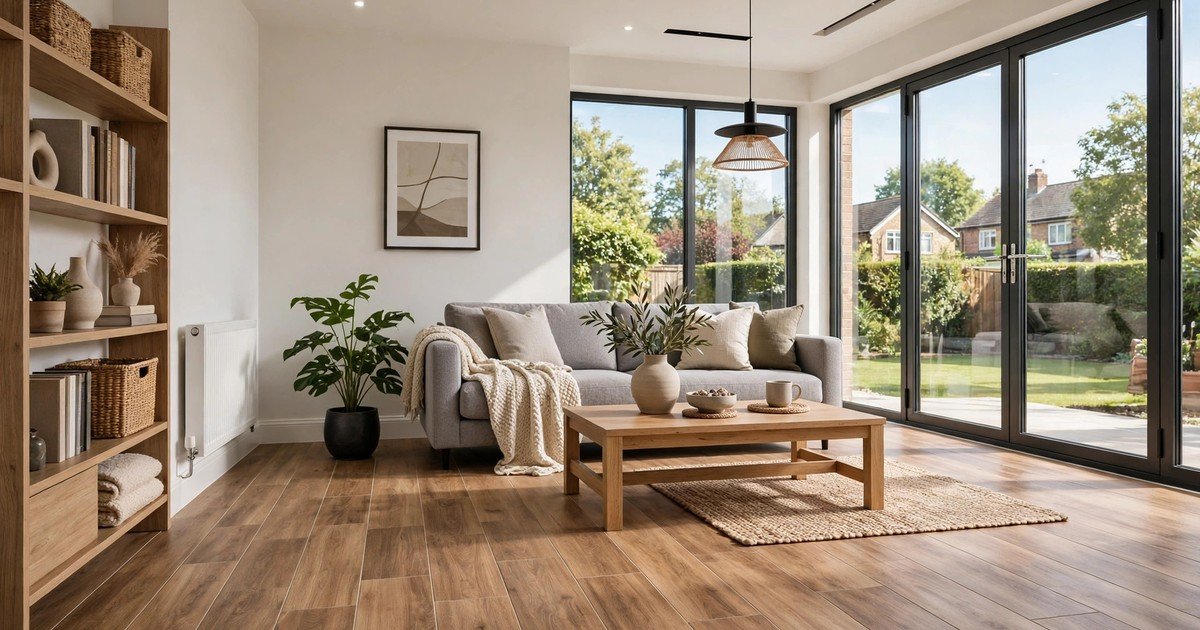
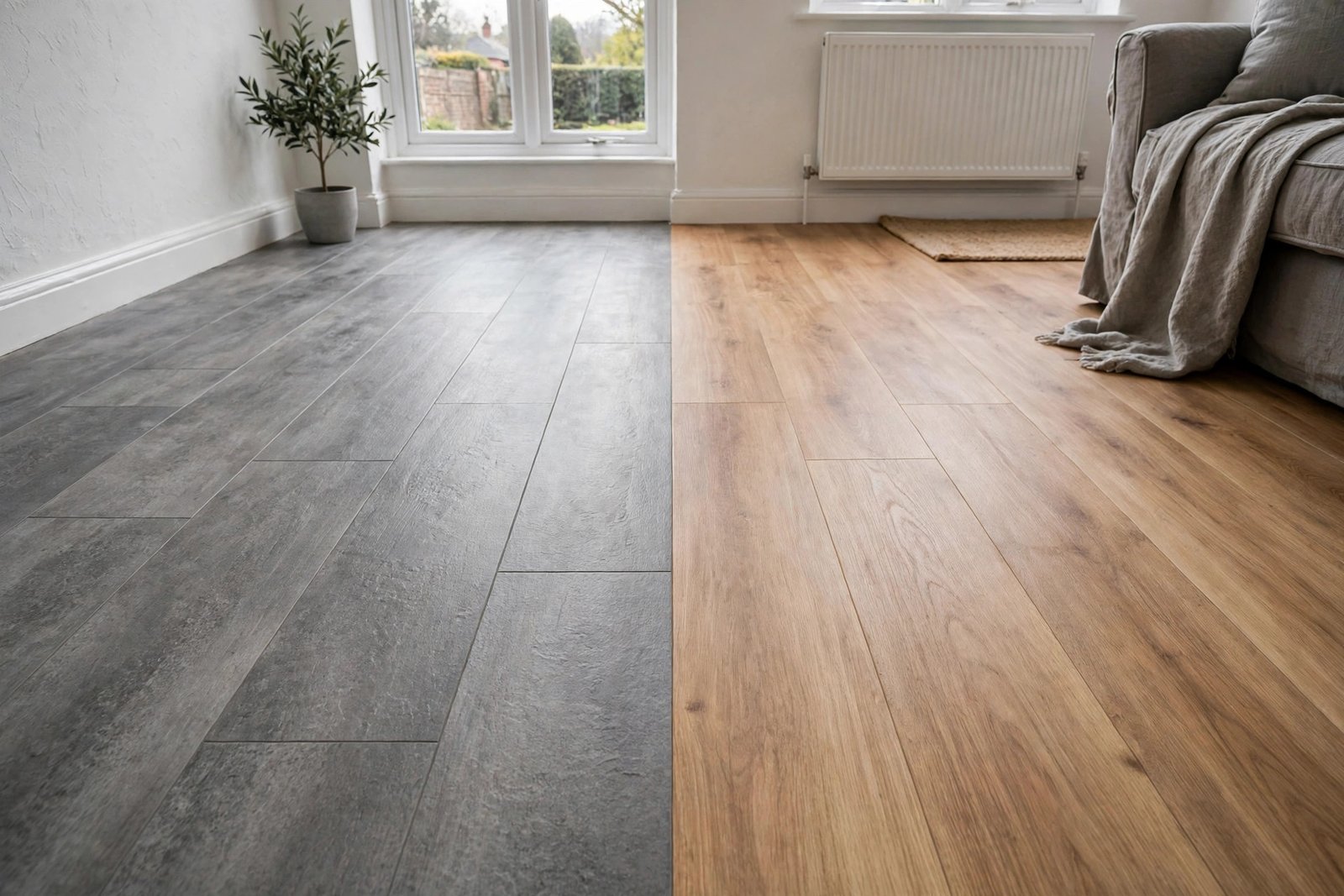
Laminate is a wood-fibre (HDF) core with a photographic wood layer and a protective coating. It clicks together and floats over underlay. LVT (luxury vinyl tile) is layered vinyl — either click-together rigid planks or thin glue-down tiles. Both mimic wood (and stone) convincingly at a glance; the differences show up in use.
Price
Laminate is the clear budget winner: decent laminate runs £8–£20/m² for materials, £12–£30/m² fitted. LVT starts higher — £20–£45/m² materials for mid-range click, £45–£75/m² fitted for premium brands like Karndean or Amtico. For a 20m² living room, the fitted difference is typically £500–£1,000. If budget decides, laminate wins; if the budget stretches, keep reading.
Waterproofing
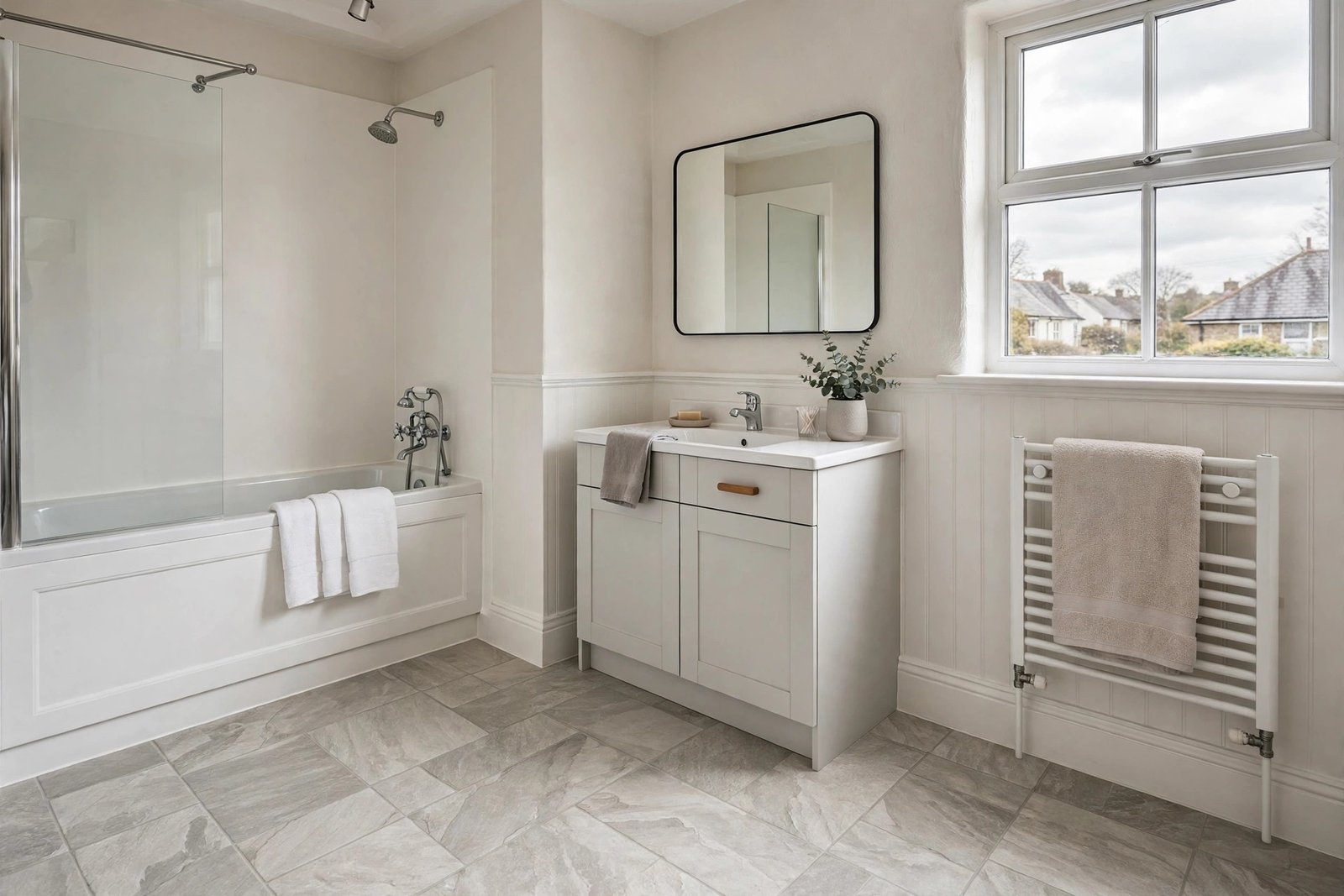
This is LVT’s biggest advantage: it is waterproof, full stop. Laminate is water-resistant at best — spills wiped quickly are fine, but standing water, mopping and bathroom humidity will eventually swell the HDF core. For kitchens, bathrooms, utility rooms and homes with dogs, LVT is the safer choice. See our best flooring for kitchens and best flooring for dogs guides.
Noise and Feel
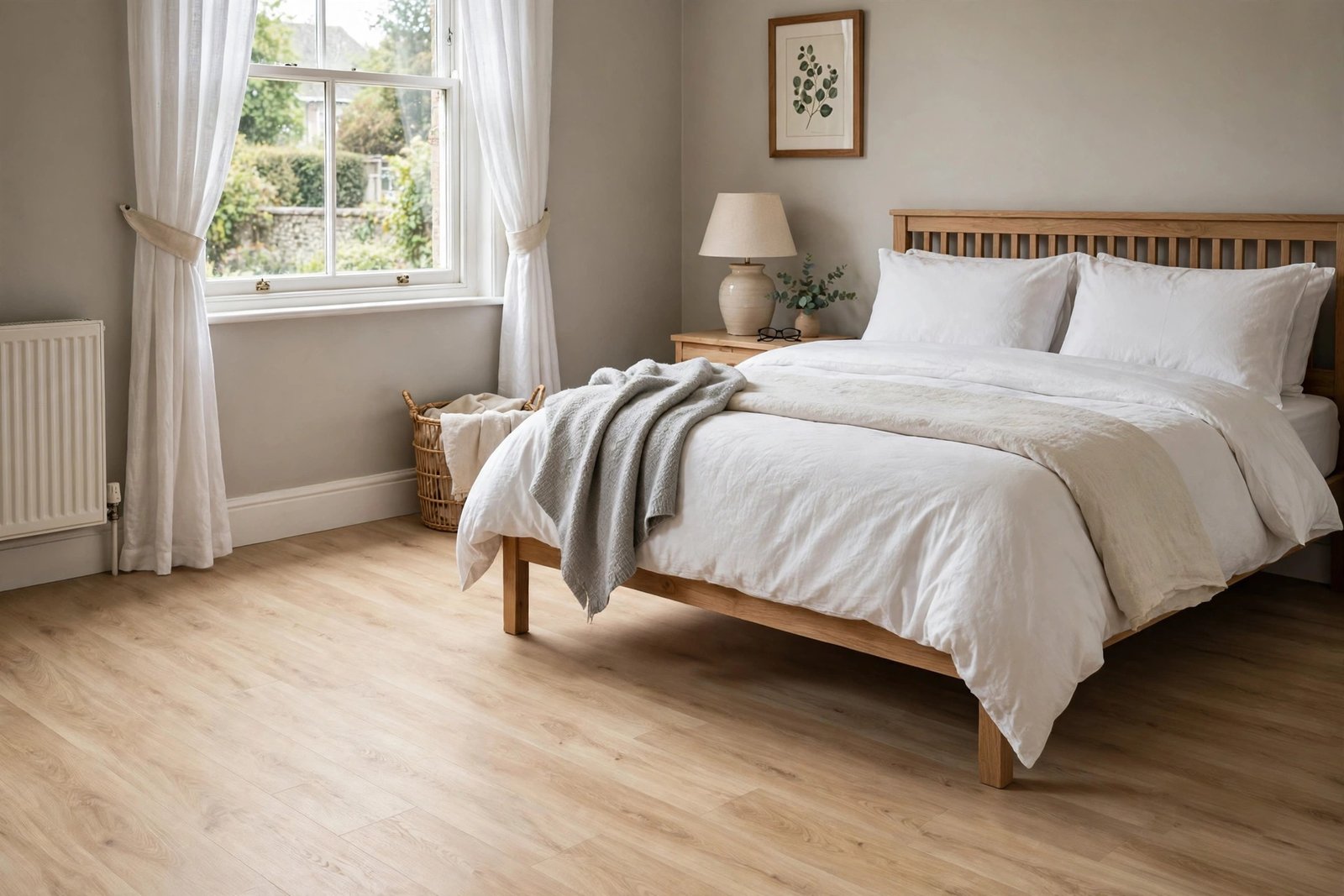
Laminate is notoriously clicky underfoot — the hollow tapping that flat-dwellers dread. LVT (especially glue-down) is noticeably quieter and feels slightly softer and warmer. Good underlay helps laminate, but it never fully closes the gap. If noise matters (flats, bedrooms), LVT wins.
Durability
Both are tough, but differently: laminate’s aluminium-oxide coating resists scratches brilliantly but chips at edges and cannot be repaired — a damaged plank must be replaced. LVT’s wear layer resists scratches well and individual tiles/planks can be replaced, especially glue-down. In rental or high-traffic homes, LVT’s repairability is a genuine advantage.
Fitting
Laminate is the DIY champion — click, float, trim, done; see our beginner’s laying guide. Click LVT is DIY-possible but fussier about subfloor flatness; glue-down LVT is a professional job. Both need the expansion gap covered — see beading vs scotia.
Frequently Asked Questions
Is LVT better than laminate?
LVT is better at waterproofing, noise and repairability; laminate is better on budget and DIY-friendliness. Neither is universally better — match the product to the room.
Which lasts longer, LVT or laminate?
Comparable in practice: quality versions of both last 15–25 years domestically. LVT’s edge is that damaged sections can be replaced; laminate damage usually means living with it.
Can you put LVT and laminate in bathrooms?
LVT yes, happily. Laminate no — bathroom humidity will destroy it eventually, whatever the box claims.
Is LVT warmer than laminate?
Slightly — vinyl feels less cold underfoot than laminate’s hard surface, and LVT works well with underfloor heating. Neither is as warm as carpet.
Which is better for dogs?
LVT, clearly — waterproof, scratch-resistant and easy to clean. Our flooring for dogs guide explains why.
The Bottom Line
Budget or DIY? Laminate. Wet rooms, dogs, flats, or a “fit and forget” floor? LVT. For the full picture, see our complete UK flooring guide.