 by
Kitchens punish flooring: water, heat, dropped pans, muddy boots and constant traffic. The best kitchen floor shrugs all of that off and still looks good in ten years. This guide compares the realistic options for UK kitchens — not what looks good in a showroom, but what survives real cooking.
What a Kitchen Floor Must Do
Before the options, the job spec: handle water (spills, leaks, mopping), resist stains (turmeric, red wine), survive dropped items, clean easily, and not become a skating rink when wet. Anything that fails the water test is disqualified — which rules out more products than retailers admit.
LVT: The Best All-Rounder
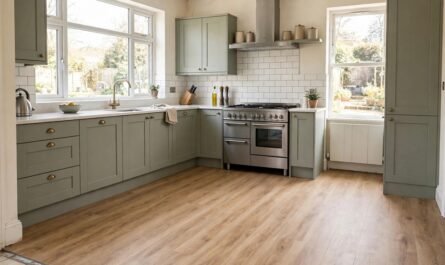
LVT (luxury vinyl tile) is the default recommendation for UK kitchens for good reason: fully waterproof, warm-ish underfoot, quiet, and available in convincing wood and stone looks. Glue-down LVT is the pro choice (thinnest, most stable); click LVT is DIY-friendlier. Expect £30–£60/m² fitted for quality products. Downsides: premium brands cost real money, and cheap LVT looks cheap. See Karndean vs Amtico at the top end and LVT vs laminate for the budget step down.
Porcelain Tile: The Toughest
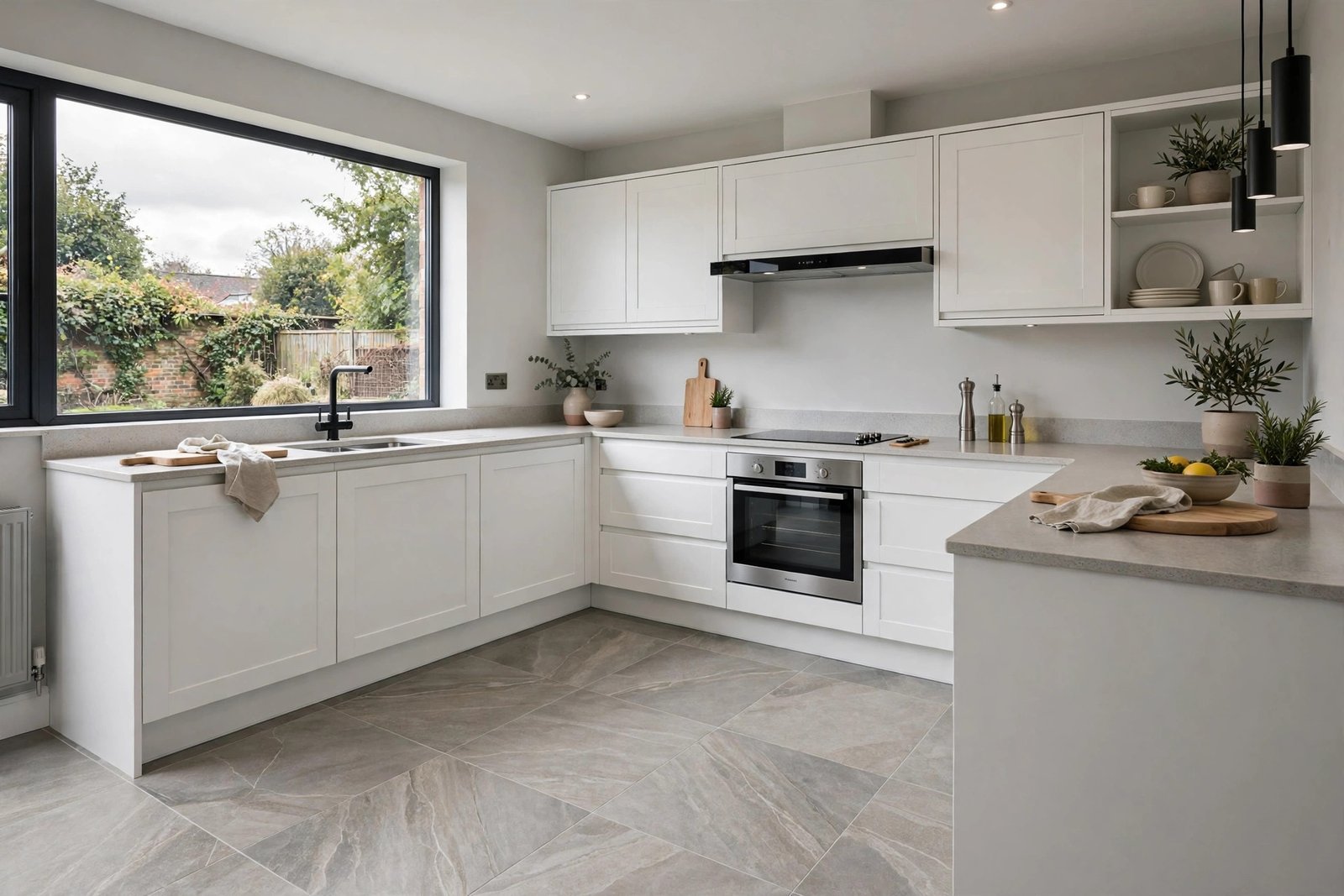
Porcelain tiles are the hardest-wearing kitchen floor available — waterproof, stain-proof, heat-proof, essentially indestructible. The trade-offs: cold and hard underfoot (rugs or underfloor heating help), grout lines need cleaning, and dropped glassware shatters rather than bounces. Large-format tiles with minimal grout look superb in modern kitchens. Typically £40–£80/m² fitted including tiles.
Laminate: Budget, With Caveats
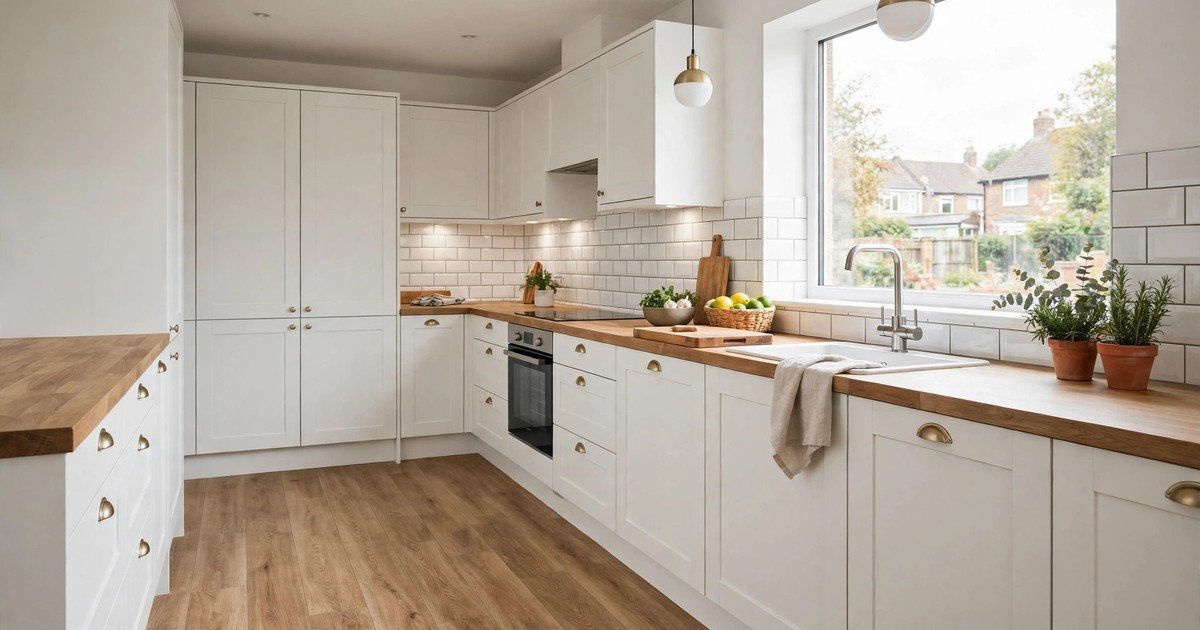
Laminate works in kitchens only if you are disciplined: wipe spills immediately, never mop wet, and accept a shorter life near the sink and dishwasher. “Water-resistant” laminate buys margin, not immunity. At £12–£25/m² fitted it is the cheapest hard option — see laminate costs per m² — but go in with eyes open. For most buyers, stretching to LVT pays for itself in longevity.
Engineered Wood: Beautiful but Demanding
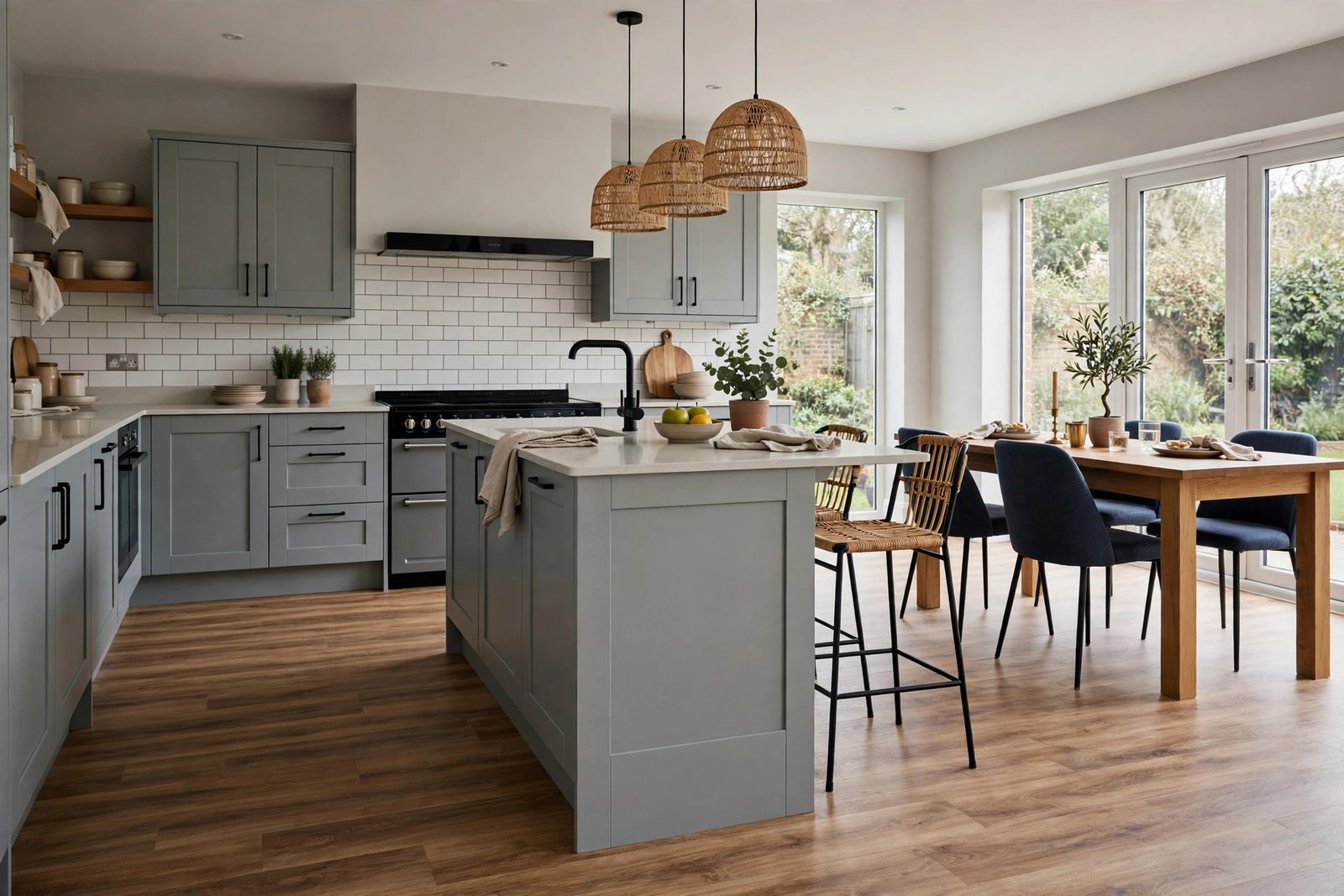
Engineered wood looks stunning in open-plan kitchen-diners and handles the environment better than solid wood — but it still dislikes standing water and needs prompt spill management. Best for kitchen-diners where the “kitchen” is more dining than cooking. See engineered vs solid wood.
What to Avoid
- Carpet: obviously not — see carpet costs for where it does belong.
- Solid wood: too movement-prone for wet zones.
- Cheap sheet vinyl: the old lino look; modern LVT made it obsolete.
Frequently Asked Questions
What is the most practical kitchen flooring?
LVT for most people — waterproof, comfortable, good-looking. Porcelain tile if maximum toughness matters more than comfort.
Can you put laminate in a kitchen?
You can, but it is a compromise: manage spills religiously and expect a shorter life near water sources. Water-resistant ranges help.
Is tile too cold for a kitchen?
Bare porcelain is cold — underfloor heating or a runner in the working zone solves it. LVT is the warmer alternative.
What flooring is best with underfloor heating in kitchens?
Tile and LVT conduct heat best; engineered wood works with temperature limits. Laminate is acceptable; carpet is poor.
How much does kitchen flooring cost?
A typical 12m² kitchen: £150–£400 laminate, £400–£800 LVT, £500–£1,000+ tile or engineered wood, fitted. See our flooring cost overview.
The Bottom Line
LVT for most kitchens, porcelain for the toughest ones, laminate only on a strict budget with careful habits. See our complete UK flooring guide for the full market.