 by
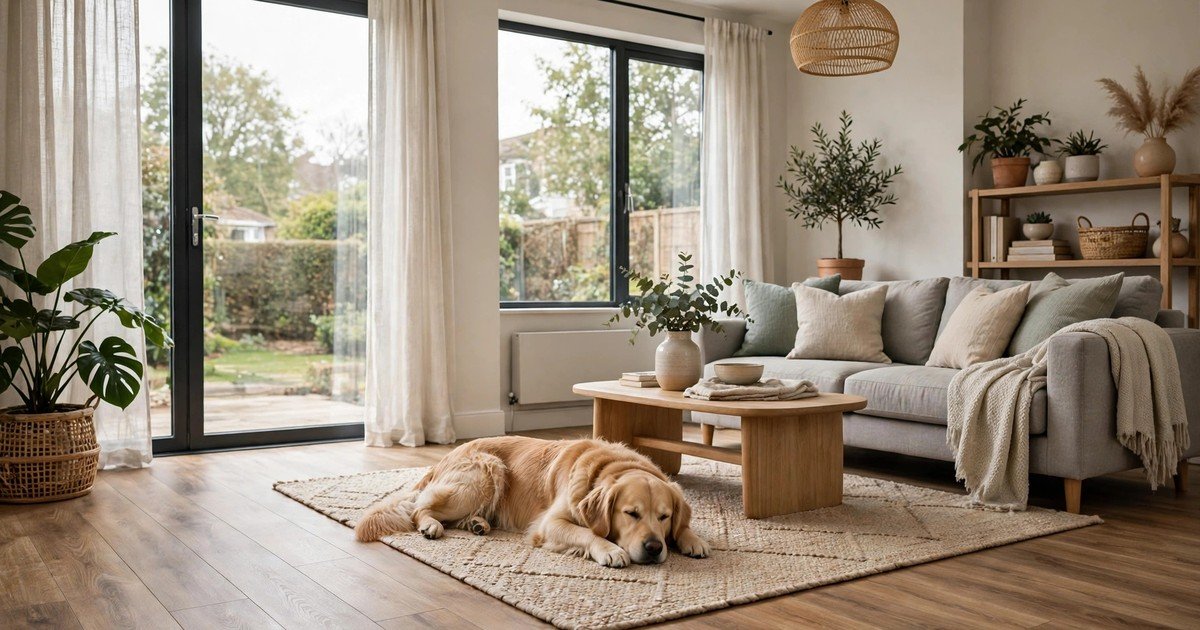
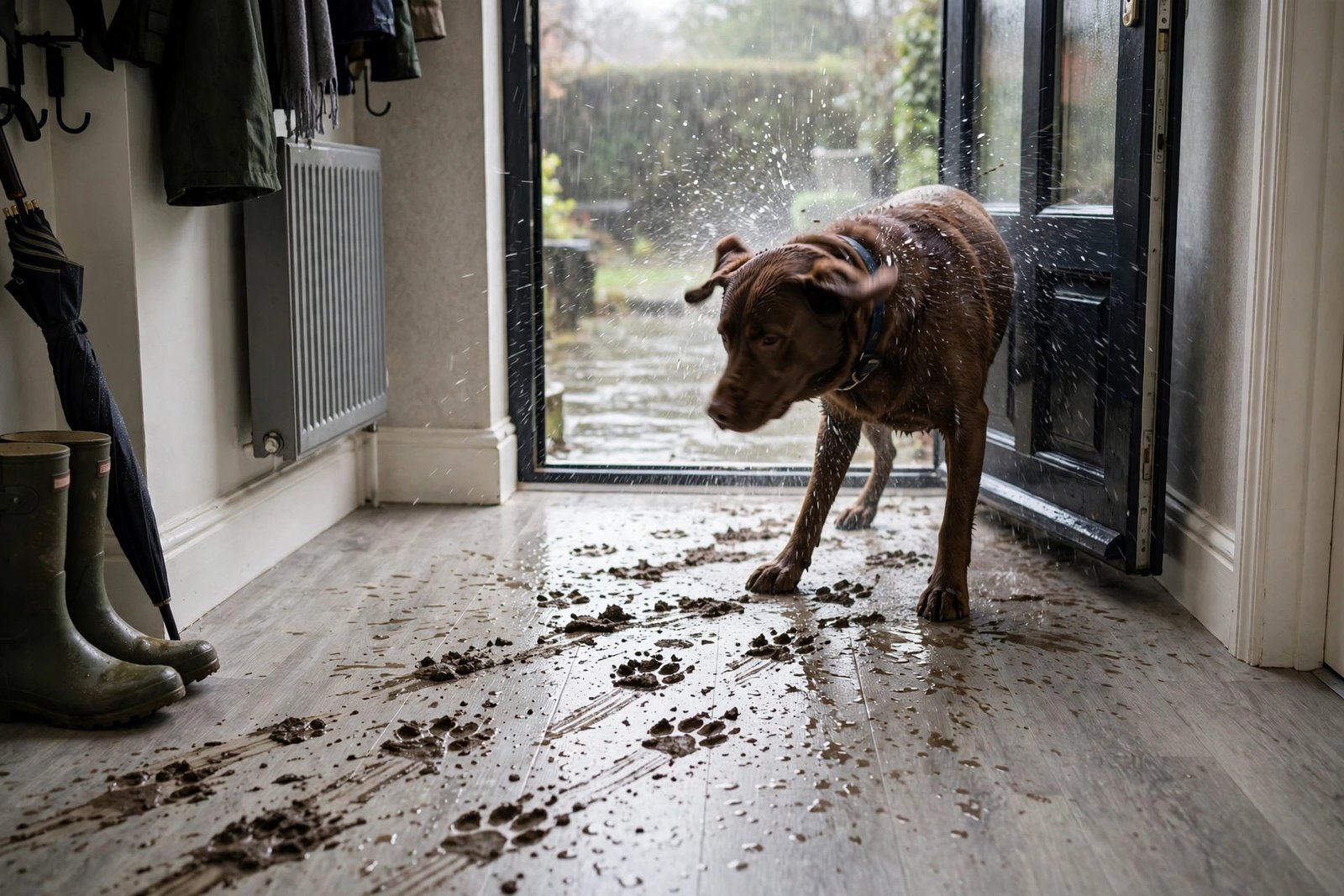
Dogs destroy flooring in specific ways: claws scratch, muddy paws stain, accidents soak in, and zoomies test every joint. The best flooring for dogs handles all four without looking like a kennel. This guide ranks the realistic options for UK dog owners — from the clear winner to what to avoid.
What Dog Owners Need
The job spec: scratch resistance (claws), waterproofing (accidents, wet paws, water bowls), easy cleaning (mud), and grip (older dogs slip on glossy floors — a real welfare issue). Aesthetics matter too; nobody wants their home to look like a vet clinic.
LVT: The Clear Winner
LVT is the best flooring for most dog owners. It is waterproof (accidents wipe up), highly scratch-resistant (quality wear layers shrug off claws), easy to clean, and available with textured, non-slip finishes. Individual damaged planks can be replaced. Expect £30–£60/m² fitted for quality products. The only real downside is cost — see LVT vs laminate and Karndean vs Amtico for the range.
Tile: Toughest, Coldest
Porcelain tile is essentially dog-proof — waterproof, scratch-proof, stain-proof. The trade-offs: cold, hard (uncomfortable for dogs to lie on), slippery when wet unless you choose textured tiles, and dropped bowls shatter. Great for utility rooms and boot rooms; less kind for living areas where the dog actually lives.
Laminate: Decent Budget Option
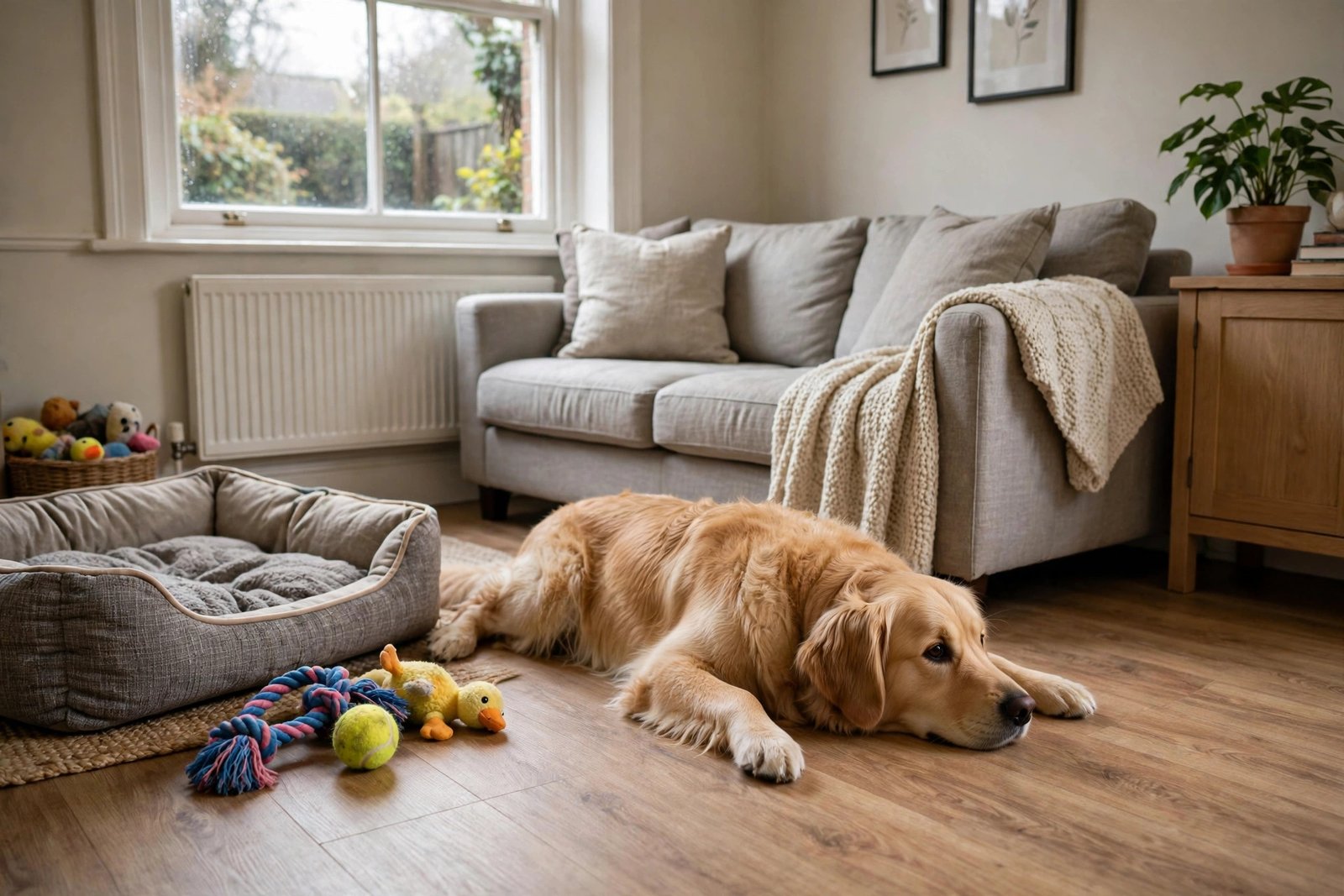
Laminate resists scratches well (its hard coating is genuinely tough) and costs far less — see laminate costs. But it is not waterproof: accidents that sit will swell the boards, and the clicky noise can stress noise-sensitive dogs. Fine for calm, house-trained dogs; risky for puppies and seniors.
Engineered Wood: Beautiful but Vulnerable
Dogs and real wood are a difficult combination — claws scratch the finish and accidents stain. If your heart is set on wood, choose a hard species, a matte lacquer (hides scratches better than gloss), and accept maintenance. See engineered vs solid wood.
Carpet: Avoid (Mostly)
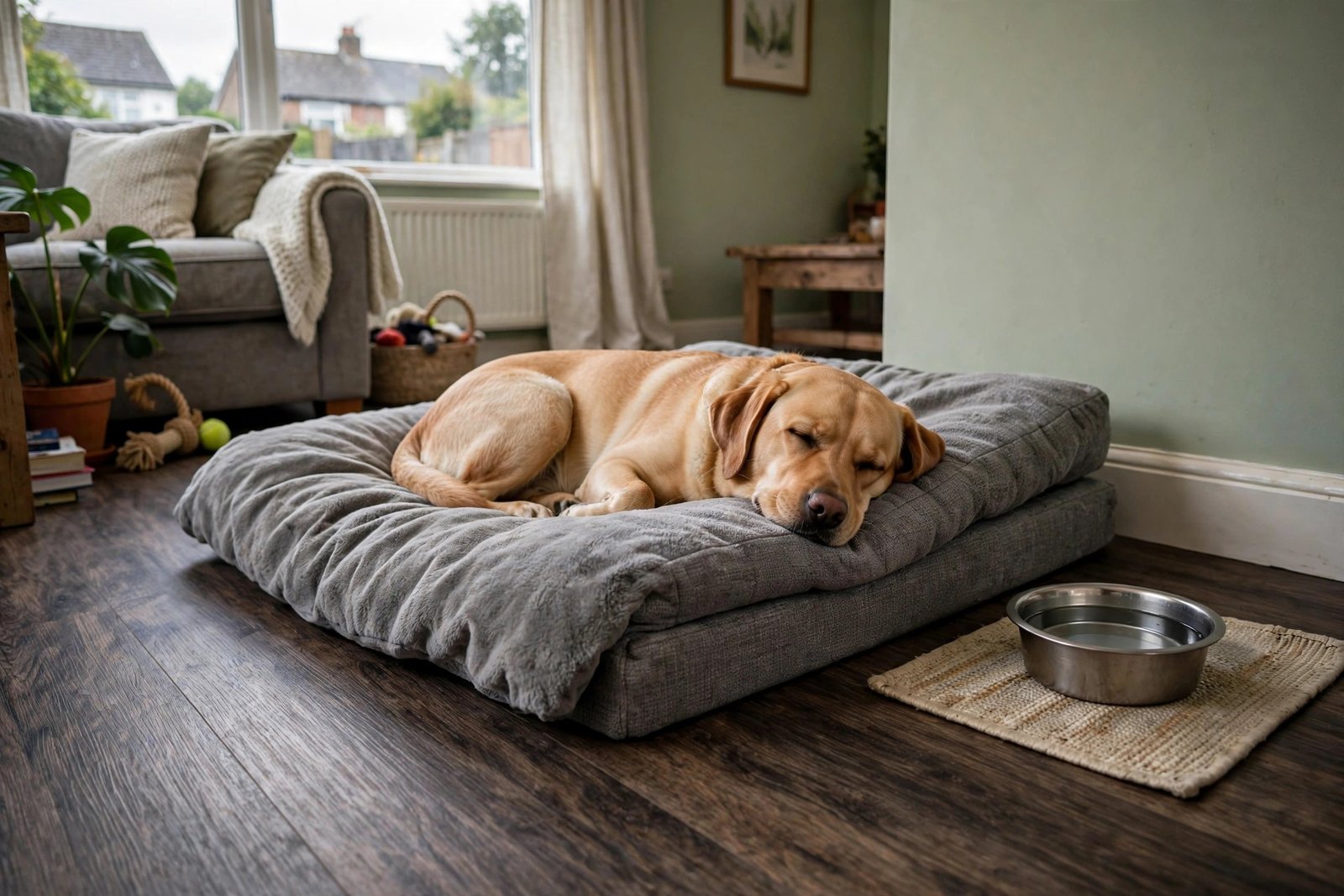
Carpet plus dogs means smells, stains and worn traffic lanes — see carpet costs before committing. The exception: bedrooms, where comfort wins and dogs spend less waking time. Everywhere else, choose hard flooring.
Practical Tips
- Choose textured/matte finishes over gloss — grip for older dogs, and scratches show less.
- Runners on slippery stretches help arthritic dogs enormously.
- Keep a mop by the door — the best floor still needs the mud dealt with.
- Check the slip rating (R rating) when comparing products.
Frequently Asked Questions
What flooring is most scratch-resistant for dogs?
Porcelain tile, then quality LVT, then laminate. Real wood scratches most visibly.
Is laminate OK with dogs?
For calm, trained dogs, yes — it resists scratches well. For puppies, accidents will damage it. LVT is the safer bet.
What is the best flooring for older dogs?
Textured LVT or tile with grip — avoid glossy floors that cause slipping. Add runners on long stretches.
Does dog urine ruin LVT?
No — quality LVT is waterproof, so accidents wipe up without damage if cleaned reasonably promptly. It is one of LVT’s biggest advantages over laminate and wood.
Is carpet or hard floor better with dogs?
Hard floor, clearly — hygiene, cleaning and durability all favour it. Keep carpet to bedrooms if at all.
The Bottom Line
LVT for most dog owners, tile for utility zones, laminate on a budget with a calm dog. See our complete UK flooring guide for everything else.