
 by
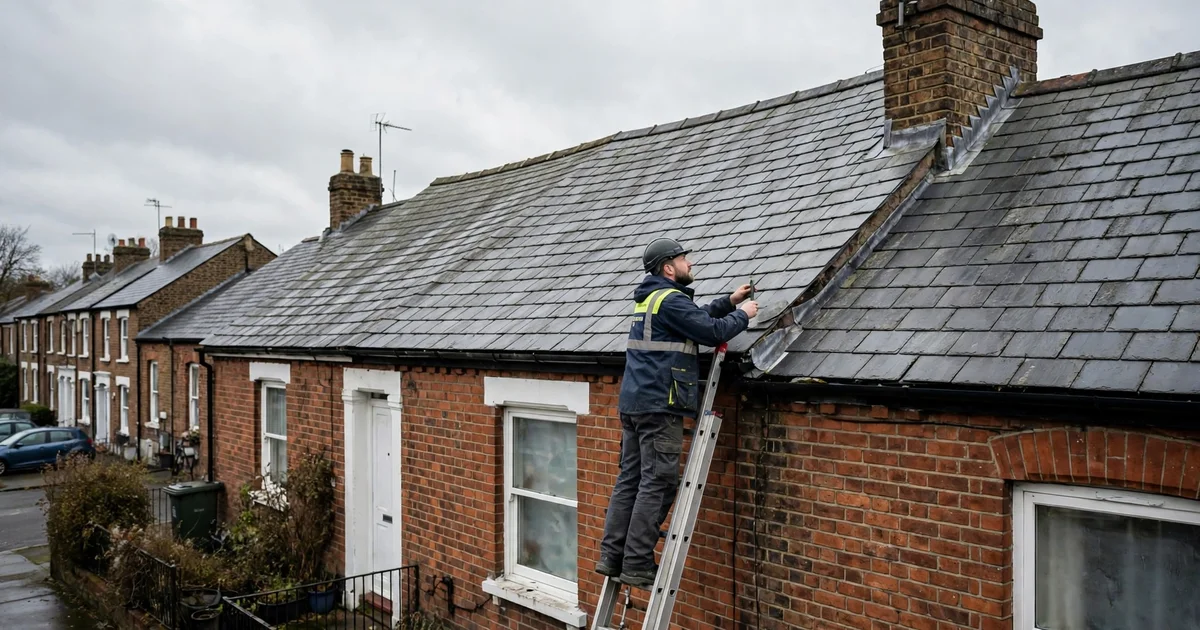
A leaking roof is one of the few household problems that genuinely gets worse by the hour. A small drip through the ceiling can turn into soaked insulation and stained plaster. Rotten timbers and mould can follow in a matter of weeks. The longer water runs, the bigger the repair bill. The good news is that most UK roof leaks come from a short list of causes. Once you know where to look, you can find and fix many of them quickly.
This guide explains how to fix a leaking roof in the UK step by step. It covers what to do in the first few minutes, how to find the source of the leak, and the temporary fixes that actually hold. You will also find the permanent repairs for tiles, flashing and flat roofs, and typical costs. Just as important, it explains when to put the ladder away and call a roofer.
First, Stop the Water Doing More Damage
If water is coming through right now, deal with the inside of the house first. Leave the roof itself until later. Move furniture, electronics and anything valuable out of the path of the drip, and put a bucket or washing-up bowl under it. Lay towels or a plastic sheet over flooring and carpets. If water is collecting in a bulging patch of ceiling plaster, pierce a small hole at the lowest point. Use a screwdriver for this. The water will drain in one controlled stream instead of bringing the whole ceiling down without warning. Put a bucket underneath first.
If water is anywhere near light fittings, downlights or sockets, switch off that circuit at the consumer unit. Damp and electricity are a dangerous combination, and it is not worth the risk. Take photographs of everything: the leak, the damage inside, and anything you can see outside from ground level. The photos help the roofer diagnose the problem and they are essential if you later make an insurance claim. And stay off the roof. Wet tiles and slates are dangerously slippery, and a roof that is already failing is no place to be in the dark or in the rain. Almost everything urgent can be done from inside or from ground level until a professional arrives.
How to Find Where a Roof Is Leaking
Finding the leak is usually the hardest part of the job, because water rarely drips straight down. It runs along rafters, battens and the underside of the felt before it finds a way through the ceiling. As a result, the damp patch can sit a metre or more from the actual hole in the roof. Work through it in order, starting inside.
Check the loft first
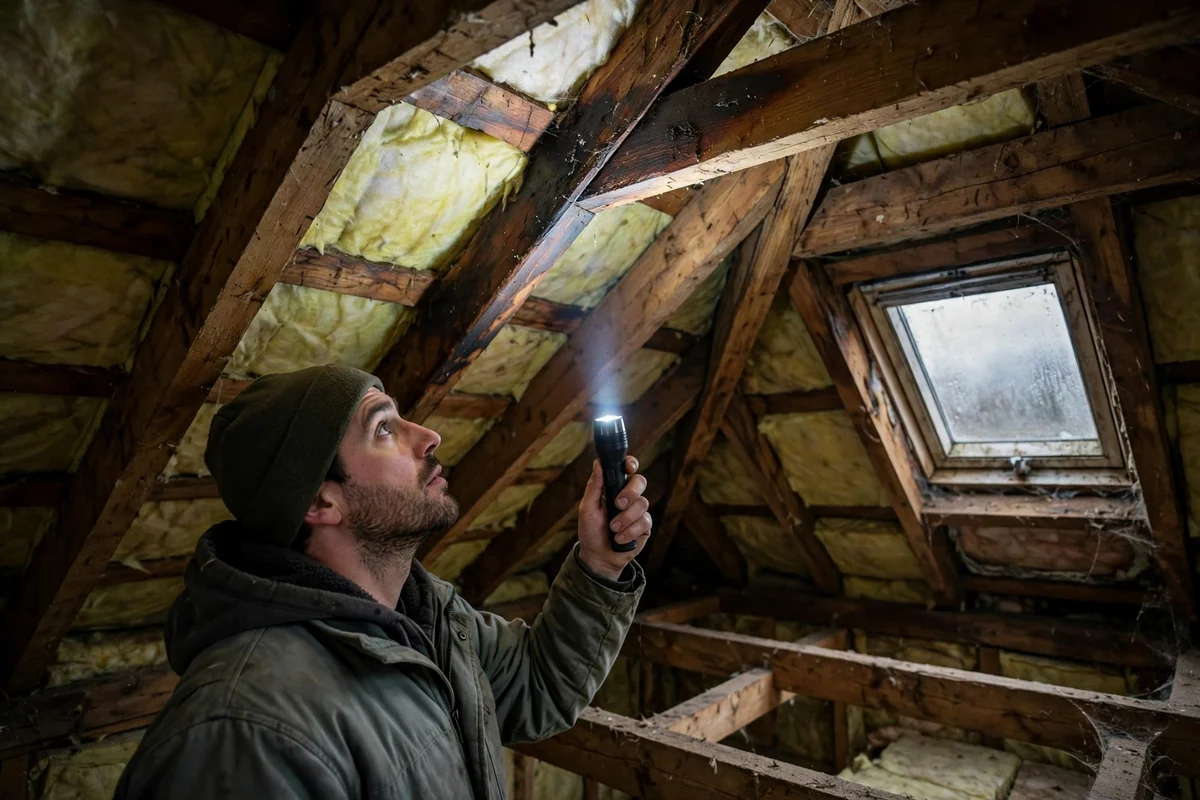
On a dry day, take a torch into the loft and look for the signs. Check for active drips, wet or stained rafters, and damp insulation. Look for daylight showing through where it should not, and dark water tracks running down the timbers. Follow any stain uphill — the entry point is usually higher than the damp patch on the ceiling below. Check around anything that passes through the roof: chimney breasts, soil vent pipes, skylights and rooflights. If the leak only appears in heavy rain or wind-driven rain, note that too. It points towards flashing or a gap that only opens up when water is being blown sideways.
Use the hose test
If the source still is not obvious, try a controlled water test with a helper. One person stands in the loft with a torch. The other runs a garden hose over small, isolated sections of the roof. Work on one section at a time, starting low and working up. Soak one section for a few minutes, wait, then move on. When the helper sees a drip, you have found the section — then narrow it down to the tile, joint or flashing in that area. Never do this in freezing weather or on a roof you cannot reach safely from a ladder.
Check from the ground outside
Use binoculars or your phone’s zoom to scan the roof from the garden or the pavement. Look for slipped, cracked or missing tiles and slates. Check for lifted or damaged flashing around the chimney and abutments. Look for sagging or split ridge tiles, and any obvious storm damage. Also check the gutters and downpipes. Blocked or overflowing gutters push water back under the roofline. They are a surprisingly common hidden cause of leaks. If the damp patch is on an internal wall rather than the ceiling, the cause may not be the roof. Our guide to what causes damp on internal walls can help. It explains how to tell a roof leak apart from condensation or rising damp.
Common Causes of Roof Leaks in the UK
UK roofs take a battering: constant rain, wind, frost and sudden temperature swings all speed up wear. The most frequent causes are:
- Slipped, cracked or missing tiles and slates. The single most common cause. Wind lifts a tile, frost cracks it, or the nail holding it rusts through and it slides out of place. One missing tile is enough to let rain in.
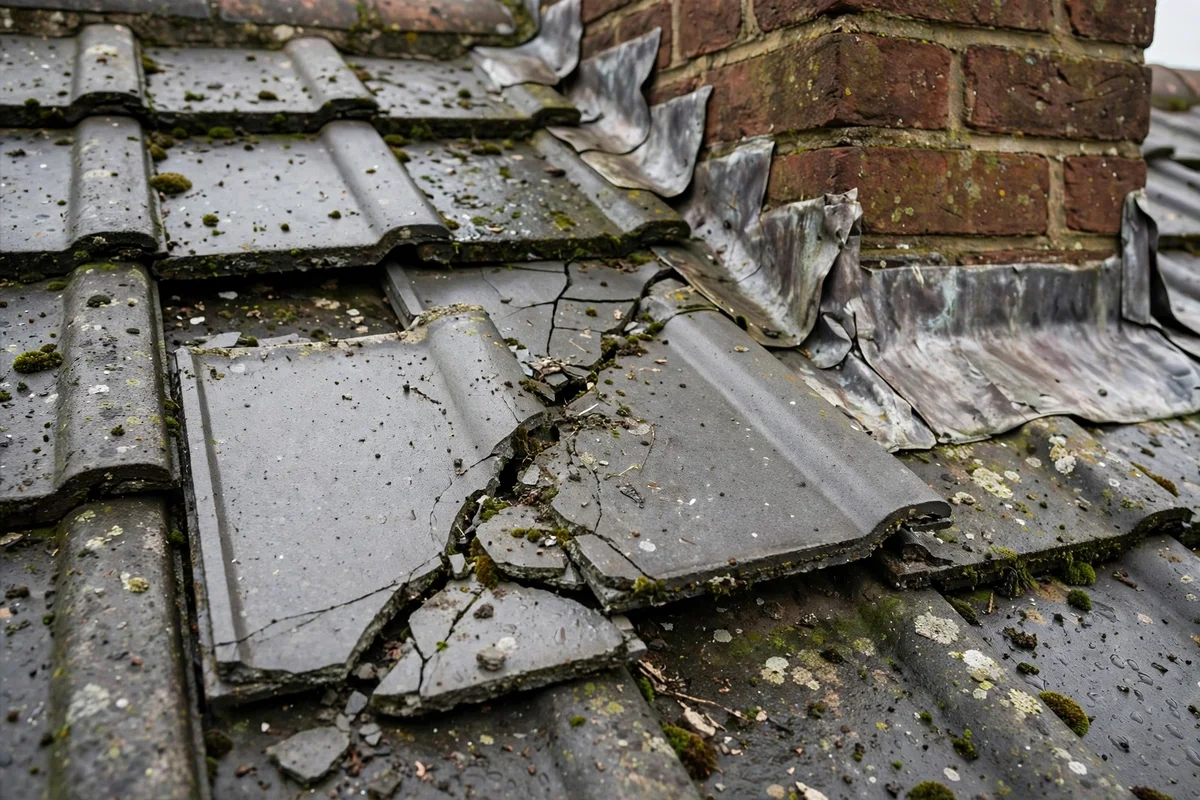
- Failed or damaged flashing. Flashing is the lead or metal strip that seals the joints where the roof meets a chimney, wall or skylight. It cracks, lifts or corrodes over time, and mortar around chimney flashing crumbles away. Leaks around chimneys are almost always a flashing problem.
- Perished roofing felt. Under the tiles sits a layer of felt or membrane. On older roofs this can tear, sag or rot, so water that gets past a tile has nothing stopping it reaching the timbers.
- Blocked gutters and valleys. Leaves and moss block gutters, water overflows and runs back under the eaves. Valleys — the V-shaped channels where two roof slopes meet — collect debris the same way.
- Flat roof damage. Felt flat roofs blister, split and crack with age; ponding water sits on the surface and finds every weak point. EPDM rubber and fibreglass (GRP) roofs last longer but can still split at seams and edges.
- Ridge and hip tiles. The mortar bedding ridge tiles dries out and cracks over decades, letting wind-driven rain in along the top of the roof.
Temporary Fixes That Actually Work
If you cannot get a proper repair done immediately, these stopgaps genuinely help — but they are temporary, and none of them replaces a real repair.
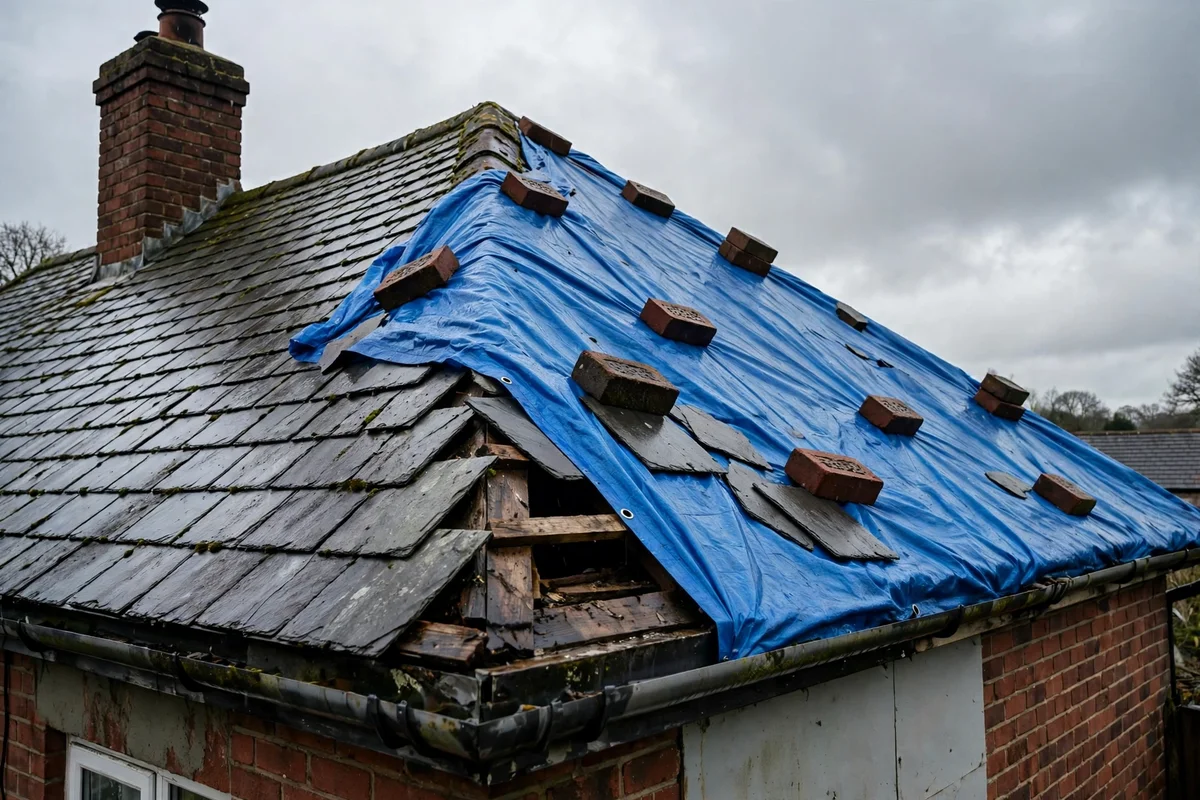
- Tarpaulin over the damaged area. For larger damage or a missing section of roof, drape a heavy-duty tarpaulin over the affected area. Extend it well past the damage on all sides and over the ridge if you can. Weigh it down with bricks or sandbags. Never nail through a tarp into the roof if you can avoid it. A tarp secured properly can keep a roof watertight for weeks.
- Roofing sealant for small gaps. For a small crack, a lifted flashing edge or a gap around a pipe, use a tube of sealant. Roofing sealant or roof cement both work. Apply it on a dry day and it can seal the gap. Clean the area first and apply it generously; it is a patch, not a permanent fix.
- A roof patch over a small hole. A self-adhesive flashing tape can cover a small hole or split. So can a small piece of roofing felt bedded in roof cement. Either one will hold until a roofer can replace the material properly.
- Inside the house. Keep catching the drip and keep the room ventilated. If water has soaked the plaster or insulation, let it dry out fully before you redecorate. Painting over damp plaster traps the moisture and brings the stain straight back. Our guide to treating mould on walls before painting covers what to do if the leak has already left mould behind.
How to Replace a Slipped or Cracked Tile
This is the one roof repair many confident DIYers can do safely from a ladder, on a dry, calm day, on a roof that is not steep. If the roof is steep, high, wet or icy, do not attempt it — call a roofer.
- Work out which tile has damage and buy a matching replacement. Take a photo or, better, the broken tile to a roofing merchant. Matching the profile, size and colour matters. A wrong tile will not sit properly.
- Carefully lift the tiles either side of the damaged one and the row above it, using a flat bar or your hands. Do not force them. Tiles overlap, so you need to lift the ones above before the broken one can slide out.
- Remove any nails or clips holding the broken tile, then slide it out.
- Slide the new tile into place, making sure it sits under the row above and overlaps the tiles below it correctly. Secure it with a nail or tile clip if the original had one.
- Lower the surrounding tiles back into place and check from the ground that they all sit flush, with no tile lifted at an angle.
- After the next heavy rain, check the loft to confirm the leak has stopped.
If you find several broken tiles, or the battens underneath have rotted, the problem is bigger than one tile. Ask a roofer to look at the whole slope. On a roof that is failing everywhere, replacing tiles one by one wastes effort.
How to Repair Damaged Flashing
Flashing repairs are fiddly. They often involve working close to a chimney or wall, so many homeowners leave this one to a roofer. If the damage is minor and you can reach it safely, a small repair is possible:
- Scrape away old, cracked sealant or crumbling mortar around the flashing with a scraper, and clean the area so new material can bond.
- If a section of lead flashing has lifted, carefully press it back into place so it sits flat against the roof surface and the chimney or wall.
- Apply a suitable weatherproof sealant along the joint, or re-point with mortar where the flashing meets brickwork. Take care not to create a water trap — a lip of sealant that holds water against the roof instead of letting it run off.
- For a corroded or split section, the proper fix is to cut out the damaged piece and fit new lead flashing, bedded in and sealed. That is a job for a roofer with the right tools and experience.
Lead flashing is the standard on UK homes because it lasts for decades when fitted well, but it is heavy and awkward to work with. If your flashing is cement fillet rather than lead, it will crack again eventually. Cement fillet is a common shortcut on older houses. Replacing it with lead is the lasting fix.
How to Fix a Flat Roof Leak
Flat roofs leak differently from pitched roofs, and they are harder to diagnose because water can travel a long way under the membrane before it shows inside.
- Find the damage. Look for blisters, splits, cracks or areas where water ponds after rain. On felt roofs, blisters are the classic sign that water has got under the surface.
- Patch small splits. Cut away any loose or perished material. Clean and dry the area thoroughly. Then apply a patch of compatible material, bedded in the right adhesive. Use felt, EPDM or liquid membrane, depending on your roof type. Using the wrong product is the most common reason a flat roof patch fails within a season.
- Fix the drainage. If water ponds on the roof for days after rain, the falls are wrong or something blocks the outlet. The falls are the slight slope that drains water away. Clearing the outlet often solves it; re-laying the roof to fix the falls is a professional job.
- Know when to replace. A felt flat roof typically lasts around 15–20 years. If it is blistering in several places, the felt has perished across the whole roof. Patching will only buy you a few months. At that point, a full re-cover in EPDM or GRP fibreglass is usually better value than repeated patches.
How Much Does It Cost to Fix a Leaking Roof in the UK?
Costs vary a lot by cause, roof type and where you live, but as a rough guide for typical UK prices:
- Replacing a few tiles or slates: typically around £150–£350, including labour and materials, for a straightforward repair.
- Flashing repair or replacement: typically around £200–£600. The price depends on how much flashing needs replacing and whether the job needs scaffolding.
- Small flat roof patch: typically around £150–£400; a full flat roof re-cover typically starts around £1,000 for a small garage or extension roof.
- Emergency call-out: typically around £150–£350 for a roofer to come out and make the roof watertight, often more at night or over a bank holiday weekend.
- Full roof repair after storm damage: typically around £500–£1,000 or more, depending on how many tiles and how much felt or batten needs replacing.
Most roofers will quote free of charge after an inspection, and it is worth getting two or three quotes for anything beyond a small repair. Be wary of anyone who quotes over the phone without seeing the roof, or who wants full payment upfront. If the roof is high or the repair needs scaffolding, expect the quote to include it. Scaffolding alone can add a few hundred pounds. That is one reason small repairs on tall houses cost more than the same repair on a bungalow.
When to Call a Professional Roofer
Call a roofer — do not climb up yourself — if any of these apply:
- The roof is steep, high, wet or icy, or you cannot reach the damage safely from a ladder.
- You cannot find the source of the leak after checking the loft and the roof from the ground.
- More than a few tiles have damage, or the battens or felt underneath have rotted.
- The leak is around a chimney, valley or skylight and involves flashing.
- The roof is a flat roof that needs re-covering, or water is ponding and the drainage is wrong.
- There is a leak inside a ceiling void near electrics, and you have not safely isolated the power.
A good roofer will inspect the roof, explain the cause in plain terms and quote before starting work. Look for a roofer with reviews from local customers, and check whether they are a member of a trade body such as the National Federation of Roofing Contractors (NFRC) or TrustMark. For storm damage, tell your home insurer before you authorise major work. They may want to send a loss adjuster. They usually need to see the damage before you repair it.
How to Prevent Roof Leaks in the Future
A roof you check once a year rarely springs a surprise leak. A few simple habits keep most leaks away:
- Clear the gutters twice a year — in late autumn after the leaves fall, and again in spring. Blocked gutters are one of the most common and most preventable causes of leaks.
- Look at the roof from the ground every autumn. Binoculars are enough to spot slipped tiles, sagging ridge tiles and moss building up.
- Cut back overhanging branches. Branches drop leaves into gutters and valleys, and in high winds they can scrape tiles or fall onto the roof.
- Deal with moss. Moss holds moisture against tiles and lifts them over time. You can brush it off on a dry day or treat it. But never jet-wash a roof — the pressure damages tiles and drives water under them.
- Check the loft after heavy rain. A quick look with a torch after a storm catches a small leak before it becomes a stained ceiling and a mould problem. If the ceiling below already has stains, read our guide to mould on a bedroom ceiling. It explains how to deal with the damage safely.
Most of all, do not ignore a small stain. A brown mark the size of a coin on the ceiling means a leak. It has already been running for a while, and it will not fix itself.
Frequently Asked Questions
Can I fix a leaking roof myself?
Sometimes. Replacing one or two tiles or sealing a small gap is possible for a confident DIYer on a dry day, on a roof you can reach safely from a ladder. Anything steep, high, wet or involving flashing, felt or a flat roof should be left to a professional roofer.
How much does it cost to fix a leaking roof in the UK?
Typically around £150–£350 for a small tile repair, £200–£600 for flashing work, and £150–£400 for a small flat roof patch. Emergency call-outs typically cost £150–£350. The exact price depends on the cause, the roof type and whether scaffolding is needed.
Will home insurance cover a leaking roof?
Often, if the leak was caused by a sudden event such as storm damage or a fallen tree. Gradual wear and tear, old age and poor maintenance are usually not covered. Tell your insurer promptly, take photos before any repair, and keep receipts for emergency work.
How long does a roof leak repair last?
A properly done tile or flashing repair should last for years — as long as the surrounding roof is in reasonable condition. A sealant patch or tarpaulin is a stopgap that may only last weeks or months. If the roof itself is near the end of its life, repairs will keep failing and a re-cover is the better investment.
Why does my roof only leak in heavy rain?
Usually because the fault only shows under pressure: wind-driven rain gets under a lifted tile or flashing edge that stays dry in light rain, or a blocked gutter only overflows when there is a lot of water. Check the flashing and gutters first, and inspect the loft during or just after heavy rain to catch the entry point.