
 by
First-time buyers usually need everything at once, which makes a practical new home gift especially welcome. This guide focuses on genuinely useful ideas for someone setting up a home from scratch.
Why Practical Gifts Suit First-Time Buyers Best
Buying a first home often means spending on essentials like furniture, appliances, and moving costs, leaving little budget for extras. A practical gift fills a genuine gap, rather than adding to a pile of things they didn’t need yet. For a broader look at gift categories, see our new home gifts guide.
Kitchen Essentials Worth Gifting
- A good quality knife set or chopping board
- A slow cooker or air fryer, useful for busy new homeowners
- A decent set of pots and pans, if not already covered by a group gift
Tools and Maintenance Basics
Many first-time buyers don’t yet own a basic toolkit, spare fuses, or a good torch, all of which come in useful sooner than expected. A well-stocked basic toolkit is a practical, if unglamorous, gift that tends to genuinely help.
Bedding and Bathroom Essentials
Quality bedding, towels, or a good bath mat are items people often underspend on for themselves, making them a welcome gift. These also tend to suit most tastes, unlike more style-specific decor items.
Group Gift Ideas for Bigger-Ticket Items
For friends or family pooling money together, bigger-ticket items like a vacuum cleaner, a decent mattress topper, or contributing towards furniture can make a genuinely meaningful group gift for a first-time buyer.
Adding a Personal Touch
Pairing a practical gift with something smaller and more personal, such as a card or a framed photo, helps balance usefulness with warmth. Our unique home gifts guide has more ideas for that personal addition.
The First-Week Survival Kit Every Buyer Needs
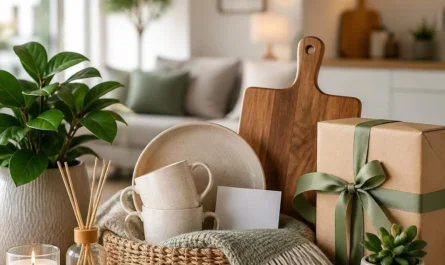
The most appreciated practical gifts are the ones needed on day one, before the boxes are unpacked. A first-week survival kit might include a kettle, tea and coffee, cleaning spray and cloths, toilet roll, light bulbs, basic tools and phone chargers. Individually these are unglamorous, but bundled together they solve the exact problems every new buyer faces in those first chaotic days. It is the rare gift that gets used within hours of being received.
Practical Gifts by Room: Kitchen, Bathroom and Bedroom
Thinking room by room stops you buying duplicates and ensures everything finds a use. For the kitchen, quality basics like a good chef’s knife, chopping boards or food storage containers are always welcome. In the bathroom, a set of thick towels, a bath mat and a proper toilet brush — the item everyone forgets — are genuinely useful. For the bedroom, decent pillows or a mattress protector are practical luxuries buyers rarely buy for themselves.
How to Avoid Buying Duplicates
The biggest risk with practical gifts is giving something they already own. A quick, casual question to their partner, parent or close friend usually reveals what is still missing. Some couples keep a shared notes list of things they need — asking about it is not spoiling a surprise, it is preventing waste. If in doubt, choose consumables or vouchers for homeware stores, which can never really be duplicated.
Upgraded Basics: When Practical Meets Premium
The cleverest practical gifts take an everyday essential and upgrade it. Instead of basic tea towels, give thick linen ones; instead of a standard extension lead, a surge-protected tower with USB ports. These premium versions of boring necessities feel like luxuries precisely because the buyer would never spend the extra on themselves. For distinctive alternatives alongside the practical, browse our unique home gifts guide.
The Gift of Time: Practical Help as a Present
Not every practical gift comes in a box. Offering a day of your time — helping unpack, assembling flat-pack furniture, or driving loads to the tip — is often the most valuable present a first-time buyer receives. Pair the offer with something tangible, like a toolkit or cleaning supplies, so there is still something to unwrap. Be specific when offering (“I’m free next Saturday to help with the garden”) rather than vague, since open-ended offers are rarely taken up.
Setting a Sensible Budget for Practical Gifts
Practical gifts span every budget, so decide yours before shopping. Under £20, focus on single high-quality basics — a proper chef’s knife or a set of storage containers. Between £30 and £60, you can cover small appliances like a hand blender or a decent tool set. Above that, consider clubbing together with others for bigger-ticket items such as a vacuum cleaner or microwave. Whatever you spend, prioritise one genuinely useful item over several mediocre ones; a first-time buyer with limited storage will thank you for restraint.
Frequently Asked Questions
What do first-time buyers actually need most?
Kitchen essentials, basic tools, and quality bedding are commonly underestimated costs that make genuinely useful gifts.
Is it better to give one big gift or several smaller ones?
This depends on budget and the group involved, though a few smaller, genuinely useful items often go further than one large, less practical gift.
Should I ask what they need before buying a new home gift?
If you know the person well, this can be a good approach, particularly for bigger-ticket items where preferences vary significantly.
What should you avoid giving a first-time buyer?
Avoid large furniture, bold artwork and anything requiring installation, since you do not know their space or taste yet. Also steer clear of the most common basics unless you have confirmed they do not own them.
Is giving money an acceptable new home gift?
Yes, particularly for close family. Money towards the new home is always useful, though presenting it thoughtfully — in a card explaining it is for something specific — feels warmer than a plain transfer.
Do first-time buyers prefer vouchers or physical gifts?
It varies, but vouchers for homeware stores are often the safer choice, letting buyers choose exactly what fits their space. A small physical gift alongside the voucher keeps it feeling personal.