 by
Quirky home accents are the details that stop a room from feeling generic. A single unusual piece, placed well, can define the personality of an entire space. This guide explores how to bring quirky accents into your home without tipping into clutter.
What Counts as a Quirky Home Accent?
A quirky accent is anything that breaks from the expected. This might be an oversized sculptural object, an unusual colour combination, or a piece with an offbeat shape or theme. Unlike standard home ornaments, quirky accents are meant to spark conversation rather than blend in. For a broader look at ornaments generally, see our home ornaments buying and styling guide.
Design Movements Behind the Quirky Look
Many quirky accents draw on distinct design movements. Memphis Design, from 1980s Italy, brought clashing colours and playful geometric shapes into homeware. Bauhaus favours bold, functional simplicity, while Art Deco leans into glamour, symmetry, and rich materials. Recognising these influences can help you choose pieces that feel intentional rather than randomly mismatched, and UK interiors publications such as Elle Decoration regularly feature homes built around one of these movements.
Popular Quirky Home Accent Ideas
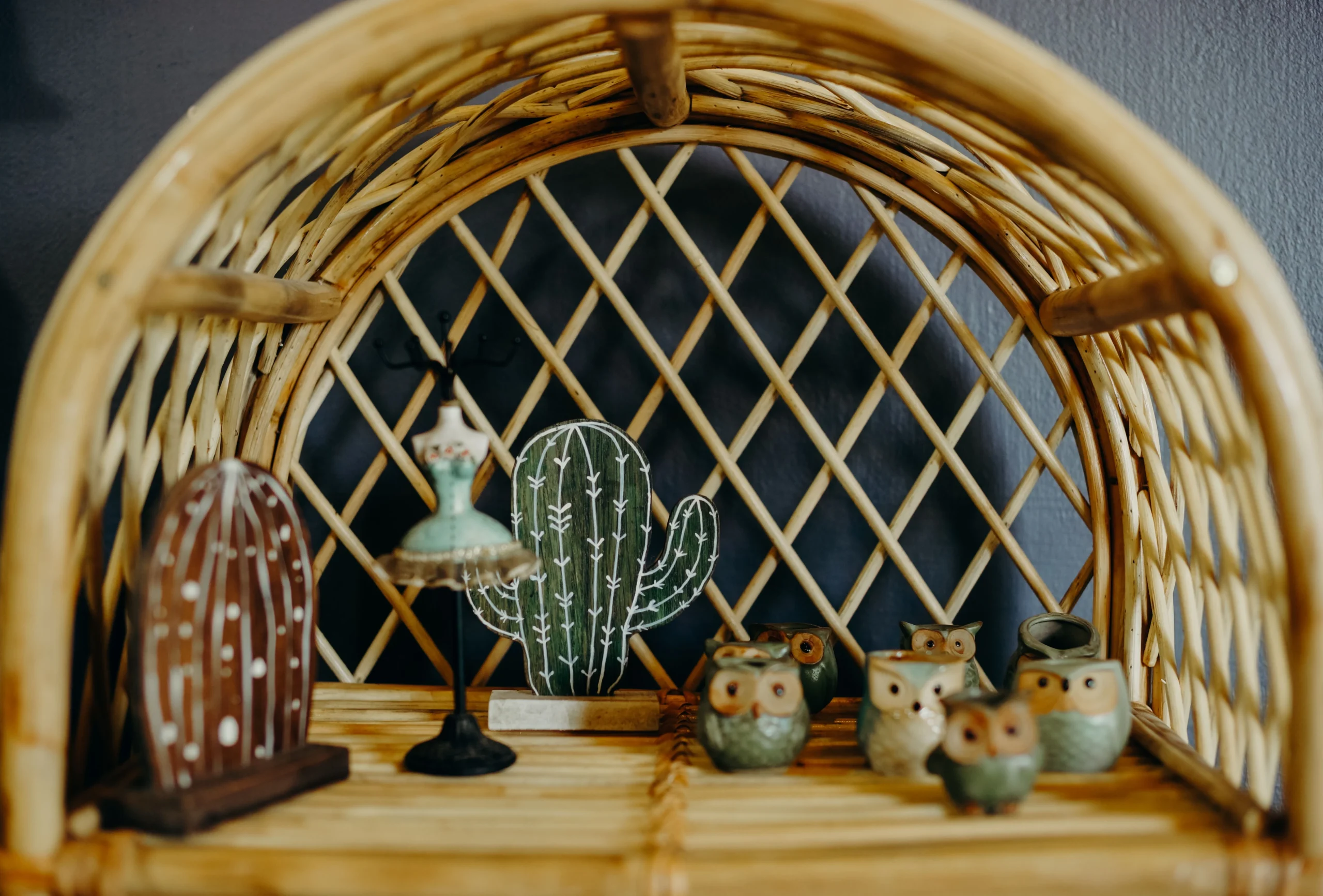
- Statement mirrors in unusual shapes, such as arches or asymmetric forms
- Bold sculptural vases with irregular silhouettes
- Novelty bookends shaped as animals, objects, or abstract forms
- Unexpected wall hooks shaped like hands, plants, or other playful designs
- Retro-inspired lighting, such as lava lamps or coloured glass fixtures
How to Use Quirky Accents Without Overdoing It
Pick One Focal Point Per Room
Rather than filling a room with several bold pieces, choose one standout accent per space. This keeps the quirky element feeling deliberate, rather than overwhelming.
Balance Quirky With Simple
A bold accent works best against a relatively calm backdrop. Neutral walls, simple furniture, and understated lighting all help a quirky piece stand out, rather than compete with its surroundings.
Use Quirky Accents to Update a Room Cheaply
Swapping out a single accent piece is one of the most affordable ways to refresh a room’s look, since it avoids the cost of redecorating entirely. For more affordable, easy-to-source options, our guide to quirky accessories for the home covers budget-friendly ideas in more depth.
Where Quirky Accents Work Best
Hallways, alcoves, and mantelpieces are ideal spots for quirky accents, since these areas naturally draw the eye without competing with a room’s main furniture. Bathrooms and kitchens can also benefit from a single playful touch, as long as it’s practical and easy to keep clean.
Mixing Quirky Accents With Vintage Pieces
Quirky and vintage styles pair surprisingly well, since both prioritise character over convention. If vintage is more your style, our vintage home decor guide explains how to source authentic pieces and blend them with more contemporary accents.
Quirky Accents Through the Decades: A Quick History
Quirky decor is not new — every era had its rebels. The 1960s brought pop-art brights and space-age shapes; the 1970s went earthy-craft with macramé and mushrooms; the 1980s Memphis movement made deliberate bad taste high design; the 2000s gave us shabby chic’s distressed everything. Knowing the lineage helps you mix intentionally: a Memphis-style vase beside a Victorian chair works when you understand both references. It also helps you spot quality — genuine period pieces beat pastiche.
The 60-30-10 Rule for Quirky Styling
Interior designers’ favourite ratio keeps quirk under control: 60% calm base (neutral walls, plain large furniture), 30% supporting character (patterned textiles, interesting wood tones), 10% outright quirk (the neon sign, the surrealist print, the lobster lamp). The 10% gets all the attention precisely because the 60% lets it breathe. Most cluttered quirky rooms fail this ratio — they run 30% quirk or more, and the eye has nowhere to rest.
Where Designers Actually Shop for Quirky Pieces
Beyond the obvious high street: auction house “day sales” (not the headline evening auctions) offer odd, wonderful lots cheaply; house clearance firms sell job lots of interesting objects; art school degree shows sell original work for little; and reclamation yards stock everything from Victorian tiles to cinema seats. Online, search beyond “quirky” — try “unusual”, “novelty”, “conversational” and specific eras for better results.
Renters’ Guide to Quirky Accents
Renting need not mean magnolia. Freestanding quirk — furniture, lamps, textiles, art leaned on shelves — needs no permission and moves with you. Removable wall decals and washi tape create feature walls that peel off cleanly. Even “no nails” rules bend for small picture hooks (fill the holes on exit; it takes minutes). Invest in pieces you love rather than the flat: the average UK tenancy lasts 4+ years, long enough to deserve personality.
Photographing Your Home: Making Quirk Camera-Ready
Whether for selling, renting out, or just Instagram, quirky homes photograph best with discipline. Declutter ruthlessly first — cameras amplify mess. Shoot in daylight, straighten lines, and style each shot around one hero piece rather than everything at once. Interestingly, a little quirk helps property listings stand out in thumbnail grids — agents report distinctive-but-tasteful homes get more clicks. Just remove anything truly divisive before the estate agent arrives. For larger statement pieces, see our vintage decor guide.
Frequently Asked Questions
How many quirky accents should one room have?
One strong focal piece per room usually works best. Adding too many can make a space feel chaotic rather than characterful.
Are quirky home accents a passing trend?
Not necessarily. While specific styles come and go, the idea of adding a personal, characterful touch to a home has remained popular for decades.
Do quirky accents suit small rooms?
Yes, in fact a single bold accent can work particularly well in a small room, since it draws attention away from the room’s size and towards the piece itself.
What are quirky home accents?
Small decorative pieces with unusual, playful or unexpected character — novelty lighting, surreal art, patterned textiles — that give a room personality beyond standard decor.
How many quirky pieces should a room have?
Follow the 60-30-10 rule: roughly 10% of a room’s visual weight as outright quirk. In practice, two to four well-chosen pieces per room, given breathing room.
Can quirky and minimalist styles mix?
Beautifully — minimalism’s calm base makes a single quirky piece sing. One surreal object in a restrained room has more impact than ten in a busy one.
Related Home Decor Guides
- Home Ornaments: Complete Buying & Styling Guide
- Quirky Accessories for the Home
- Vintage Home Decor: How to Get the Look
- Quirky Home Furnishings: Statement Pieces for Every Room