
 by
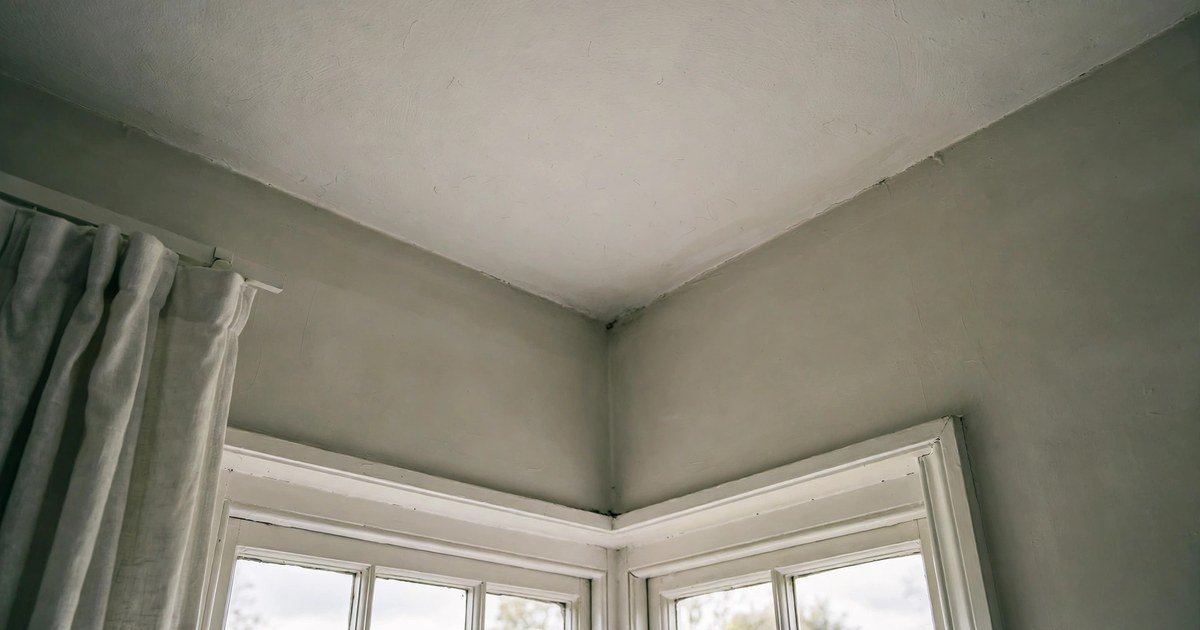
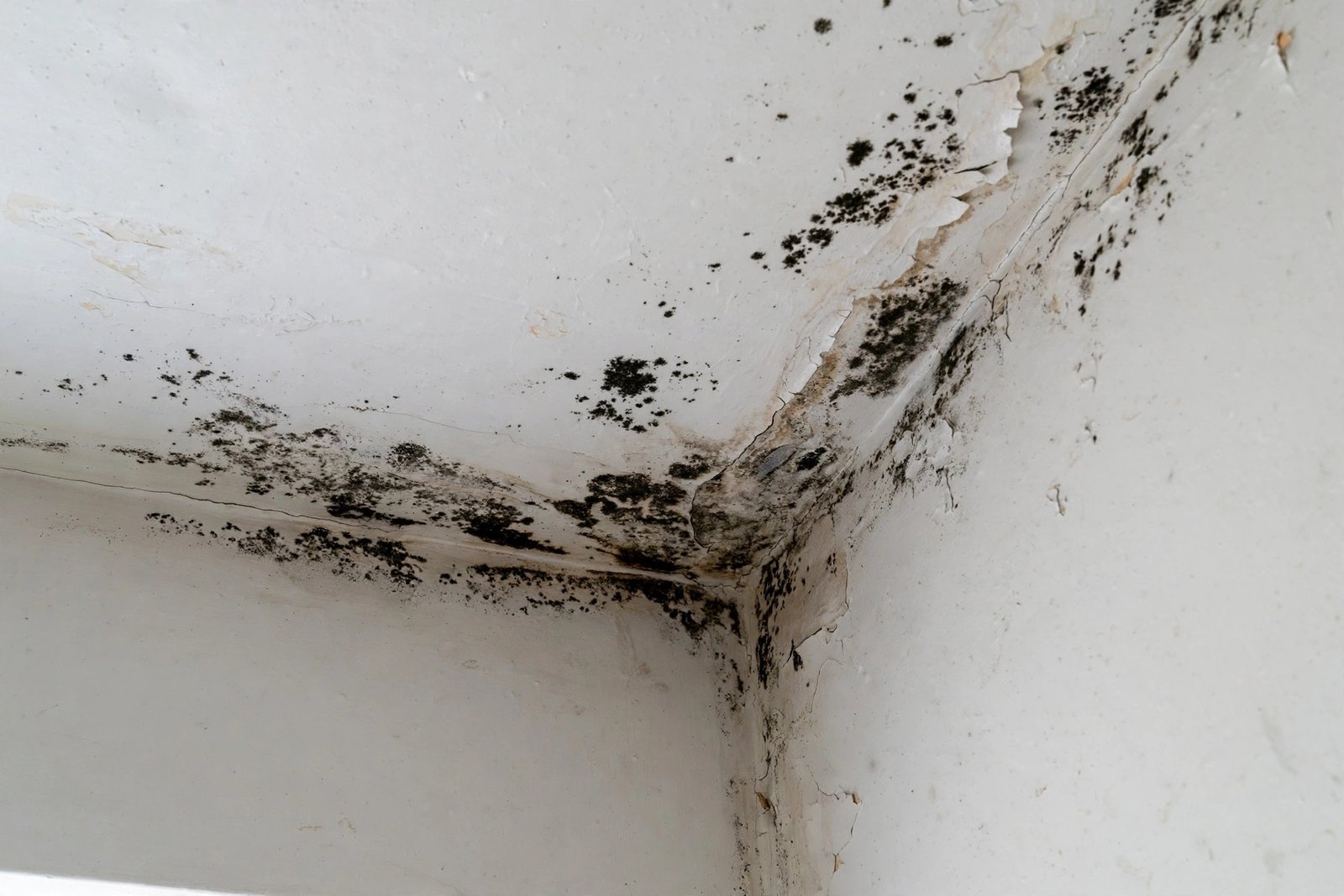
The bedroom ceiling — usually the corners — is the single most common place for mould in UK homes. There is a clear reason: bedrooms generate moisture all night (breathing), stay cool (heating often off overnight), and get ventilated least (windows shut against the cold and noise). This guide explains what to do about it, step by step.
Why Bedrooms Grow Ceiling Mould
Two adults breathing overnight release significant moisture into a closed room. That warm moist air rises, hits the coldest surfaces — typically the ceiling corners where two external walls meet, especially in top-floor flats and rooms with cold lofts above — and condenses. Add wardrobes pushed against external walls and trickle vents painted shut, and you have a mould farm. Understanding this matters because the fix is environmental, not chemical.
Is It Dangerous?
Surface mould on a ceiling is primarily an allergen and irritant issue rather than an emergency — but bedrooms are where you spend 8 hours breathing the air, so take it seriously. Anyone with asthma, allergies, babies or elderly family members should prioritise fixing it. Large, spreading or recurring patches warrant professional assessment. See our complete damp guide for the health context.
How to Clean It Safely
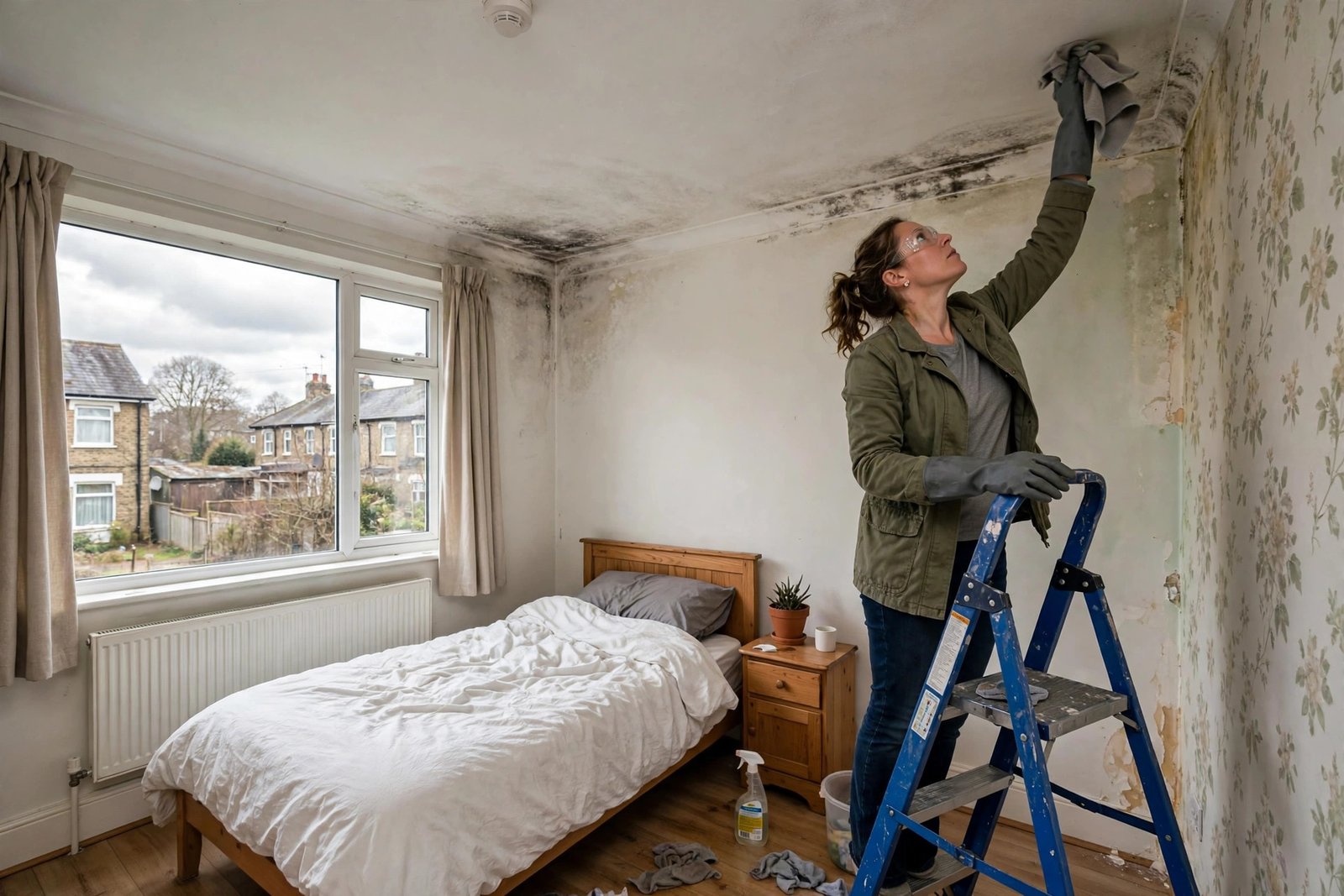
- Ventilate: open the window and door for cross-draught before you start.
- Protect yourself: gloves, dust mask (FFP2/FFP3), eye protection — ceiling work rains spores down on you.
- Use a dedicated mould remover sprayed on, not just bleach; work gently to avoid damaging the ceiling finish.
- Do not sand mouldy areas dry — wet methods keep spores contained.
- Let it dry fully before repainting, and read treating mould before painting first.
How to Stop It Coming Back
The overnight moisture cycle is the enemy — break it:
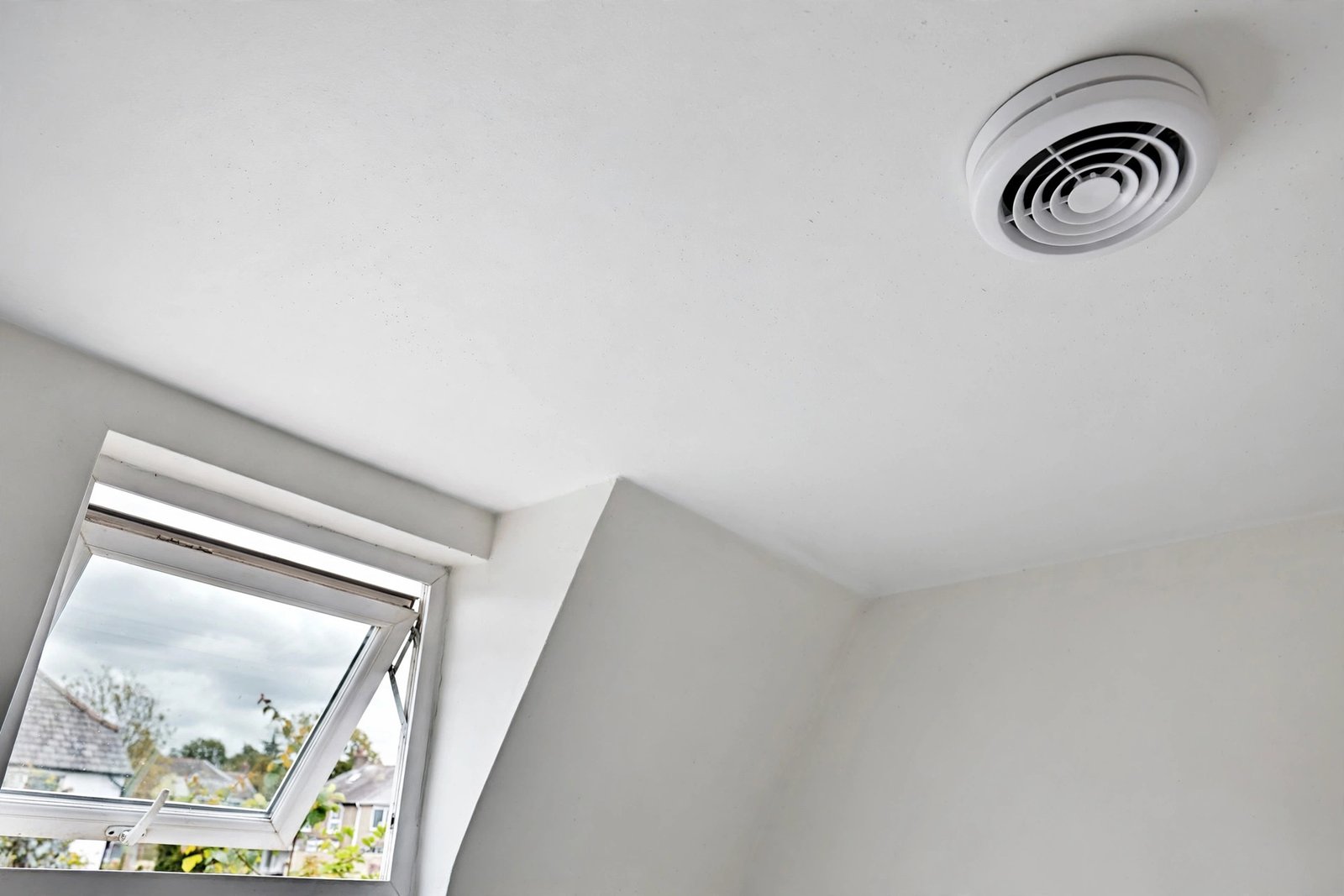
- Ventilate the bedroom: trickle vents open (unpaint them), window on night latch if security allows, or a PIV unit for chronic whole-house condensation.
- Heat consistently: a bedroom that drops to 12°C overnight will condense far more than one held at 16–18°C. Low constant heat beats blasts.
- Do not dry clothes in the bedroom — a single load releases litres of water into the air.
- Pull furniture off external walls by 5–10cm so air circulates.
- Insulate above: a cold loft above the bedroom is often the root cause — check loft insulation depth (270mm is the current guidance).
- Consider a dehumidifier for the bedroom in winter — see dehumidifier vs extractor fan.
Frequently Asked Questions
Why is there mould on my bedroom ceiling but nowhere else?
Bedrooms combine overnight moisture, cool temperatures and poor ventilation — the exact recipe for condensation on the coldest surface, which is usually the ceiling.
Can I sleep in a room with mould on the ceiling?
Small patches: ventilate well and clean promptly; the room remains usable. Large or spreading mould, or any respiratory symptoms — sleep elsewhere until treated.
Will painting over it work?
No. Clean it, fix the moisture, let it dry, then repaint — preferably with anti-mould paint. See the pre-painting guide.
Does a dehumidifier help bedroom mould?
Yes — it directly removes the overnight moisture that causes it. Size it for the room and empty it (or plumb it) regularly.
My landlord won’t fix it — what can I do?
Document in writing with dated photos, report formally, and know that persistent damp and mould in rented homes is increasingly enforced against landlords. See our complete guide.
The Bottom Line
Bedroom ceiling mould is a ventilation and heating problem wearing a cleaning-problem disguise. Clean it safely, then fix the overnight moisture cycle — and see our stop-mould-returning guide for the full prevention system.