 by
A radiator cold at bottom but warm at the top is one of the most common heating complaints in UK homes. You turn the heating on, the top of the radiator gets hot, and the bottom stays cold. The room never quite warms up. This guide explains what a radiator cold at bottom what to do uk means in practice: the likely cause, the checks you can do yourself, the fixes that work, and when to call a heating engineer.
The short answer is that sludge is the usual cause. Rust and debris settle along the bottom of the radiator and block the hot water. Bleeding will not fix it. But before you book anyone, a one-minute test tells you what is really going on. Read on to find the cause and the right fix.
The One-Minute Touch Test
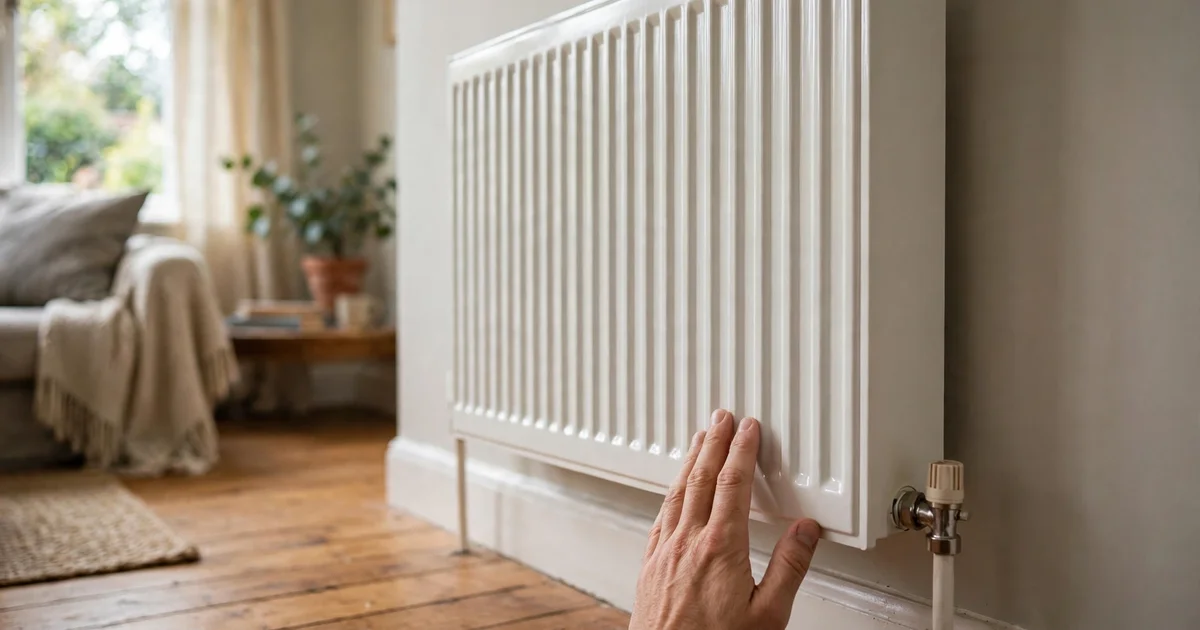
Turn the heating on and let it run for 15 to 20 minutes. Then run the back of your hand slowly over one radiator, from top to bottom. Radiators get hot, so use the back of your hand and take care. Do the same on the other radiators. The pattern of heat tells you the cause, so you never have to guess.
- Cold at the bottom, warm at the top: sludge has settled in the radiator. This is the pattern in our title.
- Cold at the top, warm at the bottom: air is trapped in the radiator. Bleeding fixes it in a few minutes.
- Cold in the middle, warm at the ends: sludge has built up across the middle of the radiator.
- The whole radiator is cold, others are fine: a closed or stuck valve, or a balancing issue.
- Every radiator is cold: the problem is not the radiators. It is the boiler, the pump or the controls.
Note one exception. A radiator is naturally hotter at the top than the bottom. Hot water enters, gives off heat and cools as it falls through the panel. So a bottom that feels slightly cooler can be normal. This is true when the thermostatic valve has closed down because the room is already warm, or when the boiler flow temperature is set low. It is a problem when the bottom is distinctly cold while the top is hot, when it happens on the same radiator every day, or when the room never gets warm.
Why Does Sludge Collect at the Bottom?
A central heating system is a loop of water. Over time, the inside of steel radiators and pipes slowly corrodes. That corrosion creates a dark, heavy sludge, mostly iron oxide, which is sometimes called magnetite. Because it is heavier than water, it settles along the bottom of the radiator. There it blocks the channels that hot water needs to flow through. The top still warms up. The bottom stays cold.
Sludge builds up faster in some homes. It builds up faster when the system has little or no corrosion inhibitor, when fresh water keeps being added to top up a leak, or when the system has never been cleaned properly. Older homes with original pipework are more prone to it. And a system that has had many top-ups is more prone too. Each top-up adds fresh water, and fresh water brings oxygen. Oxygen speeds up corrosion.
Sludge is not dangerous. But it wastes heat and it gets worse over time. A radiator full of sludge heats the room poorly. So the boiler runs longer and the bills go up. And sludge can damage the pump and the boiler if it spreads through the system. That is why it is worth fixing, even if the room is only a little cooler than it should be.
Checks You Can Do Yourself
Before you book anyone, run through these checks. None of them involve opening the boiler. Only a Gas Safe registered engineer should work inside a gas boiler.
Bleed the radiator and look at the water
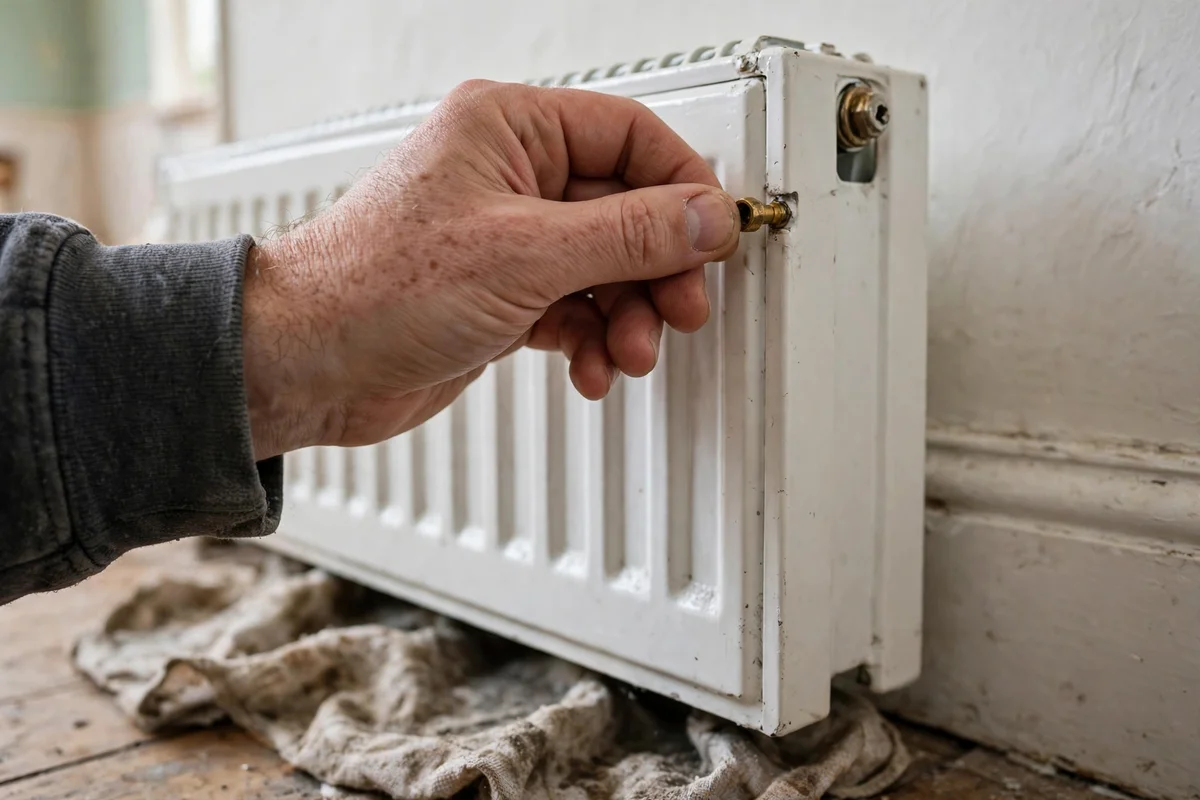
With the heating off and the radiators cool, hold a cloth under the bleed valve and open it a quarter turn with a radiator key. If you hear a hiss of air, let it out until water appears, then close the valve. Air on its own makes a radiator cold at the top, not the bottom. So bleeding is worth doing, but it rarely solves a cold bottom on its own.
The water itself is the useful clue. Clear water is a good sign. Black or dark brown water means sludge is in the system. If you have a combi or system boiler, check the pressure gauge after bleeding. Letting air or water out drops the pressure, and it usually needs to be back at around 1 to 1.5 bar when cold. Our guide to why your boiler loses pressure explains what to look for if you find yourself topping it up often.
Check the thermostatic valve
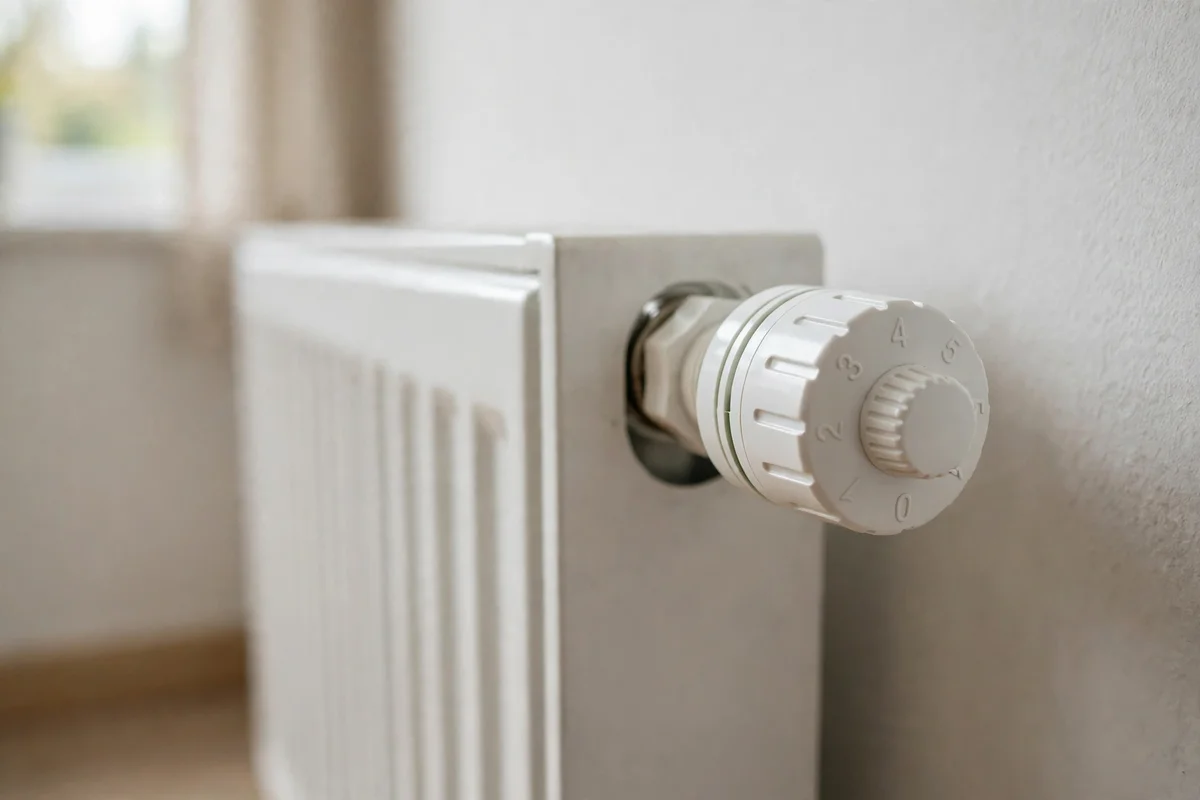
A thermostatic radiator valve, or TRV, has a pin inside that can stick shut. This is common after summer, when the valve has sat closed for months. Take the TRV head off by hand. You should see a small pin. Press it gently with a spoon. It should move in and out freely. If it is stuck down, the valve is closed and the radiator cannot heat up. A gentle tap or a little WD-40 can free it. If it will not move at all, the valve needs replacing.
Check the lockshield valve
The lockshield valve sits at the other end of the radiator. It is usually covered by a cap. If it is fully closed, no water can flow through the radiator at all. Take the cap off and check that the valve is open. Note the position before you touch it, so you can put it back. The lockshield also sets the balance of the system, so do not adjust it much. A small turn is enough to test it.
Count how many radiators are affected
This decides the fix. One radiator affected means the problem is local. Several radiators affected means the whole system needs cleaning. Walk round the house and feel each radiator. Write down which ones are cold at the bottom. That list helps an engineer a lot, and it stops you paying for a full system clean when one radiator flush would do.
Fix 1: Bleed the Radiator
Bleed the radiator when the touch test shows a cold top. It lets trapped air out, so hot water can fill the whole radiator again. You need three things: a radiator key, an old cloth, and a small container. A radiator key costs about £1 from any DIY shop.
- Switch the heating off and let the radiators cool down.
- Hold the cloth under the bleed valve at the top corner of the radiator.
- Open the valve a quarter turn with the key. You should hear a hiss of air.
- Close the valve as soon as water comes out in a steady stream.
- Check the boiler pressure gauge. Top the system up to 1 to 1.5 bar if needed.
Remember: bleeding moves air, not sludge. So if the bottom stays cold after bleeding, the cause is sludge. Move on to the next fixes. Do not keep bleeding the same radiator. Each bleed drops the pressure, and repeated top-ups add fresh water that speeds up corrosion.
Fix 2: Free a Stuck TRV Pin
If the touch test shows the whole radiator is cold while the others are hot, a stuck TRV pin is a likely cause. This fix takes five minutes and costs nothing.
- Turn the TRV head to its highest setting.
- Unscrew the head by hand. It should come off easily.
- Find the small pin underneath. Press it with the back of a spoon.
- If it is stuck down, tap it gently and press it again until it moves freely.
- Put the head back on and turn the heating on. The radiator should warm up within 20 minutes.
If the pin will not move at all, the valve body needs replacing. That is a job for a heating engineer. A new TRV typically costs around £25 to £60 fitted, depending on the valve and where you live.
Fix 3: Flush a Single Radiator Yourself
If only one radiator is cold at the bottom, you can flush it yourself. This is a messy job, so put old towels down first. And do it on a day when you can live without the heating for a few hours.
- Switch the heating off and let the system cool down completely.
- Close both valves on the radiator. Note the lockshield position first, so you can restore it.
- Loosen the union nut at one end with an adjustable spanner, with a tray underneath. Water will come out.
- Undo both ends and lift the radiator off its brackets. It will be heavy, so get help.
- Take it outside and flush it with a garden hose through one end until the water runs clear.
- Refit the radiator, open both valves, and bleed it. Then check the boiler pressure.
Black water coming out confirms sludge. If the water runs clear quickly, the problem may be elsewhere. And if the radiator is badly corroded inside, flushing may not be enough. A radiator that is very old or badly rusted is often better replaced. A new standard radiator typically costs around £100 to £250 supplied and fitted.
If you rent your home, do not do this job yourself. Flushing is your landlord’s job. Bleeding and topping up pressure are fine for a tenant. Anything that involves taking a radiator off the wall is not.
Fix 4: Power Flush the Whole System
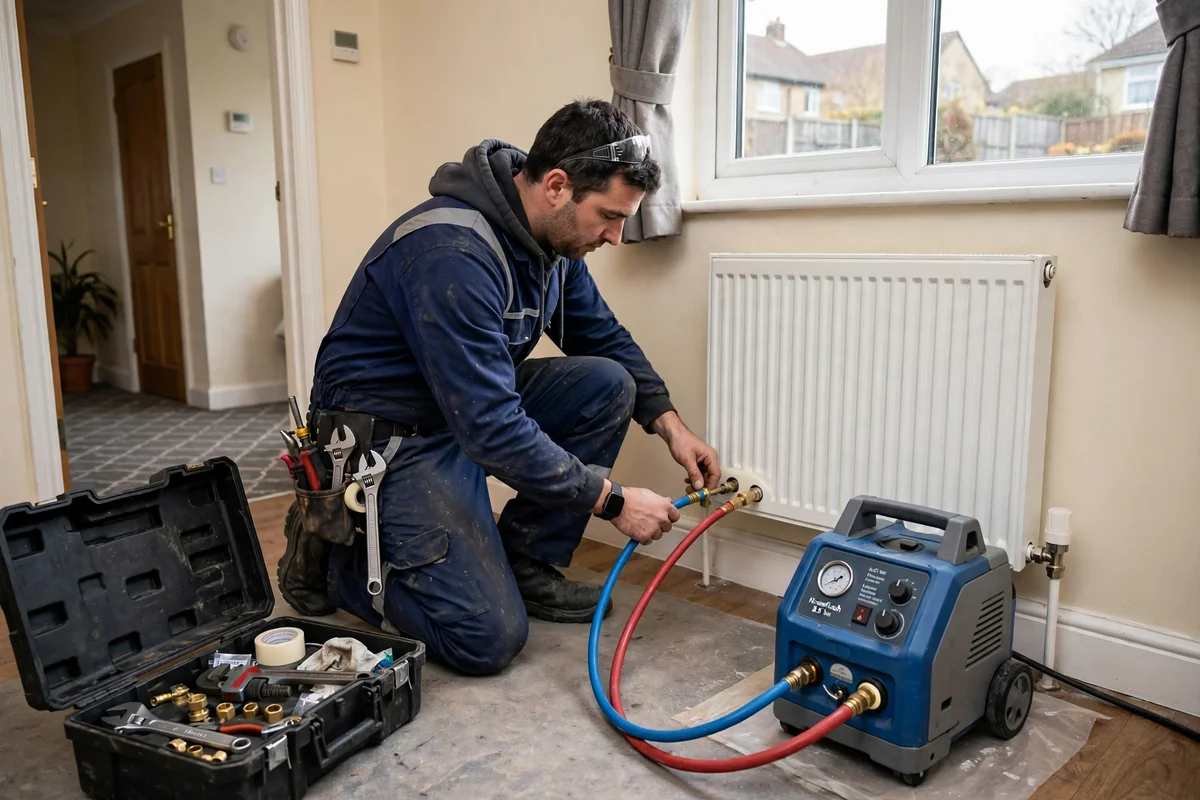
If several radiators are cold at the bottom, the whole system needs cleaning. A power flush is the standard fix. A heating engineer connects a powerful pump to the system and pushes cleaning chemicals through every radiator and pipe. The sludge is loosened and flushed out. Then the system is refilled with clean water and a dose of inhibitor.
A power flush takes most of a day for a typical three-bedroom house. The engineer should also fit or clean the magnetic filter, and check the pump and valves while the system is open. Ask for a written quote first. And ask what is included. Some quotes include the inhibitor and a filter clean. Others charge extra.
There are other options. A chemical flush is gentler and cheaper. It uses chemicals left in the system for days or weeks, then drained and refilled. It suits mild sludge. A mains flush pushes clean water through at mains pressure. It sits between the two. Your engineer can advise which one suits your system. Our guide to whether you need a power flush explains the signs in more detail.
What Does It Cost to Fix?
Costs depend on the cause, the size of your system and where you live. The radiator cold at bottom what to do UK costs below are typical ranges, so treat them as a starting point. Always get a written quote before work starts.
- Radiator key and DIY bleed: around £1, five minutes per radiator.
- Freeing a stuck TRV pin: free, if you do it yourself.
- Replacing a TRV: typically around £25 to £60 fitted.
- Flushing a single radiator (engineer): typically around £80 to £150.
- Power flush (typical 3-bed house): typically around £300 to £500.
- Power flush (larger house, more radiators): typically around £500 to £800.
- Magnetic filter supply and fit: typically around £150 to £250.
Our guide to power flush costs in the UK breaks the prices down by house size. And if you are weighing a bigger heating change, our guide to how central heating works explains the parts of the system and how they fit together.
When to Call a Heating Engineer
Some jobs are safe for a homeowner. Others are not. Call a heating engineer if any of these apply:
- Several radiators are cold at the bottom, not just one.
- The water from bleeding is black or very dark brown.
- The boiler pressure keeps dropping, or you have to top it up often.
- The pump makes grinding or rattling noises.
- You smell gas, or the boiler shows a fault code that will not clear. In that case, switch it off and call an engineer at once.
- You rent your home and the fix needs more than bleeding or topping up.
Only a Gas Safe registered engineer should work on a gas boiler. Ask for their Gas Safe ID card when they arrive, and check the number on the Gas Safe Register. It takes a minute, and it is the simplest safety check you can do.
How to Stop Sludge Coming Back
Once the system is clean, a few simple steps keep it that way. First, fit a magnetic filter on the return pipe near the boiler, if you do not have one already. It catches rust particles before they settle. Clean it once a year, usually at the boiler service.
Second, keep the inhibitor topped up. Inhibitor is a chemical that slows corrosion inside the system. A power flush should include a fresh dose. And your engineer can check the level at each annual service. If the system is drained for any reason, the inhibitor must be replaced.
Third, have the boiler serviced once a year. A service includes a pressure check, and the engineer can spot a weeping valve or a tired pump before it fails. And do not keep topping the system up without a diagnosis. Each top-up adds fresh water, and fresh water brings oxygen. Oxygen speeds up corrosion. So a system that needs regular top-ups has a leak or a fault that needs finding.
Most of all, do not ignore a cold bottom. A radiator that is cold at the bottom wastes heat every day it runs. Fix it early, and the fix is usually small. Leave it, and the sludge spreads through the system until a full power flush is the only answer. That, in short, is the full radiator cold at bottom what to do UK answer: test the pattern, fix the cause, then stop it coming back.
Frequently Asked Questions
Why is my radiator cold at the bottom but hot at the top?
Sludge has settled along the bottom of the radiator. Rust and debris from inside the system sink to the bottom, where they block the channels that hot water needs to flow through. The top still warms up, but the bottom stays cold.
Will bleeding a radiator fix a cold bottom?
Usually not. Bleeding lets trapped air out, and air makes a radiator cold at the top, not the bottom. If the bottom stays cold after bleeding, the cause is sludge. A single radiator can be flushed, or the whole system can be power flushed.
How much does a power flush cost in the UK?
A power flush typically costs around £300 to £500 for a typical three-bedroom house, and around £500 to £800 for a larger house with more radiators. Always get a written quote first, and check whether inhibitor and a filter clean are included.
Is a radiator cold at the bottom dangerous?
No, it is not dangerous. But it wastes heat and it gets worse over time. Sludge can also damage the pump and the boiler if it spreads through the system. So it is worth fixing, even if the room is only a little cooler than it should be.
Can I fix a cold radiator myself?
Yes, for the simple checks. You can bleed a radiator, free a stuck TRV pin, and check the valves. Flushing a single radiator is possible if you are confident, but it is messy and heavy. A power flush needs a heating engineer. If you rent, flushing is your landlord’s job.