 by
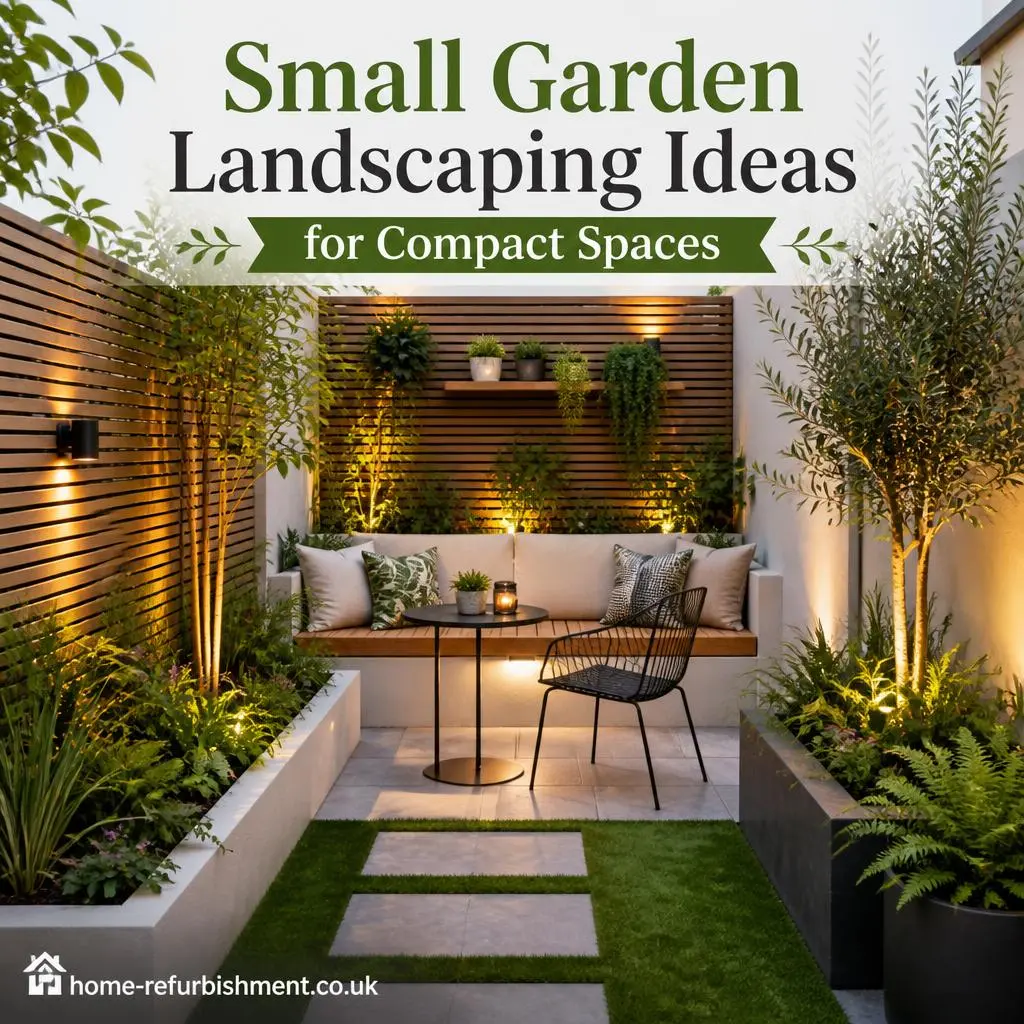
Small garden landscaping ideas need a slightly different approach than larger plots, since every element has to work harder in a limited footprint. This guide covers how to make a compact garden feel bigger and more considered.
Plan Around Sightlines, Not Just Space
In a small garden, what you see matters as much as how much space you have. Leading the eye towards a focal point, such as a specimen plant or a piece of garden art, makes a compact space feel more intentional and less cramped.
Use Vertical Space
- Wall-mounted planters and trellises free up ground space for other uses
- Climbing plants add greenery without taking up bed space
- Tiered planting draws the eye upward, making the garden feel taller and larger
Choosing Paving and Materials for Small Spaces
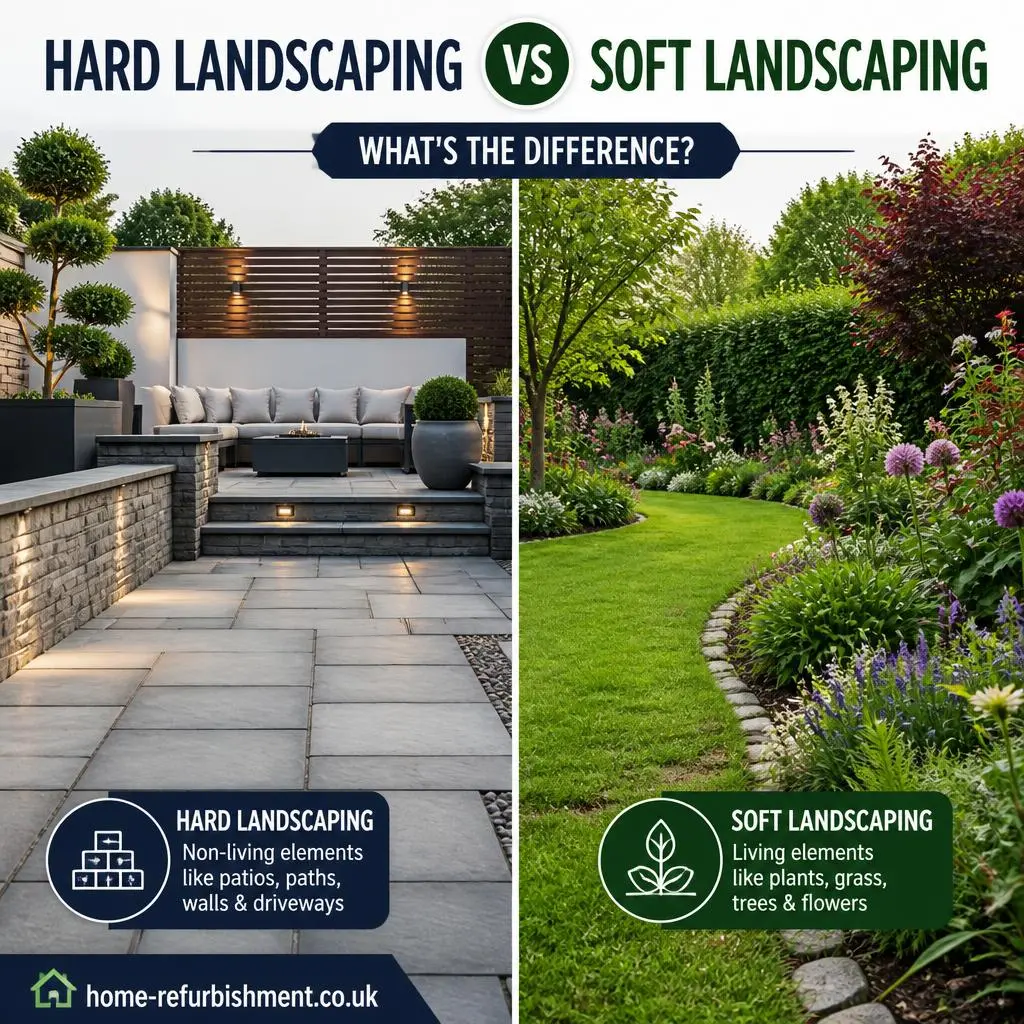
Larger paving slabs, with fewer joints, tend to make a small garden feel more spacious than lots of small pavers with busy grout lines. Keeping to one or two materials throughout, rather than mixing several, also helps a compact garden feel cohesive rather than fragmented. Our hard vs soft landscaping guide covers material choices in more depth.
Multi-Functional Garden Zones
In a small garden, a single area often needs to serve more than one purpose, such as a dining spot that doubles as a seating area for relaxing. Furniture that folds away or stores easily helps a space adapt to different uses without feeling cluttered.
Planting Tips for Compact Gardens
Choose plants with a naturally compact habit, or ones that respond well to pruning, rather than varieties that will quickly outgrow the space. The Royal Horticultural Society (RHS) plant selector can filter specifically for smaller garden varieties, which is a useful starting point when choosing what to plant.
Boundary and Screening Considerations
In small, overlooked gardens, screening with trellis, planting, or slatted fencing can add privacy without making the space feel enclosed. Remember that boundary fences are generally limited to 2m in height without planning permission, so check local rules before adding taller screening.
Mirror Tricks and Other Space Illusions
Small gardens benefit enormously from visual trickery. A mirror fixed to a fence or wall — specifically an outdoor acrylic mirror, since glass is a hazard — doubles the perceived depth instantly. Curved paths and beds feel larger than straight ones because the eye cannot take in the whole space at once. Repeating the same plant in drifts rather than ones and twos creates rhythm that reads as abundance. And resist the urge to fill every corner: deliberate empty space makes a small garden feel calm rather than cramped.
Choosing a Focal Point for a Small Garden
Every successful small garden has one thing the eye lands on. It could be a water feature — even a simple bubbling pot — a sculptural shrub like a cloud-pruned box, a painted bench, or an attractive pot cluster by the door. Position it where it is visible from the main window, since small gardens are mostly viewed from indoors. One strong focal point beats five competing ones; restraint is the entire secret.
Small Garden Storage: Hiding the Practical
Bins, bikes and tools can devour a compact garden. A slimline storage box doubles as a bench, while a narrow lean-to shed tucked against the house wall holds tools without dominating. Wheelie bin screens — timber slatted panels — hide the ugliest essentials for under £100. Wall-mounted hose reels and folding furniture keep floors clear. The principle: everything practical gets a lid, a screen or a cupboard, so the garden reads as garden, not utility yard.
Lighting a Small Garden for Evening Use
A few well-placed lights extend a small garden’s usable hours enormously. Solar spike lights along a path cost almost nothing to run and need no wiring — just ensure the panel gets daylight. One warm uplight on a tree or architectural plant creates drama out of nothing. String lights overhead turn even a tiny patio into an evening destination. Stick to warm white (2700K); cool blue-white light makes small spaces feel stark and uninviting.
What to Avoid in a Compact Garden
Certain choices actively shrink a small garden. Lawns edged with fussy bedding eat space for little return — consider reducing or removing them. Dark fences close in; painting them a soft sage or pale grey pushes boundaries visually outward. Avoid small fiddly ornaments scattered about — they read as clutter, not charm. And think twice about thirsty, sprawling plants; in a compact space, every plant must earn its place through long seasons of interest. For bigger-picture inspiration, browse our garden landscaping ideas.
Frequently Asked Questions
How do I make a small garden feel bigger?
Using larger paving slabs, a limited material palette, and vertical planting all help a compact garden feel more spacious.
What plants work best in a small garden?
Compact or slow-growing varieties, along with climbers that use vertical space, tend to suit smaller gardens best.
Is landscaping a small garden cheaper than a large one?
Not always. Labour and delivery costs can stay similar regardless of size, so a small garden doesn’t always cost proportionally less.
How do you make a small garden look bigger?
Use curved lines, repeat plants in drifts, add a mirror on a wall, keep boundaries light-coloured, and leave deliberate empty space. One strong focal point beats many small features.
What is the best layout for a small garden?
Divide it into two or three distinct zones — even just a seating area and a planting bed — so the eye discovers the space in stages rather than seeing all of it at once.
How much does it cost to landscape a small garden in the UK?
A simple refresh with plants, gravel and paint can cost £500 to £1,500 DIY. Professional landscaping for a small garden typically runs £2,000 to £6,000 depending on materials and complexity.
Related Garden Landscaping Guides
- Garden Landscaping Ideas: The Complete Guide
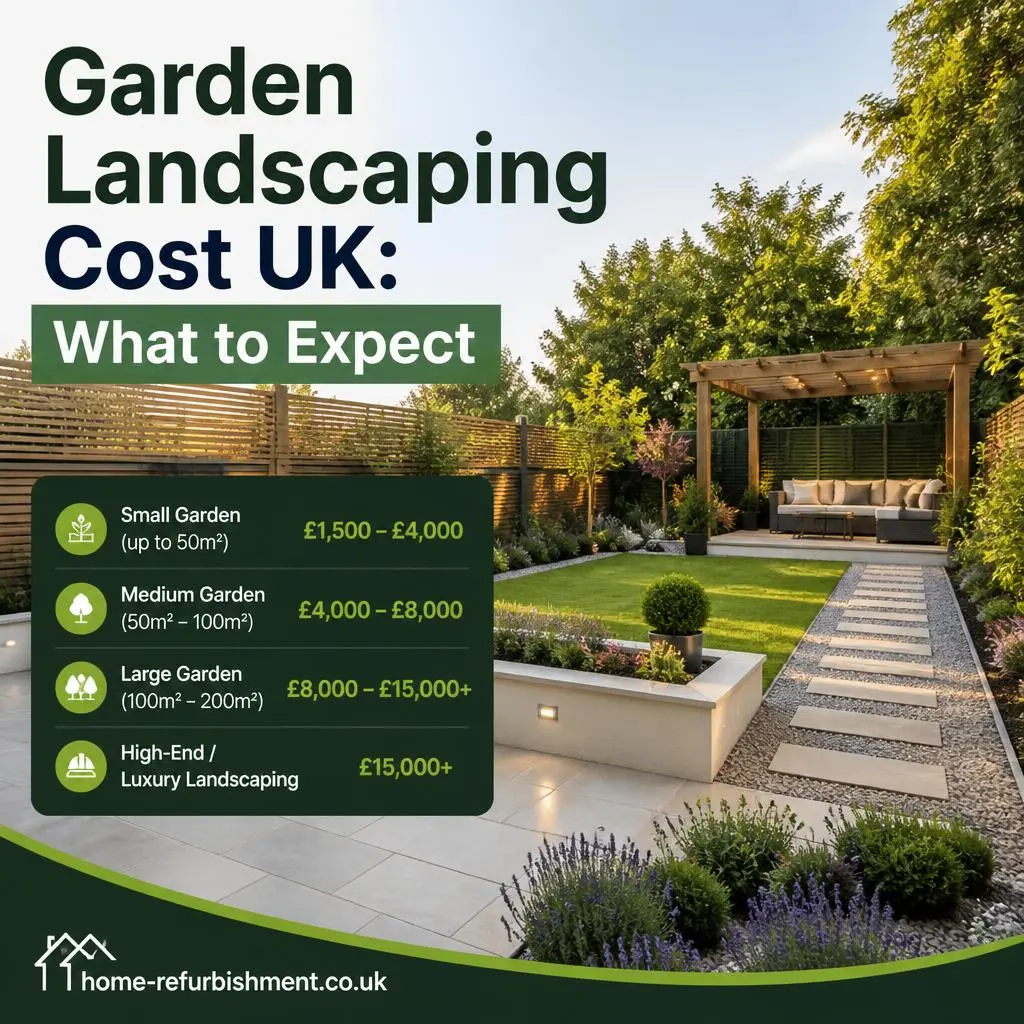
- Garden Landscaping Cost UK: What to Expect
- Front Garden Landscaping Ideas That Boost Kerb Appeal
- Hard Landscaping vs Soft Landscaping: What’s the Difference?