 by
by With so many different types of blinds on the market, choosing between them can feel overwhelming. This guide breaks down the main options, how they work, and which rooms or window types each one suits best.
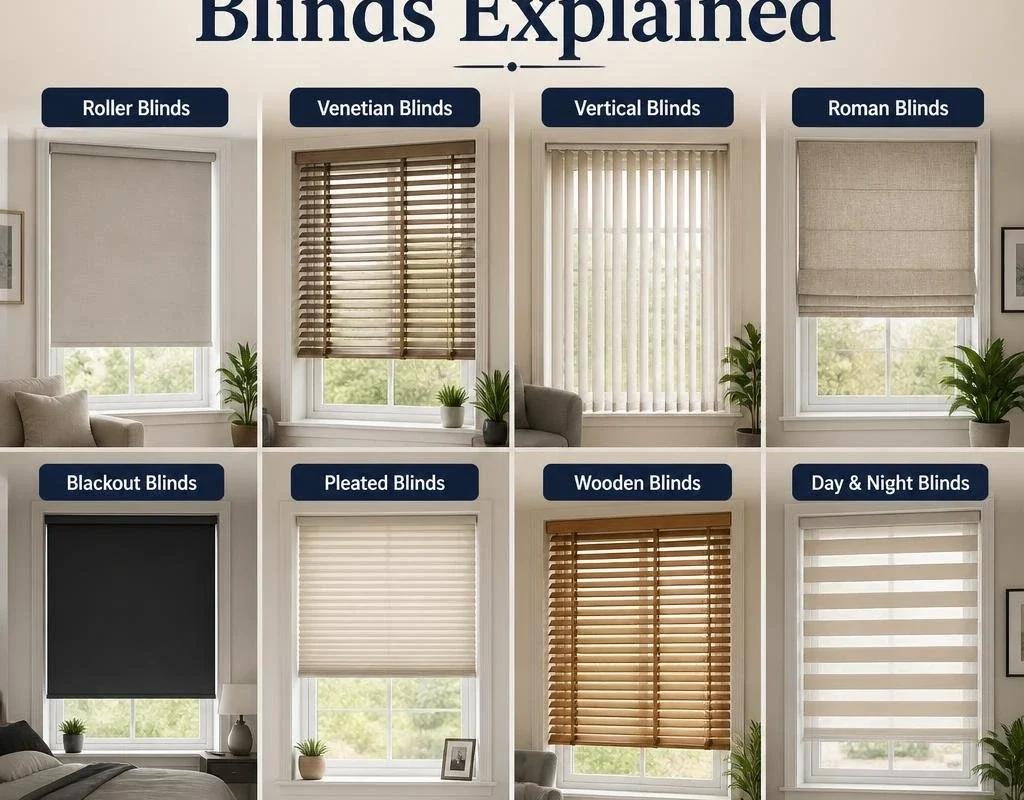
Roller Blinds
A single piece of fabric wound around a roller mechanism at the top of the window. Roller blinds are simple, affordable, and available in an enormous range of fabrics, from sheer to full blackout. They suit almost any room and window type, making them one of the most popular choices in the UK.
Venetian Blinds
Horizontal slats, typically in aluminium or wood, that tilt to control light without fully raising the blind. Aluminium venetians suit kitchens and bathrooms thanks to their moisture resistance, while wooden venetians add warmth to living rooms and bedrooms.
Vertical Blinds
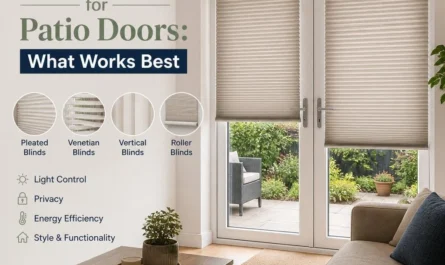
Hanging fabric or PVC vanes that rotate to control light and stack neatly to one side when open. Vertical blinds are particularly well suited to wide windows, patio doors, and sliding doors, since they don’t obstruct access the way some other blind types can. Our blinds for patio doors guide covers this application specifically.
Roman Blinds
Fabric that folds into neat, structured pleats when raised, giving a softer, more decorative look than roller or venetian blinds. Roman blinds work well in living rooms and bedrooms where a more tailored, fabric-led look is wanted, though they sit slightly bulkier when fully raised than a roller blind.
Perfect Fit Blinds
A no-drill system that clips directly into the window or door frame, popular for uPVC windows and doors. Perfect fit blinds are available in roller, venetian, and pleated styles, making them a flexible option for renters or anyone wanting to avoid drilling into frames.
Day and Night (Vision) Blinds
Made from alternating sheer and opaque fabric bands that shift between soft light filtering and full privacy, depending on how the bands are aligned. These suit rooms where light needs vary throughout the day, such as home offices or living rooms.
Pleated Blinds
Similar in construction to Roman blinds but using a crisp, concertina-style fold, pleated blinds sit flatter and neater when raised. They’re a popular choice for skylights and conservatories, in addition to standard windows.
Panel Blinds
Wide fabric panels that slide along a track, offering a clean, modern alternative to vertical blinds. Panel blinds suit large windows, patio doors, and bifold doors particularly well.
Choosing Between Them
Consider the room’s function first: bathrooms and kitchens generally suit moisture-resistant materials like aluminium or PVC, bedrooms often benefit from blackout roller or Roman blinds, and living rooms have the most flexibility to prioritise style. Window shape matters too, with bay windows, covered in our blinds for bay windows guide, needing a slightly different approach than a standard flat window.
Manual vs. Motorised Options
Most blind types are available in both manual and motorised versions. Motorised blinds add convenience and work particularly well for skylights or hard-to-reach windows, though they cost more and need power, whether mains or battery.
Which Blinds Are Best for Bedrooms?
Bedrooms prioritise darkness and quiet. Blackout roller blinds are the simplest effective choice; blackout honeycomb blinds add insulation for cold bedrooms. Roman blinds in blackout fabrics look softer but cost more. Avoid venetians as the sole bedroom blind — light leaks through the slat holes and cord routes. For shift workers and light sleepers, layering a blackout blind with curtains is the gold standard (see our bedroom curtains guide).
Which Blinds Are Best for Bathrooms?
Bathrooms demand moisture resistance above all. PVC roller blinds, faux-wood venetians and aluminium venetians all shrug off steam; real wood warps and fabric rollers stain. Prioritise wipe-clean surfaces and rust-proof components. Privacy matters too — top-down bottom-up operation gives daylight without exposure. Whatever you choose, ventilate the bathroom properly; no blind survives permanent condensation.
Blinds for Rented Homes: No-Drill Options
Tenants need damage-free solutions. Perfect Fit blinds clip into window beading with zero drilling — the renter’s best friend. Tension-rod cafe blinds suit kitchen and bathroom windows. Adhesive or suction-mounted options exist for lightweight blinds. Keep all original fittings and packaging for move-out; most landlords accept Perfect Fit since they leave no trace. Check your tenancy agreement anyway — some prohibit even “no-damage” alterations.
How Long Do Different Blinds Last?
Lifespan varies widely by type and quality. Aluminium venetians: 5–8 years. Roller blinds: 5–7 years (fabric fades first). Roman blinds: 7–10 years. Wooden venetians: 10+ years with care. Vertical blinds: 7–10 years (louvres replaceable individually). Sun-facing windows halve fabric blind lifespans; kitchens and bathrooms are harsher than living rooms. Budget replacements accordingly rather than expecting decades.
Cleaning Difficulty by Blind Type
Be honest about your cleaning enthusiasm before choosing. Easiest: roller blinds (wipe down) and verticals (louvres wipe individually). Moderate: venetians (slat by slat — tedious but simple). Hardest: roman and pleated blinds (delicate fabrics, professional cleaning for stains). Households with dust allergies should favour wipe-clean types. Detailed methods are in our how to clean blinds guide.
Frequently Asked Questions
What’s the most versatile type of blind?
Roller blinds are generally the most versatile, since they suit almost any room and come in an enormous range of fabrics and finishes.
Which blinds are best for a bathroom?
Aluminium venetian blinds or PVC roller blinds are usually best, since both resist moisture well compared with wood or standard fabric.
Are wooden blinds suitable for kitchens?
They can work in kitchens away from direct steam or splashes, but a moisture-resistant material is generally a safer choice near sinks and hobs.
What is the most popular type of blind in the UK?
Roller blinds remain the best-seller for their simplicity and price, followed by venetians. Perfect Fit blinds are the fastest-growing category, especially for new-build homes.
Which blinds are easiest to clean?
Roller blinds and vertical blinds — both wipe clean with a damp cloth. Venetians are simple but time-consuming; roman and pleated blinds are the most delicate.
Are more expensive blinds worth it?
Up to a point — mid-range blinds operate more smoothly and last noticeably longer than budget ones. Beyond ~£100 per blind, you are paying for fabric, finish and motorisation rather than durability.