
 by
Most people only hear the word “powerflush” when something has already gone wrong — a boiler engineer mentions it during a service, or a quote for a new boiler includes one as an extra. So it’s a fair question: do I need a powerflush, or is this just an upsell?
Sometimes it genuinely is needed. A powerflush is a deep clean of the water inside your central heating system, and if your radiators are full of sludge, it can be the difference between a heating system that works properly and one that limps along. But plenty of systems don’t need one at all. Here’s how to tell which camp yours falls into.
What Is a Powerflush, Exactly?
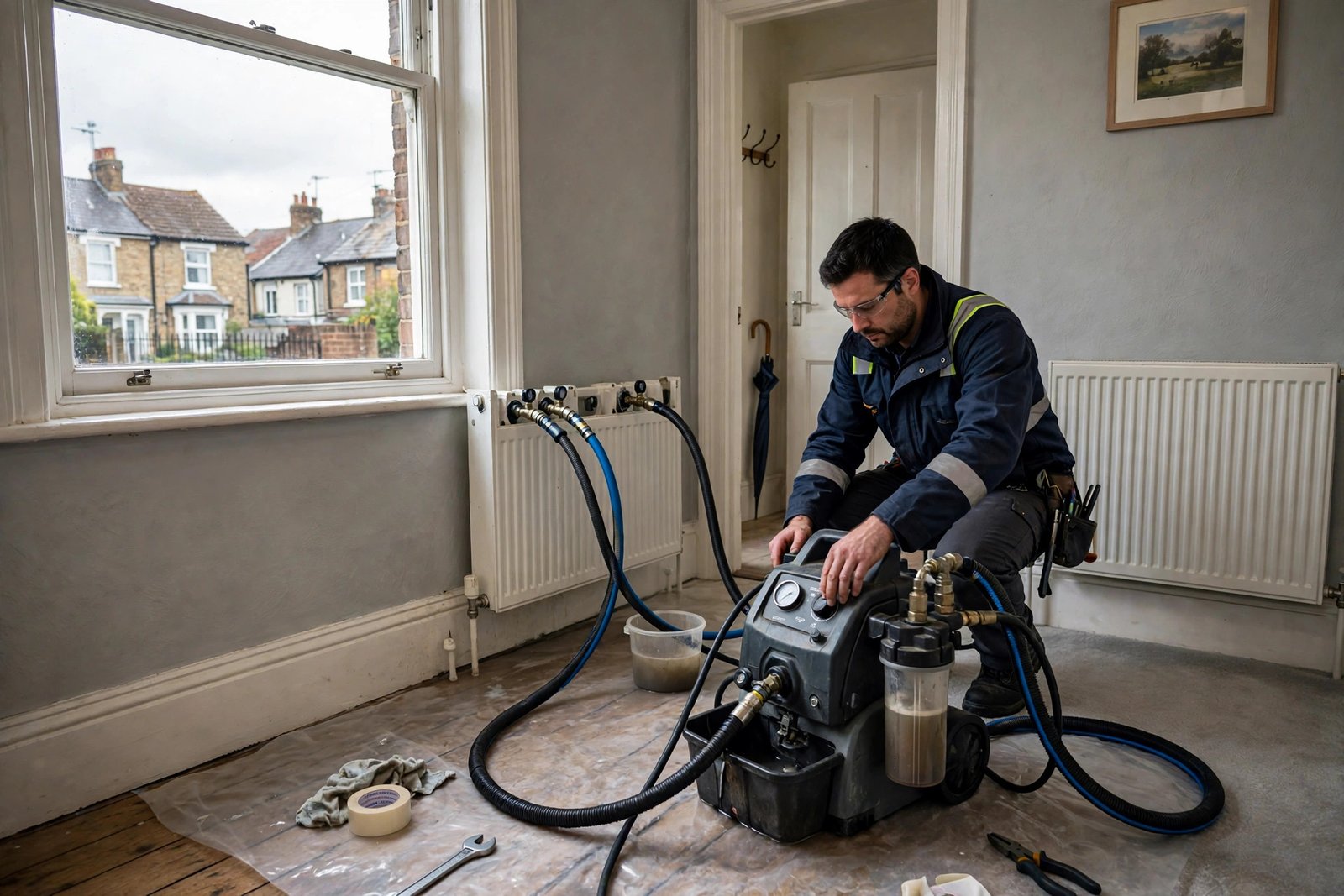
A powerflush is a thorough cleaning of your central heating pipework and radiators. An engineer connects a powerful pump — the “powerflushing machine” — to your system and pushes water (plus special cleaning chemicals) through at high speed, dislodging the black sludge, rust and limescale that build up inside over the years.
That black sludge has a name: magnetite. It’s a byproduct of the chemical reaction between the water in your system and the inside of your radiators, and nearly every wet central heating system in the UK accumulates some of it. A little is normal; a lot causes problems.
After the flush, the engineer refills the system with clean water and adds an inhibitor — a chemical that slows corrosion and helps stop the sludge building up again so quickly. The whole thing is about restoring flow: water that can circulate freely heats your home faster and puts less strain on the boiler.
What Are the Signs You Need a Powerflush?
If you’re wondering “do I need a powerflush?”, start by looking at your radiators. These are the classic symptoms of a sludged-up system:
Cold spots on radiators
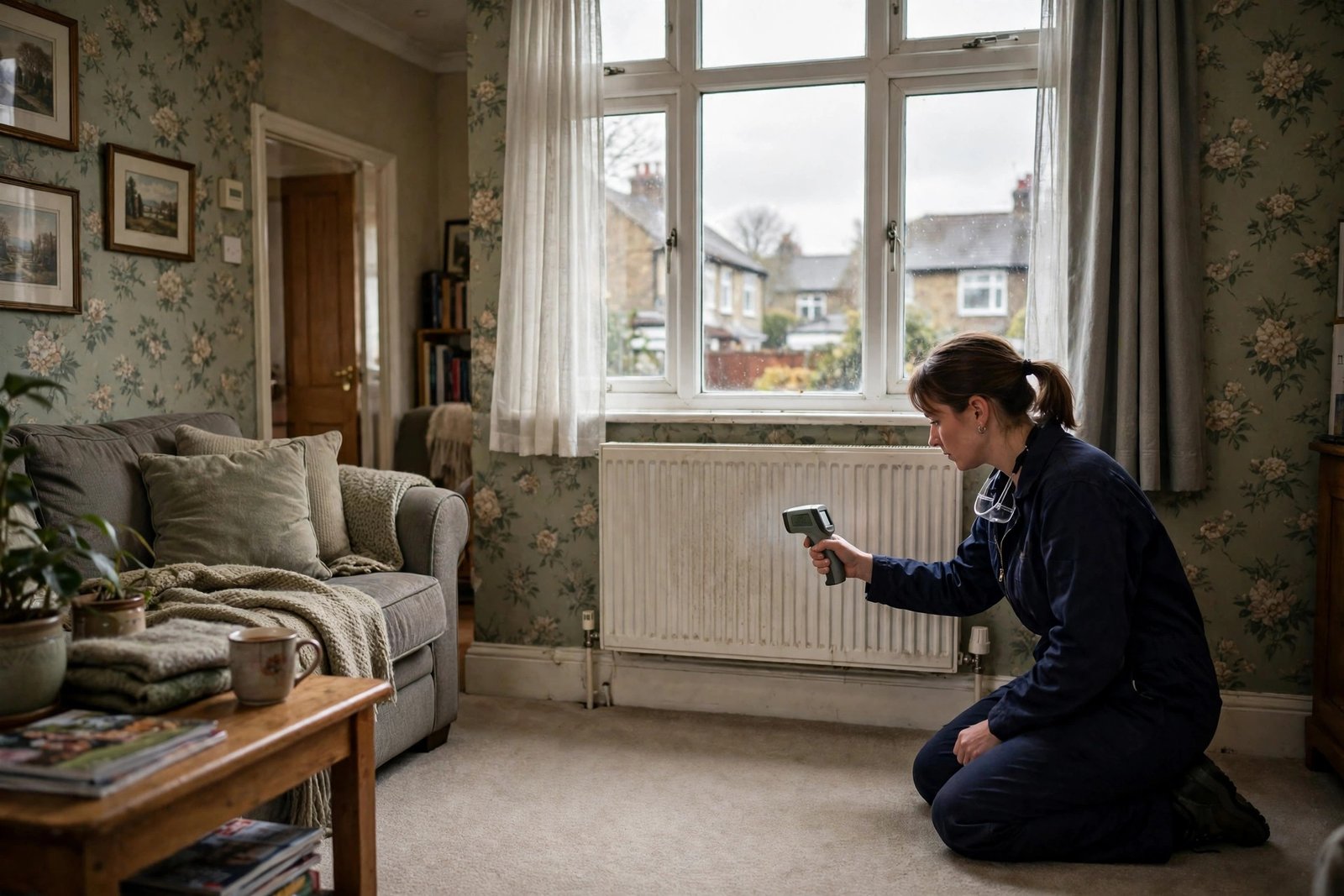
The most telling sign. If your radiators are hot at the top but cold at the bottom, that’s sludge settling at the base of the radiator. It blocks the hot water from circulating properly. Bleeding the radiator won’t fix this — in fact, if you’ve bled your radiators and the cold bottom persists, sludge is the prime suspect.
Radiators take ages to heat up
A healthy system should get your radiators properly hot within 10–20 minutes of the boiler firing up. If it takes noticeably longer, or some rooms never quite get there, restricted flow from sludge buildup is a likely cause.
The boiler is noisy
Banging, kettling or gurgling noises from the boiler or pipework can mean the heat exchanger is coated in debris. The boiler works harder to push heat through, which is inefficient and can shorten its life.
Dirty water when you bleed a radiator
Next time you bleed a radiator, look at the water. It should be reasonably clear. If it’s black or dark brown, your system has significant corrosion — the sludge a powerflush is designed to remove.
Frequent pump failures or leaking radiators
Sludge is abrasive. It wears out circulating pumps and can corrode radiators from the inside, causing pinhole leaks — usually at the bottom where the sludge sits. If you’ve replaced a pump or patched a leak recently, a flush is worth considering before the next failure.
Some radiators don’t work at all
In severe cases, individual radiators can be completely blocked. No amount of balancing will fix a radiator that’s full of magnetite.
If you recognise two or more of these signs, there’s a good chance your system would benefit. A Gas Safe registered engineer can do a simple water test — dipping a test strip or sending a sample — to confirm how bad the corrosion is before you commit.
How Does a Powerflush Actually Work?
Knowing what happens helps you judge whether the quote you’re looking at is sensible. A proper powerflush goes roughly like this:
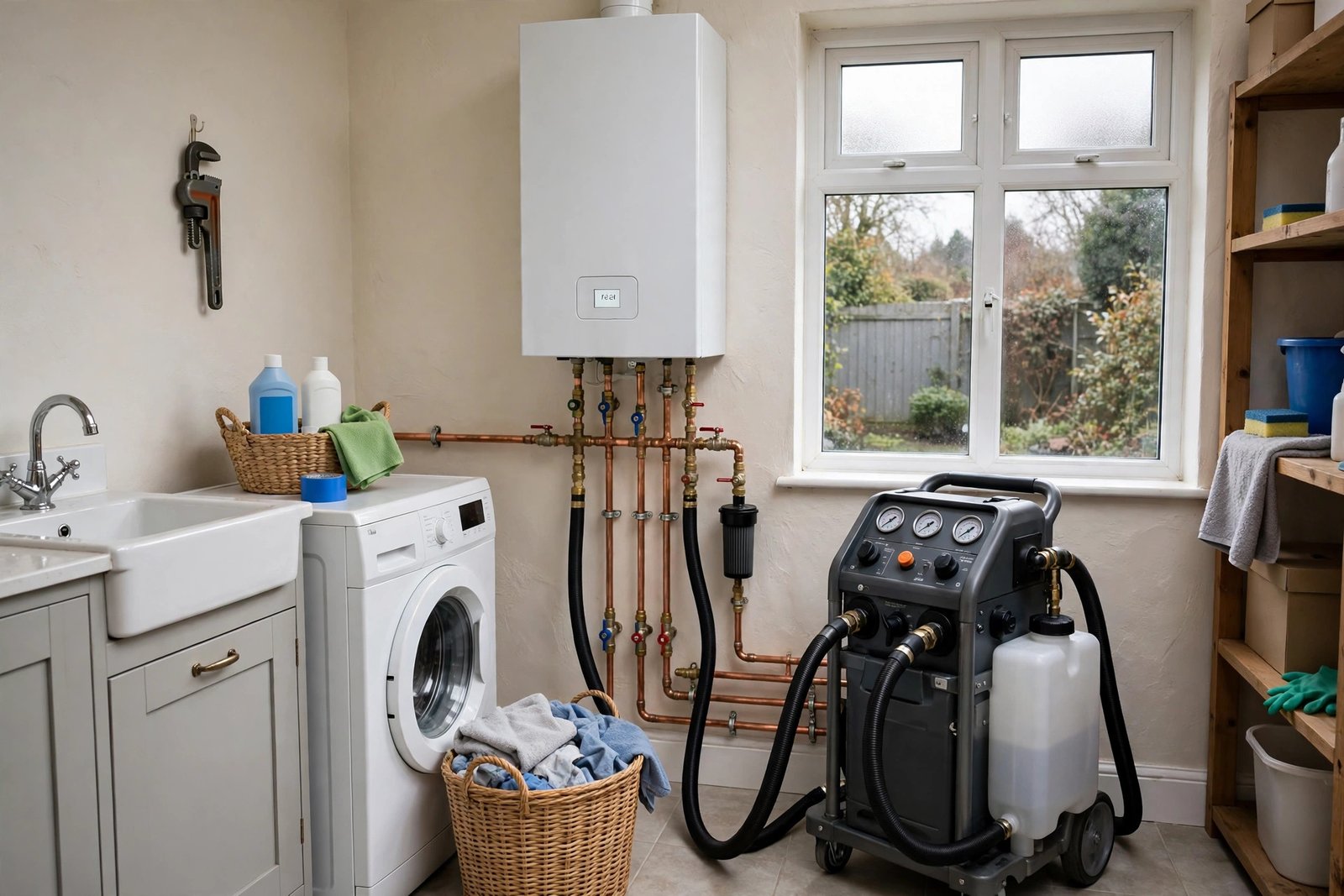
- The engineer connects the machine — usually to the pump head or to a radiator tail, after isolating the boiler so the high-velocity water doesn’t damage it.
- Cleaning chemicals go in — a descaler and sludge mobiliser circulates for a while (sometimes an hour or more) to loosen everything up.
- Each radiator is flushed individually — the engineer works around the house, vibrating radiators and reversing the flow to knock loose stubborn deposits, catching the dirty water in a bucket or drain.
- A magnetic filter captures the debris — most powerflush machines have one, and many engineers will recommend fitting a permanent magnetic filter (like a Magnaclean) to the system afterwards.
- The system is refilled and treated — clean water goes back in along with corrosion inhibitor, and the system is rebalanced so every radiator heats evenly.
For a typical 3-bedroom house with around 8–10 radiators, the job usually takes a full day. If someone quotes you for a one-hour “powerflush”, that isn’t one — a proper flush takes time.
When You Probably Don’t Need a Powerflush
Not every heating problem is a sludge problem, and it’s worth ruling out the simpler explanations first:
- Your system is fairly new — systems under about five years old with inhibitor added at installation rarely have meaningful sludge.
- The issue is air, not sludge — cold spots at the top of radiators usually mean trapped air, fixed by bleeding. Sludge causes cold at the bottom.
- It’s a single radiator — one cold radiator might just need balancing or its valve checking, not a whole-system flush.
- Your boiler is the problem — a failing boiler won’t be fixed by cleaning the pipework. If the boiler itself is 15+ years old and unreliable, your money may be better spent on replacement — see our guide on deciding between a combi boiler or a heat pump.
Also be wary of being told you “need” a powerflush on the spot during a routine service with no evidence shown. A trustworthy engineer will show you the dirty water or a water test result — not just tell you.
What Causes Sludge to Build Up in the First Place?
Understanding the cause helps you prevent it coming back. Magnetite forms when oxygen in the system water reacts with the mild steel inside radiators. The main culprits:
- Age — every year of circulation adds a little more corrosion product.
- No inhibitor — if inhibitor was never added, or has broken down over time (it typically needs topping up every few years), corrosion runs unchecked.
- Open-vented systems — older systems with a feed-and-expansion tank in the loft constantly absorb a little oxygen from the air, accelerating corrosion.
- Mixed metals — systems combining copper pipework, steel radiators and brass fittings are more prone to galvanic corrosion.
- Frequent draining — every time the system is drained and refilled, fresh oxygenated water goes in.
After a powerflush, keeping inhibitor topped up and fitting a magnetic filter are the two best ways to slow the process down. Many engineers recommend having the inhibitor level checked at each annual boiler service.
Alternatives to a Full Powerflush
A powerflush isn’t the only way to deal with a dirty system — and it isn’t always the best value. Here’s how the options compare:
| Option | What it does | Typical UK cost | Best for |
|---|---|---|---|
| Powerflush | High-velocity clean of the whole system with chemicals | Typically £300–£600 | Moderate to severe sludge, whole system affected |
| Chemical flush | Cleaner added to the system and left to circulate for days, then drained | Typically £100–£200 | Mild sludge, budget option |
| Mains-pressure flush | Each radiator removed and flushed individually with mains water | Typically £200–£400 | Individual bad radiators |
| Magnetic filter only | Filter fitted to catch circulating magnetite going forward | Typically £150–£250 fitted | Prevention after a flush, or very mild cases |
A chemical flush is the gentler, cheaper cousin — the chemicals do the work over several days rather than brute force. It suits mild cases. A full powerflush is the right call when multiple radiators have cold bottoms and the system is clearly struggling. For the detail on pricing, see our breakdown of how much a power flush costs in the UK.
One caution: powerflushing an old, fragile system can expose weak spots — radiators that were being held together by sludge can start leaking after a flush. A good engineer will warn you about this beforehand, especially on systems 20+ years old.
How Often Should You Powerflush?
There’s no fixed schedule, despite what some companies’ marketing suggests. You don’t need one every five years “as a matter of course” if the system is running fine. The honest answer: get one when the symptoms say you need one, and keep the system protected with inhibitor and a magnetic filter in between.
The one exception is a new boiler installation. Most boiler manufacturers require the system to be flushed before fitting a new boiler — it’s often a warranty condition. If you’re replacing the boiler anyway, a flush is usually bundled into the quote. If you’re weighing up electric boilers vs gas boilers for the replacement, factor the flush into the gas side’s total.
What to Check Before You Book
A few things to get straight so you pay for a proper job:
- Gas Safe registration — anyone working on your boiler must be Gas Safe registered. Check the register; it’s free and takes a minute.
- Ask what the quote includes — a proper job includes chemicals, a full day on site, system rebalancing, inhibitor and (ideally) a magnetic filter recommendation.
- Get the water tested first — a reputable engineer will confirm the system actually needs flushing rather than taking your word for it.
- Ask about the warranty — some firms guarantee their flush for a period; at minimum, get the work documented.
Frequently Asked Questions
How do I know if my radiators need a powerflush?
The clearest sign is radiators that are hot at the top but cold at the bottom, even after bleeding. Other clues: black or brown water when bleeding, radiators that take a long time to heat up, a noisy boiler, and radiators that don’t heat at all. Two or more of these together usually means sludge is the problem.
Can a powerflush damage my boiler?
Done properly, no — the boiler is isolated during the flush so the high-velocity water never passes through it. The risk is to very old radiators and pipework: aggressive flushing can disturb corrosion that’s plugging pinhole leaks, so weak spots may start weeping afterwards. A good engineer flags this risk upfront on older systems.
How long does a powerflush take?
For a typical 3-bedroom house with 8–10 radiators, expect most of a day — roughly 5–7 hours. Larger systems or badly sludged ones can take longer. Be sceptical of anyone promising a full powerflush in an hour or two; the chemicals need time to work and each radiator should be flushed individually.
Will a powerflush make my heating cheaper to run?
It can reduce your bills, but don’t expect miracles. A sludged system forces the boiler to work harder and heat rooms unevenly, so restoring proper circulation usually means the boiler runs less to reach the same temperature. The saving depends on how bad the system was — a mildly dirty system won’t see much change, while a badly blocked one can see a noticeable improvement.
Do I need a powerflush before a new boiler is fitted?
Usually, yes. Most boiler manufacturers require the existing system to be flushed before a new boiler goes in, and it’s often a condition of the warranty. If you’re getting a new boiler, the flush is normally included in the installation quote — ask for it to be itemised so you can see what you’re paying for.
The Bottom Line
Do you need a powerflush? If your radiators have cold bottoms, heat up slowly, and bleed black water — yes, probably. If your system heats evenly and the water runs clear, save your money and keep the inhibitor topped up instead. Get the water tested, use a Gas Safe engineer, and treat the powerflush as a fix for a diagnosed problem rather than routine maintenance.