 by
Black spots on the ceiling. Paint peeling above the shower. That damp, stale smell that never quite goes away. If your bathroom looks like this, you’ve probably wondered whether an extractor fan is just a good idea — or something the law actually requires. So: are bathroom extractor fans a legal requirement in the UK?
The short answer is that the Building Regulations require bathrooms to have adequate ventilation — and in most modern bathrooms, that means mechanical extraction. It’s not quite as simple as “every bathroom must have a fan”, though. Here’s what the rules actually say, what counts as adequate, and what it costs to sort it.
Are Bathroom Extractor Fans a Legal Requirement?
In practice: usually, yes. The UK Building Regulations (Part F, which covers ventilation) require that bathrooms have adequate means of ventilation to remove moisture. A bathroom with an openable window can meet the requirement through natural ventilation — but a bathroom with no window, or a window that doesn’t open properly, needs mechanical extract ventilation. In other words, an extractor fan.
This applies most clearly to new builds, extensions and renovations, where building control will expect to see compliant ventilation. For existing homes there’s no inspector knocking on doors — but the requirement still matters when you sell (surveyors flag poor ventilation), when you renovate, and if you’re a landlord, as we’ll cover below.
One important nuance: the regulations require adequate ventilation, not specifically a fan in every case. But for windowless bathrooms — increasingly common in flats and ensuites — a fan isn’t optional. It’s the only way to comply.
What Do the Building Regulations Say About Bathroom Ventilation?
Part F of the Building Regulations sets the standards for ventilation in dwellings, and bathrooms get specific attention because they’re the biggest source of indoor moisture. A single hot shower can pump a litre or more of water vapour into the air. Without somewhere for it to go, it condenses on the coldest surfaces — usually the ceiling, windows and external walls — and that’s where mould starts.
The regulations distinguish between two types of ventilation working together:
- Extract ventilation — removing moist air at the source, i.e. the bathroom fan (or an openable window doing the same job).
- Background ventilation — the constant low-level air exchange the whole house needs, usually via trickle vents in windows.
The general principle is simple: moisture should be extracted at source, quickly, before it migrates into the rest of the house. That’s why the guidance expects bathroom extract to run on after you leave — usually via a timer or humidistat — rather than switching off with the light.
If you’re planning a bathroom renovation, this is worth sorting at the same time as everything else. There’s little point spending £1,500 retiling a small bathroom if steam is going to attack the new grout from day one.
What Counts as Adequate Ventilation?
So what does “adequate” actually look like in a real bathroom? It depends on what the bathroom has:
- Bathroom with an openable window: the window can provide the extract ventilation — but only if you actually open it, every time, for long enough. Be honest: in January, most people don’t. A fan is still the better option.
- Bathroom with no window (or a fixed window): mechanical extract is required. No way around it.
- Ensuites and shower rooms: same rules as bathrooms. The smaller the room, the faster steam builds up, so ensuites arguably need extraction most.
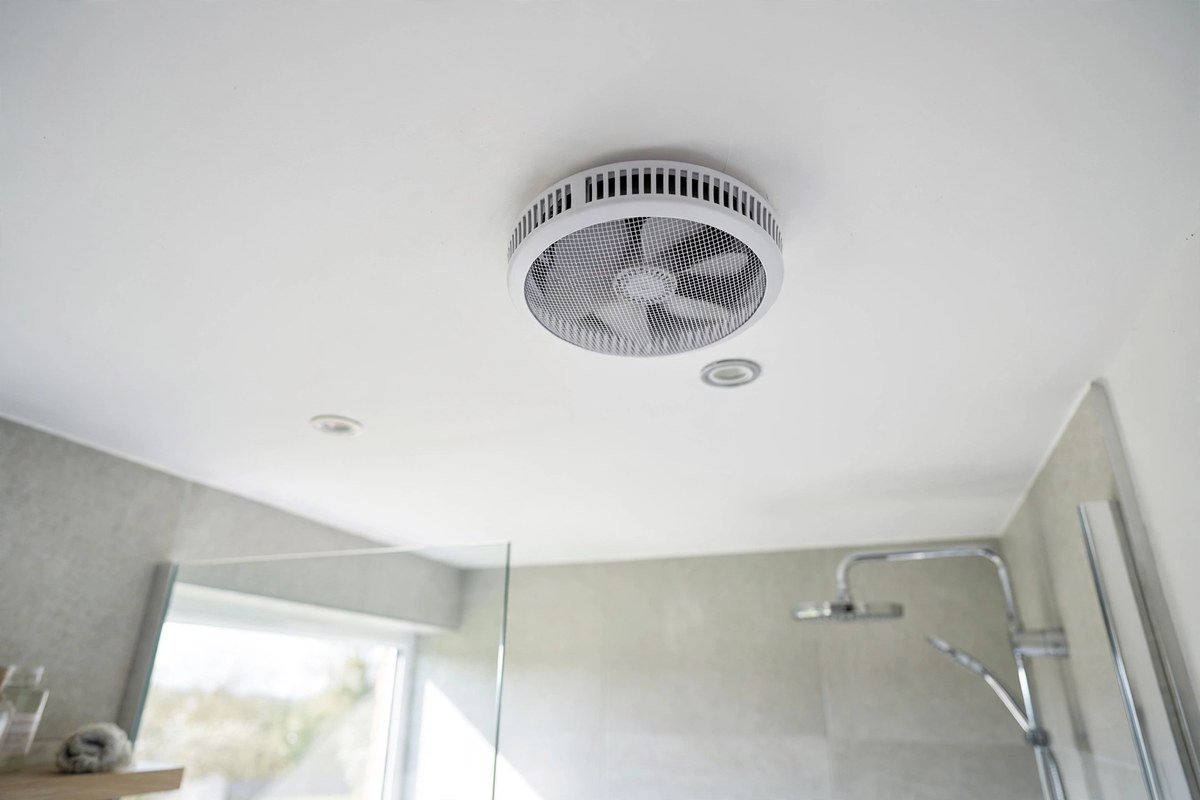
As for the fan itself, look for one with a timer overrun (it keeps running for around 15 minutes after you leave) or, better, a humidistat model that runs until the moisture level drops. Humidistat fans cost a little more but actually respond to conditions rather than a fixed timer — they’re the closest thing to fit-and-forget ventilation.
Do Landlords Have to Provide an Extractor Fan?
Landlords have a general duty to keep rented homes fit for human habitation and free from serious damp and mould — and inadequate bathroom ventilation is one of the most common causes of both. While the law doesn’t say “every rented bathroom must contain a fan” in those exact words, a windowless bathroom with no extraction in a rental property is very hard to defend.
If you’re renting and your bathroom has no fan and no openable window, that’s worth raising with your landlord in writing — persistent condensation and mould are exactly the kind of issue environmental health teams take seriously. And if you’re a landlord reading this: fitting a decent humidistat fan (around £150–£250 fitted) is far cheaper than dealing with a mould complaint, a redecoration, or a dispute.
What Happens If You Don’t Have One?
Nothing dramatic happens overnight. What happens is slow and expensive: condensation forms after every shower, paint blisters, grout goes black, silicone sealant fails, and eventually mould takes hold in the ceiling and behind fittings. By the time you can smell it — that stale, musty smell — the problem is well established.
Beyond the cosmetic damage, persistent damp in a bathroom can affect plaster, timber and decorations in adjoining rooms, and it’s a red flag on surveys when you sell. A £30 fan versus a £2,000 remedial redecoration is not a difficult calculation.
How Much Does a Bathroom Extractor Fan Cost?
The good news: this is one of the cheapest improvements you can make to a home.
| Fan type | Supply cost | Fitted cost (typical) |
|---|---|---|
| Basic axial fan (wall or ceiling) | £25–£50 | £120–£200 |
| Timer or humidistat model | £40–£80 | £150–£250 |
| Inline fan (mounted in loft/void) | £60–£120 | £200–£350 |
Fitting needs an electrician — bathroom electrics are notifiable work in the UK, so this isn’t a DIY job unless you’re qualified. The fitted prices above assume straightforward access; if ducting needs routing through a loft or an external wall needs coring, expect the higher end.
Which Type of Extractor Fan Should You Choose?
- Axial fans — the standard white grille on the wall or ceiling. Cheap, effective for most bathrooms, slightly noisier. Fine for the vast majority of homes.
- Inline fans — the motor sits remotely (in the loft or a void), with just a discreet vent in the bathroom ceiling. Quieter and more powerful; the better choice for larger bathrooms or long duct runs.
- Timer models — keep running for a set period (usually around 15 minutes) after the light goes off. Simple and reliable.
- Humidistat models — sense moisture and run until the air is dry. The best option if you want to set it and forget it; particularly good for rental properties and busy family bathrooms.
Whichever you choose, make sure replacement air can get in — a fan can’t extract air if the bathroom is sealed airtight. A small gap under the door is usually enough; that’s what it’s for.
Frequently Asked Questions
Is it illegal to not have an extractor fan in a bathroom?
Not exactly — the law requires adequate ventilation, not a fan by name. But a bathroom with no openable window has no way to meet that requirement without mechanical extraction, so in practice a fan is legally necessary there. For new builds and renovations, building control will expect to see compliant ventilation.
Can I just open the window instead of fitting a fan?
An openable window counts as ventilation under the regulations, yes. The catch is behaviour: it only works if you open it fully, every time you shower, and leave it open long enough afterwards — including in winter. Most people don’t, which is why a fan with a timer or humidistat is the more reliable solution.
Do landlords have to provide an extractor fan in the bathroom?
There’s no single sentence in law saying so, but landlords must keep homes fit for habitation and address serious damp and mould. A bathroom with no window and no fan is very difficult to square with that duty. Tenants dealing with condensation and mould should raise it with their landlord in writing.
How long should a bathroom fan run after a shower?
Usually around 15 minutes — that’s the standard timer overrun most electricians set. Humidistat fans are better still: they keep running until the moisture level actually drops, however long that takes, then switch themselves off.
How much does it cost to install a bathroom extractor fan?
Typically £120–£250 fitted for a standard axial or humidistat fan, or £200–£350 for an inline fan with ducting. The fan itself costs £25–£120 depending on the type. Bathroom electrics are notifiable work, so use a qualified electrician.
The Bottom Line
Bathroom extractor fans aren’t named in law, but adequate bathroom ventilation is — and for any bathroom without a properly openable window, a fan is the only way to comply. At £120–£250 fitted, it’s also one of the cheapest ways to protect your bathroom from the slow, expensive damage that steam does. If your bathroom has no fan, fitting one is rarely the wrong decision.