 by
Ask “are electric boilers cheaper than gas?” and you’ll get confident answers in both directions — usually from someone selling one of them. So let’s settle it properly: the short answer is no, electric boilers are not cheaper to run than gas. But the full answer is more useful than that, because there are homes where an electric boiler is still the right call.
Here’s the complete comparison — running costs with transparent maths, installation prices, efficiency explained honestly, and the specific situations where electric wins despite the higher bills.
How Do Electric Boilers Work?
An electric boiler does the same job as a gas boiler — heats water for your radiators and hot water — but uses electricity instead of burning gas. Inside, immersion-style heating elements warm the water directly as it flows through. No flame, no flue, no combustion gases, no carbon monoxide risk.
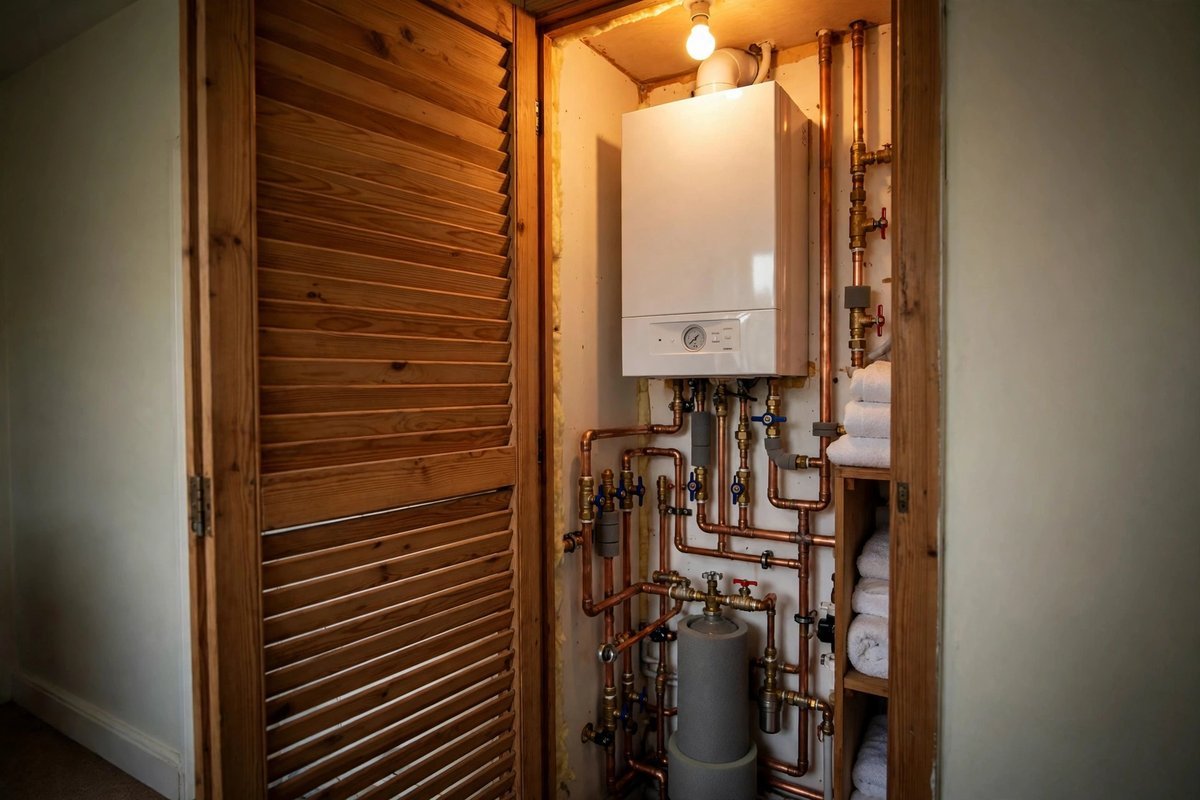
Because there’s no burner to service and no flue to route outside, electric boilers are compact and flexible about where they sit: under a kitchen counter, in an airing cupboard, in a utility room. Installation is simpler — no gas pipe to run, no flue to core through the wall.
How Do Gas Boilers Work?
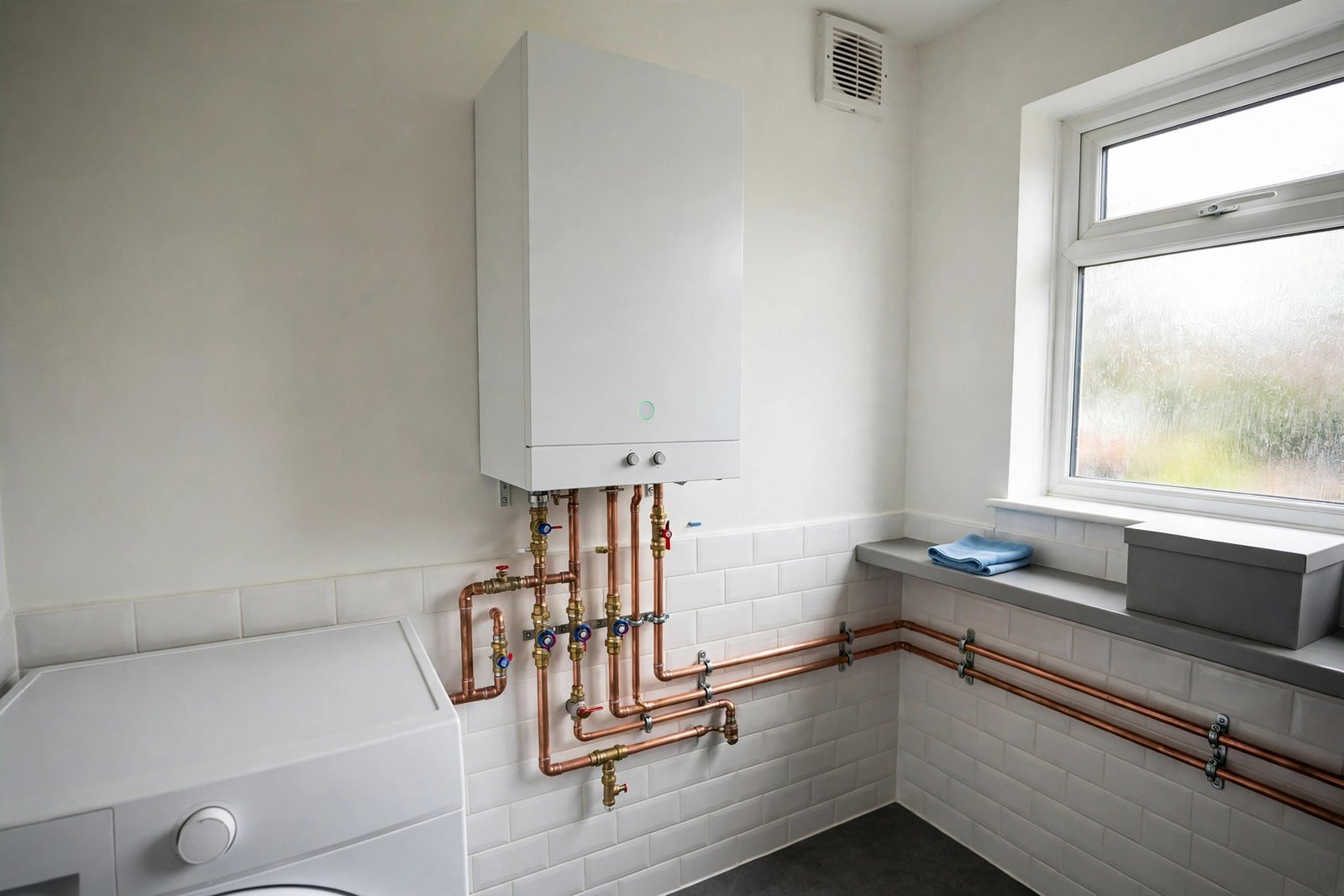
The familiar setup: a gas boiler burns natural gas in a combustion chamber, and a heat exchanger transfers that heat into your central heating water. Modern condensing boilers recover extra heat from the exhaust gases, pushing efficiency into the 90s.
Gas boilers need a gas supply, a flue to the outside, annual servicing by a Gas Safe registered engineer, and a condensate drain. They’re the default in around four out of five UK homes with central heating — the infrastructure and the installer base are everywhere.
Running Costs: The Decisive Difference
This is where the debate ends and the maths begins. Under the current energy price cap, electricity costs roughly 3–4 times as much per unit (kWh) as gas. That single fact dominates everything else.
Let’s do the transparent example maths (illustrative — tariffs move, so check current rates):
- Gas: roughly 6–7p per kWh. A modern condensing boiler at ~92% efficiency turns 6.5p of gas into about 0.92 units of heat — roughly 7p per unit of heat.
- Electric: roughly 24–25p per kWh. An electric boiler is essentially 100% efficient at the point of use (all the electricity becomes heat), so each unit of heat costs roughly 24–25p.
So per unit of heat delivered to your radiators, an electric boiler costs roughly three times as much to run as a gas boiler. The electric boiler’s near-perfect efficiency doesn’t come close to closing the gap, because the fuel itself is so much more expensive.
What does that mean in pounds? For a typical 3-bed semi using, say, 12,000 kWh of heating a year (illustrative figure — every home differs), that’s roughly £840 a year on gas versus roughly £2,900 on electricity at those illustrative rates. The gap is real and it’s large. Anyone telling you electric boilers are “cheaper to run” is either confused or selling boilers.
Installation Costs Compared
Upfront, the picture flips:
- Gas boiler: typically £2,000–£4,000 supplied and fitted for a combi swap. Needs Gas Safe installation, flue work, and possibly a system flush.
- Electric boiler: typically £1,500–£3,000 supplied and fitted. Simpler install — no flue, no gas pipe — so labour is usually less, and the units themselves are often cheaper than equivalent gas boilers.
So you might save £500–£1,000 upfront going electric. But at the running-cost gap above, that saving evaporates within the first year or two of heating bills. Upfront cost is not the reason to choose electric.
Efficiency: What the Numbers Really Mean
Electric boiler marketing loves the “99–100% efficient” figure, and it’s technically true — virtually all the electricity becomes heat, with nothing lost up a flue. Gas boilers manage around 90–94% in the real world.
Here’s why that barely matters: efficiency measures how much of the fuel becomes heat, not how much the fuel costs. A 100%-efficient boiler burning expensive fuel still costs more than a 90%-efficient boiler burning cheap fuel. It’s like comparing a car that does 100 mpg on £5-a-litre fuel with one that does 30 mpg on £1-a-litre fuel — the mpg figure alone tells you nothing about the cost per mile.
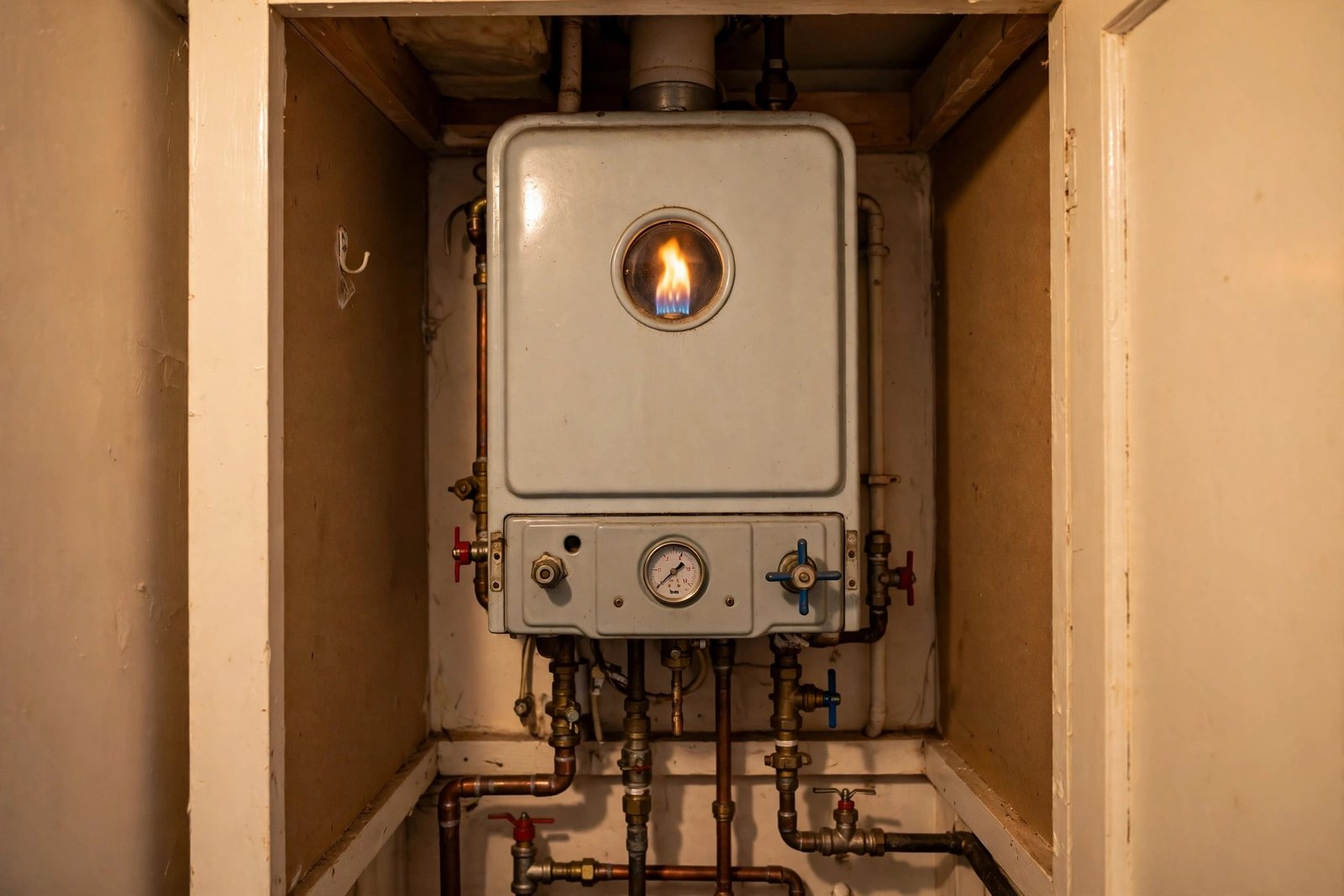
Don’t let efficiency percentages drive this decision. Fuel price per unit is what your bills are made of.
Electric Boilers vs Gas Boilers: Head to Head
| Factor | Electric boiler | Gas boiler |
|---|---|---|
| Running cost per unit of heat | Roughly 3x gas (illustrative) | Cheapest mainstream option |
| Typical installation | £1,500–£3,000 | £2,000–£4,000 |
| Efficiency at point of use | ~99–100% | ~90–94% |
| Flue required | No | Yes |
| Annual service | Recommended but simpler/cheaper | Required — Gas Safe engineer |
| Carbon monoxide risk | None | Small (managed by servicing) |
| Lifespan (typical) | 10–15 years | 10–15 years |
| Best for | Flats, no-gas homes, no-flue situations | Most UK homes on the gas grid |
When Does an Electric Boiler Actually Make Sense?
Despite the running costs, electric boilers are the right answer surprisingly often:
- No gas connection — and no prospect of one. Plenty of flats, rural homes and new-build estates have no gas. Your real comparison then is electric boiler vs oil vs heat pump — see our electric heating options for off-gas homes.
- Flats where a flue is impossible. Listed buildings, flats with no suitable external wall, or lease terms that forbid flues — an electric boiler sidesteps all of it.
- Small, super-efficient homes. In a well-insulated 1-bed flat with tiny heat demand, the absolute bill difference shrinks. If you only need £300 of heat a year, the gas-vs-electric gap is £600 — real money, but possibly worth it to avoid flue and servicing complications.
- Temporary or landlord situations. Simpler install, no annual gas safety certificate for the boiler itself (though landlords still have other gas safety duties if gas is present elsewhere).
- Backup or top-up heating. Some homes pair a main system with a small electric boiler for a hard-to-reach extension or annexe.
If you’re weighing the bigger technology question rather than just the fuel, our combi boiler or heat pump decision guide covers the heat pump angle — worth reading before committing, since heat pumps run on electricity too but use far less of it.
Can Cheap Tariffs Make Electric Boilers Viable?
Sometimes people wonder whether an off-peak tariff like Economy 7 fixes the maths. It helps, but only partially: the cheap night rate (roughly half the standard rate, typically) applies overnight, while your heating demand peaks in the morning and evening — exactly when the expensive day rate applies. Unless your lifestyle lets you shift most heating to the small hours, the blended rate still lands well above gas.
Time-of-use tariffs designed for heat pumps and EV owners are worth a look if you go electric — some offer genuinely cheap overnight windows. But do the maths on your actual usage pattern before assuming they solve it.
Cutting the Bills Whatever You Choose
If you do go electric — or if you’re stuck with one in a flat — damage control matters more than it does with gas, because every wasted unit costs triple:
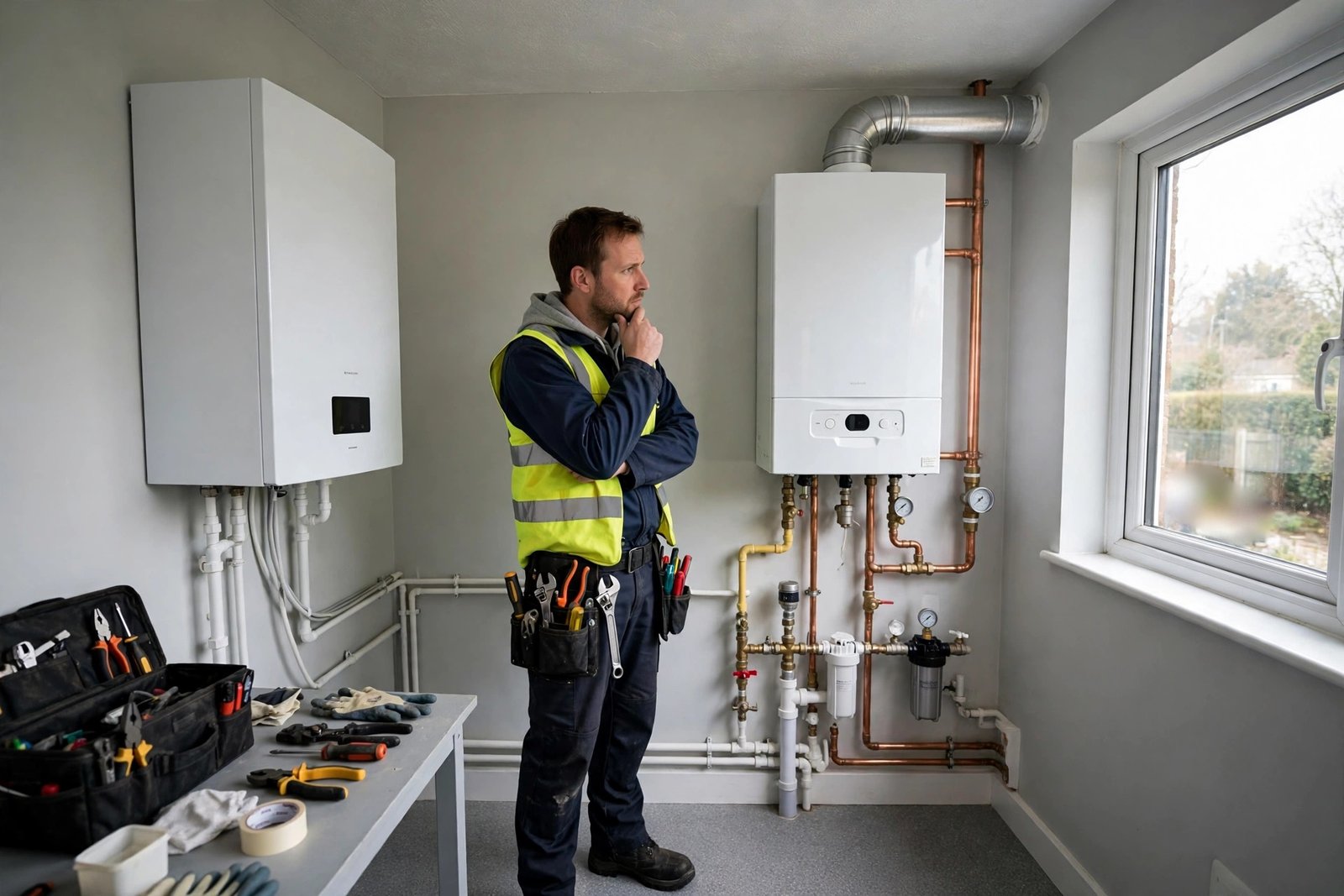
- Fit smart heating controls — room-by-room scheduling stops you heating empty rooms at 25p a unit.
- Turn down the flow temperature — radiators don’t need to run at 75°C; lower flow temperatures are gentler on bills.
- Draught-proof and insulate — the cheapest unit of heat is the one you don’t lose through the walls.
- Consider whether a heat pump suits the property — it uses electricity far more efficiently than an electric boiler, which changes the economics completely.
Frequently Asked Questions
Are electric boilers cheaper to run than gas boilers?
No. Electricity costs roughly 3–4 times as much per unit as gas under the current price cap, and the electric boiler’s higher efficiency doesn’t close that gap. Per unit of heat delivered, an electric boiler costs roughly three times as much to run as a modern gas boiler.
Can an electric boiler heat a whole house?
Yes, provided it’s sized correctly — electric boilers come in outputs up to around 14–15kW, enough for most houses. The constraint isn’t capability, it’s cost: heating a whole house electrically gets expensive quickly, so they’re most sensible in smaller or very well-insulated homes.
Do electric boilers need servicing?
They need far less servicing than gas boilers — no combustion, no flue gases, no carbon monoxide risk. An occasional check of the elements, controls and system pressure is still wise, and much cheaper than an annual gas service, but don’t skip maintenance entirely.
Can I replace my gas boiler with an electric one?
Yes — it’s a straightforward swap in plumbing terms, and your radiators and pipework can usually stay. Check your electrical supply first: larger electric boilers may need a three-phase supply or a supply upgrade, which adds cost. And go in with eyes open about the running costs.
Are electric boilers better for the environment?
At the property, yes — zero direct emissions. Overall, it depends on how the electricity is generated: as the UK grid adds more wind and solar, electric heating gets cleaner every year, while a gas boiler’s emissions are fixed. A heat pump is the lower-carbon electric option, though, since it uses far less electricity for the same heat.
The Bottom Line
Are electric boilers cheaper than gas? No — not to run, by a wide margin. But “cheaper” isn’t the only question. If you’ve got no gas supply, no way to fit a flue, or a tiny heat demand in a well-insulated flat, an electric boiler can be the most practical answer. Just make the decision knowing the running costs, not in spite of them.