 by
by The desk is the centrepiece of any home office, so getting it right matters more than most other purchases in the room. This guide walks through size, shape, and material considerations to help you choose a desk for home office use that actually fits your space and habits.
Start With Available Space, Not Style
Measure your space before browsing, including height clearance if the desk will sit under a window or shelf. A desk that looks great in a showroom can feel completely wrong once it’s boxed into a smaller room. For layout ideas around tight spaces, see our small home office ideas guide.
Common Desk Shapes and When to Use Them
- Straight desks – simple, space-efficient, and easy to fit against most walls
- Corner desks – make use of awkward corners and maximise surface area in a small footprint
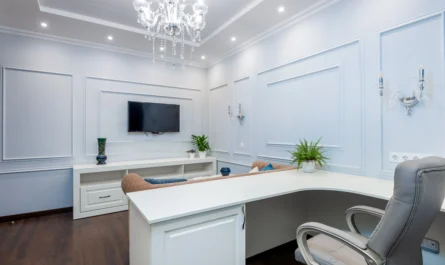
- L-shaped desks – ideal if you need separate zones for a computer and paperwork
- Floating or wall-mounted desks – best for very tight spaces, since they free up floor area
Desk Materials Worth Considering
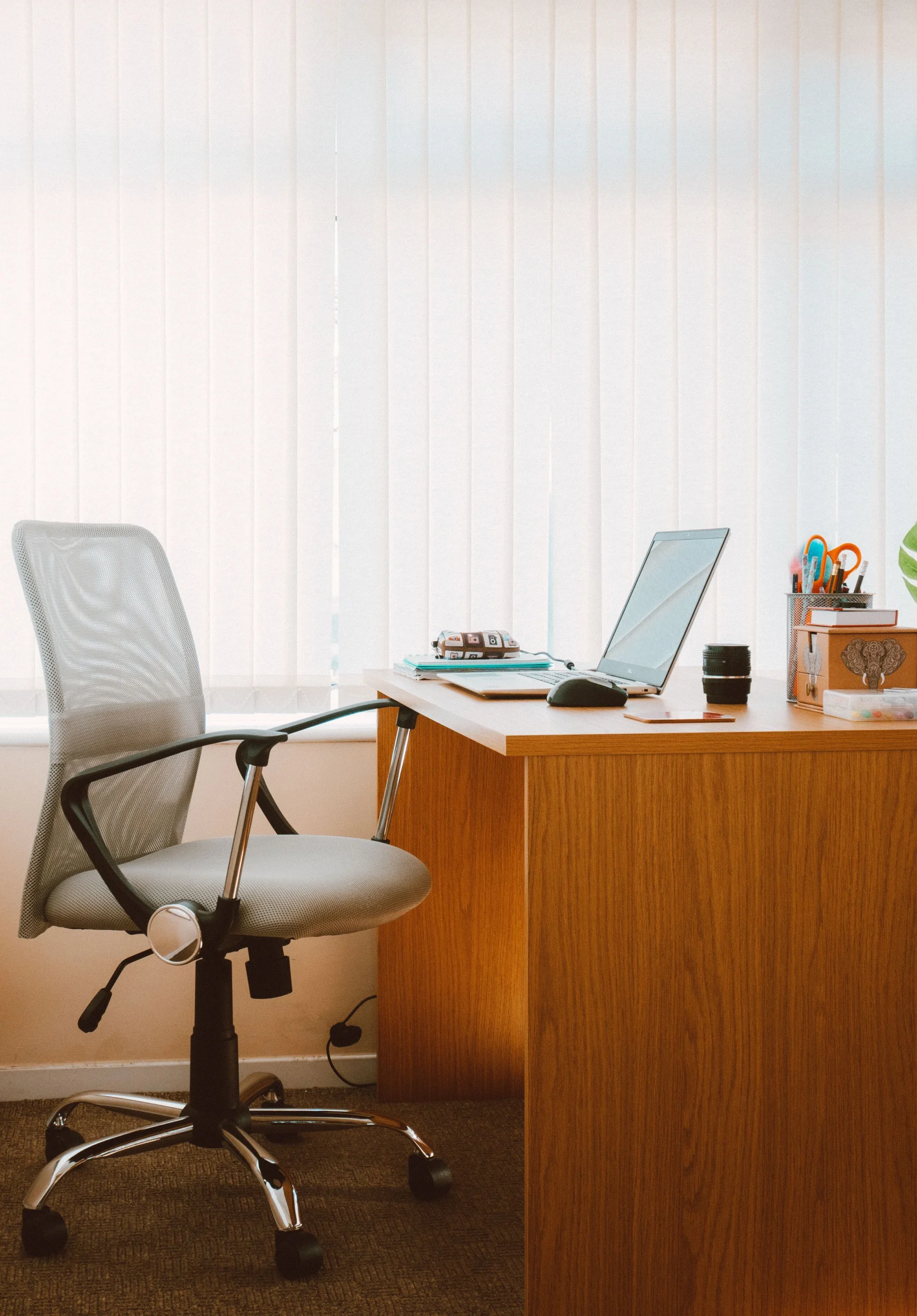
Solid wood desks are durable and age well, though they tend to cost more and weigh more too. MDF or veneer desks offer a similar look at a lower price point, while metal-framed desks with a wood or laminate top often balance durability and cost effectively.
Getting the Height and Depth Right
Most standard desks sit around 73-75cm high, which suits average seated posture and broadly aligns with the European desk standard BS EN 527. Depth matters too: a desk under 50cm deep can feel cramped for dual monitors or extensive paperwork, while anything over 70cm may push your screen too far from eye level.
Storage Built Into the Desk
Desks with integrated drawers or shelving reduce the need for separate storage furniture, which is particularly useful in smaller offices. However, built-in storage does reduce legroom slightly, so weigh this against how much you’ll actually use it.
Cable Management Features
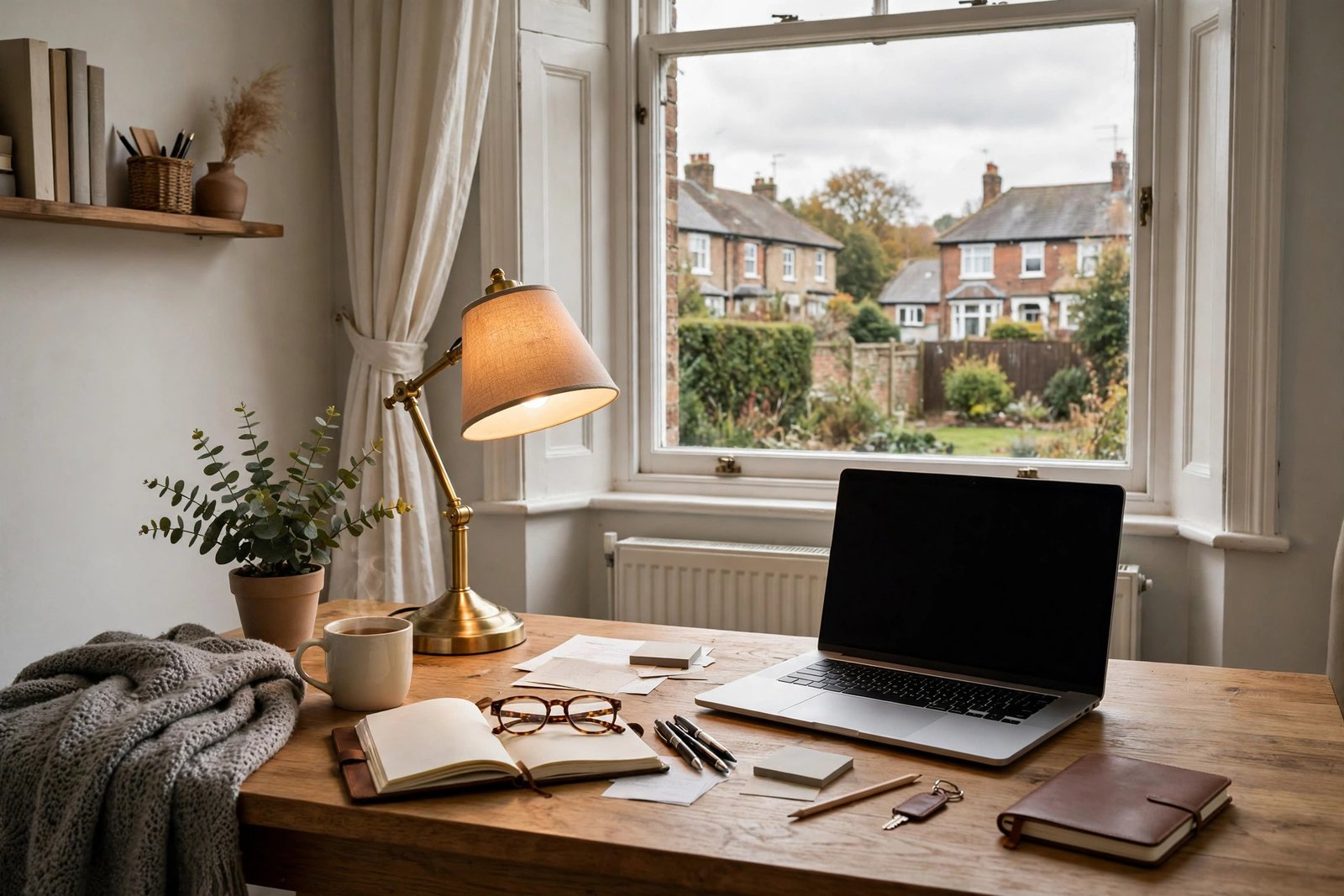
Many modern desks include built-in cable trays, grommet holes, or hidden channels. These small features make a noticeable difference to how tidy your setup feels day to day, and they’re worth prioritising over purely aesthetic details.
Standing Desks: Are They Worth It?
Height-adjustable standing desks let you alternate between sitting and standing throughout the day, which the Health and Safety Executive’s DSE guidance also touches on as part of reducing static postural strain. They typically cost more than fixed-height desks, so they’re worth considering if you spend long, uninterrupted hours at your desk. For the full room-level setup, see our home office design guide.
Desk Depth: Why 80cm Beats 60cm
Depth matters more than width for comfort. At 60cm, a monitor sits uncomfortably close and there is nowhere for a notebook in front of the keyboard. At 80cm, everything breathes: monitor at proper viewing distance, space for writing, room for a lamp behind. The difference in floor footprint is negligible; the difference in daily comfort is enormous. If your room truly cannot fit 80cm, consider a wall-mounted shelf desk — the lack of legs makes even 50cm feel workable.
Second-Hand Desks: What to Check
Solid wood desks depreciate fast, making second-hand a bargain hunter’s dream. Check for wobble (loose joints are fixable; cracked frames less so), drawer runners, and water damage on tops. Office clearances yield superb commercial-grade desks for £30–£80 — built to survive daily abuse for decades. Measure your space and vehicle before collecting. A quick sand and oil transforms most solid wood finds; veneered tops in poor condition are harder to rescue, so inspect carefully.
Corner vs. Straight: Room Layout Logic
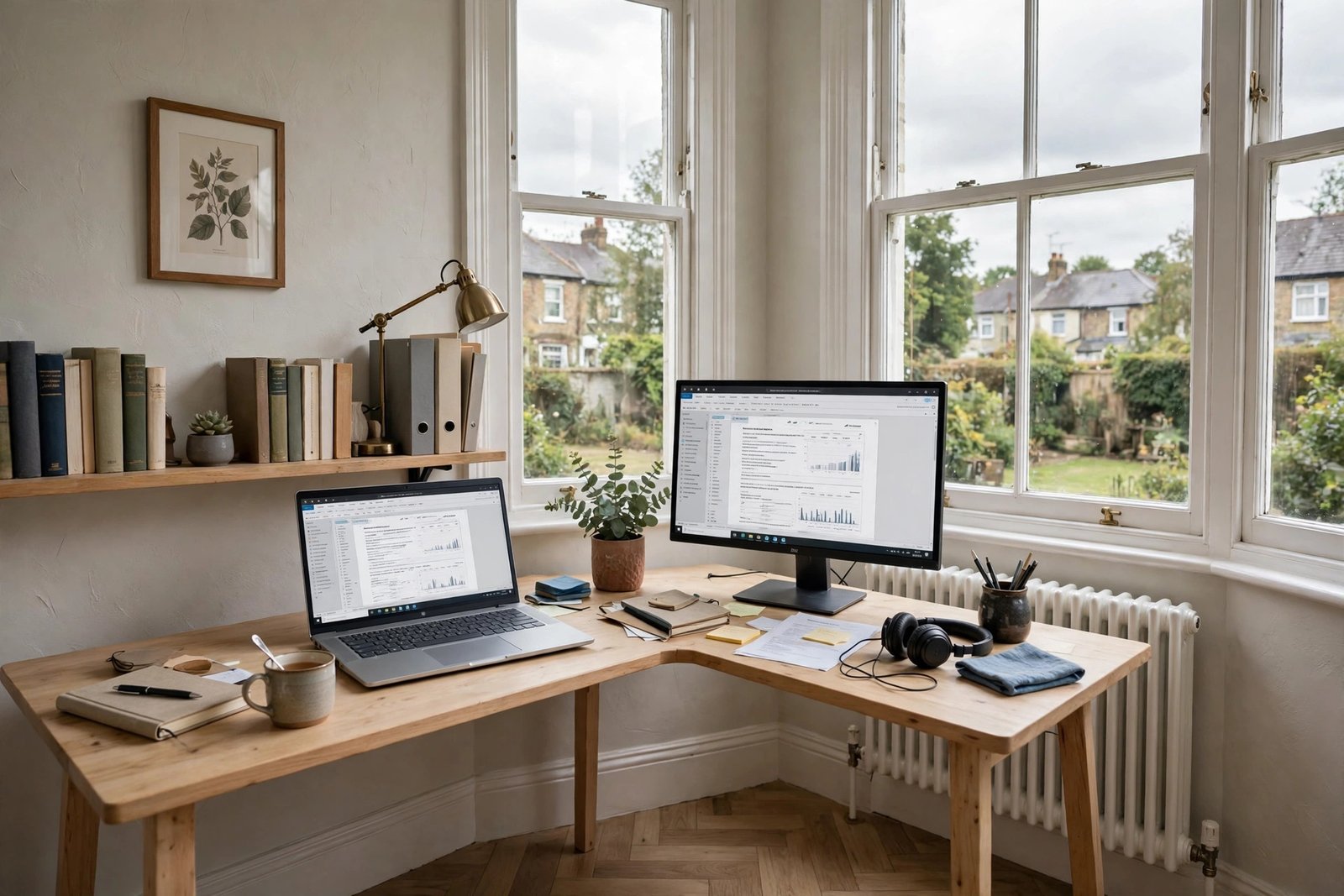
Corner desks maximise surface area in square rooms and suit multi-monitor setups, but they dominate small spaces and complicate cable management. Straight desks against a wall keep rooms feeling open and work in almost any layout. L-shaped configurations offer the best of both for dedicated offices. Rule of thumb: in rooms under 8m², go straight and narrow; in larger dedicated offices, a corner setup’s extra surface earns its footprint.
Desk Accessories That Earn Their Keep
Beyond the basics, a few accessories punch above their weight. A monitor arm frees the entire desk surface beneath the screen and fixes posture in one move. A desk mat protects the surface and subtly zones your work area. A small set of drawers or a desktop organiser beats “organised chaos” every time. Skip the rest until you feel a specific need — most desk gadgets solve problems you do not have.
When to Replace Your Desk
Desks do not last forever. Wobble that tightening cannot fix, veneer peeling across large areas, and a surface too small for your current setup are the classic triggers. Also reconsider when your work changes — the laptop desk that served for emails will not suit a new dual-monitor, video-call-heavy role. Before replacing, check whether the issue is really the desk: often a monitor arm, better chair or proper lighting solves what feels like a desk problem. Design context for the whole room is in our home office design guide.
Frequently Asked Questions
What size desk do I need for a home office?
For most tasks, a desk around 120cm wide and 60cm deep offers a good balance of workspace and space efficiency, though larger setups may need more room.
Are standing desks worth the extra cost?
For anyone spending several hours a day at their desk, many find the flexibility worthwhile, though it depends on personal comfort and budget.
What’s the best desk shape for a small home office?
A corner or wall-mounted desk generally makes the best use of limited space, since it fits into areas a straight desk can’t use efficiently.
What size desk do I need for a home office?
At least 120cm wide and 70–80cm deep for comfortable laptop-plus-monitor work. Dual monitors need 140cm+ width; 80cm depth keeps screens at a healthy viewing distance.
Are standing desks worth it?
For people who struggle to move enough during the day, yes — alternating sitting and standing helps. But a good chair and regular breaks matter more than the desk mechanism itself.
What is the best desk shape for a small room?
A straight wall-mounted or narrow console desk keeps the footprint minimal. Corner desks suit square rooms but overwhelm truly small spaces.
Related Home Office Guides
- Home Office Ideas: The Complete Setup Guide
- Small Home Office Ideas for Compact Spaces
- How to Design a Home Office That Actually Works
- Home Office Inspiration: Setups Worth Stealing