 by
by If you live in a hard water area, you’ve probably noticed limescale on taps, kettles, and shower screens. A water softener for your home tackles this at the source, but it isn’t the right solution for every household. This guide explains how softeners work and how to decide if you need one.
What Does a Water Softener Actually Do?
A water softener removes the calcium and magnesium minerals responsible for hard water and limescale build-up. Unlike a filter, which focuses on taste and contaminants, a softener specifically targets the minerals that cause scale. For a comparison with filtration, see our water filters for home guide.
Signs of Hard Water in Your Home
- Visible white, chalky limescale on taps and shower heads
- Reduced lather from soap and shampoo
- Stiff, scratchy laundry after washing
- Appliances like kettles and washing machines wearing out faster than expected
How Water Softeners Work
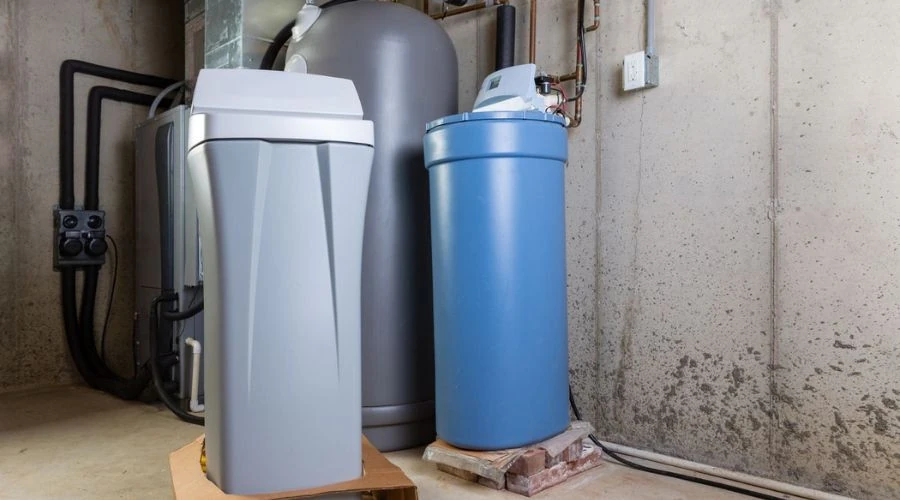
Most residential softeners use an ion-exchange process, swapping calcium and magnesium ions for sodium ions as water passes through a resin tank. Periodically, the system regenerates using a salt solution, which is why softeners need topping up with salt from time to time. UK water hardness is generally measured in mg/l or degrees Clark, and your local water supplier can confirm the figure for your area.
Types of Water Softeners
- Salt-based ion-exchange softeners – the most common and effective type for genuinely hard water
- Salt-free conditioners – alter mineral structure rather than removing minerals, and work differently to true softeners
- Magnetic or electronic descalers – a lower-cost option, though results vary and evidence is mixed compared with ion-exchange systems
Do You Actually Need One?
If you live in a known hard water area and notice regular limescale build-up, a softener can make a genuine difference to both comfort and appliance lifespan. In naturally soft water areas, however, a softener offers little benefit and isn’t usually worth the investment.
Softener vs. Filtration System
It’s a common misconception that a softener also improves water taste or purity. In most cases, it doesn’t, since its job is limescale reduction rather than filtration. Many hard water households use both a softener and a separate filter, such as those covered in our home water filtration systems guide, to address both issues.
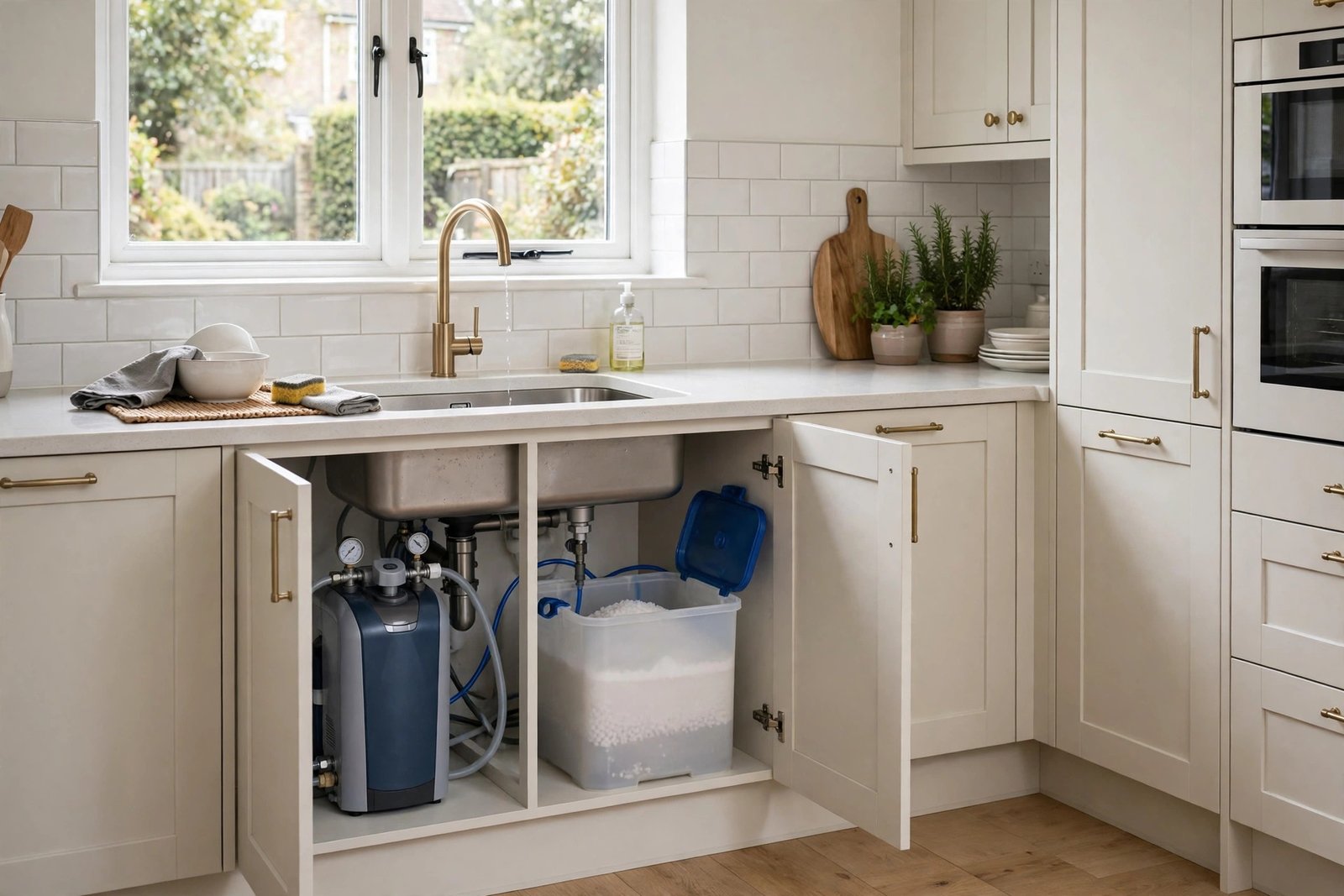
Installation and Ongoing Costs
Softeners are typically installed near the point where water enters the home, similar to whole-house filtration systems, and should carry WRAS approval for compliance with UK Water Regulations. Ongoing costs mainly involve regularly topping up softener salt, along with occasional servicing to keep the resin tank working efficiently.
How Hard Is Your Water? The UK Picture
Hardness varies enormously across the UK. London, the South East and East Anglia have the hardest water (often 200–300+ ppm), while Scotland, Wales, the North West and South West are mostly soft. Your supplier’s website publishes exact figures by postcode — check before spending anything. As a rule of thumb, above 150ppm a softener starts making sense; below 100ppm it rarely justifies the cost. Between those values, it depends how much limescale bothers you.
Salt Costs: The Ongoing Expense Nobody Mentions
The unit price is only half the story. A typical family softener uses one 25kg bag of salt every 4–8 weeks at £8–£15 a bag — so £80–£200 a year in salt alone. Tablets cost more than granular salt but dissolve cleaner; block salt suits specific models. Buying in bulk (10+ bags) from agricultural merchants cuts the per-bag price substantially. Factor salt into your payback calculations — it is the running cost that surprises most buyers.
Do Water Softeners Affect Drinking Water Taste?
Softened water tastes slightly different — most people notice it is “slipperier” — and it contains added sodium from the ion-exchange process. Levels are well within safe limits for most people, but those on sodium-restricted diets should keep a separate unsoftened drinking tap, which installers fit as standard practice in the UK. Many households simply drink from the hard-water kitchen tap and enjoy softened water everywhere else — the best of both worlds.
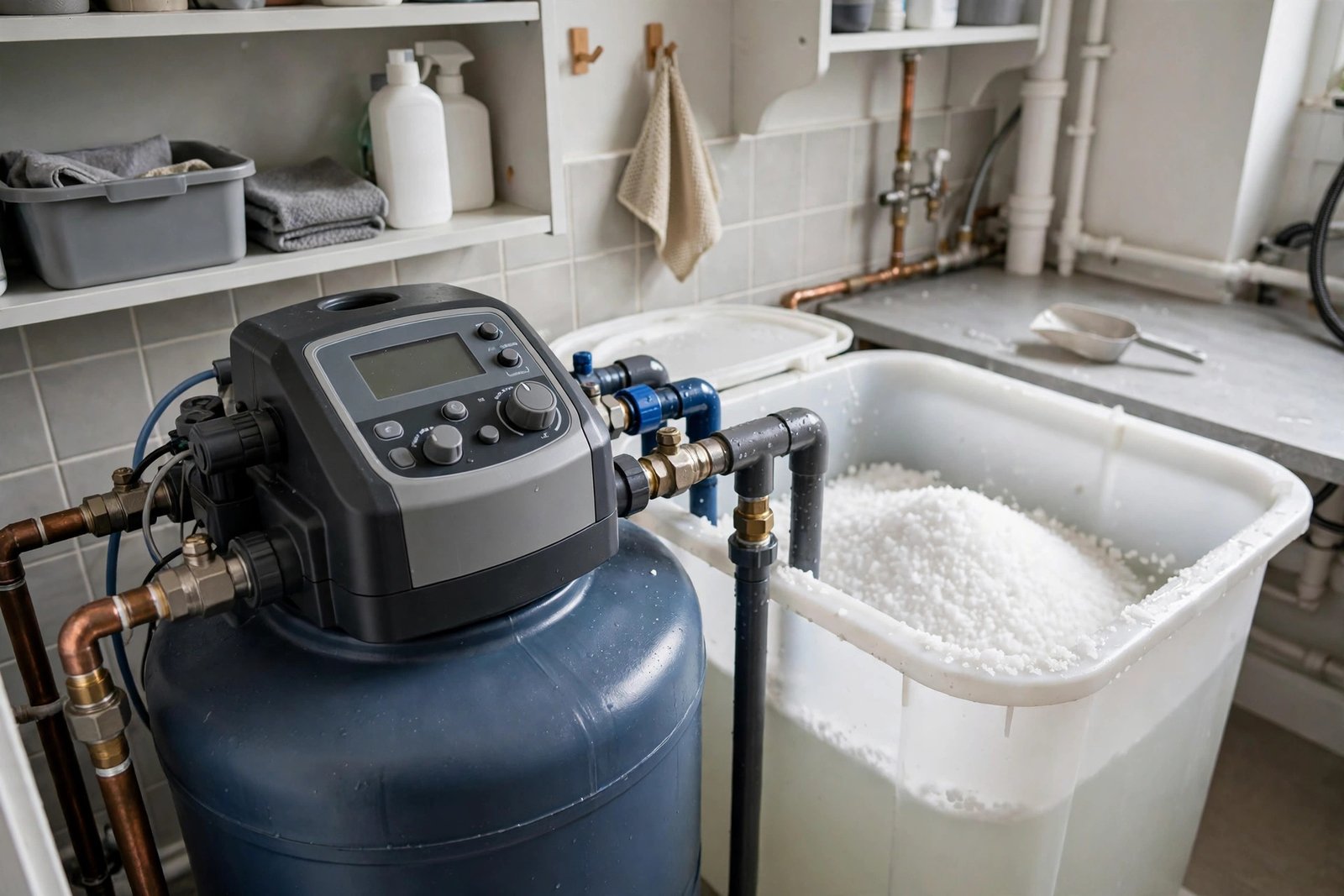
Alternatives to Salt-Based Softeners
Salt softeners are the gold standard, but alternatives exist. TAC (template-assisted crystallisation) units condition hardness without salt or wastewater — less effective at true softening but maintenance-light. Electronic descalers claim to alter crystal structure; evidence is mixed and they do not remove hardness. Reverse osmosis purifies drinking water brilliantly but is impractical whole-house. For genuine limescale elimination, salt-based ion exchange remains the proven choice.
Softeners and Septic Tanks: What to Know
Rural homes with septic tanks need care: softener regeneration discharge is salty brine, and large volumes can disrupt the bacterial balance of a septic system. Modern high-efficiency softeners regenerate less often and use less salt, reducing the load. Some installers route discharge to a separate soakaway rather than the septic tank — discuss this upfront if you are off-mains. For drinking-water purification specifically, see our reverse osmosis guide.
Frequently Asked Questions
Is softened water safe to drink?
Yes, though some people prefer to keep one unsoftened tap for drinking and cooking, since softened water contains slightly more sodium.
How do I know if I have hard water?
Visible limescale, reduced soap lather, and stiff laundry are common signs. Water suppliers can also confirm local water hardness levels on request.
Do water softeners need much maintenance?
Regular salt top-ups are the main ongoing task, along with occasional checks to ensure the system is regenerating correctly.
Is softened water safe to drink?
Yes for most people — sodium levels stay within safe limits. Those on medically sodium-restricted diets should use the separate unsoftened drinking tap that UK installers fit as standard.
How much does a water softener cost in the UK?
Typically £600–£1,500 installed for a family-sized unit, plus £80–£200 a year in salt. Twin-cylinder models cost more but supply soft water during regeneration.
Do water softeners remove limescale already present?
Gradually, yes — softened water slowly dissolves existing scale over months. For instant results on badly scaled kettles and shower heads, a one-off descale is still needed.
Related Home Purification Guides
- Water Filters for Home: The Complete Buying Guide
- Home Water Filtration Systems Explained
- Reverse Osmosis Systems for the Home: How They Work
- Air Purifiers for the Home: What to Look For