 by
by A good grinder often makes more difference to your coffee than the machine you brew it with. This guide explains the difference between burr and blade grinders, and how to choose one that suits your brewing method.
Why Grinding Fresh Matters
Coffee begins losing aroma and flavour within minutes of being ground, so grinding beans just before brewing noticeably improves taste compared with pre-ground coffee. This applies whether you’re using a drip machine or a dedicated espresso machine.
Blade Grinders: The Basics
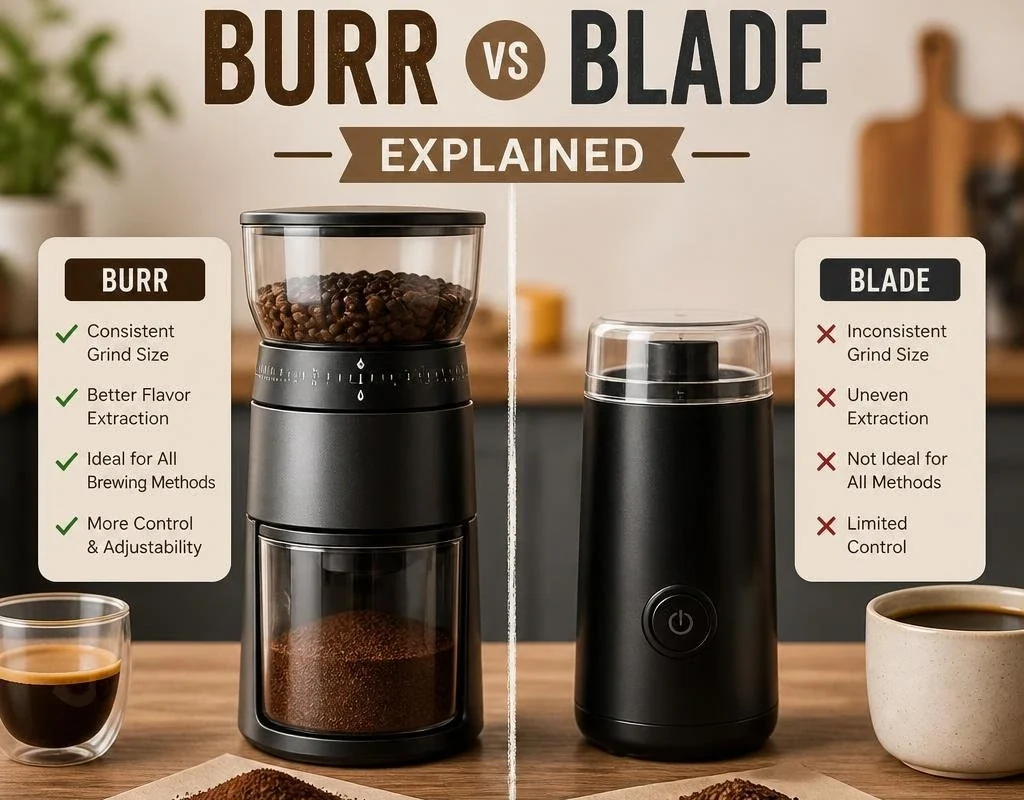
Blade grinders use a spinning blade to chop beans, similar to a small blender. They’re inexpensive and simple, but produce an uneven grind, with a mix of coarse and fine particles in the same batch. This inconsistency leads to uneven extraction and less predictable flavour.
Burr Grinders: The Basics
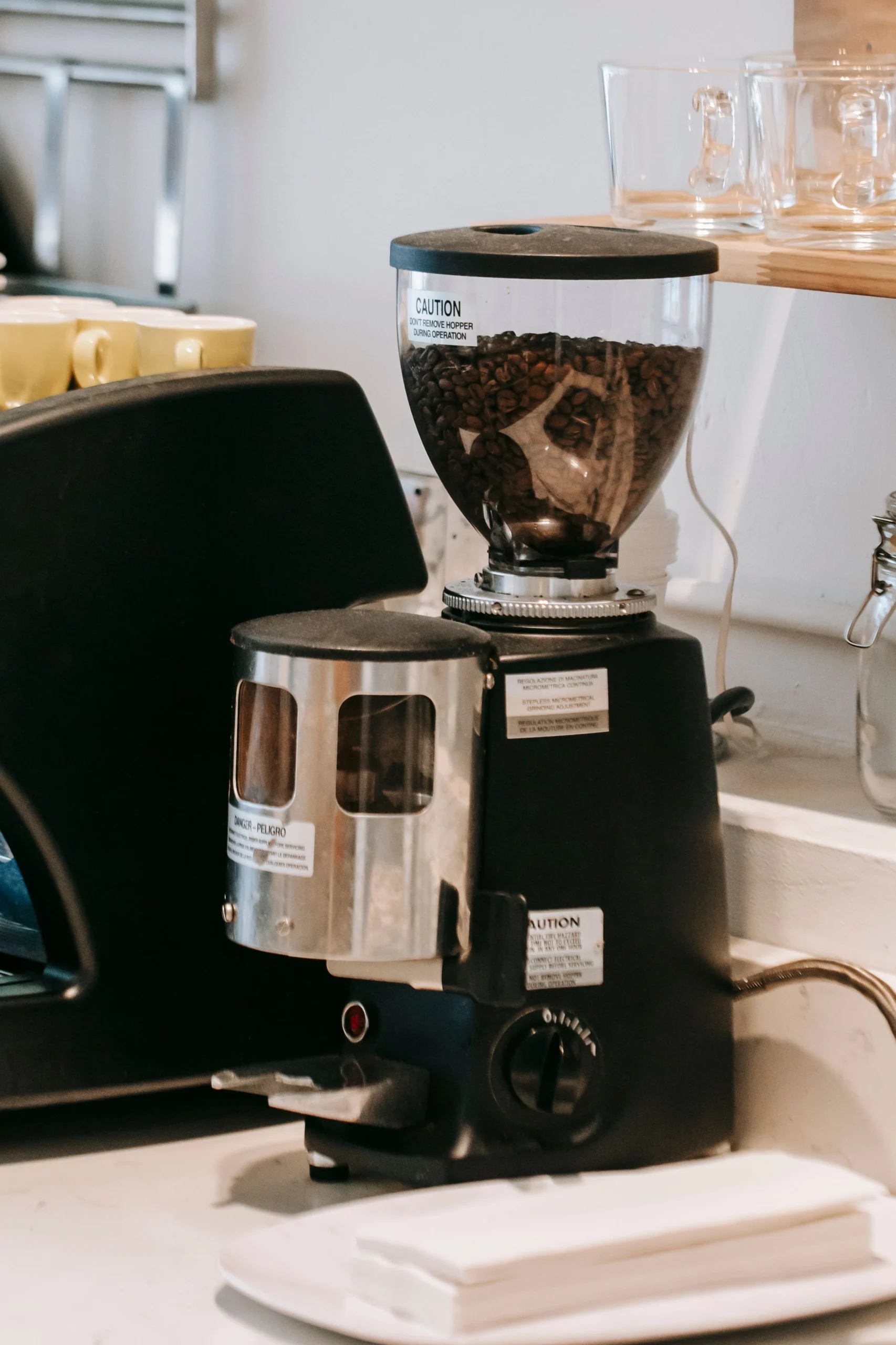
Burr grinders crush beans between two abrasive surfaces, producing a far more consistent particle size. This consistency is particularly important for espresso, where even small variations in grind size noticeably affect extraction and taste.
Flat Burr vs. Conical Burr
- Flat burr grinders – tend to produce a very consistent grind, often preferred for espresso
- Conical burr grinders – generally quieter and run cooler, with slightly less precise consistency than flat burrs
For most home users, the difference between the two is less important than simply choosing a burr grinder over a blade grinder in the first place.
Grind Size and Brewing Method
Different brewing methods need different grind sizes. Espresso requires a fine grind, drip machines suit a medium grind, and French press works best with a coarse grind. A good burr grinder lets you adjust grind size accurately for whichever method you use.
Manual vs. Electric Grinders
Manual burr grinders are more affordable and portable, making them a good entry point, though they take more physical effort and time per use. Electric grinders cost more but grind much faster, which matters if you’re making coffee for several people or multiple times a day.
What to Look for When Buying
- A burr mechanism rather than a blade, for consistency
- A range of grind settings suited to your brewing method
- Easy-to-clean components, since old coffee residue affects flavour over time
- A hopper size that matches how much coffee you typically grind at once
How Much Should You Spend on a Grinder?
Grinder pricing has clear tiers. Under £30: basic blade grinders — fine for French press, poor for espresso. £40–£80: entry-level burr grinders, the sweet spot for most filter and cafetiere drinkers. £100–£250: quality electric burr grinders capable of espresso-range fineness. £300+: enthusiast territory with single-dosing and premium burrs. The golden rule: your grinder budget should roughly match your brewer budget — a £400 espresso machine deserves better than a £25 grinder.
Grinder Maintenance: Keeping Burrs Sharp
Burrs dull slowly, and most owners never notice the creeping decline. Clean monthly with a stiff brush or grinder cleaning pellets — never water, which rusts steel burrs. Check for worn burrs every year or two of daily use; replacement burr sets cost £20 to £60 and restore like-new performance. Avoid grinding flavoured beans, which coat burrs in oils, and never run the grinder empty for long periods. A maintained mid-range grinder outlasts a neglected premium one.
Single-Dose vs. Hopper Grinders
Traditional grinders hold beans in a hopper, convenient but exposing beans to air and light. Single-dose grinders — you weigh beans per cup — keep the rest sealed fresh and suit people who switch beans often. Single-dosing takes an extra minute per brew and suits espresso enthusiasts chasing perfection; hopper grinding suits busy households making the same coffee daily. Neither is objectively better — match the workflow to your routine.
Common Grinder Mistakes Beginners Make
First: adjusting grind while the burrs are still — always run the grinder while changing settings, or beans jam between the burrs. Second: changing too many variables at once; adjust grind alone, taste, then adjust again. Third: ignoring static — a light water spritz on beans (the Ross Droplet Technique) tames the mess. Fourth: grinding far too much “for later”; ground coffee stales within hours, so grind only what you will brew immediately.
Do You Need a Grinder for Pod Machines?
No — and that is rather the point of pods. Pod machines trade freshness and choice for ultimate convenience, grinding is done at the factory and sealed in. If you own a pod machine and are happy, a grinder adds nothing. But if you are curious about better coffee, the grinder matters more than the machine: a good grinder paired with a simple cafetiere or pour-over setup beats an expensive machine with pre-ground coffee every time. Pairing advice for machines is in our home coffee machine guide.
Frequently Asked Questions
Is a burr grinder really worth the extra cost over a blade grinder?
For most coffee drinkers, yes. The consistency a burr grinder provides has a noticeable effect on flavour, particularly for espresso and pour-over methods.
Can I use a blade grinder for espresso?
It’s possible, but the uneven grind typically leads to inconsistent, often disappointing results compared with using a burr grinder.
How often should I clean my grinder?
A light clean every few weeks, and a deeper clean every few months, helps prevent old coffee oils and residue from affecting flavour.
Are expensive coffee grinders worth it?
Up to about £150–£200, yes — grind consistency improves dramatically. Beyond that, gains are subtle and matter mainly for espresso perfectionists.
How often should you clean a coffee grinder?
Brush out grounds weekly and deep-clean monthly. Oily dark-roast beans need more frequent cleaning than light roasts.
Blade vs burr grinder: which is better?
Burr grinders produce uniform particles and are better in almost every way. Blade grinders are only acceptable for coarse French press brewing on a tight budget.
Related Kitchen Appliance Guides
- Coffee Machines for Home: The Complete Buying Guide
- Home Espresso Machines: What to Look For
- Hot Water Dispensers for Home: Are They Worth It?
- Homemade Chips in an Air Fryer: Easy Method