 by
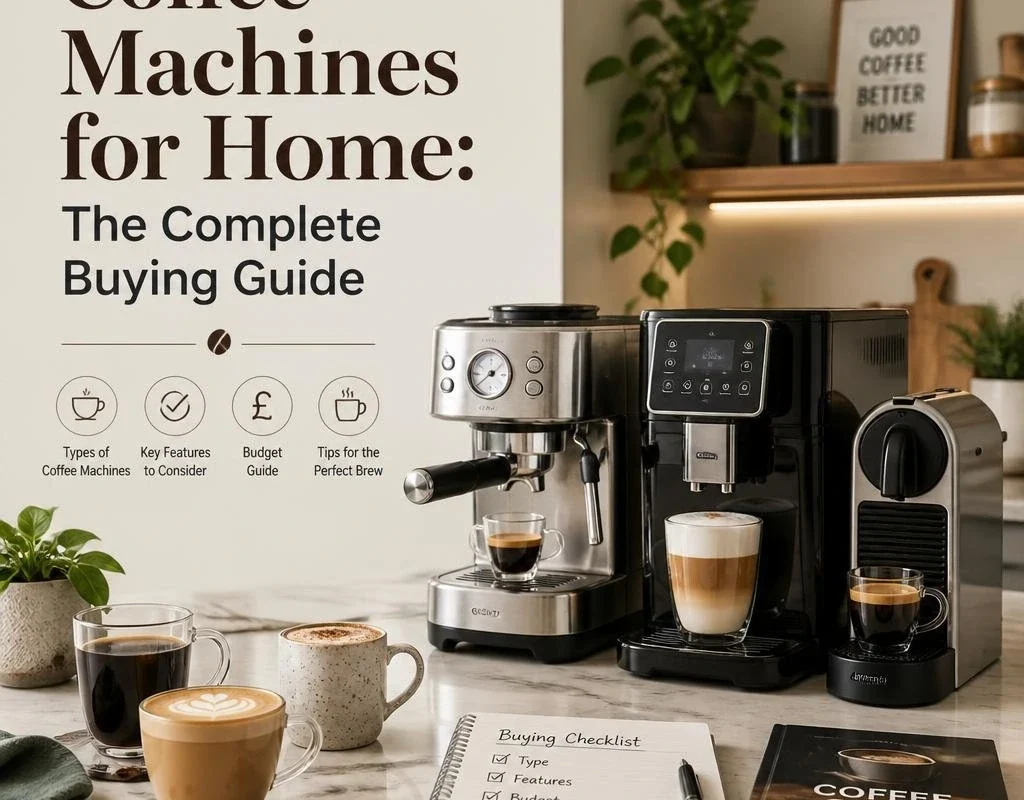
by Choosing a coffee machine for home use comes down to how you actually like your coffee, and how much time you’re willing to spend making it. This guide walks through the main types available and how to pick the right one for your kitchen and routine.
Main Types of Home Coffee Machines
- Drip/filter machines – simple, consistent, and ideal for brewing several cups at once
- Pod/capsule machines – convenient and mess-free, though running costs per cup are higher
- Bean-to-cup machines – grind fresh beans automatically for each cup, offering good flavour with minimal effort
- Espresso machines – give the most control over flavour, but require more skill and practice
If you’re leaning towards espresso specifically, our home espresso machines guide covers that category in more depth.
What to Consider Before Buying
How Much Coffee Do You Actually Drink?
A single-serve pod machine suits someone who drinks one or two cups a day, while a household of coffee drinkers may get more value from a drip machine or bean-to-cup system that handles larger volumes efficiently.
Convenience vs. Control
Pod machines prioritise speed and consistency, while espresso machines offer more control over strength and flavour, at the cost of a learning curve. Decide which trade-off suits your daily routine better.
Budget and Ongoing Costs
The machine’s upfront price is only part of the cost. Pod machines have an ongoing cost per capsule, while bean-based machines require regularly buying beans or ground coffee, and occasionally, replacement filters or descaling solution.
Does Grinding Fresh Beans Matter?
Freshly ground coffee generally produces a noticeably better flavour than pre-ground coffee, since coffee loses aroma and taste quickly once ground. If flavour is a priority, our home coffee grinders guide explains the difference between grinder types.
Maintenance and Cleaning
All coffee machines need regular cleaning to perform well and last longer. Descaling every 1-3 months, depending on water hardness, prevents limescale build-up, while daily rinsing of removable parts keeps the machine hygienic. In hard water areas, pairing your machine with a water filter can reduce how often descaling is needed.
Space and Kitchen Fit
Bean-to-cup and espresso machines tend to be larger than pod or drip machines, so measure your available counter space before buying. Built-in water tanks and bean hoppers also add to a machine’s overall footprint.
How Much Should a Home Coffee Machine Cost?
Coffee machines span absurd ranges, but sensible tiers exist. Under £100: pod machines and basic filter brewers — convenient, limited. £100–£300: decent bean-to-cup and entry pump espresso machines, the sweet spot for most homes. £300–£700: serious espresso machines with proper temperature control. £700+: enthusiast machines rivalling cafés. Remember the grinder rule: budget roughly as much for the grinder as the machine, or the machine’s potential is wasted on uneven grounds.
Pod vs. Bean-to-Cup vs. Espresso: Running Costs Compared
Purchase price misleads; running costs decide the real economics. Pods cost 25–45p per cup — convenient but easily £300+ a year for two daily drinkers. Bean-to-cup using whole beans runs 10–15p per cup. Manual espresso with fresh beans is cheapest per cup at under 10p, but demands skill and time. A two-coffee-a-day household saves £200+ yearly switching from pods to beans — the machine pays for itself.
Water Quality and Your Machine
In hard-water areas — much of London and the South East — limescale is the number one machine killer. Use filtered water (a simple jug filter suffices) and descale every 2 to 3 months; in soft-water Scotland and the North West, twice a year is plenty. Most machines have a water-hardness setting — set it correctly or the descale reminders will be wrong. Neglect descaling and you will face blocked thermoblocks and dead pumps, usually just outside warranty.
Second-Hand Coffee Machines: Worth the Risk?
Quality espresso machines depreciate well, making second-hand tempting. What to check: run a full cycle, check steam pressure, look for leaks underneath, and ask about descaling history — a scaled-up machine is a money pit. Grinders second-hand are safer buys than machines (fewer parts to fail). Avoid anything with proprietary pods discontinued by the maker. Budget £30–£50 for a professional service after purchase; even a good used machine benefits from fresh seals.
Essential Accessories Worth Buying
A few cheap accessories transform results. A proper tamper (not the plastic toy in the box), a milk thermometer or frothing pitcher, and a knock box for spent pucks cover espresso basics. For filter brewing, a gooseneck kettle gives the control pour-overs need. None of these cost much individually, but together they close half the gap between home and café quality. Grinder advice that pairs with any machine is in our coffee grinder guide.
Frequently Asked Questions
What’s the best type of coffee machine for a small household?
A pod or compact drip machine usually suits smaller households well, since they’re simple to use and don’t require the maintenance of a bean-to-cup system.
Are bean-to-cup machines worth the extra cost?
For regular coffee drinkers who value fresh-ground flavour and convenience together, many find the extra upfront cost worthwhile over time.
How often should I descale my coffee machine?
Most manufacturers recommend descaling every 1-3 months, though this depends on your local water hardness and how often the machine is used.
What is the best coffee machine for home use in the UK?
For most households, a mid-range bean-to-cup machine (£200–£400) hits the sweet spot of convenience and quality. Espresso enthusiasts should look at pump machines from £300 with a proper grinder.
Are bean-to-cup machines worth it?
Yes for daily drinkers who value convenience — fresh beans at the touch of a button, far cheaper per cup than pods. They need regular cleaning, but modern ones largely automate it.
How often should you descale a coffee machine?
Every 2–3 months in hard-water areas, twice yearly in soft-water areas. Always use filtered water to extend the interval and protect the machine.
Related Kitchen Appliance Guides
- Home Espresso Machines: What to Look For
- Home Coffee Grinders: Burr vs Blade Explained
- Hot Water Dispensers for Home: Are They Worth It?
- Homemade Chips in an Air Fryer: Easy Method