 by
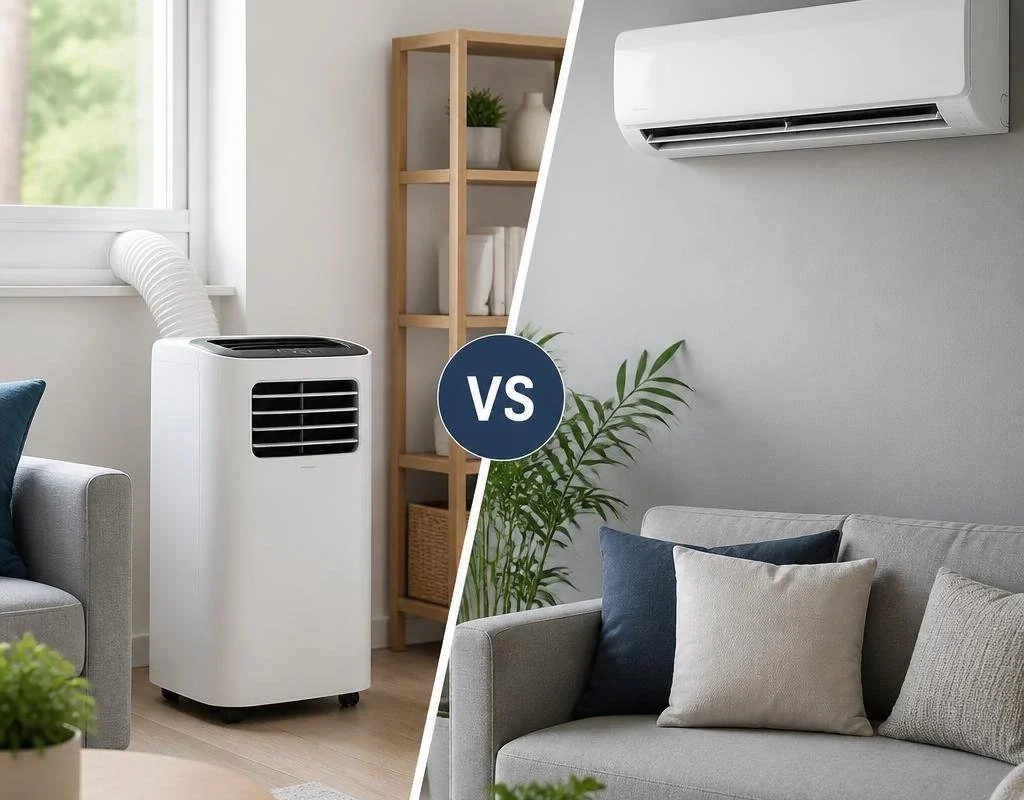
by Choosing between a portable and a split home air conditioner comes down to a trade-off between flexibility and long-term efficiency. This guide compares the two directly, so you can decide which suits your household.
How Each System Works
A portable air conditioner is a self-contained unit that vents hot air out through a window using a flexible hose. A split system separates the noisy compressor into an outdoor unit, connected by refrigerant piping to a quiet indoor unit. For a broader overview of all system types, see our home air conditioning buying guide.
Cooling Performance
Split systems generally cool a room faster and more evenly than portable units, since they don’t lose efficiency to the venting hose or draw in warm air to compensate for exhaust. Portable units can still cool a room effectively but tend to work harder to achieve the same result.
Installation and Flexibility
Portable units win clearly on flexibility. They need no professional installation and can be moved between rooms as needed. Split systems require a fixed, professional installation, which makes them less flexible but better suited to rooms that need consistent, long-term cooling.
Noise Comparison
Because the compressor sits inside the room with a portable unit, they tend to be noticeably louder than split systems, where the compressor is located outside. This matters particularly for bedrooms or home offices where noise disrupts sleep or concentration.
Running Costs
Split systems are typically more energy-efficient for regular, ongoing use, which can offset their higher upfront and installation cost over time. Portable units suit occasional or short-term cooling needs, where the lower initial outlay matters more than long-term efficiency. Our running cost guide breaks this down in more detail.
Which Should You Choose?
- Choose portable if you rent, need flexibility between rooms, or only need occasional cooling
- Choose split if you own your home, want quieter and more efficient cooling, and plan to use it regularly over several years
What Size Air Conditioner Do You Need? BTU Explained
An undersized unit runs constantly without ever cooling the room; an oversized one wastes money. As a rough guide, allow around 5,000 BTU for a small bedroom up to 15 square metres, 8,000 to 10,000 BTU for a typical living room, and 12,000 BTU or more for large open-plan spaces. South-facing rooms, top-floor flats and rooms with lots of glazing all need more capacity — add roughly 10% for each factor. Portable units lose some effective cooling through their exhaust hose, so size up slightly compared with a split system for the same room.
Do You Really Need Air Conditioning in the UK?
It is a fair question in a country famous for rain. But UK heatwaves are becoming longer and more intense, and modern well-insulated homes trap heat overnight, making bedrooms unbearable during hot spells. Air conditioning also dehumidifies, which helps in muggy weather, and most split systems double as efficient heaters in winter — effectively giving you year-round climate control. If you only suffer for two weeks a year, a portable unit for the bedroom may be the sensible compromise over a full installation.
Maintenance Compared: Portable vs. Split Systems
Portables are low-maintenance: empty the water tank or check the self-evaporating function, clean the washable filter monthly during use, and store the unit upright over winter. Split systems need a little more — indoor filters cleaned every few months, plus a professional service every one to two years to check refrigerant levels, clean the coils and verify drainage. Neglect servicing and efficiency drops noticeably while breakdown risk climbs. Our aircon maintenance guide walks through exactly what to do and when.
Energy Efficiency Ratings Explained
Running costs depend heavily on efficiency ratings. Look for the EER (cooling) and, on reversible units, COP (heating) — higher numbers mean more cooling per pound of electricity. Newer models carry the rescaled EU energy label from A to G; aim for A-rated where the budget allows. Inverter-driven split systems adjust their output continuously instead of switching on and off, cutting consumption by 30% or more compared with basic non-inverter models. Over five summers, the dearer efficient unit often pays for itself.
Installation Rules and Costs in the UK
Portable units need no permission — just a window for the exhaust hose. Split systems require a certified F-Gas engineer for installation, typically costing £1,500 to £2,500 for a single room including the unit. Most homes need no planning permission, but listed buildings, conservation areas and some leasehold flats have restrictions, so check first. Outdoor units must sit on a stable base with airflow around them, and consider noise: modern units run around 20 to 45 decibels, but placement near a neighbour’s bedroom window can still cause friction.
Frequently Asked Questions
Is a split system worth the extra cost over a portable unit?
For regular, long-term use, many homeowners find the improved efficiency and quieter operation worth the higher upfront investment.
Can I install a split air conditioning system myself?
No, split systems involve refrigerant handling and should always be installed by a qualified, certified professional.
Do portable air conditioners really work well?
Yes, for smaller rooms or occasional use, though they’re generally less efficient than a properly sized split system.
How much does it cost to run a portable air conditioner in the UK?
A typical 9,000 BTU portable unit draws around 1kW, costing roughly 25p per hour at current electricity prices — so about £2 for an eight-hour night. Efficient inverter split systems cost significantly less per hour of cooling.
Do I need planning permission for a split air conditioning unit in the UK?
Usually not for standard homes, as outdoor units fall under permitted development. Listed buildings, conservation areas and flats with restrictive leases are the main exceptions — always check before booking installation.
Can a portable air conditioner cool a whole house?
No — portables are single-room appliances. Cooling a whole house needs either multiple units or a multi-split system with indoor units in each key room.