 by
by Running costs are one of the biggest factors in deciding whether an air conditioning unit for home use makes sense for your household. This guide breaks down what actually affects the cost and how to keep it under control.
What Determines Running Cost?
Three main factors drive running cost: the unit’s energy efficiency rating, how often it’s used, and the room’s insulation and size. A well-insulated, correctly sized room costs noticeably less to cool than a poorly insulated one of the same dimensions.
Portable vs Split: Cost Differences
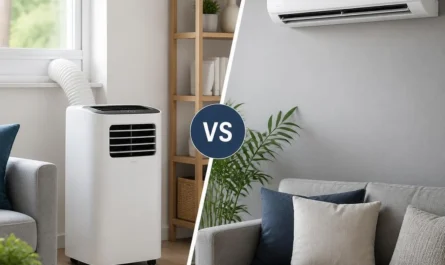
Split systems generally cost less to run per hour than portable units of similar cooling capacity, since portable units lose efficiency through their exhaust hose. For a full comparison of the two system types, see our portable vs split air conditioners guide.
Understanding SEER Ratings
The Seasonal Energy Efficiency Ratio (SEER) indicates how efficiently a unit cools relative to the electricity it uses. A higher SEER rating means lower running costs for the same cooling output, so it’s worth comparing this figure directly when shopping between models.
Estimating Daily and Seasonal Costs
A typical single-room split unit, run for a few hours on a warm day, costs a modest amount in electricity, though this adds up over a full summer of regular use. Larger multi-room systems, or units run continuously, naturally cost more to operate.
Ways to Reduce Running Costs
- Set a moderate target temperature rather than the coldest setting, since each additional degree of cooling increases energy use
- Use timers or smart controls to avoid cooling empty rooms
- Keep curtains or blinds closed during peak sun hours to reduce the cooling load
- Have the unit serviced regularly, since a poorly maintained system works harder and costs more to run
Our air conditioning maintenance guide covers upkeep tasks that help keep running costs down over the system’s lifetime.
Is the Running Cost Worth It?
For homes that overheat regularly in summer, most homeowners find the running cost reasonable compared with the comfort and, in some cases, improved sleep quality it provides. For occasional use, a portable unit’s lower running hours can help keep overall costs down.
Worked Example: Cooling a Bedroom Through a Heatwave
Concrete numbers beat vague estimates. Take a typical UK double bedroom (around 14 square metres) cooled by a 9,000 BTU portable unit drawing roughly 1kW. Running it for 8 hours overnight at 24.5p per kWh costs about £1.96 per night — so a full week-long heatwave costs under £14. A split system doing the same job at higher efficiency might draw 0.6kW, cutting that to roughly £1.18 a night. These are not scary numbers; the fear of aircon bills is usually worse than the bills themselves.
Tariff Tricks: When You Run It Matters
If you are on a time-of-use tariff such as Economy 7 or Octopus Agile, shifting cooling to cheaper hours slashes costs. Pre-cooling the bedroom during an off-peak window before bedtime, then letting the room coast, can halve the effective price. Even on a standard tariff, avoiding the 4pm–7pm peak — when some tariffs charge most — is sensible. A £20 plug-in energy monitor on the unit tells you exactly what each session costs, which quickly trains better habits than any amount of advice.
The Hidden Cost of an Oversized Unit
Bigger is not better with air conditioning. An oversized unit cools the room so fast it short-cycles — switching on and off constantly — which wastes energy, wears components and leaves humidity high because the coil never runs long enough to dehumidify properly. You pay more upfront, more in electricity, and get a clammy room for your trouble. Size the unit to the room using proper BTU guidance (our portable vs split comparison covers sizing), and resist the “just in case” upgrade.
Comparing Quotes: What Installers Often Leave Out
For split systems, the headline installation quote rarely tells the whole story. Check whether it includes the outdoor mounting bracket, electrical spur, condensate drainage and F-Gas commissioning — missing items become expensive extras later. Ask about the warranty split between equipment and labour, and what a callout costs after year one. Get at least three quotes and be suspicious of any dramatically cheaper than the rest; corners get cut on pipework quality and vacuuming, which you will pay for in reliability.
How Running Costs Change as Units Age
A new unit’s efficiency is its best-ever efficiency. Without servicing, running costs creep up 5 to 10% a year as coils foul, filters clog and refrigerant slowly leaks. After about 8 to 10 years, a portable can cost nearly double per hour of cooling what it did new — at which point replacement beats repair on running costs alone. Annual filter cleaning and a professional service every couple of years hold the line; it is the cheapest efficiency measure available.
Frequently Asked Questions
Is air conditioning expensive to run in the UK?
Costs are generally moderate for typical UK summer usage, since cooling is needed for shorter periods than in hotter climates.
Does a higher SEER rating really save money?
Yes, a higher SEER rating means the unit uses less electricity for the same amount of cooling, which reduces running costs over time.
Does regular maintenance affect running costs?
Yes, a well-maintained unit runs more efficiently, while a neglected one, particularly with dirty filters, has to work harder and uses more electricity.
How much does it cost to run air conditioning for one hour in the UK?
A typical portable unit costs around 20 to 30p per hour at current electricity prices. An efficient inverter split system cooling the same room costs roughly half that.
Is it cheaper to run a fan or air conditioning?
A fan is far cheaper — around 1 to 2p per hour — but it only moves air rather than cooling it. Above about 30°C indoors, fans stop helping much and air conditioning becomes worth the cost.
Do air conditioners use a lot of electricity on standby?
Very little — typically 1 to 3 watts, costing pennies per year. The real consumption happens during active cooling, so standby is not worth worrying about.
Related Home Air Conditioning Guides
- Home Air Conditioning: The Complete Buying Guide
- Portable vs Split Air Conditioners for the Home
- Home Air Conditioning UK: What You Need to Know
- Home Aircon Maintenance: Keeping Your Unit Running Efficiently